Earlier this year I licensed some images to a New Zealand based company that is producing calendars that contain iconic landscapes of New Zealand (both the North and the South Island). The Calendars have now come back from the printers and can be ordered through Black Fish Design and Publishing in New Zealand. They will shortly be distributed around the country to tourist hot spots and major cities and towns for purchase. Additionally calendars can be ordered with custom text for any individual business requirements. Some of my New Zealand photography is featured in the Top New Zealand Destinations 2012, Southern Splendour 2012, and Beautiful New Zealand 2012 Calendars.
AUSTRALIAN PHOTOGRAPHY AND GALLERY COMPENDIUM 2011
-

The Compendium The 2011 Australian Photography and Gallery Compendium has just been released. This high quality fine art book is made using the finest production techniques with pre-press production by expert colour managers and designers. The reproduction of detail, colour and depth is exceptional and is the next best thing to actually viewing one of the fine art prints. The book is bound in linen with a screen printed silver letter dust jacket and includes a bookmark ribbon. At the close of each year, The Compendium accepts photographic artists who exhibited in the year, represented by a defining image of their contemporary work in a collectable fine art format. The Compendium aims year on year to build a record of contemporary art photography and galleries.
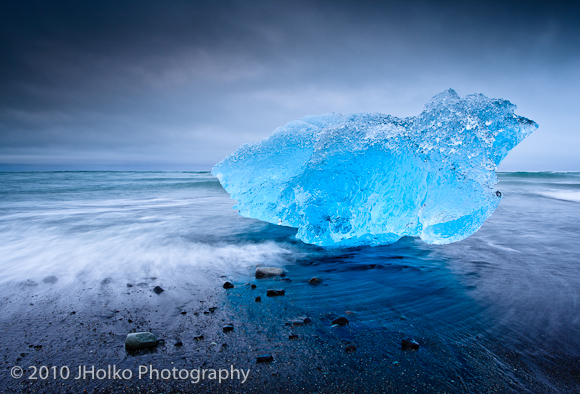
This is the inaugural edition of this new compendium and I am pleased to say it includes my Gold Award Winning APPA print and World Extreme Environment Photograph of the year peoples choice award ‘Blue Berg’ which was photographed near the Jokulsarlon Glacial Lagoon in Iceland last year. Strictly Limited Editions of this print are available for purchase form Source Photographica in Melbourne. If you are a photographer or collector of fine art photography and have always wondered what a GOLD award winning APPA print looked like then this is your unique chance to own one. Alternatively, if you are just starting out in collecting photography then this will be a very fine start to your collection. This limited ‘special’ edition print will be made on 13 x 19 Moab Somerset Museum Rag paper; which is my absolute favourite fine art paper and will be signed and accompanied by a matching certificate of authenticity. Each print and certificate will include a serialised and numbered hologram identifying its unique number in this edition and verifying its authenticity. Each certificate will be printed on Moab Japanese Moenkopi Washi paper. This Moenkopi Washi paper is made of all natural mulberry fibres by the finest artisans at the Awagami Factory in Tokushima Japan. It is the perfect accompaniment to a paper as beautiful and sensual as Somerset Museum Rag. Each ‘pigment on paper’ print will be printed, inspected and signed by me personally and will ship to you flat on archival acid free foam core in a clear archival bag ready for the matt and frame of your choice. This is a strictly limited special edition of 50 prints to celebrate the appointment as a Moab Master and once orders are filled there will be no more. Each print investment is being offered at the special price of $500 plus delivery. Please contact Philip Kulpa at the Source Photographica Gallery in Brighton for any enquiries or to place your order. Philip can be contacted via email at philip@sourcephoto.com.au or via phone on +61 3 9530 6059. You can also contact me directly at jholko@bigpond.com.
As a special offer the next 4 (four) orders ONLY will also receive complimentary a copy of the Australian Photography and Gallery Compendium 2011 as an accompanying piece to the print as my way of thanking you for your purchase and investment. The Compendium will also be signed on the page featuring my photography. The Compendium itself normally sells for $69.00 including shipping and handling. Don’t miss your chance to own a special limited edition GOLD Award APPA print and copy of the 2011 Australian Photography and Gallery Compendium!
ANTARCTICA – T MINUS 3 MONTHS : WILL I BE TAKING A NEW CANON PRO DSLR?
I realised this morning it is now only three months until I leave for Antarctica with Quark Expeditions; which means it is definitely time to get a wriggle on in terms of a packing list and preperation. I have a pretty good idea already on what I plan to take with me but I still need to buy a few things to round out my ‘kit’ for the trip. I need additional memory cards, more thermal clothes and just possibly another lens or two to round out my available focal lengths. The big question is what do I take with me as a second camera body to supplement the 1DS MKIII?
I have been hanging off purchasing another camera body pending either the announcement of a 1DS MKIV or a 1D MKV. The rumour mill has been really spinning up over the last few weeks that an announcement would soon be forthcoming. Specification lists are appearing all over the internet for both the 1DS MKIV and 1D MKV; most of them are clearly no more than wish lists by keen fan boys eager to fuel the rapidly spreading rumour fires. A few of them seem to have some real credibility to them, but it is hard to sort the wheat from the chaff. Of course those who actually know are under strict NDA agreement and can’t say.
Without a desire to add fuel to the now raging fires here is my revised and considered take on what is probably (emphasis on probably) going to happen with both the 1DS MKIV and the 1D MKV cameras in the next few months. As to when it happens; well in my opinion it may well happen sooner rather than later. Especially if Nikon do announce their new big gun pro DSLR’s later this month or early September. A Nikon announcement of a D3S or D3X replacement will more than likely force Canon’s hand to avoid loss of early sales.
Canon will announce a 1D MKV before a 1DS MKIV. The 1D MKV will be a replacement for the 1D MKIV and the 1DS MKIII. It will in effect be a merging of the two cameras as has long been rumoured. The camera will be full frame high mega pixel (probably low 30 mega pixels) and will use the current 1 series body. It will be squarely aimed at sports, photojournalist and outdoor photographers. It will undoubtedly shoot 1080p video and include several new technologies as well as amazing high ISO performance.
A 1DS MKIV will come to market early to mid next year; but it will come under a new name in a new body and will be squarely aimed at studio only shooters. It will most likely use a larger than 35mm sensor (perhaps similar in size to the Leica S2) and will be designed to compete with Medium Format Digital Backs. It will not be weather sealed and may or may not include video capability.
For those clamouring for the 5D MKIII; you won’t see it this year. It will likely come to market in March or April next year and will be a cut down version of the new 1D MKV. Most likely sporting the same mega pixel sensor as the 1D MKV without the rugged body, blazing fast frames per second and auto focus capabilities of the 1D MKV.
I stress again that these are just my current thoughts on what is going to happen with Canon’s Pro DSLR range of cameras – Don’t take them to the bank!
History has shown that it is very difficult to get a hold of a new Canon product soon after its announced, so irrespective of what happens with the 1DS MKIV and 1D MKV if there has not be an announcement by the end of September I will almost certainly be taking an additional 1D MKIV body with me to Antarctica.
MOAB MASTER APPOINTMENT – AUSTRALIA’S FIRST MOAB MASTER AND YOUR CHANCE TO OWN A GOLD APPA PRINT
I am both extremely pleased and proud to announce that Legion Paper and Moab who produce my absolute favourite photographic papers have officially designated and appointed me as one of their Moab Masters. This makes me to date the first and only Australian photographer to be honoured by Moab with Master status and I would like to thank them for their support. From Moabs website:
Moab Master photographers are a select group of artists connected by their unique visions and their love of reproducing their images on Moab fine art paper. You’ll notice some well-established photographers in the galleries below, as well as photographers on the rise. Moab is proud to be associated with these artists and thank them for trusting Moab with their images.
To my friends in the USA and abroad this means that some of my photography and prints will now be taken and exhibited by Moab to trade shows around the country. You should be able to see some of my photography in print at PhotoPlus Expo in New York as soon as October this year.
To celebrate the appointment I am going to be offering a strictly limited number of my 2011 Fine Art Landscape GOLD Award winning APPA (Australian Professional Photography Awards) Print ‘Blue Berg’. If you are a photographer or collector of fine art photography and have always wondered what a GOLD award winning APPA print looked like then this is your unique chance to own one. Alternatively, if you are just starting out in collecting photography then this will be a very fine start to your collection. This limited ‘special’ edition print will be made on 13 x 19 Moab Somerset Museum Rag paper; which is my absolute favourite fine art paper and will be signed and accompanied by a matching certificate of authenticity. Each print and certificate will include a serialised and numbered hologram identifying its unique number in this edition and verifying its authenticity. Each certificate will be printed on Moab Japanese Moenkopi Washi paper. This Moenkopi Washi paper is made of all natural mulberry fibres by the finest artisans at the Awagami Factory in Tokushima Japan. It is the perfect accompaniment to a paper as beautiful and sensual as Somerset Museum Rag. Each ‘pigment on paper’ print will be printed, inspected and signed by me personally and will ship to you flat on archival acid free foam core in a clear archival bag ready for the matt and frame of your choice. This is a strictly limited special edition of 50 prints to celebrate the appointment as a Moab Master and once orders are filled there will be no more. Each print investment is being offered at the special price of $500 plus delivery. Please contact Philip Kulpa at the Source Photographica Gallery in Brighton for any enquiries or to place your order. Philip can be contacted via email at philip@sourcephoto.com.au or via phone on +61 3 9530 6059. Don’t miss your chance to own a special limited edition GOLD Award APPA print!

THE VERTICAL COMPOSITION – SELFOSS BEFORE STORM
When out shooting in the field I usually find that the subject and composition will dictate the orientation of the frame – either horizontal or vertical in the 35mm format. Almost always I will go with my first instinct when making framing, composing and orientation decisions and usually my first instinct results in the best overall frame. Once I have taken that photograph I will then experiment with different compositions and usually a different camera orientation. Often, an alternate orientation produces an equally good photograph and occasionally a superior one. It almost always results in a photograph that ‘reads’ differently and the experience can be quite different for the end viewer.
Speaking extemporaneously it is no skin off my nose to experiment with an alternate camera orientation in the field. It takes little to know time to re-orientate the camera after shooting a horizontal or vertical composition; especially with the Really Right Stuff L bracket that I use on my primary Canon 1DS MKIII. This is something I find myself doing a lot as the alternate orientation gives me a choice of options during the editing process back in my studio – and choice is always a good thing. Even if the different orientation ends up a banal photograph destined to reside in my Lightroom catalogue without ever seeing ‘print’ I do at least have the photograph for comparative purposes.
Every now and again I end up processing both the horizontal and vertical frames as I cant decide which I prefer; or I like both equally as in the case of ‘Selfoss Before Storm’. Both the horizontal and vertical compositions work to my eye for this photograph and both for quite different reasons. Each orientation places the emphasis on different elements in the frame and each; although similar, is visually quite a different experience. The vertical composition more successfully coveys a sense of height to the waterfalls that cascade down this martian like canyon. On the other hand the horizontal orientation conveys a greater sense of grandeur; giving a sense of scale to the width of the falls. In both instances the racing storm clouds are positioned to emphasise the orientation of the frame. I like both – Which do you prefer?
 www.WILDNATUREPHOTOTRAVEL.com