Departing for Greenland in Winter Expedition 2024 Offline Update

Early tomorrow morning (the 10th of March, 2024), I am leaving for Iceland and Greenland for my dog-sled expedition to photograph Polar bears, Iceberg landscapes and other wildlife in the Arctic Winter. Please note that I will be offline in Greenland from the 12th of March until the 22nd of March. If you are trying to contact me during this time, please be patient, and I will get back to you upon my return. The 2024 and 2025 winter expeditions via dogsled in Greenland have long been sold out, but I will soon announce dates for 2026. These expeditions are for those looking to get out of their comfort zone and have the opportunity to capture dramatic, powerful and evocative photographs of Arctic wildlife in winter on the frozen sea ice.

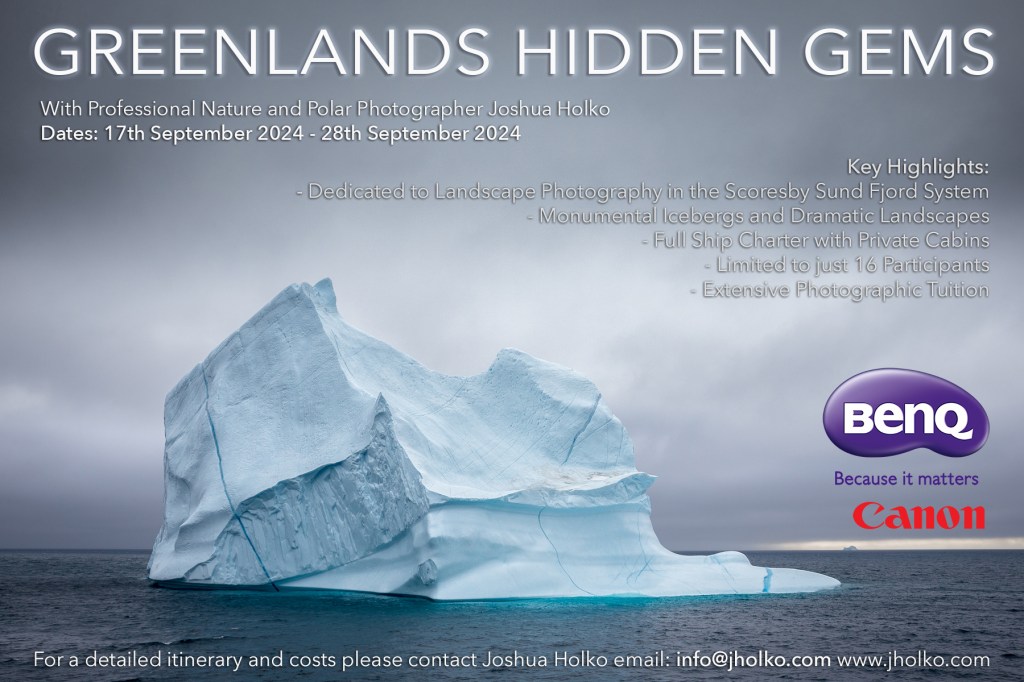
Just a couple of places remain on my Greenland East Coast Scoresby Sund expedition in September of this year for those looking for a less exposed, more comfortable adventure. This expedition is for photographers looking to photograph and capture evocative and dramatic photographs of Greenland’s incredible icebergs and landscapes from the ease and comfort of a warm ship. We will have the comfort and luxury of flying across the Denmark Strait from Iceland to Greenland in both directions. This will save us both time and a potentially uncomfortable crossing should the weather not cooperate in the open ocean between Greenland and Iceland. You can get an idea of what to expect on this expedition by checking out the 2023 Trip Report HERE or by visiting the Greenland portfolio on my website. If you have ever wanted to photograph the best icebergs on the planet in the best possible conditions and light – this is the expedition for you. Drop me a note for more information or to register your place.
Snow Leopard and Pallas Cat 2025 Expeditions now Sold Out

The 2025 expedition to Western Mongolia to find and photograph the ghost of the mountains – The Snow Leopard, is now sold out – thank you. Likewise, the follow-up expedition for Pallas Cat in the Eastern region is also sold out.  If you want to join us, I am offering the Pallas Cat expedition again in January 2026. The expedition will run from January 2nd to January 8th and will be limited to five photographers. On this expedition, you can expect to see and photograph wild Pallas cats, Corsak Foxes and raptors, including the Upland Buzzard, Golden Eagle and Saker Falcon. More information, including a full trip PDF and itinerary, can be downloaded from my website, www.jholko.com/workshops . To get an idea of the type of photographs you can take on this expedition, please be sure to check out the Mongolia portfolio on my website.

Just a reminder, you can vote for my Pallas Cat photograph in the People’s Choice Award for the Asia / Pacific Photography Awards online HERE.

WNPP Episode #93 Choosing Your Next Photography Tour or Workshop

I have just published Episode #93 of my Wild Nature Photography Podcast. In this podcast episode, I  give my thoughts on what to consider when choosing your next photography tour, workshop or expedition and questions you should ask your potential trip leader to ensure you have the best possible experience and maximise the return on your investment.

How to Choose the Right  Photographic Expedition to Antarctica

How to Choose the Right Ship-Based Photographic Expedition

Photograph of the Month March 2024 – Riding the Iceberg in Antarctica

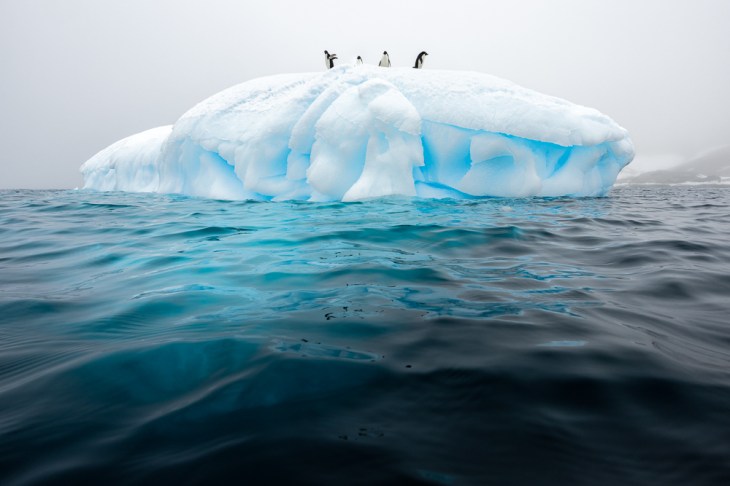
The photograph of the month for March 2024 comes from my recent December 2023 expedition to the Antarctic Peninsula (Read the Trip Report) and is of Adelie penguins riding an Iceberg. Photographed on our very last full day in Antarctica, this image was made by holding the camera with a wide angle 14-35mm lens over the side of the zodiac, just a few centimetres above the water line. The key to making this approach work is the focal point and the choice of f-stop to ensure sufficient depth of field. You really need to focus one-third into the frame and ensure you have stopped down enough to have the image sharp front to back. In this situation, I manually selected the focus point I wanted to ensure the depth of field was correct. The Auto focus would otherwise lock the penguins or iceberg, leaving the foreground too soft for my tastes.