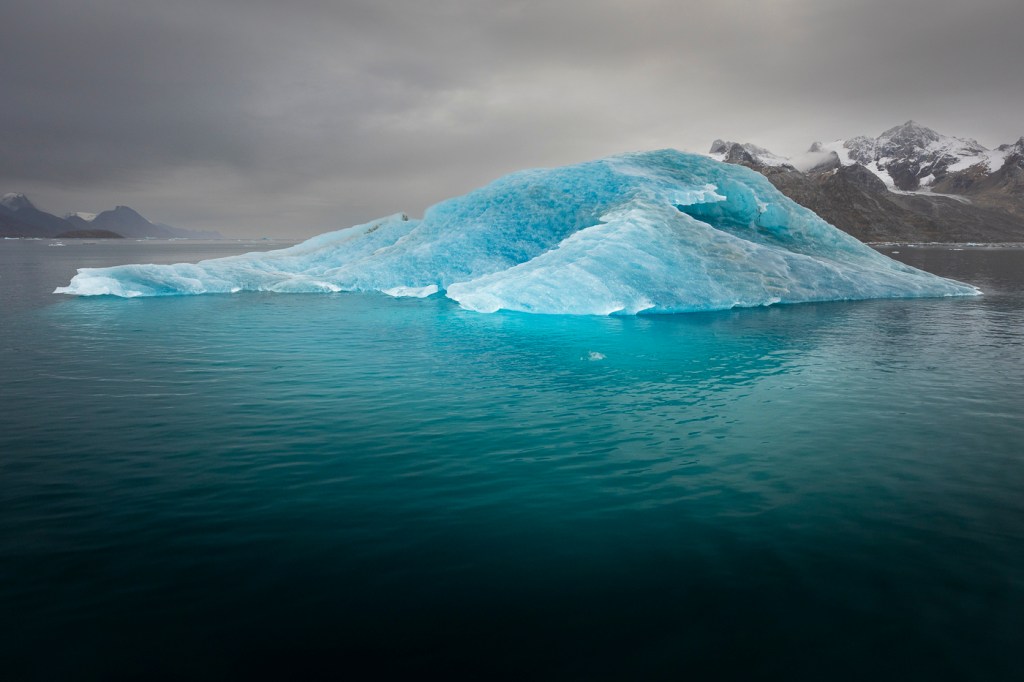
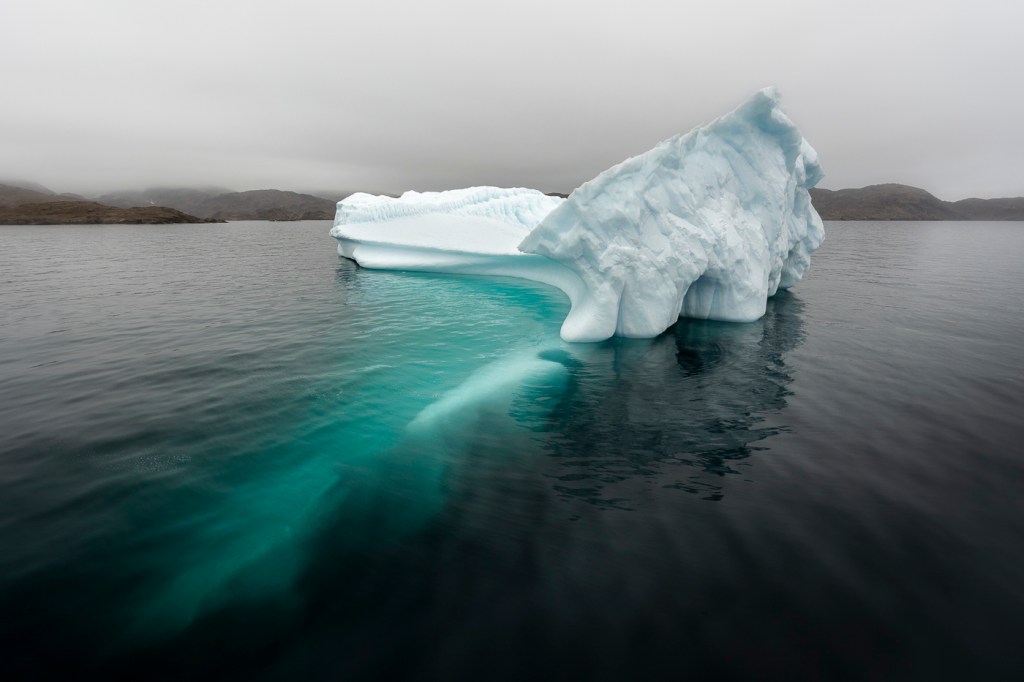
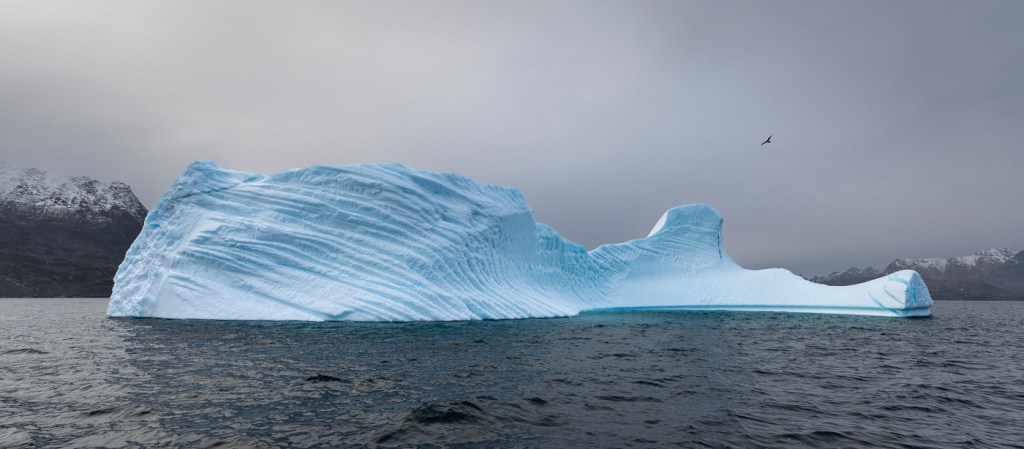
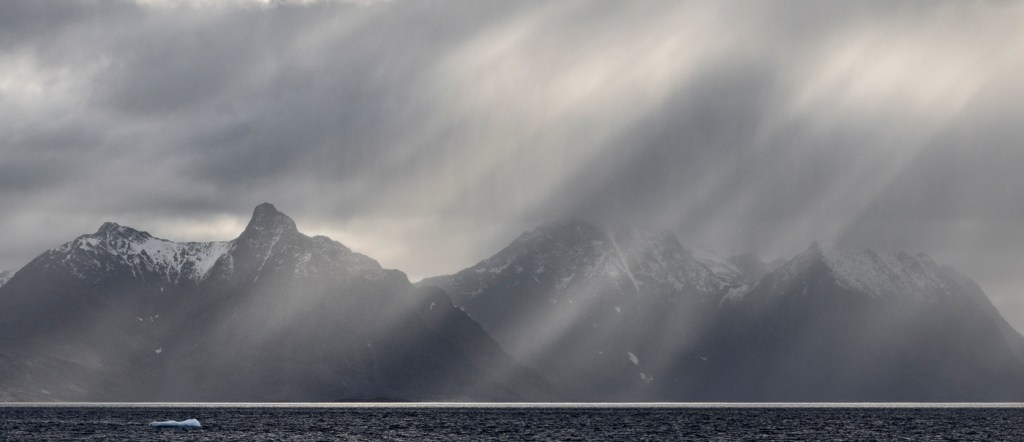
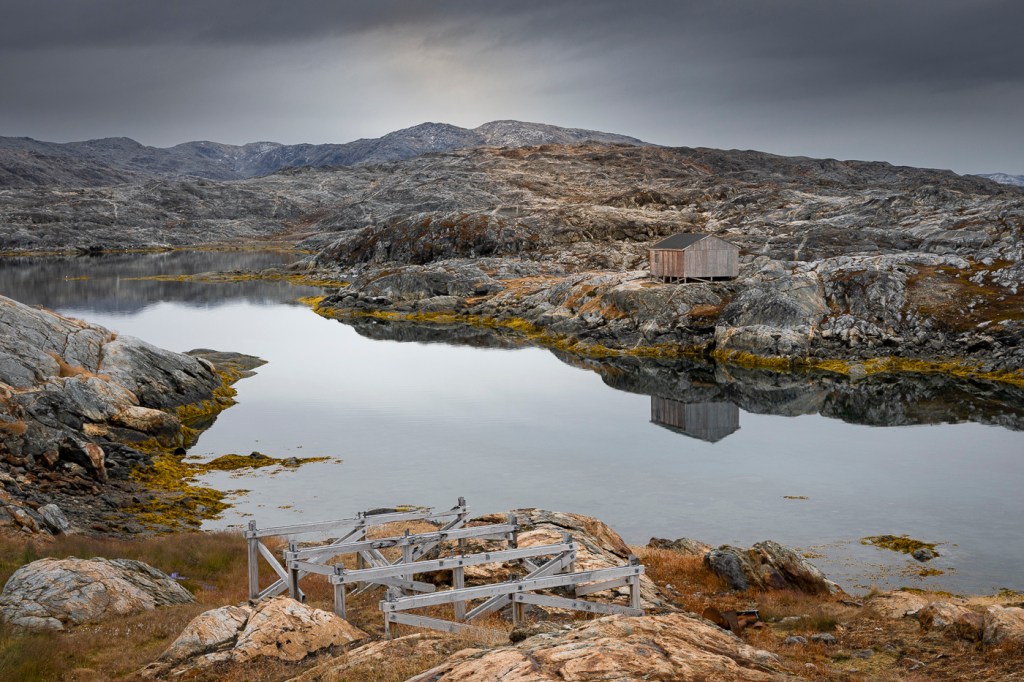
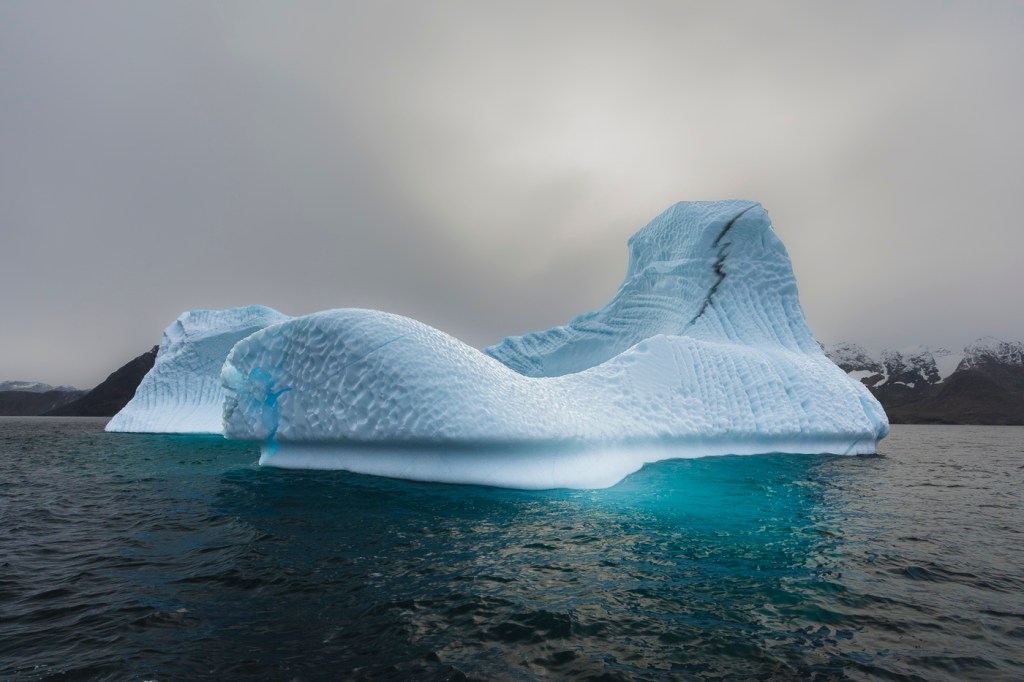
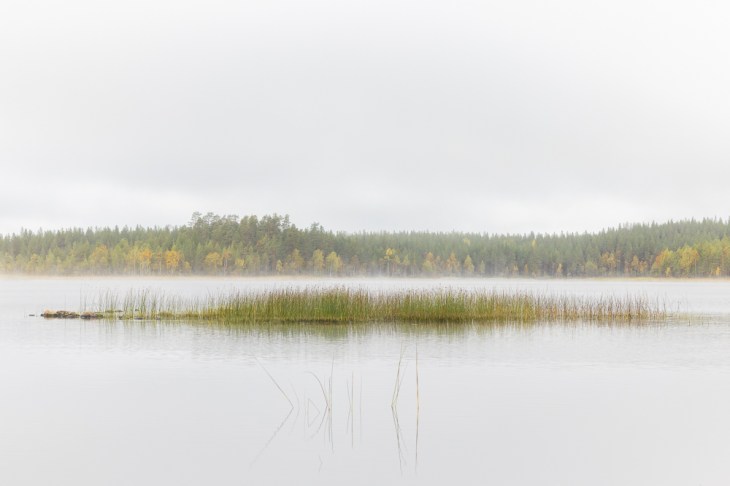
In October 2022, I ran a specialised workshop to South Eastern Greenland to photograph the incredible landscapes, icebergs and whales found in this remote region of Greenland. East Greenland is one of those places in the Arctic where you can look out across the landscape and feel as though you have stepped completely outside the modern world. It is very much an otherworldly landscape that is as inspiring as it is evocative.
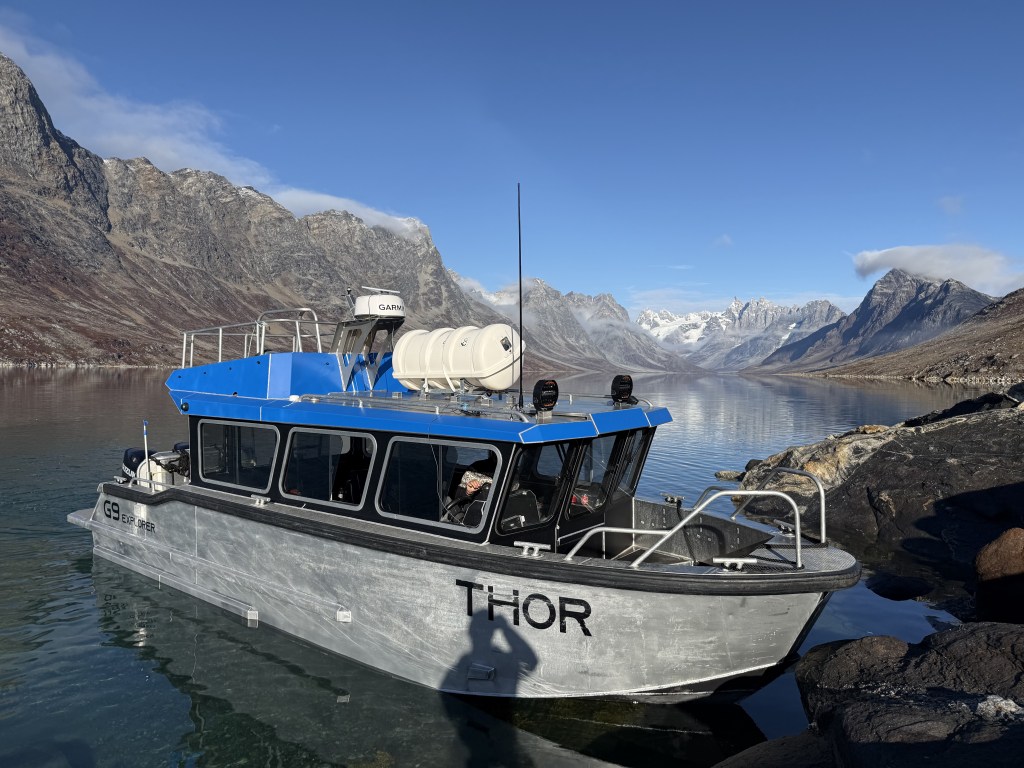
From 30 September to 9 October, we based ourselves in Tasiilaq, on Greenland’s remote east coast, using the small town as our base for a series of daily boat excursions deep into the surrounding fjords and coastline. Each morning we headed out by boat, leaving Tasiilaq behind and entering a landscape of immense mountains, narrow fjords, drifting sea ice and enormous icebergs. In this part of Greenland, the remoteness is matched only by its beauty. Every day offered something different, and that unpredictability was one of the great photographic rewards of the trip. East Greenland rewards an open mind and a willingness to embrace what is offered. Icebergs were always on the wish list, but oftentimes it’s whales that were served up, making for some engaging and enthralling wildlife photography.
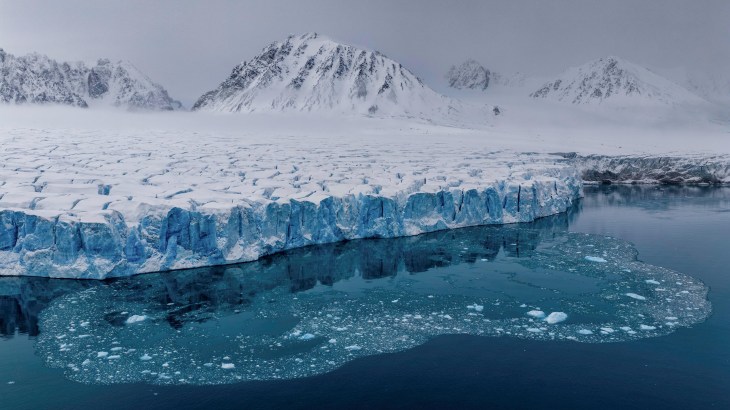
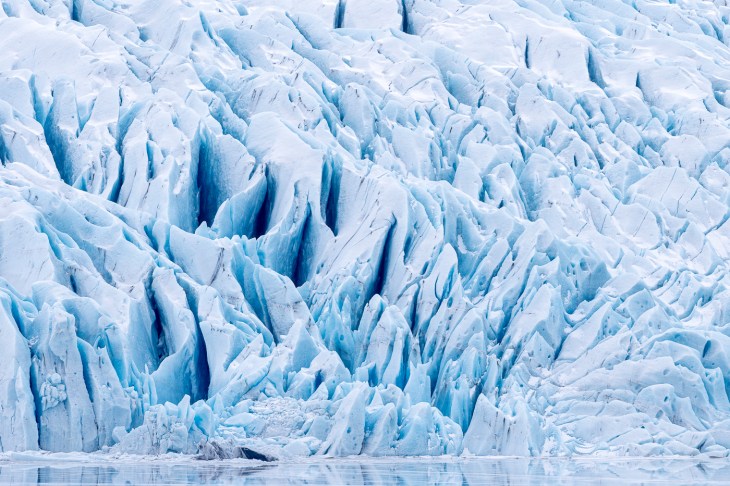
East Greenland is an extraordinarily visual place and is a landscape made for photography. The mountains rise dramatically from the sea, their steep slopes and rugged faces disappearing into cloud and autumn light. Icebergs of every imaginable shape and scale drift through the fjords — some brilliant white, others deeply blue, and many sculpted into extraordinary forms by wind, waves and time. For a photographer, the challenge is not finding something to photograph. It is deciding what not to photograph.
We spent long periods working with the ice and landscape, looking for the relationships between the enormous scale of the mountains and the much smaller, intricate forms of the ice. Changing weather constantly transformed the scenes in front of us. One moment we could be surrounded by brilliant Arctic light; the next, cloud, fog and mist would roll across the mountains, completely changing the mood. The low autumn sun was particularly beautiful, producing long shadows and warm light across an otherwise cold landscape. There was often a wonderful tension between the warmth of the light and the starkness of the environment.
And then there were the moments when everything simply came together — an enormous iceberg positioned perfectly against a mountain, a shaft of light breaking through the cloud, or a whale breaking the surface of the fjords waters. These are the moments that make travelling this far north worthwhile.
We enjoyed excellent encounters with both humpback whales and fin whales, while travelling through the fjords by boat. Seeing these enormous animals in such a vast and untouched environment is an extraordinary experience. There is something particularly powerful about photographing a whale in East Greenland. It is not simply the animal itself. It is the entire scene — the whale surfacing in dark Arctic water, immense mountains rising behind it and icebergs drifting through the background. The scale of the landscape makes the whales appear surprisingly small, despite their enormous size. For photography, this also meant being prepared for the unexpected. The boat could be moving through beautiful landscape one moment, and then suddenly a whale would surface nearby. Cameras needed to be ready, compositions anticipated and decisions made quickly. Those unscripted encounters are often some of the most rewarding photographs of an expedition. Just as an aside, I was extremely impressed at the medium-format Fuji’s capability to focus on wildlife and whales during this workshop.
One of the most memorable aspects of the journey was the opportunity to visit several small and extremely remote Inuit communities scattered along the coast. Some of these villages have populations of only around 200 people. Arriving by boat, with the mountains rising immediately behind the settlement and virtually no sign of the outside world, gave us a genuine sense of just how isolated and remote these communities are.
These were not simply photographic stops. They provided an opportunity to see another side of Greenland — a way of life shaped by the sea, ice, weather and extraordinary geographical isolation. The contrast between the dramatic wilderness surrounding these settlements and the everyday life within them was fascinating to photograph.
We also visited an abandoned Greenlandic village, a particularly evocative experience. Empty buildings and remnants of a former community remain against a backdrop of mountains, water and wilderness. Nature is gradually reclaiming the settlement, and the combination of human history and the immense Arctic landscape created some incredibly atmospheric photographic opportunities.
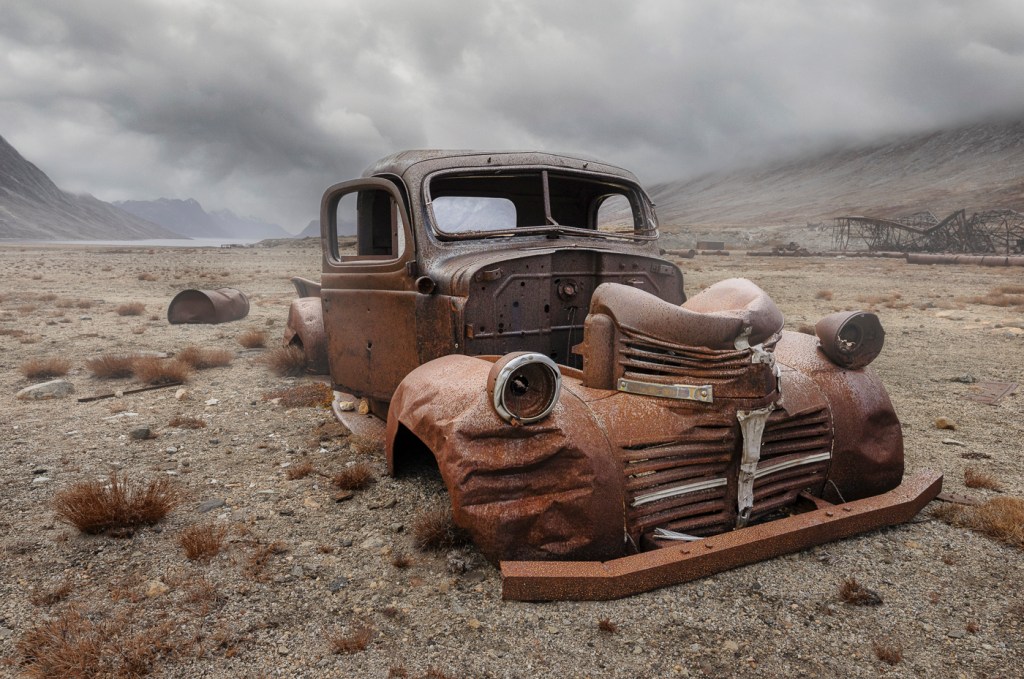
Another highlight was visiting an abandoned United States World War II base. Hidden away in this remote part of Greenland, the site contains a remarkable collection of abandoned and rusting relics from the American presence during the war. Rusting machinery, oil barrels, structures and remnants of the former base remain scattered across the landscape. Against the stark Greenlandic environment, these objects have taken on an almost sculptural quality. For photographers, it was an extraordinary location — a collision between history and wilderness. If rusty-bits are your thing, this is a must-visit destination.
The rust, peeling surfaces and weathered metal provided a completely different photographic palette from the ice and mountains we had been working with elsewhere. At the same time, the surrounding landscape constantly reminded us just how remote this place was. Standing amongst these remnants, it was difficult not to wonder about the people who had once lived and worked here, and what it must have been like to establish a military base in such an isolated corner of the world.
Perhaps the greatest takeaway from this expedition was simply the feeling of being somewhere genuinely remote. East Greenland is not a destination where you can simply drive to the next location or follow a well-worn tourist trail. Much of our exploration was done from the water, navigating through fjords and along a coastline where mountains, ice and ocean dominate the landscape. The silence and sense of space one experiences in this region is extraordinary.
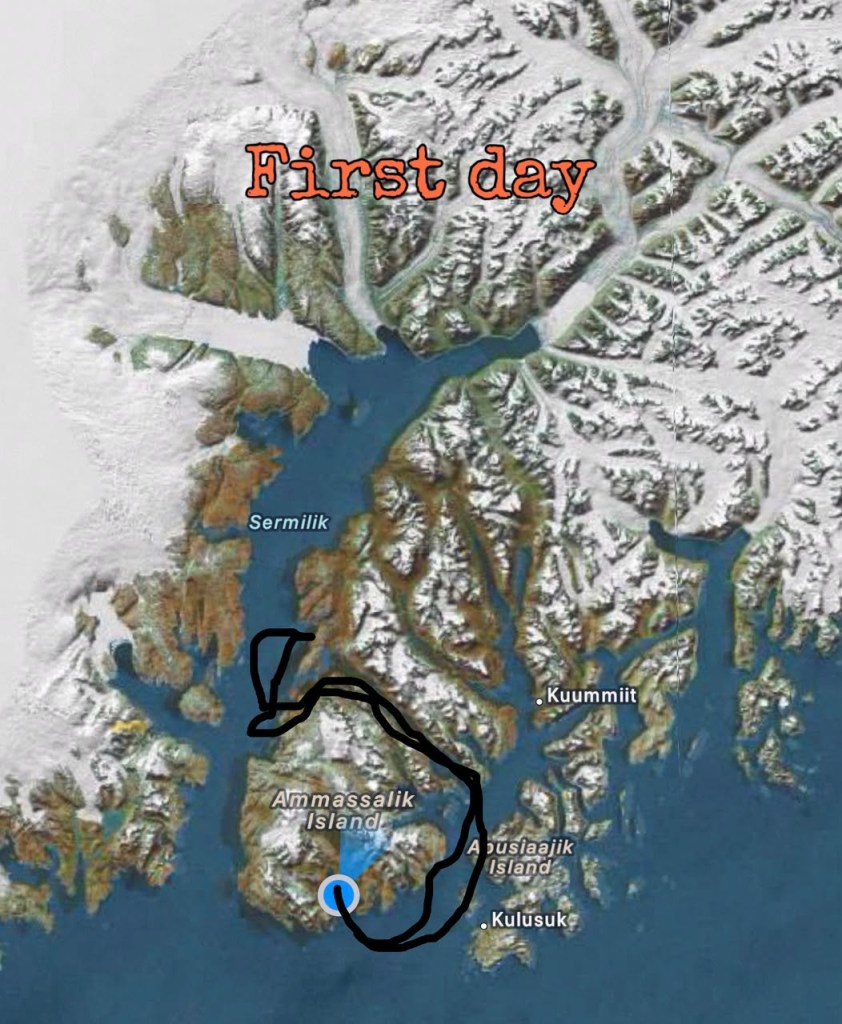
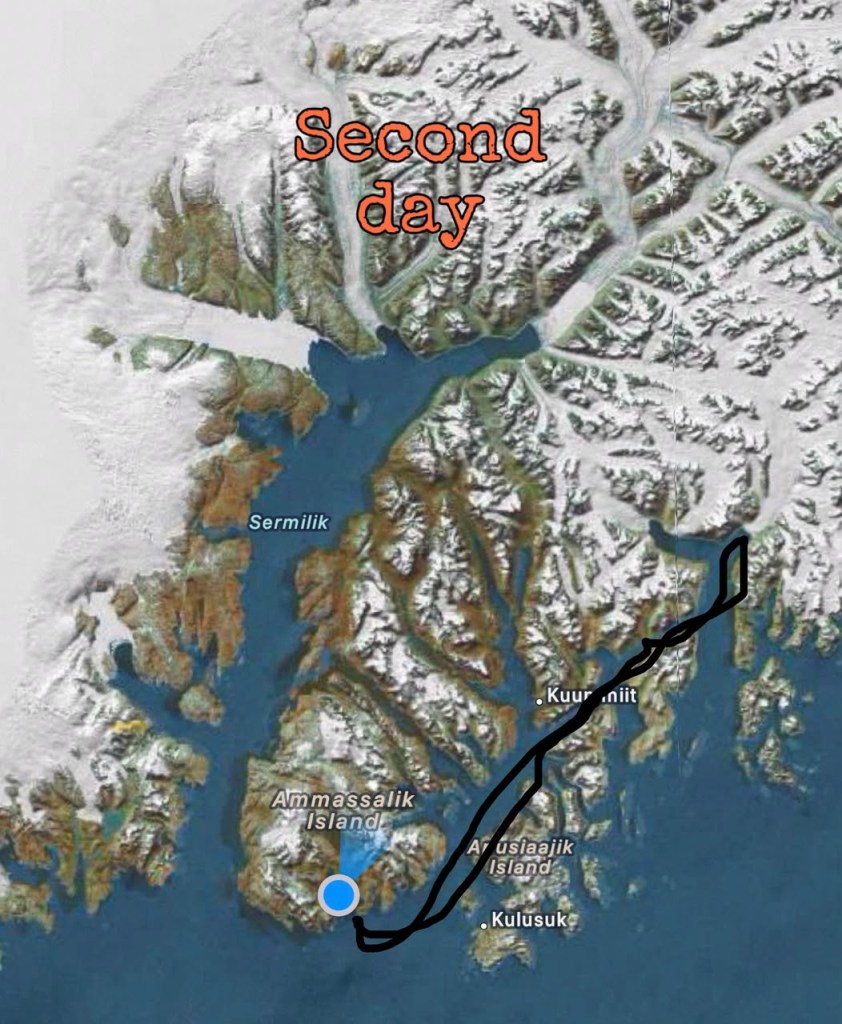
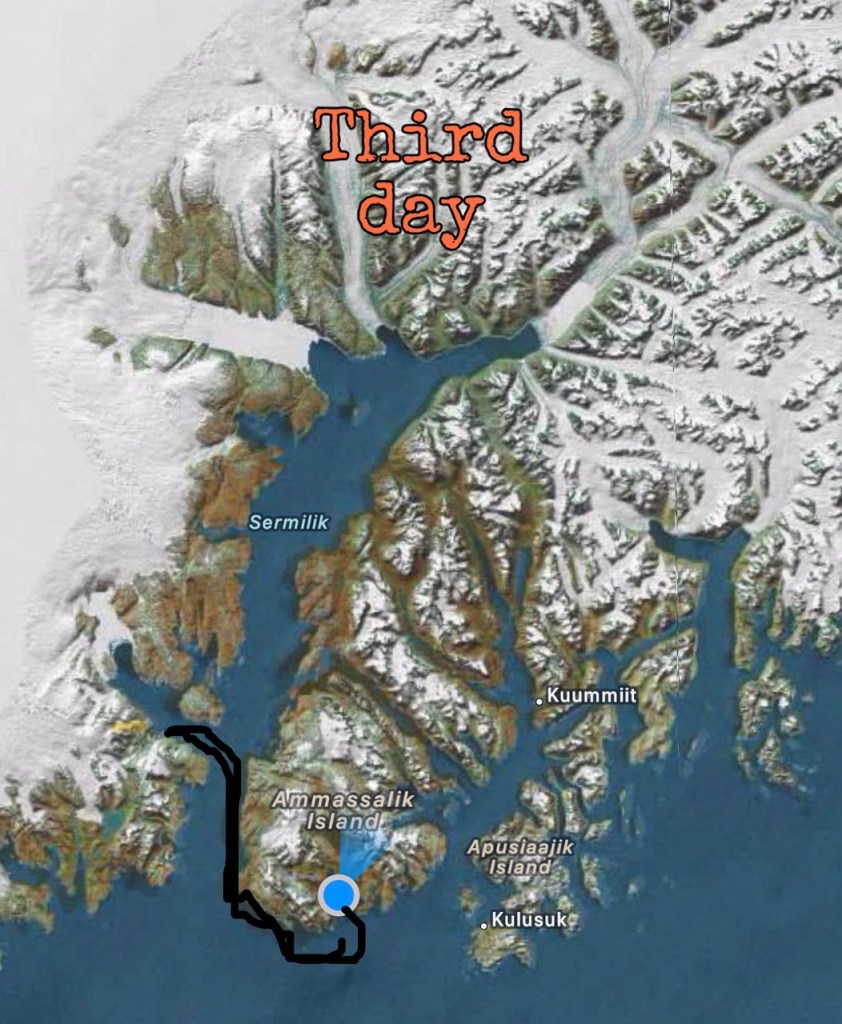
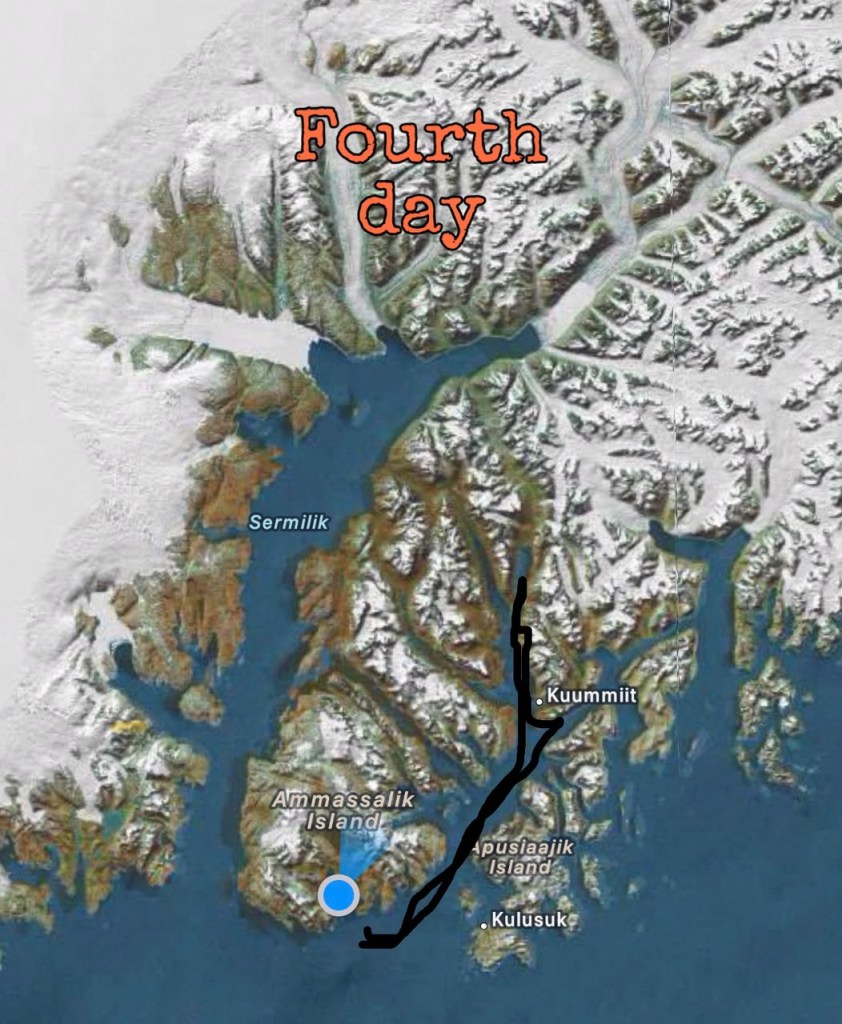
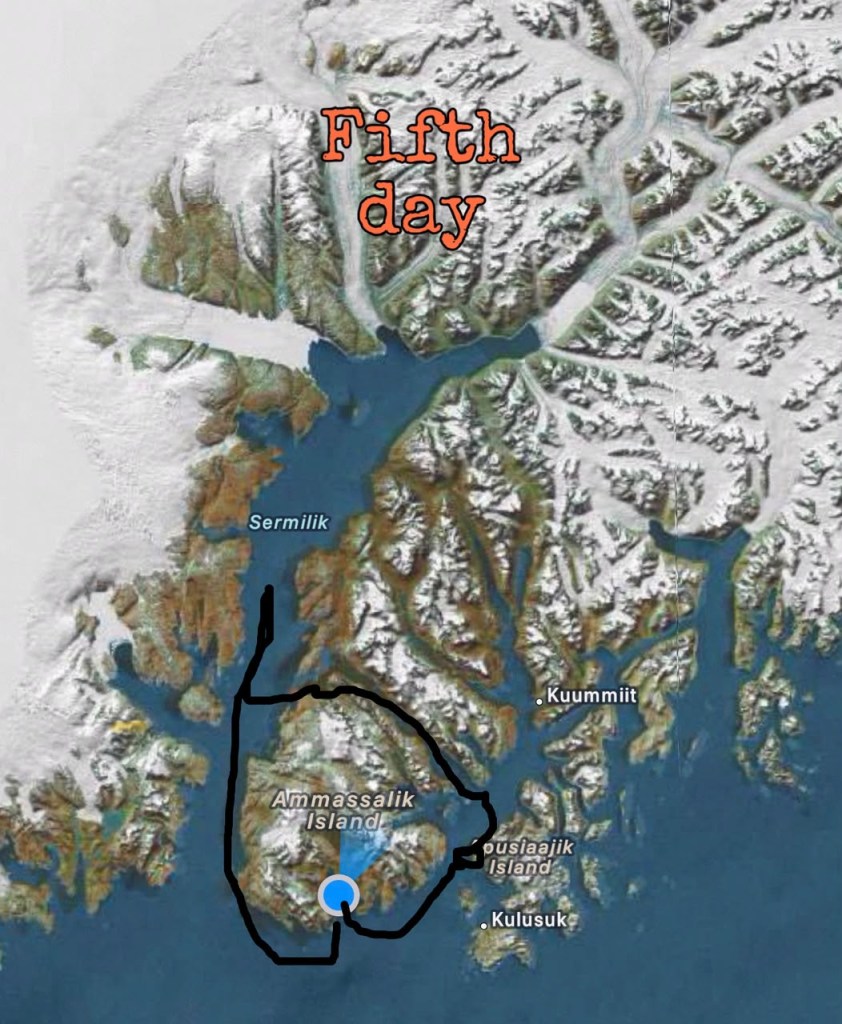
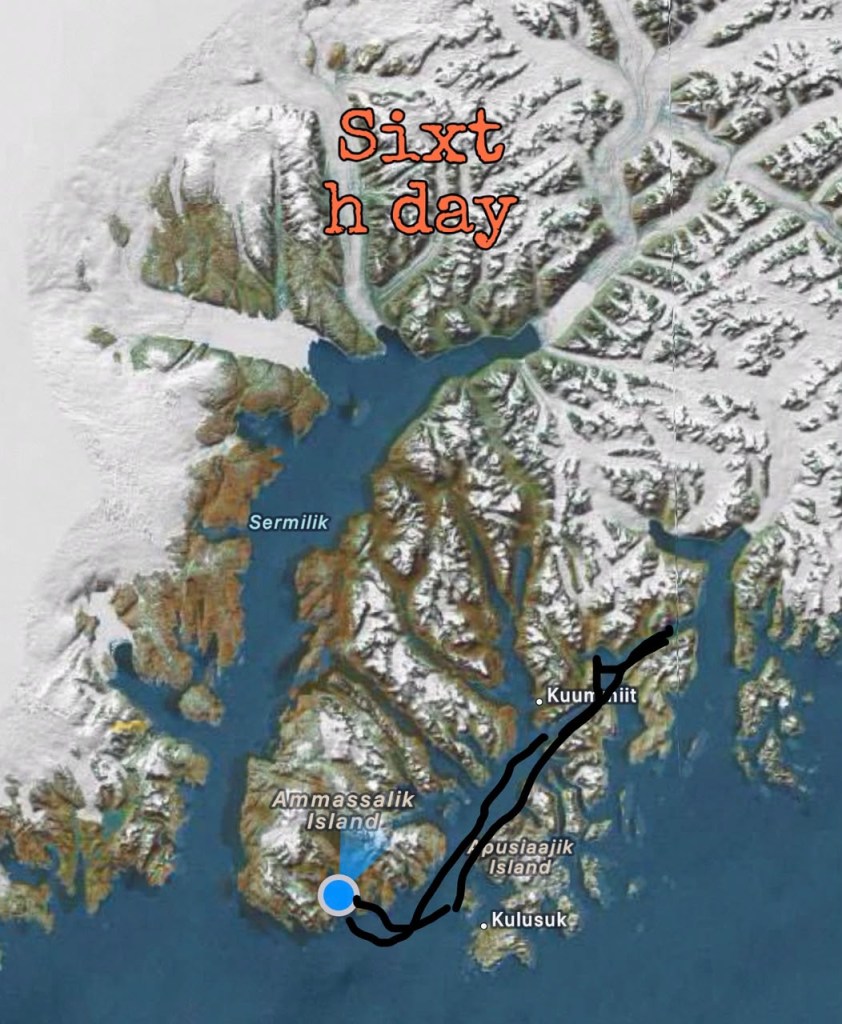
Away from Tasiilaq and the small settlements, there was very little to remind us of the modern world. Just mountains, ocean, ice and wildlife. That sense of isolation is becoming increasingly difficult to find, and it is one of the things that makes East Greenland so special. Below are the maps of our daily expeditions.
Our time in East Greenland was ultimately about much more than spectacular scenery. It was about photographing a landscape that still feels wild, encountering whales in one of the world’s great Arctic wildernesses, visiting tiny Inuit communities, exploring abandoned settlements and discovering the remnants of a much more recent human history. And, of course, it was about a shared passion for photography.
Every day brought new possibilities. The light changed constantly, the ice was always moving, whales appeared without warning, and the weather could transform the landscape within minutes. That is precisely what makes a place like East Greenland so rewarding. You cannot control the conditions. You cannot predict what will happen next. You simply have to be there, watching, waiting and ready when the Arctic decides to put on a show.
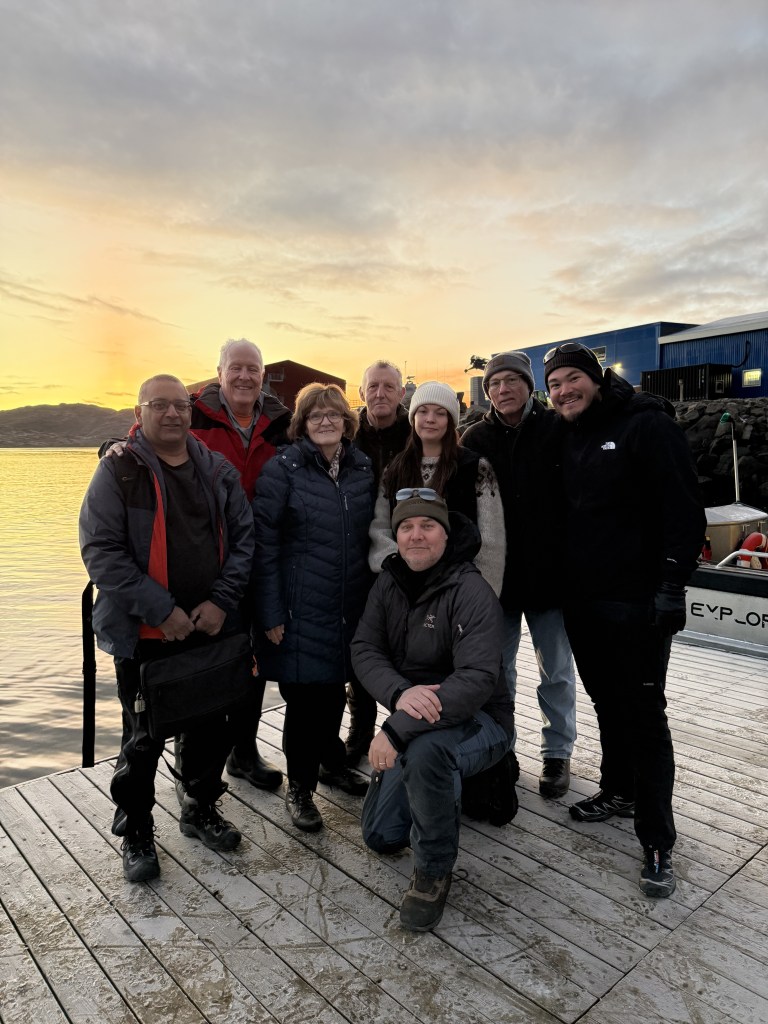
For nine days, East Greenland gave us an extraordinary combination of icebergs, mountains, whales, remote communities, abandoned history and some truly spectacular Arctic light. It was a privilege to experience this remote corner of Greenland — and an even greater privilege to photograph it with such a fantastic group of passionate photographers.
There are very few places left on Earth where you can travel deep into a wilderness this vast, this remote and this uncompromising. In April next year, I’ll be returning to Svalbard for an extraordinary Arctic photography expedition — travelling deep into the frozen wilderness as winter slowly gives way to spring. And there are now only a limited number of single cabins remaining.
This isn’t Summer Svalbard. April is something completely different. The fjords are still frozen. The sea ice stretches towards the horizon. The mountains are buried beneath snow. And the Arctic sun has returned, creeping higher each day and bathing the landscape in extraordinary light. This is the Svalbard that exists in the imagination — a vast, frozen wilderness where the next kilometre of track can reveal something completely unexpected. There are no crowds. No prescribed route that we have to follow. No guarantee of what we’ll find. And that’s exactly the point.
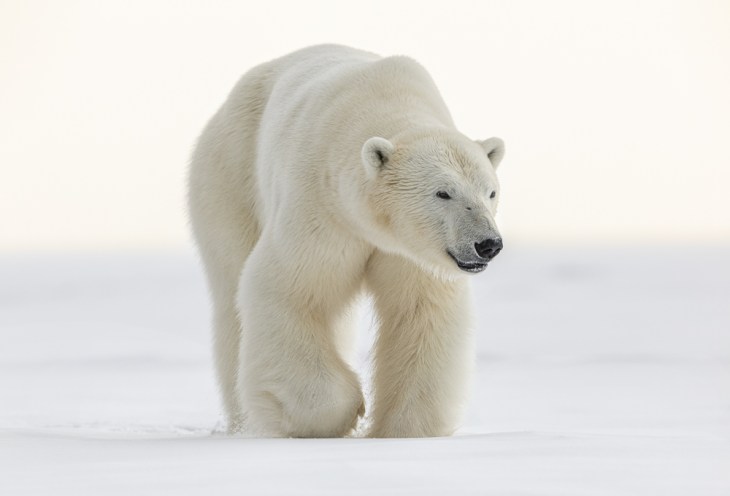
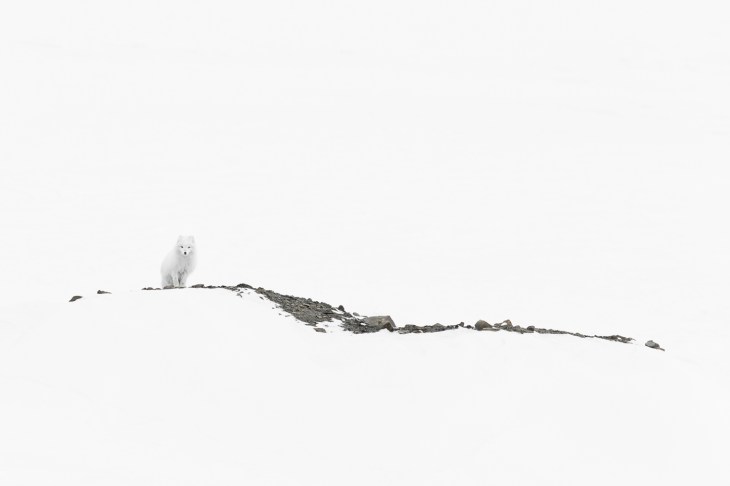
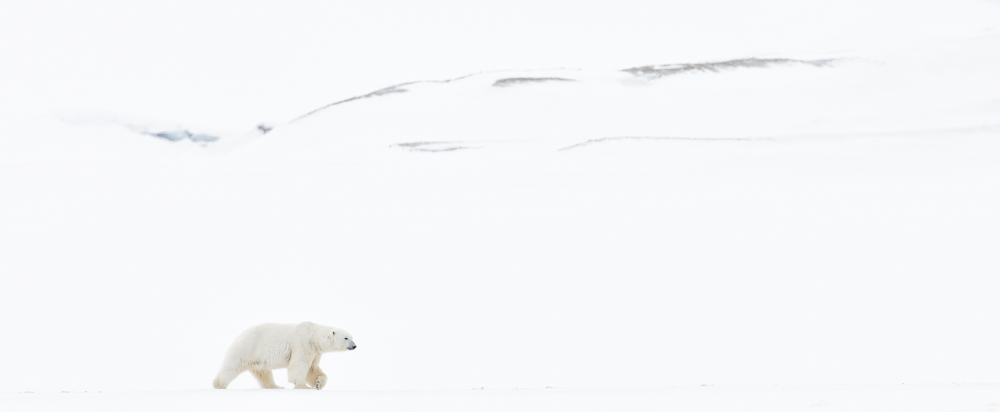
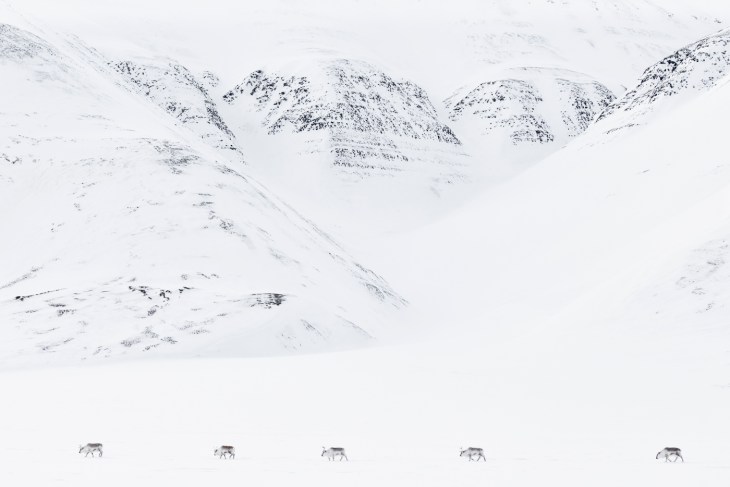
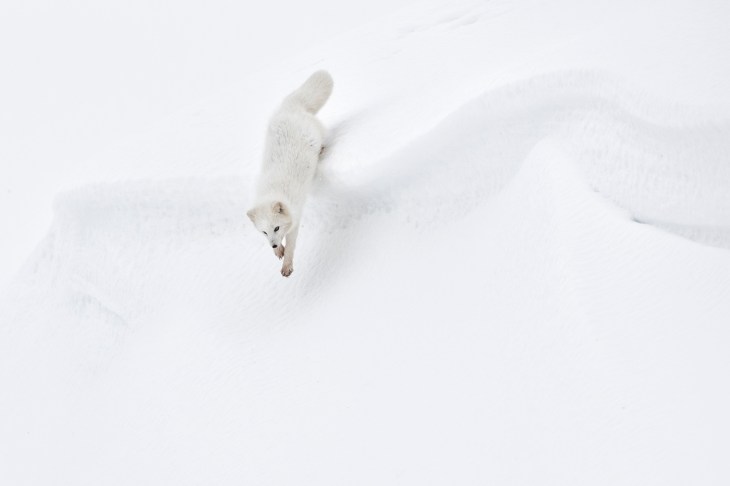
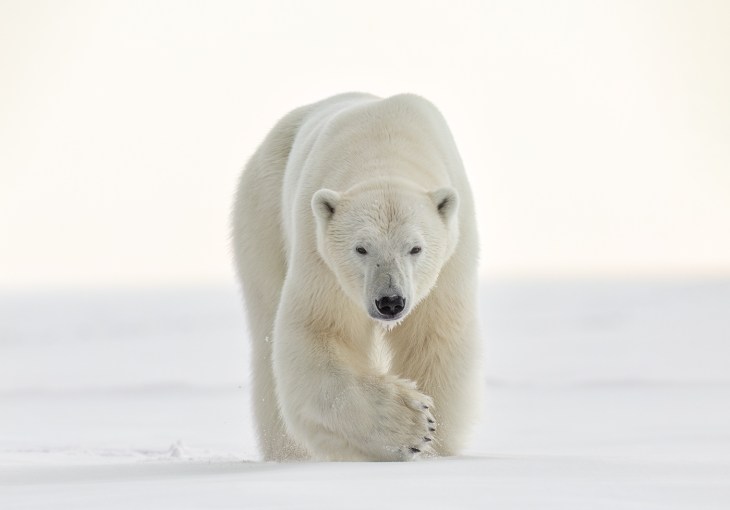
Svalbard is home to some of the most iconic wildlife on the planet. Polar bears. Arctic foxes. Walrus. Svalbard reindeer. Arctic birds. But this isn’t a wildlife park. These animals are wild, elusive and perfectly adapted to a landscape that can be unforgiving. Finding them is part of the adventure. Perhaps we’ll discover fresh polar bear tracks crossing the sea ice. Perhaps an Arctic fox will appear against the snow. Perhaps we’ll encounter walrus hauled out on the ice. Or perhaps, after hours of searching, a distant white shape will appear on the horizon. A polar bear. Those are the moments you remember. Not just because of the photograph you bring home, but because of where you were when you made it.
For photographers, April offers something truly remarkable. The sun remains low enough to produce beautiful, directional light across the landscape, while the returning daylight gives us long hours in which to explore. Snow-covered mountains glow. Ice becomes blue. Shadows stretch across frozen valleys. And when clouds and blowing snow arrive, the landscape can change within minutes. The Arctic doesn’t need to be improved. You simply need to be there when the light happens.
This expedition isn’t designed around ticking locations off a list. It’s about being in the field. We travel by expedition ship and have the freedom to explore the frozen landscape, following wildlife tracks, weather systems and promising light. Sometimes we’ll travel for hours. Sometimes we’ll stop because the light is extraordinary. Sometimes we’ll wait. And sometimes the Arctic will give us absolutely nothing. That’s wilderness. And then, without warning, everything can change. A fox appears. A bear emerges from the distance. The clouds part. The mountains light up. And suddenly you realise exactly why you came.
I deliberately keep my Arctic expeditions small. That allows us to spend more time in the field, remain flexible and concentrate on photography rather than simply moving a large group from one location to another. Whether you’re an experienced wildlife photographer or simply passionate about photography and adventure, I’ll be there to help you make the most of the opportunities we encounter. My approach is straightforward: No HDR. No focus stacking. No multi-image composites. No artificial recreation of the moment. Just real photography, made in the Arctic, in the conditions we actually experience.
There are holidays. There are photographic trips. And then there are experiences that become stories you tell for the rest of your life. Standing on an expedition ship deck in the middle of Svalbard’s frozen wilderness, surrounded by mountains and sea ice, with the Arctic light stretching across the horizon, is one of those experiences. You don’t know what you’ll find. You don’t know what the weather will do. You don’t know whether the next ridge will reveal a fox, a reindeer, a walrus — or the animal everyone dreams of seeing. But that’s what makes it real.
If you’ve been thinking about experiencing Svalbard, April is one of the most extraordinary times to do it. The wilderness is still locked in winter. The sea ice is still present. The wildlife is moving through its frozen world. And the Arctic light is returning. I have only a limited number of single cabins remaining for this expedition. If you’d like to join me, I’d love to have you along. Come and experience Svalbard before the Arctic summer arrives. Come looking for the impossible. Come into the Arctic.
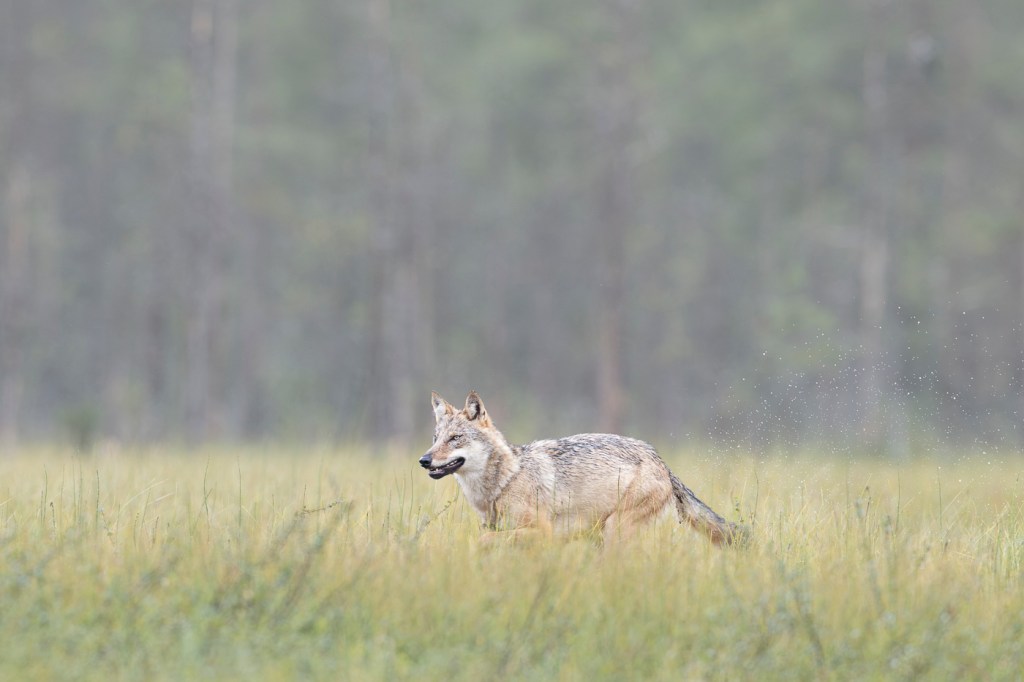
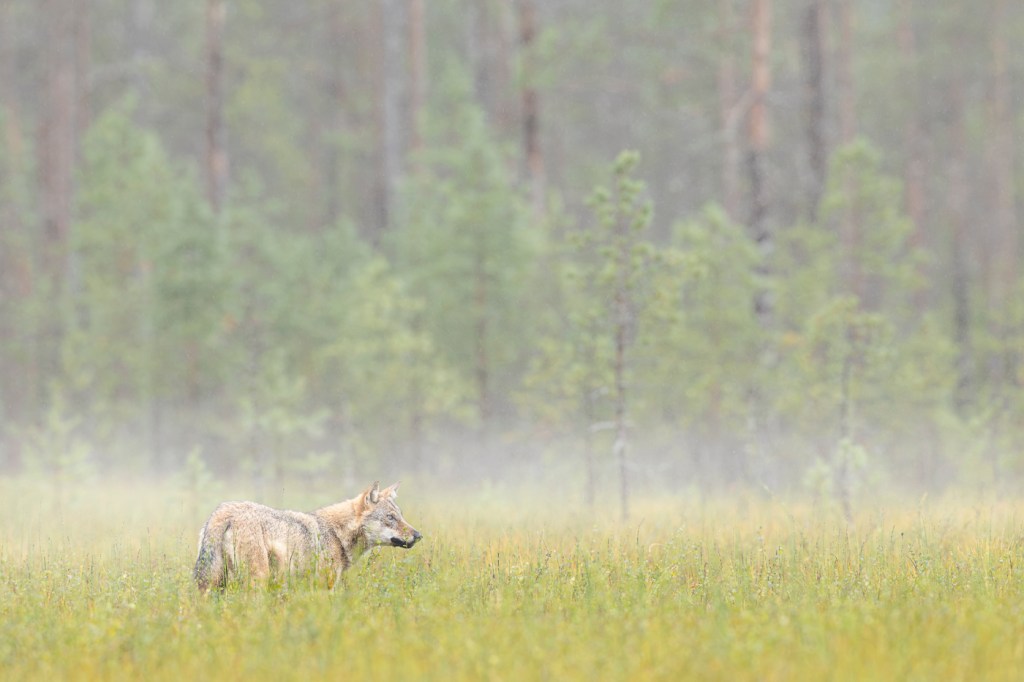
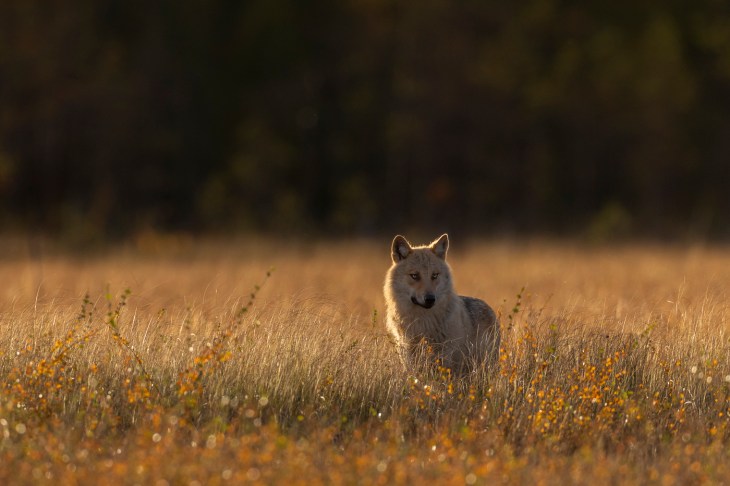
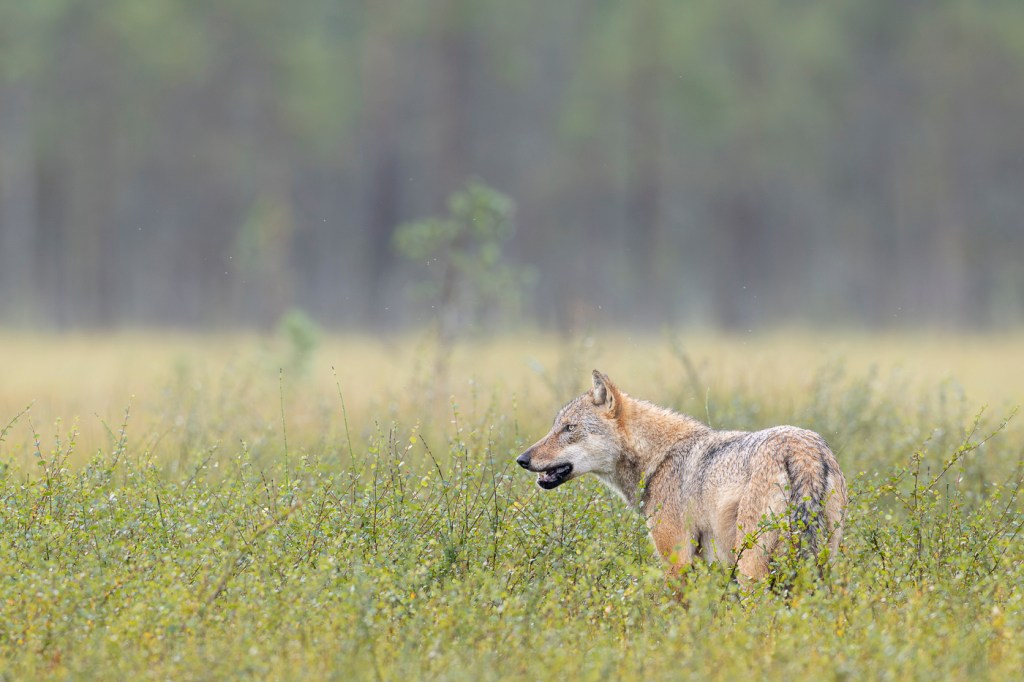
In August 2026, I ran my semi-annual workshop in Finland to photograph wild wolves, brown bears and wolverines in the remote Taiga forests of northern Finland. This is a workshop I have been running for many years now, and is always one I look forward to. Finland remains one of the most underrated destinations for wildlife in my experience and always offers very special encounters. Our workshop ran for 8 days / 7 nights from August 1st until August 8th, with the group spending the week photographing from a series of private wildlife hides. We also had an extensive post-production seminar at the conclusion of the worskhop.
This region of Finland is one of the few places in the world where you can reliably photograph both wild wolves and brown bears in their natural Taiga forest habitat. The setting provides an extraordinary photographic environment, with dense coniferous forest, mist, low evening light and the possibility of unexpected encounters at any time.
At this time of the year, the sun is setting around 10pm, and the wildlife is most active in the evenings. As such, we spent our time in the hides between 4pm and 10pm each evening. We were fortunate this year to have some significant rain during the workshop, which made for really moody, atmospheric photographs.
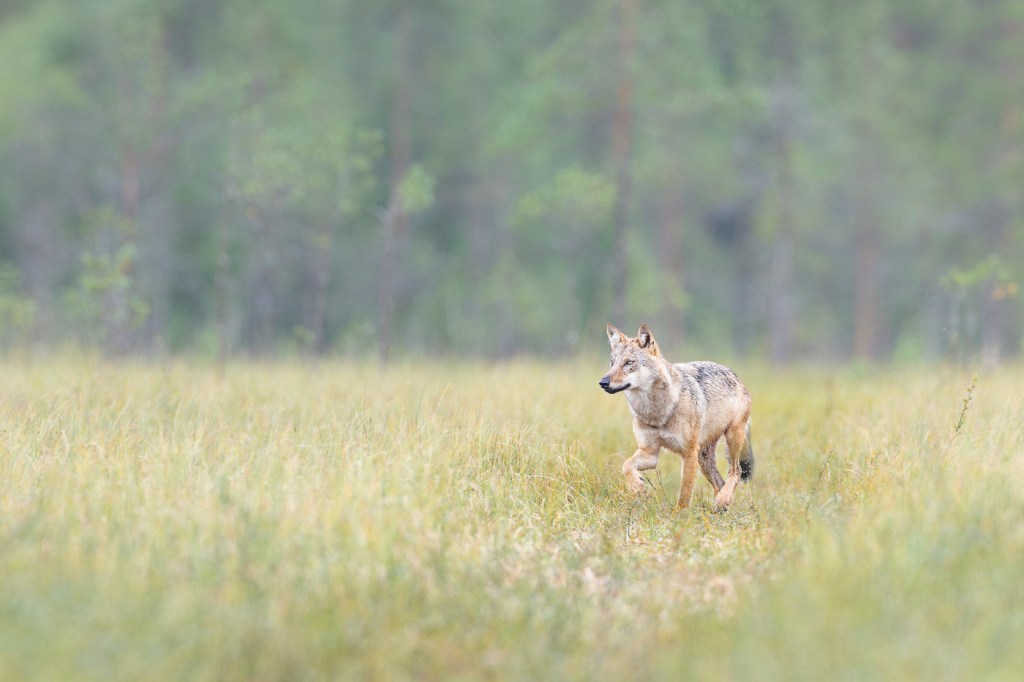
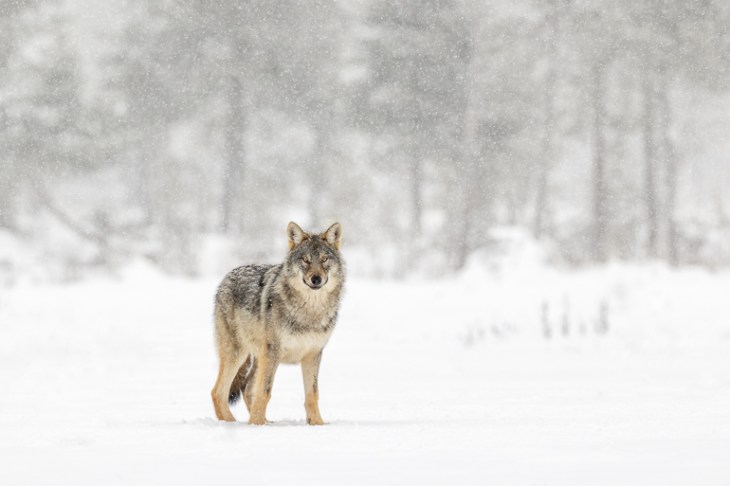
Over the course of the week, we had photographic encounters with more than half a dozen individual brown bears and at least four different wolves. As always, it is important to emphasise that these are genuinely wild animals. They are completely free to come and go as they please, and there are no guarantees of sightings. The unpredictability of these encounters is an important part of what makes photographing them so rewarding. Every appearance is on the animal’s terms, and patience is essential.
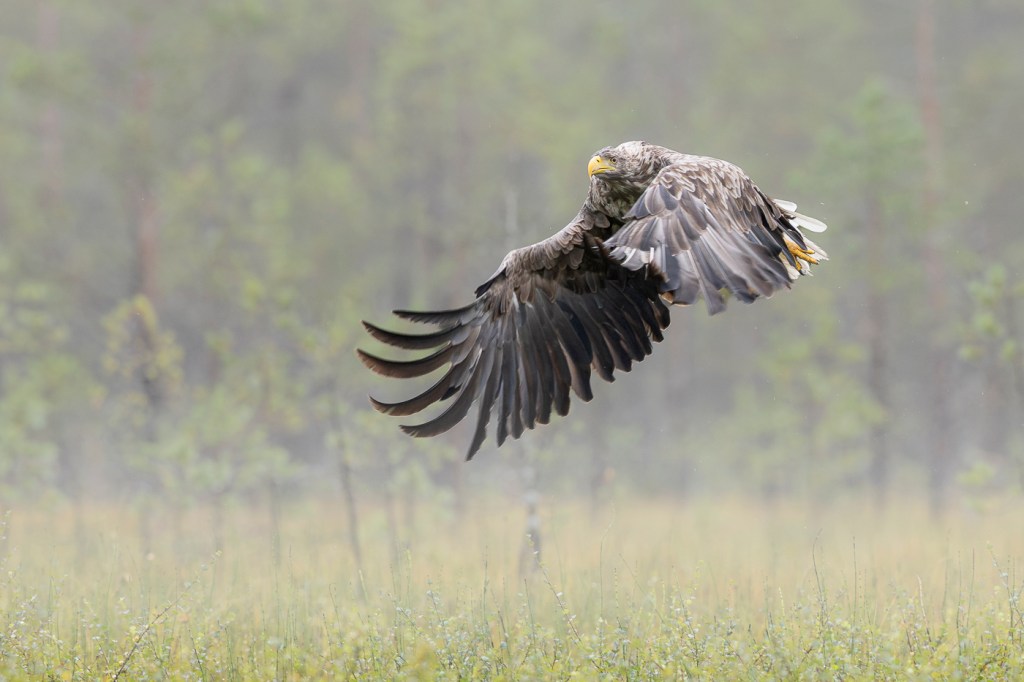
The private hides provided excellent opportunities to work at close range while remaining unobtrusive to the wildlife. This allowed us to concentrate on behaviour, interaction and environmental portraits rather than simply recording sightings. The long hours spent quietly waiting in the hides were repeatedly rewarded with memorable encounters. One such encounter was with a white-tailed eagle that landed in the grass directly in front of my hide position, facilitating the opportunity to capture it as it took off into the wind.
The changing light of the northern summer also provided a wonderful range of photographic conditions. The extended daylight hours allowed us to continue working late into the evening, while the atmospheric conditions of the Taiga created opportunities for images with a strong sense of place. This area of Finland is truly virgin forest that provides for opportunites that extend beyond the wildlife.
For the duration of the workshop, we stayed at a nearby, comfortable hotel with modern amenities. This provided a welcome base between photographic sessions and made it possible to concentrate fully on the wildlife and photography throughout the week. Typically, I recommend longer telephoto lenses for this workshop (500mm and 600mm are ideal), but it is always worth keeping something shorter handy as there are times the wildlife approaches quite close to the hides. My preference is always to photograph with two cameras – one with a 600mm lens and a 2nd with a mid-range to telephoto such as a 100-300mm lens.
Once again, Finland’s Taiga delivered an outstanding week of wild wolf, and bear photography. With multiple wolf encounters and more than half a dozen bears, as well as several eagle encounters, the August 2026 workshop provided an exceptional collection of wildlife encounters and photographic opportunities in one of Europe’s great wilderness environments.
We are returning again next year in both August and November for two more workshops to this wonderful region of Finland. The August trip is set up for optimal fall colour and our November trip is set to coincide with what should be arrival of the first snow. If you have ever wanted to photograph wild wolves and bears in a stunning forest setting, then this is absolutely the workshop for you. Places are already extremely limited on both trips, so please get in touch if you would like to join us.
It has been a long time since I last did a yearly workshop and expedition update, and the year is just going past at hyper speed, so this is well and truly overdue. With the first half of 2026 now well and truly behind us, I am looking into the remainder of the year and into the coming 2027 year.
All of our workshops and expeditions for 2026 are already sold out – thank you to those of you who are joining us. I am really looking forward to our upcoming trips. For the remainder of 2026, we are running our Finland Wolves and Bears workshop, a workshop to south-eastern Greenland to photograph Icebergs and landscapes and then our Gould Bay Antarctica Emperor Penguin expedition.
For 2027, we are kicking off with a winter Mongolia workshop for the Pallas’s cat in the Eastern Steppe region. This is a workshop we pioneered and have been offering for nearly ten years now. We take just five people on this trip to ensure the very best photographic experience, and we have just three places remaining before the trip sells out.
In February I will be leading two back-to-back workshops for Arctic Fox in the Hornstrandir Nature Reserve in Northern Iceland. There are only very limited places on both these workshops before they will both be sold out. If you have ever wanted to photograph these incredible mammals in a stunning winter setting, then this is the workshop for you. Be sure to check out the video below that will give you a wonderful idea on what this is like experience. I also just published a deep dive podcast episode on photographing Arctic Fox.
In April, I will be leading an expedition to Svalbard in late Winter/early Spring to photograph Arctic wildlife, including polar bears, Walrus, reindeer, and dramatic Arctic landscapes. This is a ship-based expedition with only limited cabins remaining. Late April is the ideal time to travel to Svalbard with the low angle of sun and the landscape still wearing its winter armour there are outstanding opportunities to create powerful and emotive photographs.
In May I will lead a ground level wildlife masterclass to Zimanga in South Africa. This workshop has long been sold out, but we are running it again in 2028 and full details are now on the website. From South Africa we will travel to Namibia where we are offering a small group experience to photograph Namibia at some of its most stunning and remote locations (including some only accessible via light plane). There are only two places remaining on our Namibia trip before it will also be sold out.
In June we are doing a great migration safari to Tanzania for a small group of just five photographers. Only one place remaining before it will also be sold out. This workshop will take place in an exclusive private high-end tented camp for seven nights / eight days. Africa’s Big Five can be seen and photographed in this region. In addition, there are many other mammals, reptiles and birds, including eagles, owls and more. Lions, leopards, cheetahs, and Cerval are regularly seen and photographed. You can also expect many encounters with elephants, giraffes, rhinos, Cape Buffalo, zebras, and other wildlife on the plains.
In July we are returning to Mongolia in Summer to photograph Pallas Cat kittens. Like our winter trip this workshop will take us into the Eastern Steppe region in search of Pallas cats and their newborn kittens. At this time of the year Mongolia is warm to to hot and there are outstanding opportunities to photograph the kittens when they are most active in the early morning and late afternoon.
In August we are returning to Finland for our Wild Wolves and Bears workshop. This is the workshop for you if you have ever wanted to photograph wild wolves and bears. Be sure to check out our video from our 2025 workshop below. This is a highly immersive workshop where we spend the majority of our time photographing from hides.
Later in August we are running a unique 18-day expedition to the archipelago of Svalbard to photograph Polar Bears. 18 days is unique in Svalbard and provides us an opportunity to spend an extended amount of time in the northern pack ice. If you have ever wanted to photograph Polar Bears on the pack ice, in their natural enviroment then this is absolutely the expedition for you. There are just two places remaining before this expedition will be sold out.
In September we are running an all new wildllife expedition to South Georgia. It has long been a dream of mine to lead an expedition to South Georgia in September. At this time of year, the mountains and landscape will be blanketed in snow, offering a truly extraordinary opportunity to photograph King Penguins in a winter setting! Full details on this new expedition can be found HERE.
After South Georiga I will return to Australia for two back-to-back small group workshops to the Great Ocean Road in Victoria and Tasmania. The Great Ocean Road region of Victoria is renowned around the world as offering world-class landscape imagery of its sandstone sea cliffs. Tasmania is a primordial landscape of relatively untouched beauty. It offers outstanding opportunities to create iconic photographs of its rugged coastline, ancient forests and dramatic mountain peaks. During this workshop, we will visit multiple locations around the island, offering opportunities to photograph a variety of landscapes in different lighting conditions.
In November I will lead my annual expedition to Gould Bay in Antarctica for Emperor Penguins. This is a fly in fly out expedition that takes us to the world’s most southerly Emperor Penguin colony deep in the Weddell Sea. The sea ice of Gould Bay in the Weddell Sea is the best place in the world to photograph Emperor Penguins under the midnight sun.
Then, to finish the 2027 year, I am running an all-new workshop to Greece to photograph the iconic Dalmatian Pelicans. Northern Greece offers one of Europe’s most extraordinary settings for wildlife photography. From the dramatic raptor landscapes of Dadia National Park to the serene waters of Lake Kerkini, this carefully designed journey focuses on two remarkable photographic experiences: powerful birds of prey and intimate encounters with the Dalmatian Pelican. This small-group expedition is designed for photographers who value patience, repetition, and optimal light conditions. With only a handful of participants, the itinerary allows time to refine compositions, experiment with techniques, and capture both dynamic action and quiet moments in nature.
Please get in touch with me directly if you are interested in any of the few remaining places on next year’s workshops and expeditions. Be sure to also check out the portfolios on my website to get an idea of the sort of photographs you can make on this expedition.
Introduction: Gloves are a constant source of frustration for any photographer who has ever photographed in really cold climates (not just cool climates). In the 25+ years I have been photographing in the world’s polar regions, I have yet to encounter the perfect glove. It is not for lack of trying; my cupboard is full of gloves I have purchased over the years that have subsequently failed the field test and now gather dust while they await their final journey to the great clothing recycle bin in the sky. Like the perfect Cold Weather Boot, the perfect Cold Weather Glove for photography simply does not exist. The ideal glove is therefore a compromise based on user needs, preferences, and environmental considerations. I previously published a podcast (Episode 92 – Cold Weather Photography Gloves) on this topic back in February 2024, but much has changed in the two-plus years since then, and an extensive update is in order, along with a deep dive podcast on this topic (coming soon). My years of glove frustration have finally boiled over, and in this blog post and the deep dive podcast, I am going to dissect and fully analyse the problems and discuss at length how to develop the ideal cold-weather photography glove. I am also going to discuss some of the popular gloves on the market and dissect the many issues and problems with them.
Transparency: For the sake of transparency, you will not find affiliate links here. The internet is awash with websites that tell you, ‘we have reviewed X products, and these are the best‘. Such websites and reviews are nothing more than thinly veiled attempts to advertise products and make money through affiliate links. I have no interest in selling gloves, boots or bags under the table to make extra money. What you will find here are my straightforward recommendations based on my experience – nothing more.
The Problem: Gloves for cold-weather photography are more problematic than boots because photographers have a very specific need to control our cameras whilst staying warm and dry. This requires a glove that provides a high degree of dexterity (at least in the thumb and forefinger) whilst still offering significant warmth and protection from the elements. Over my years in the field, I have been continually frustrated by over-hyped (and over-priced) cold-weather gloves that fail to deliver on their extensive promises. Gloves marketed to photographers as the ‘perfect photography glove’ are, frankly, (and truthfully) rubbish in the vast majority of cases. Fold back fingers that get in the way (who on earth thought that was a good idea?), and allow ingress of water and snow are but a small example. Whoever came up with the concept of the fold-back finger has clearly never tried to work in blizzard or sleet conditions, whilst lying in the snow and trying to photograph wildlife with a long lens. Whilst fold-back fingers are a woeful design decision, the list of poor design choices in so-called ‘photography gloves’ does not stop there. Gloves that don’t fit properly are commonplace; those that are unfit for purpose, are not windproof, not waterproof, lack dexterity and tactility where it is needed, lack insulation where it’s needed, consist of a liner that is too thin have zippers that cannot be operated by gloved fingers, zippers that break, touchscreen liners that dont work, and are otherwise utterly useless, and the list of problems goes on.
The Problems Bottom Line: Ultimately, the problem is that none of the gloves on the market has been designed by a photographer who has significant cold-weather photographic experience. Most are re-purposed hunting gloves or gloves designed by outdoor companies for various ‘outdoor activities’ (hiking, kayaking, mountaineering, ice climbing, etc). None of which are designed and built from the ground up for cold-weather photography. Those gloves that do claim to have been designed by photographers are, in my experience, garbage. They might be fine if it’s +5 degrees and you are on a tripod, but they are utterly useless in real cold-weather environments. Photographers working in cold climates have very specific needs for their gloves, and these needs differ significantly from those of hunters and other outdoor activities. These needs are simply not being adequately addressed by any manufacturer to date. Understanding these needs is key to good design and to creating a glove fit for purpose.
A Call to Arms: If there is any manufacturer out there who wants to collaborate on the ground-up design of a cold-weather glove system for photographers (a huge market opportunity), please reach out to me.
Breaking Down the Problem: If we analyse the problem that photographers who want to operate in cold environments face, we can break down our needs as follows:
We require a high degree of touch sensitivity and dexterity in the first pad of our thumb and forefinger (predominantly on our right hand only) so that we can easily and reliably feel the camera controls under our fingers. These two fingers also need touchscreen-support fabric, and for the Canon EOS R1 and EOS R3, a fabric that specifically works with the I.R touch-sensitive Auto Focus button on the back of the camera. To my knowledge and testing, 66º North are the only company that makes a fabric that reliably works with the touch-sensitive Auto-focus button on the EOS R1 and EOS R3. Unfortunately, this fabric is only found on a thin liner that is otherwise useless in snowy environments, as it gets wet within a few minutes. These gloves also have quality control issues with the stitching coming undone. I wrote about these in a previous blog post on the EOS R1 HERE.
On the other three fingers on each hand, we require a high degree of warmth to protect them from the cold. Ideally, this would also be extended to the thumb and forefinger, leaving just the first pad of each with the thinner material noted above in point 1. This extra warmth is even more important on the left hand, which frequently supports a metal lens (or lens foot or tripod) that will be extremely cold in cold weather.
The entire glove needs to be windproof and waterproof1. Not wind or water resistant – but windproof and waterproof. Cold-weather wildlife photographers, in particular, spend a lot of time lying on the ground in the snow. As soon as snow sticks to a merino wool liner or other non-waterproof material, it melts in the body’s residual warmth, and the glove gets wet, leaving cold, wet fingers and rendering it useless. Landscape photographers who often shoot in the rain will be familiar with the problem of non-waterproof gloves. These days, I will instantly dismiss a glove if it’s not waterproof (or if it cannot be made at least water resistant with a spray), as it’s unfit for purpose (see footnote below).2
The seal around the wrist of the glove should be firm, but not tight on the wrist to keep out snow. The seal around the wrist should also be warm. The glove cuff should be designed to fit under an outer jacket, with the cuff against the wrist, not designed to go over the top of the jacket. Gloves with a large snow gaiter-style entry are useless for photographers, as the large opening invariably doesn’t fit over a bulky outer jacket, causing it to bunch up and let snow in.
Battery Heated Gloves: Personally, I find battery-heated gloves a real nuisance. Typically, the batteries are housed in a large snow gaiter around the cuff, which flops annoyingly with the additional battery weight and invariably bunches up against an outer jacket. None of the battery gloves I have tried provides sufficient tactile control for the camera, and if they do, they are not waterproof. In my experience, the batteries rarely last a full day of fieldwork and require daily charging (I have tried a few different brands over the years). At this point, I feel I just don’t need or want anything else in my life that requires daily charging. Nor should it be necessary to use battery heaters if the glove is well designed and fit for purpose.
How We Experience Cold: It is important to note that we all experience cold differently. For me, my hands rarely feel the cold, and my tolerance for cold in my fingers seems unusually high. I frequently go without gloves while others reach for their warmer set. Your tolerance for the cold may very well be different to mine, and you should keep that in mind when making any buying decision. Another important point is that Nature photographers (I include landscape and wildlife in that genre) are typically not all that active in the field. We may hike to a location that requires some degree of activewear, but we often spend a long time waiting outdoors for wildlife or the right light. Thus, the choice of gloves is critical to our comfort level in the field. Many products from active-wear companies are simply inappropriate, in my experience, for cold-weather photography because they do not account for the significant time photographers spend inactive and just sitting or standing around in the field.
The Proposal: I propose that the perfect glove for cold-weather photography should be a two-stage system. That is, it should comprise a base-layer glove and an outer glove (or mitt) that slips over the top of the base layer when temperatures really plummet (let’s say below -10º Celsius, though this temperature will vary by individual).
The Base Layer: The base-layer glove should be designed and constructed around points 1, 2, 3, and 4 above. It should have sufficient insulation in the fingers for temperatures down to at least -10º Celsius. This means it needs to be better insulated than a merino wool layer alone. The first pad of the thumb and forefinger still needs to be thin enough to provide adequate tactile control of the camera, but the rest of the thumb and forefinger can be as insulated as the other three fingers. On the back of the palm, there should be a small pocket with a velcro closure (I prefer velcro to magnets, as it keeps out snow and water better) to optionally house a chemical hand warmer. The back of the palm is the ideal place for a chemical warmer, as it’s over the veins that carry blood to the fingers. This sort of pocket is already found on several base-layer gloves marketed to photographers (which are not waterproof or windproof and thus inappropriate).
The Second Layer: When temperatures really plummet, there needs to be a secondary layer or ‘mitt’ that can be pulled over the top of the base layer. This should not be a fold-back mitt attached to the base layer (as that just gets in the way), but an entirely different mitt pulled over the top of the base layer. This oversized mitt should contain significant insulation and be both windproof and waterproof. This mitt should have a significantly oversized snow gater entry that can be easily pulled over the top of a bulky outer jacket without bunching. Additionally, it should have the ability to slip the thumb and forefinger out through a ‘slit’ so that the photographer can maintain tactile control of the camera, but can put their fingers back inside the mitt if they get too cold. Yes, that means there will be an entrance in the second layer that snow and water can enter, but remember, the base layer is also waterproof in this design.
The Current State of Play: The above glove system, as documented, simply does not exist (as of this blog post), and until a manufacturer takes this feedback on board and builds the ideal glove, photographers will continue to struggle with gloves that are not truly fit for purpose in cold-weather environments.
Additional Design Considerations: Photographers already have a lot of gear to manage. We don’t need to complicate our lives further. Thus, straps and other systems designed to clip gloves to are usually not a good idea. They often get in the way when lying down in the snow and tend to snag on cameras and lenses. A simple clip system to clip a pair of gloves together and to a backpack or jacket is all that is required. Keeping it simple is the key to making the gloves ‘get out of the way’ in the field.
My Current Glove Solution: As noted above, no manufacturer has designed and constructed the ideal glove for cold-weather photography. As such, my current glove system is a compromise based on experience and extensive field testing.
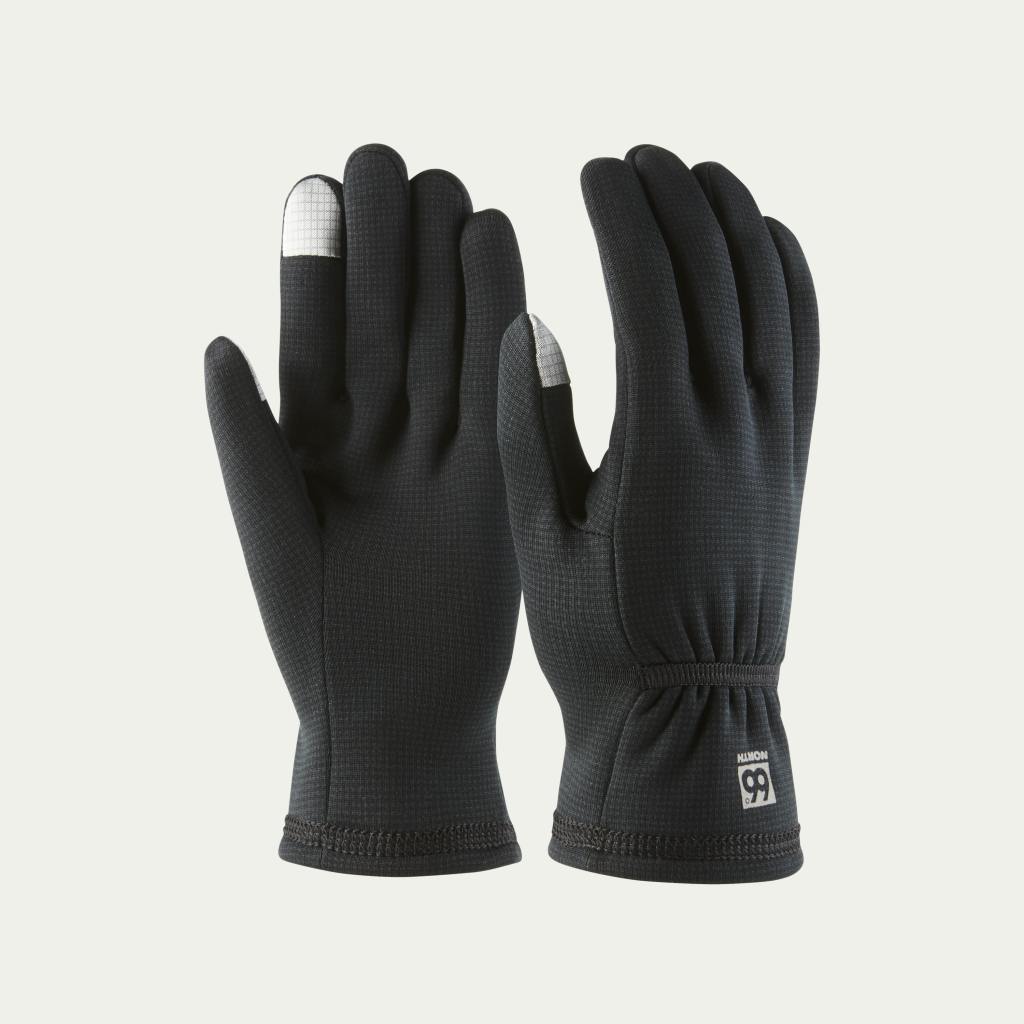
The Base Layer: My current choice for base layers is the 66º North Vik Wind Pro Gloves. These gloves are extremely warm for a reasonably thin liner, but they are not waterproof and need to be treated with a waterproofing spray to make them repel water in the field. They are also extremely expensive for a liner glove (at around $75 USD a pair). However, they are the only gloves I have tested to date that have a touchscreen fabric on the thumb and forefinger, which reliably works with the Canon EOS R1 and EOS R3 I.R Touch Sensitive Autofocus button.
These gloves are thin enough that they provide an extremely high degree of dexterity and tactility for camera control. Once treated with a waterproofing spray, they become sufficiently water-repellent for use in snow, sleet, and rain. In continual or very heavy rain, you may still get wet fingers and hands even with waterproofing treatment. Without a waterproofing treatment, these gloves are not suitable for use in rain, snow or sleet.
In my experience, these 66º North gloves are suitably warm down to about -5 °C without additional glove support. For temperatures below -5º C, I will add a second layer as noted below.
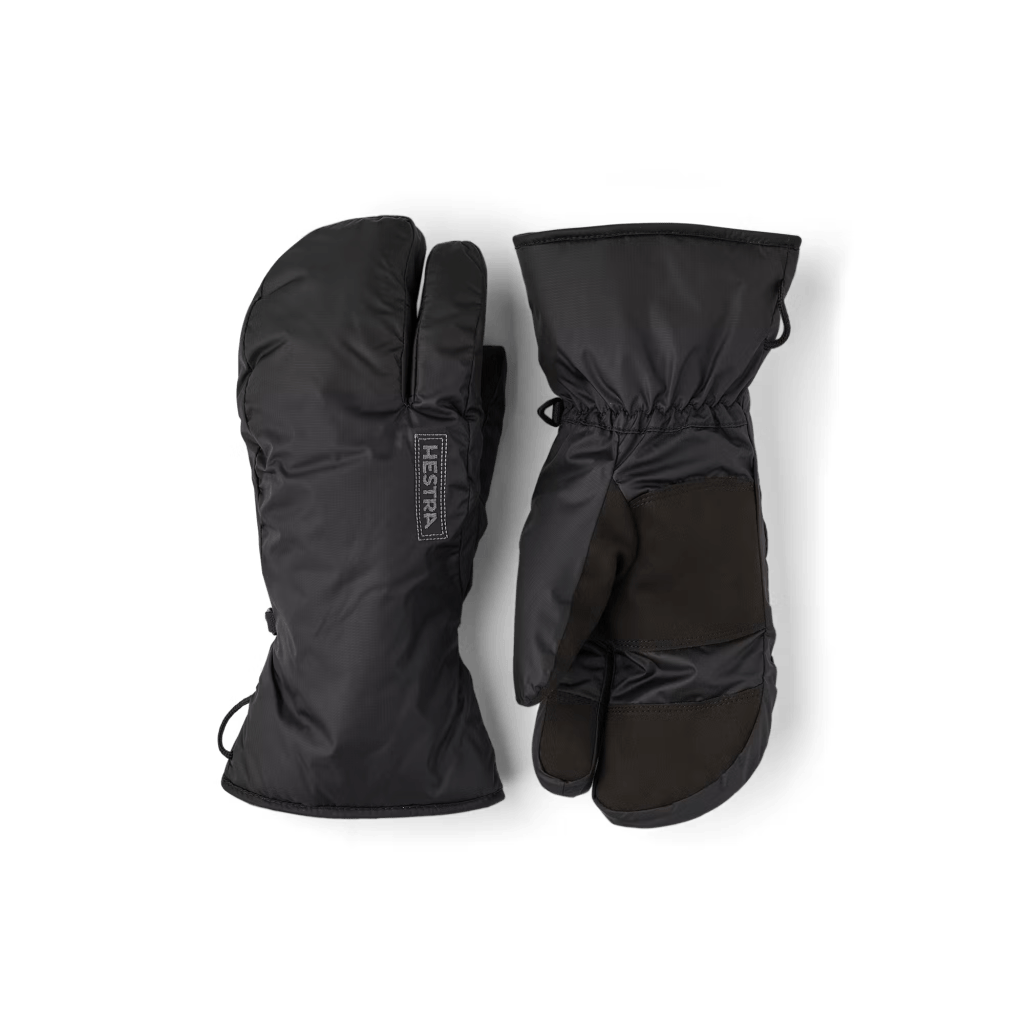
The Mid Layer: My current mid-layer is a pair of modified Hestra Expedition Liner 3-Finger gloves. I use these gloves over the top of the base layer from 66º North when temperatures drop below -5º Celsius. These gloves are incredibly warm and suitable for use (with the liner above) in temperatures down to -35º Celsius, and even colder, depending on your tolerance for the cold. I have modified my pair by making a small 2 cm cut in both the thumb and forefinger on the right hand side so that I can push out my thumb and forefinger to use the I.R touch sensitive pad on the Canon EOS R1.
From the factory, these gloves are not waterproof, but they are quite good at wicking moisture away, and with the addition of a waterproofing treatment, are extremely effective at keeping out snow, sleet and rain in inclement weather. I have not hesitation in using these gloves while lying down in the snow and rain (once treated). They are made from Ripstop polyamide with Primaloft insulation. Reinforced with Chamude in the palm. It has been my experience that Hestra gloves (in general) are extremely well constructed and do not come apart at the seams as many other brands do.
The Outer Layer: My current outer layer is the Hestra Expedition Liner 3-Finger.
Glove Considerations: When assessing the suitability of a glove for my type of photography, I consider dexterity (the ability to control the camera), comfort and warmth for the intended purpose, ease of getting on and off, and long-term durability amongst the most important factors. The ability to withstand water (depending on the intended use) and to keep out snow also plays a major role in my decision-making. Lastly, manufacturer support also plays a role in addressing potential issues. I do not consider price when assessing the qualities of gloves for cold-weather photography since it’s folly to try to save a few bucks at the expense of cold fingers.
Conclusion: Ultimately, the choice of glove is a personal one based on your needs, preferences, and tolerances for the environment in which you work. There are many more gloves on the market that I have not used or tested, and they may or may not deliver great results, depending on your personal needs. There are other gloves I have tested that I feel fail to live up to their claims, so I won’t review or recommend them. The above are products I will stand behind as offering superb performance in their temperature range for cold-weather photography.
Many gloves and liners on the market are not waterproof from the factory, but this does not necessarily make them unfit for cold-weather photography. It is possible, with waterproofing sprays, to make even Marino wool liners highly water repellent. Such sprays typically require reapplication regularly to maintain the gloves’ water resistance. Waterproofing technology has significantly improved in recent years, with many hydrophobic options now on the market. It is possible to treat various fabrics and not just leather for waterproofing and water repellency. ↩︎
I want to tell a recent anecdote about a European company that shall remain nameless (for now) that tried to laughably tell me their photographers’ gloves are not waterproof (a glove marketed specifically for cold-weather photography) because they are designed to be used in temperatures below 0º Celsius when water is frozen. I had to point out to them that it doesn’t matter how cold it is outside; if you get snow on a non-waterproof glove, it will melt from the residual body heat passing through the glove, leaving a wet glove and cold, wet fingers. It took less than five minutes of lying and shooting in the snow with these gloves to end up completely wet through. I also pointed out that photographers can often find themselves on zodiacs in sub-zero temperatures with sea spray, resulting in wet gloves. This was a pair of gloves I (and another photographer I know) returned as ‘unfit for purpose’. To the company’s credit, they did take back the gloves and offered store credit toward other items (which I used for socks, not their gloves!). They have, however, continued to market and sell these gloves to unsuspecting photographers who will no doubt experience wet, cold fingers during field use. ↩︎