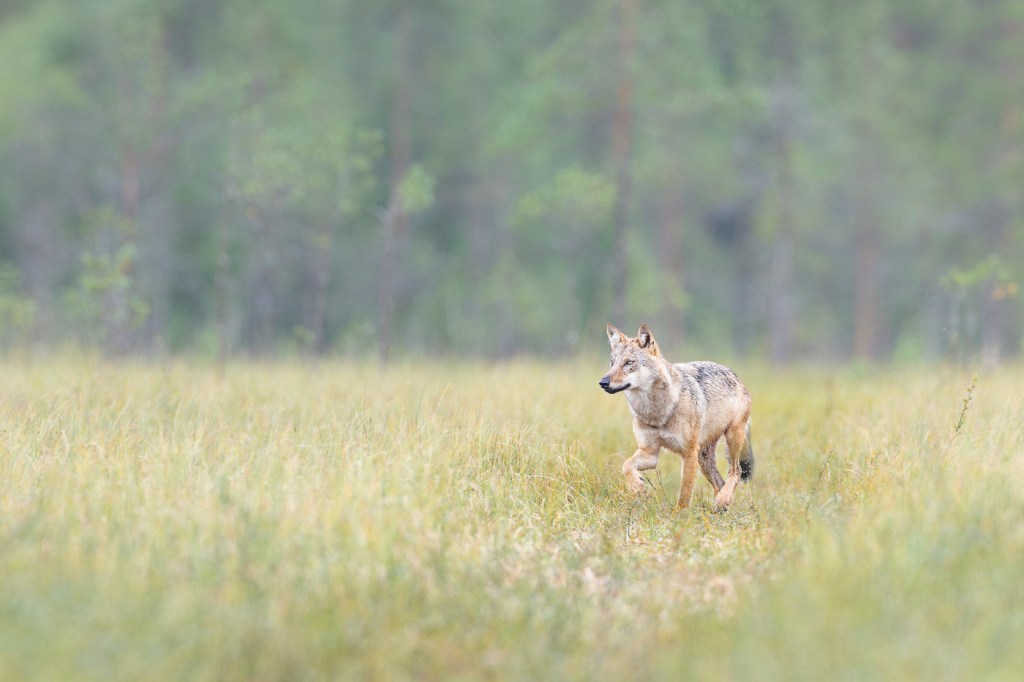
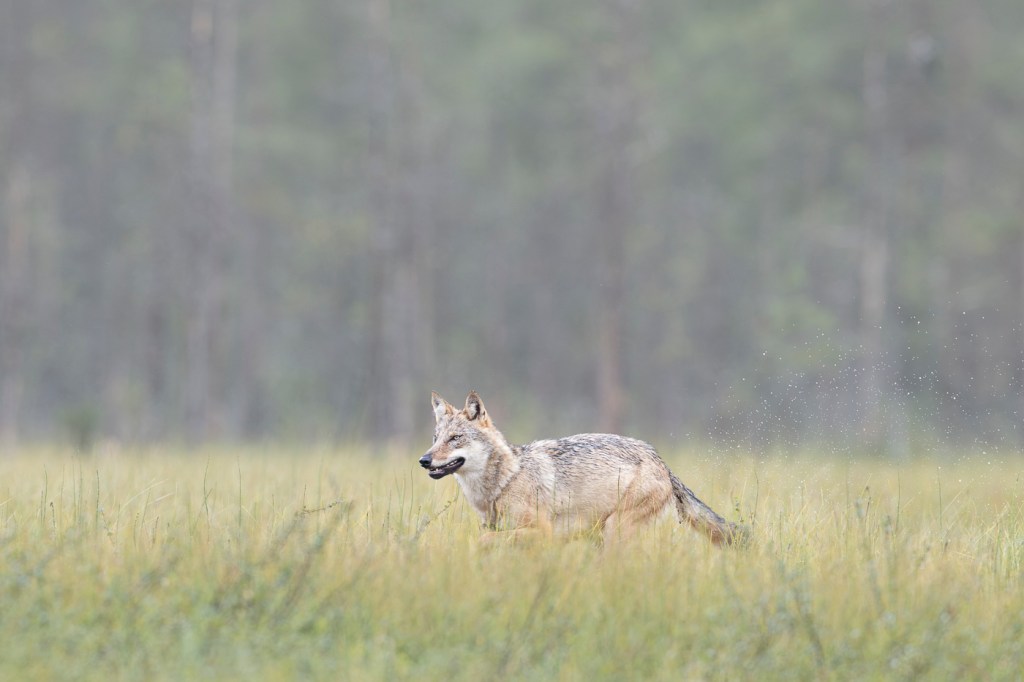
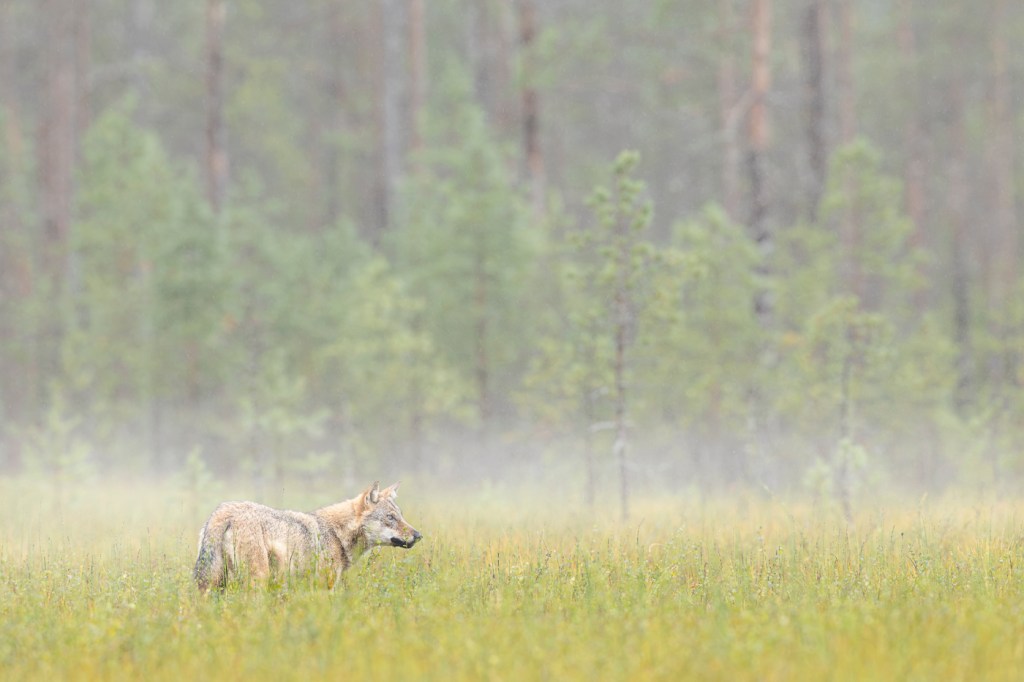
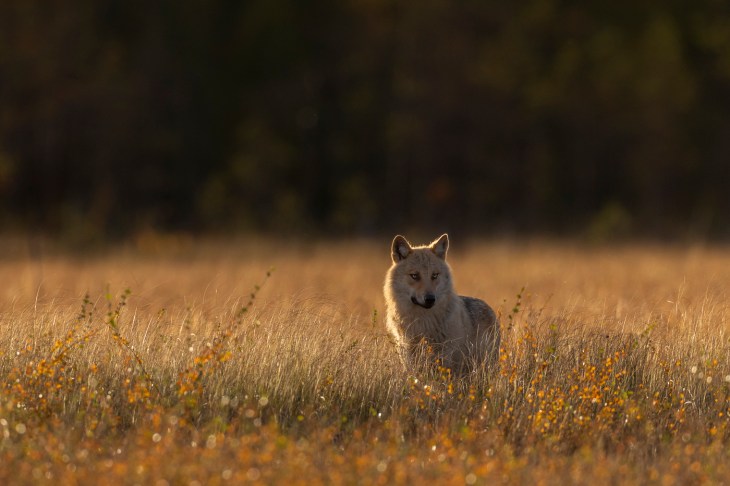
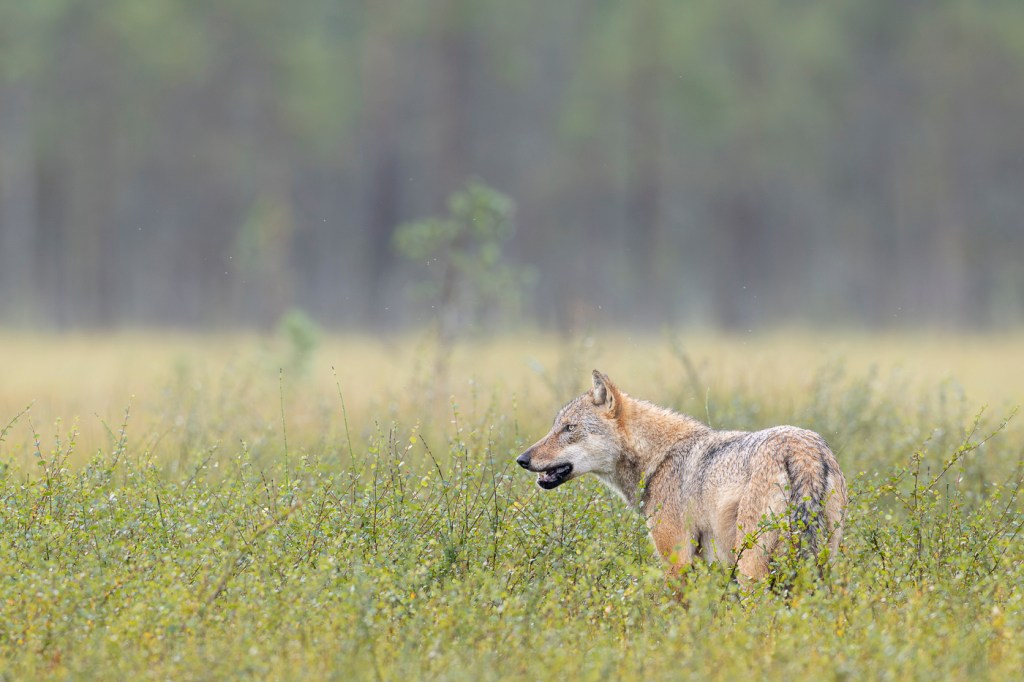
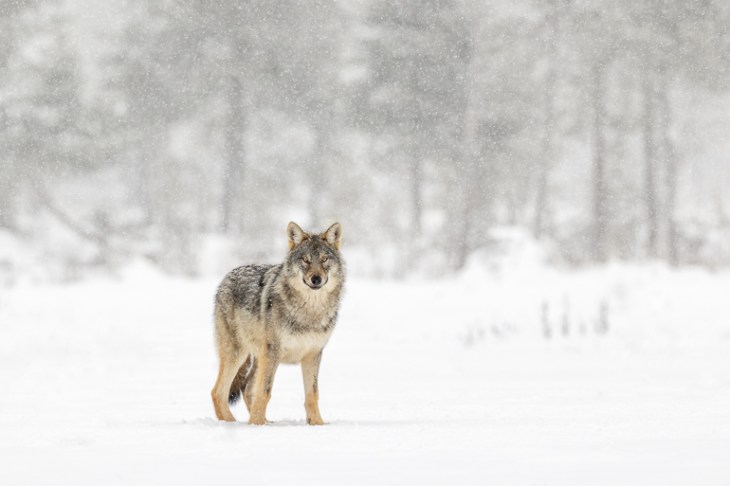
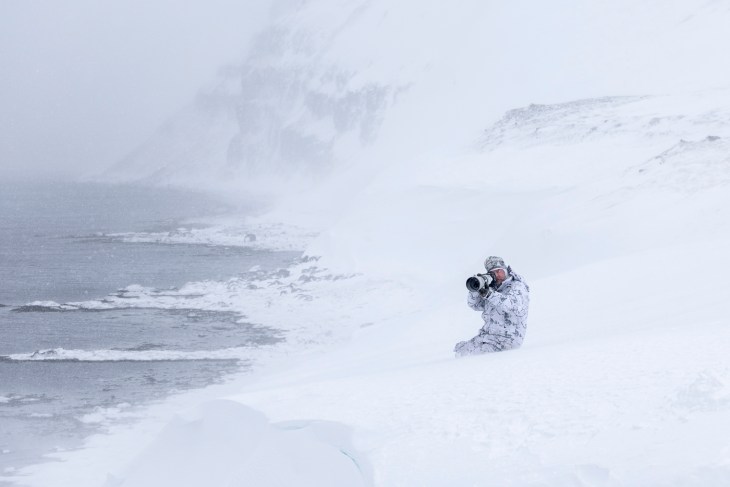
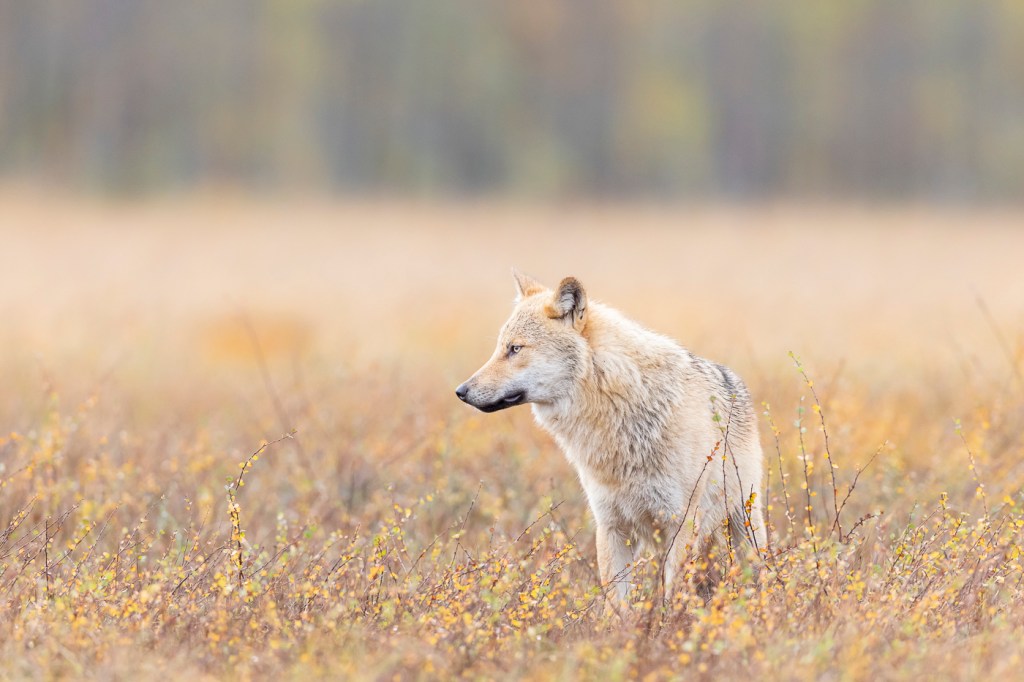
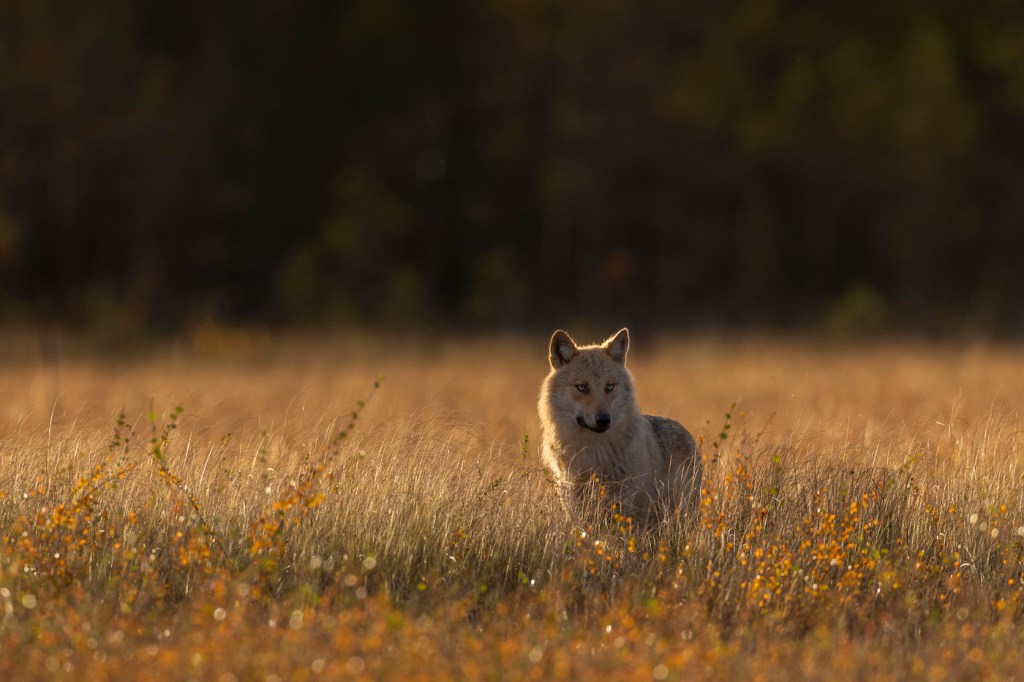
In August 2026, I ran my semi-annual workshop in Finland to photograph wild wolves, brown bears and wolverines in the remote Taiga forests of northern Finland. This is a workshop I have been running for many years now, and is always one I look forward to. Finland remains one of the most underrated destinations for wildlife in my experience and always offers very special encounters. Our workshop ran for 8 days / 7 nights from August 1st until August 8th, with the group spending the week photographing from a series of private wildlife hides. We also had an extensive post-production seminar at the conclusion of the worskhop.
This region of Finland is one of the few places in the world where you can reliably photograph both wild wolves and brown bears in their natural Taiga forest habitat. The setting provides an extraordinary photographic environment, with dense coniferous forest, mist, low evening light and the possibility of unexpected encounters at any time.
At this time of the year, the sun is setting around 10pm, and the wildlife is most active in the evenings. As such, we spent our time in the hides between 4pm and 10pm each evening. We were fortunate this year to have some significant rain during the workshop, which made for really moody, atmospheric photographs.
Over the course of the week, we had photographic encounters with more than half a dozen individual brown bears and at least four different wolves. As always, it is important to emphasise that these are genuinely wild animals. They are completely free to come and go as they please, and there are no guarantees of sightings. The unpredictability of these encounters is an important part of what makes photographing them so rewarding. Every appearance is on the animal’s terms, and patience is essential.
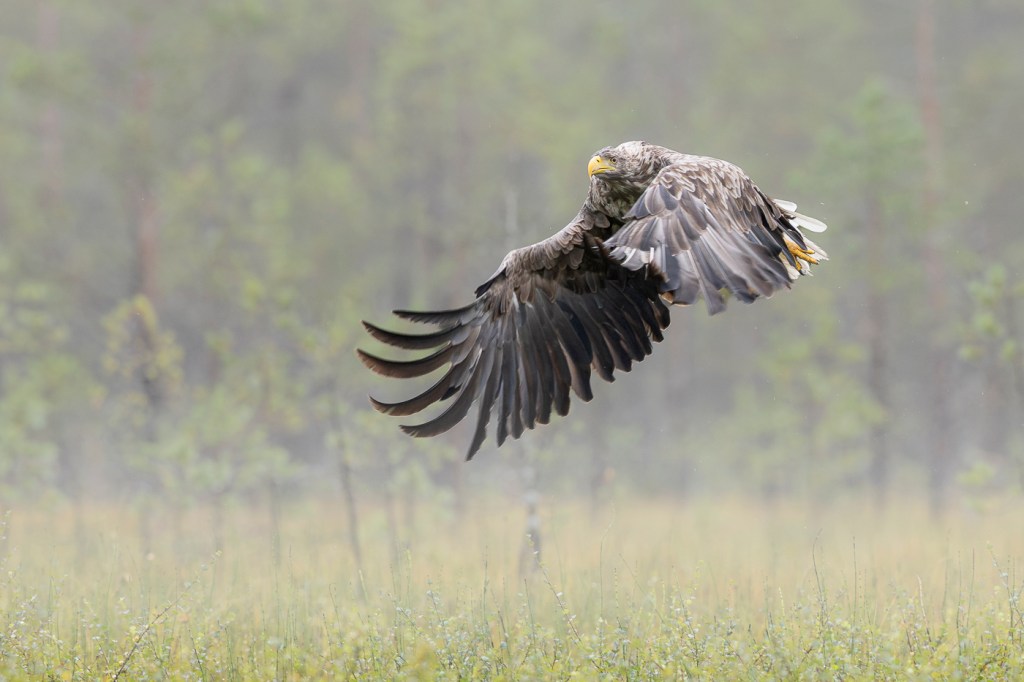
The private hides provided excellent opportunities to work at close range while remaining unobtrusive to the wildlife. This allowed us to concentrate on behaviour, interaction and environmental portraits rather than simply recording sightings. The long hours spent quietly waiting in the hides were repeatedly rewarded with memorable encounters. One such encounter was with a white-tailed eagle that landed in the grass directly in front of my hide position, facilitating the opportunity to capture it as it took off into the wind.
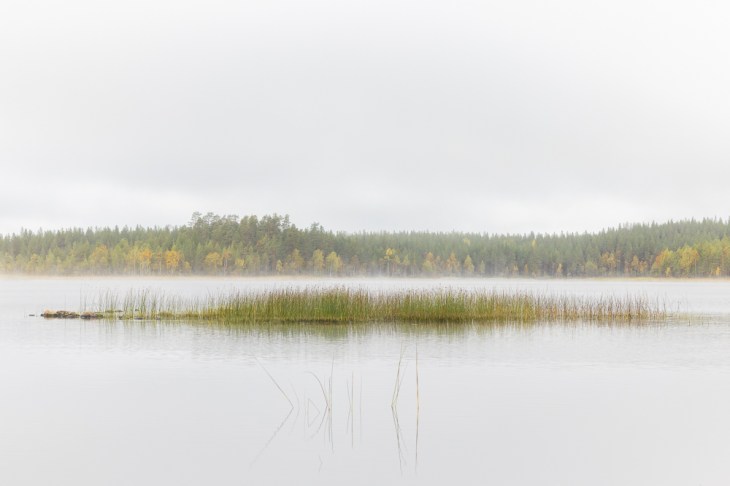
The changing light of the northern summer also provided a wonderful range of photographic conditions. The extended daylight hours allowed us to continue working late into the evening, while the atmospheric conditions of the Taiga created opportunities for images with a strong sense of place. This area of Finland is truly virgin forest that provides for opportunites that extend beyond the wildlife.
For the duration of the workshop, we stayed at a nearby, comfortable hotel with modern amenities. This provided a welcome base between photographic sessions and made it possible to concentrate fully on the wildlife and photography throughout the week. Typically, I recommend longer telephoto lenses for this workshop (500mm and 600mm are ideal), but it is always worth keeping something shorter handy as there are times the wildlife approaches quite close to the hides. My preference is always to photograph with two cameras – one with a 600mm lens and a 2nd with a mid-range to telephoto such as a 100-300mm lens.
Once again, Finland’s Taiga delivered an outstanding week of wild wolf, and bear photography. With multiple wolf encounters and more than half a dozen bears, as well as several eagle encounters, the August 2026 workshop provided an exceptional collection of wildlife encounters and photographic opportunities in one of Europe’s great wilderness environments.
We are returning again next year in both August and November for two more workshops to this wonderful region of Finland. The August trip is set up for optimal fall colour and our November trip is set to coincide with what should be arrival of the first snow. If you have ever wanted to photograph wild wolves and bears in a stunning forest setting, then this is absolutely the workshop for you. Places are already extremely limited on both trips, so please get in touch if you would like to join us.
Introduction: Gloves are a constant source of frustration for any photographer who has ever photographed in really cold climates (not just cool climates). In the 25+ years I have been photographing in the world’s polar regions, I have yet to encounter the perfect glove. It is not for lack of trying; my cupboard is full of gloves I have purchased over the years that have subsequently failed the field test and now gather dust while they await their final journey to the great clothing recycle bin in the sky. Like the perfect Cold Weather Boot, the perfect Cold Weather Glove for photography simply does not exist. The ideal glove is therefore a compromise based on user needs, preferences, and environmental considerations. I previously published a podcast (Episode 92 – Cold Weather Photography Gloves) on this topic back in February 2024, but much has changed in the two-plus years since then, and an extensive update is in order, along with a deep dive podcast on this topic (coming soon). My years of glove frustration have finally boiled over, and in this blog post and the deep dive podcast, I am going to dissect and fully analyse the problems and discuss at length how to develop the ideal cold-weather photography glove. I am also going to discuss some of the popular gloves on the market and dissect the many issues and problems with them.
Transparency: For the sake of transparency, you will not find affiliate links here. The internet is awash with websites that tell you, ‘we have reviewed X products, and these are the best‘. Such websites and reviews are nothing more than thinly veiled attempts to advertise products and make money through affiliate links. I have no interest in selling gloves, boots or bags under the table to make extra money. What you will find here are my straightforward recommendations based on my experience – nothing more.
The Problem: Gloves for cold-weather photography are more problematic than boots because photographers have a very specific need to control our cameras whilst staying warm and dry. This requires a glove that provides a high degree of dexterity (at least in the thumb and forefinger) whilst still offering significant warmth and protection from the elements. Over my years in the field, I have been continually frustrated by over-hyped (and over-priced) cold-weather gloves that fail to deliver on their extensive promises. Gloves marketed to photographers as the ‘perfect photography glove’ are, frankly, (and truthfully) rubbish in the vast majority of cases. Fold back fingers that get in the way (who on earth thought that was a good idea?), and allow ingress of water and snow are but a small example. Whoever came up with the concept of the fold-back finger has clearly never tried to work in blizzard or sleet conditions, whilst lying in the snow and trying to photograph wildlife with a long lens. Whilst fold-back fingers are a woeful design decision, the list of poor design choices in so-called ‘photography gloves’ does not stop there. Gloves that don’t fit properly are commonplace; those that are unfit for purpose, are not windproof, not waterproof, lack dexterity and tactility where it is needed, lack insulation where it’s needed, consist of a liner that is too thin have zippers that cannot be operated by gloved fingers, zippers that break, touchscreen liners that dont work, and are otherwise utterly useless, and the list of problems goes on.
The Problems Bottom Line: Ultimately, the problem is that none of the gloves on the market has been designed by a photographer who has significant cold-weather photographic experience. Most are re-purposed hunting gloves or gloves designed by outdoor companies for various ‘outdoor activities’ (hiking, kayaking, mountaineering, ice climbing, etc). None of which are designed and built from the ground up for cold-weather photography. Those gloves that do claim to have been designed by photographers are, in my experience, garbage. They might be fine if it’s +5 degrees and you are on a tripod, but they are utterly useless in real cold-weather environments. Photographers working in cold climates have very specific needs for their gloves, and these needs differ significantly from those of hunters and other outdoor activities. These needs are simply not being adequately addressed by any manufacturer to date. Understanding these needs is key to good design and to creating a glove fit for purpose.
A Call to Arms: If there is any manufacturer out there who wants to collaborate on the ground-up design of a cold-weather glove system for photographers (a huge market opportunity), please reach out to me.
Breaking Down the Problem: If we analyse the problem that photographers who want to operate in cold environments face, we can break down our needs as follows:
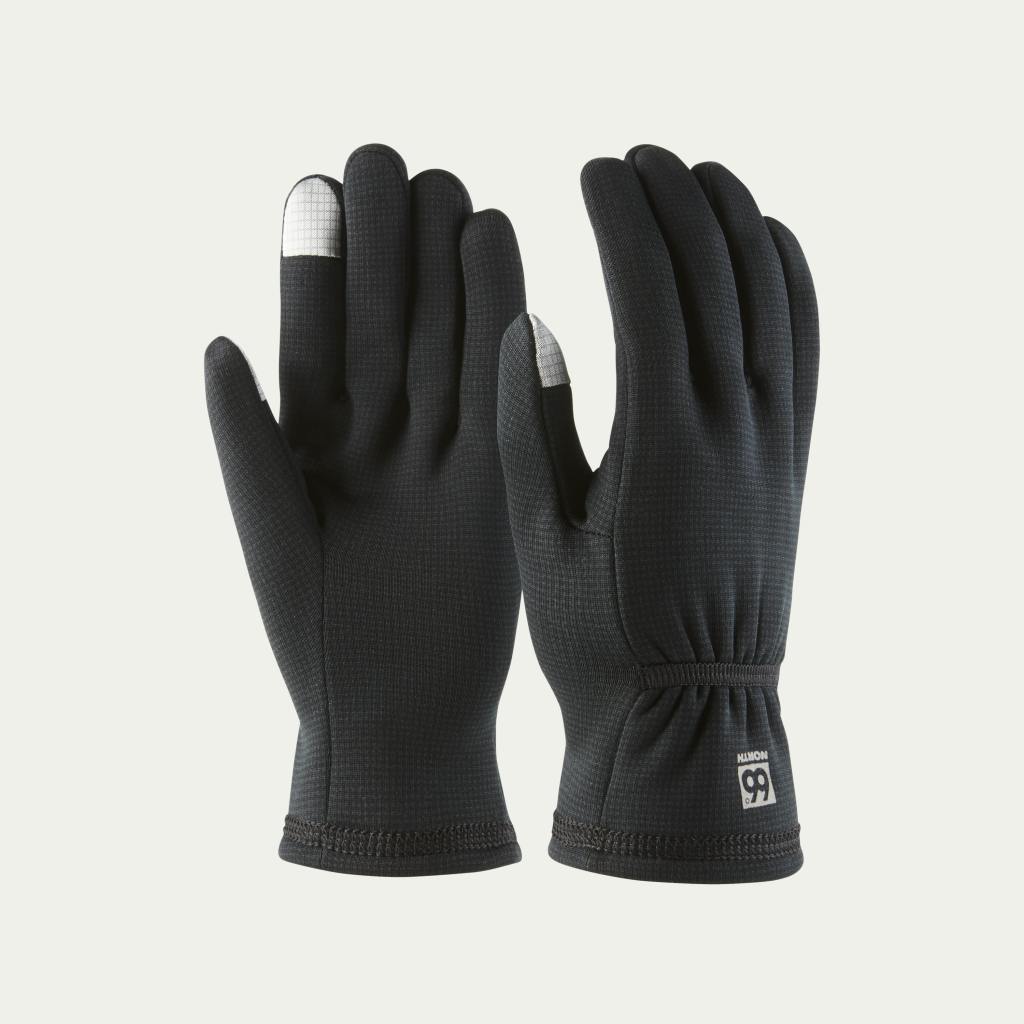
We require a high degree of touch sensitivity and dexterity in the first pad of our thumb and forefinger (predominantly on our right hand only) so that we can easily and reliably feel the camera controls under our fingers. These two fingers also need touchscreen-support fabric, and for the Canon EOS R1 and EOS R3, a fabric that specifically works with the I.R touch-sensitive Auto Focus button on the back of the camera. To my knowledge and testing, 66º North are the only company that makes a fabric that reliably works with the touch-sensitive Auto-focus button on the EOS R1 and EOS R3. Unfortunately, this fabric is only found on a thin liner that is otherwise useless in snowy environments, as it gets wet within a few minutes. These gloves also have quality control issues with the stitching coming undone. I wrote about these in a previous blog post on the EOS R1 HERE.
On the other three fingers on each hand, we require a high degree of warmth to protect them from the cold. Ideally, this would also be extended to the thumb and forefinger, leaving just the first pad of each with the thinner material noted above in point 1. This extra warmth is even more important on the left hand, which frequently supports a metal lens (or lens foot or tripod) that will be extremely cold in cold weather.
The entire glove needs to be windproof and waterproof1. Not wind or water resistant – but windproof and waterproof. Cold-weather wildlife photographers, in particular, spend a lot of time lying on the ground in the snow. As soon as snow sticks to a merino wool liner or other non-waterproof material, it melts in the body’s residual warmth, and the glove gets wet, leaving cold, wet fingers and rendering it useless. Landscape photographers who often shoot in the rain will be familiar with the problem of non-waterproof gloves. These days, I will instantly dismiss a glove if it’s not waterproof (or if it cannot be made at least water resistant with a spray), as it’s unfit for purpose (see footnote below).2
The seal around the wrist of the glove should be firm, but not tight on the wrist to keep out snow. The seal around the wrist should also be warm. The glove cuff should be designed to fit under an outer jacket, with the cuff against the wrist, not designed to go over the top of the jacket. Gloves with a large snow gaiter-style entry are useless for photographers, as the large opening invariably doesn’t fit over a bulky outer jacket, causing it to bunch up and let snow in.
Battery Heated Gloves: Personally, I find battery-heated gloves a real nuisance. Typically, the batteries are housed in a large snow gaiter around the cuff, which flops annoyingly with the additional battery weight and invariably bunches up against an outer jacket. None of the battery gloves I have tried provides sufficient tactile control for the camera, and if they do, they are not waterproof. In my experience, the batteries rarely last a full day of fieldwork and require daily charging (I have tried a few different brands over the years). At this point, I feel I just don’t need or want anything else in my life that requires daily charging. Nor should it be necessary to use battery heaters if the glove is well designed and fit for purpose.
How We Experience Cold: It is important to note that we all experience cold differently. For me, my hands rarely feel the cold, and my tolerance for cold in my fingers seems unusually high. I frequently go without gloves while others reach for their warmer set. Your tolerance for the cold may very well be different to mine, and you should keep that in mind when making any buying decision. Another important point is that Nature photographers (I include landscape and wildlife in that genre) are typically not all that active in the field. We may hike to a location that requires some degree of activewear, but we often spend a long time waiting outdoors for wildlife or the right light. Thus, the choice of gloves is critical to our comfort level in the field. Many products from active-wear companies are simply inappropriate, in my experience, for cold-weather photography because they do not account for the significant time photographers spend inactive and just sitting or standing around in the field.
The Proposal: I propose that the perfect glove for cold-weather photography should be a two-stage system. That is, it should comprise a base-layer glove and an outer glove (or mitt) that slips over the top of the base layer when temperatures really plummet (let’s say below -10º Celsius, though this temperature will vary by individual).
The Base Layer: The base-layer glove should be designed and constructed around points 1, 2, 3, and 4 above. It should have sufficient insulation in the fingers for temperatures down to at least -10º Celsius. This means it needs to be better insulated than a merino wool layer alone. The first pad of the thumb and forefinger still needs to be thin enough to provide adequate tactile control of the camera, but the rest of the thumb and forefinger can be as insulated as the other three fingers. On the back of the palm, there should be a small pocket with a velcro closure (I prefer velcro to magnets, as it keeps out snow and water better) to optionally house a chemical hand warmer. The back of the palm is the ideal place for a chemical warmer, as it’s over the veins that carry blood to the fingers. This sort of pocket is already found on several base-layer gloves marketed to photographers (which are not waterproof or windproof and thus inappropriate).
The Second Layer: When temperatures really plummet, there needs to be a secondary layer or ‘mitt’ that can be pulled over the top of the base layer. This should not be a fold-back mitt attached to the base layer (as that just gets in the way), but an entirely different mitt pulled over the top of the base layer. This oversized mitt should contain significant insulation and be both windproof and waterproof. This mitt should have a significantly oversized snow gater entry that can be easily pulled over the top of a bulky outer jacket without bunching. Additionally, it should have the ability to slip the thumb and forefinger out through a ‘slit’ so that the photographer can maintain tactile control of the camera, but can put their fingers back inside the mitt if they get too cold. Yes, that means there will be an entrance in the second layer that snow and water can enter, but remember, the base layer is also waterproof in this design.
The Current State of Play: The above glove system, as documented, simply does not exist (as of this blog post), and until a manufacturer takes this feedback on board and builds the ideal glove, photographers will continue to struggle with gloves that are not truly fit for purpose in cold-weather environments.
Additional Design Considerations: Photographers already have a lot of gear to manage. We don’t need to complicate our lives further. Thus, straps and other systems designed to clip gloves to are usually not a good idea. They often get in the way when lying down in the snow and tend to snag on cameras and lenses. A simple clip system to clip a pair of gloves together and to a backpack or jacket is all that is required. Keeping it simple is the key to making the gloves ‘get out of the way’ in the field.
My Current Glove Solution: As noted above, no manufacturer has designed and constructed the ideal glove for cold-weather photography. As such, my current glove system is a compromise based on experience and extensive field testing.
The Base Layer: My current choice for base layers is the 66º North Vik Wind Pro Gloves. These gloves are extremely warm for a reasonably thin liner, but they are not waterproof and need to be treated with a waterproofing spray to make them repel water in the field. They are also extremely expensive for a liner glove (at around $75 USD a pair). However, they are the only gloves I have tested to date that have a touchscreen fabric on the thumb and forefinger, which reliably works with the Canon EOS R1 and EOS R3 I.R Touch Sensitive Autofocus button.
These gloves are thin enough that they provide an extremely high degree of dexterity and tactility for camera control. Once treated with a waterproofing spray, they become sufficiently water-repellent for use in snow, sleet, and rain. In continual or very heavy rain, you may still get wet fingers and hands even with waterproofing treatment. Without a waterproofing treatment, these gloves are not suitable for use in rain, snow or sleet.
In my experience, these 66º North gloves are suitably warm down to about -5 °C without additional glove support. For temperatures below -5º C, I will add a second layer as noted below.
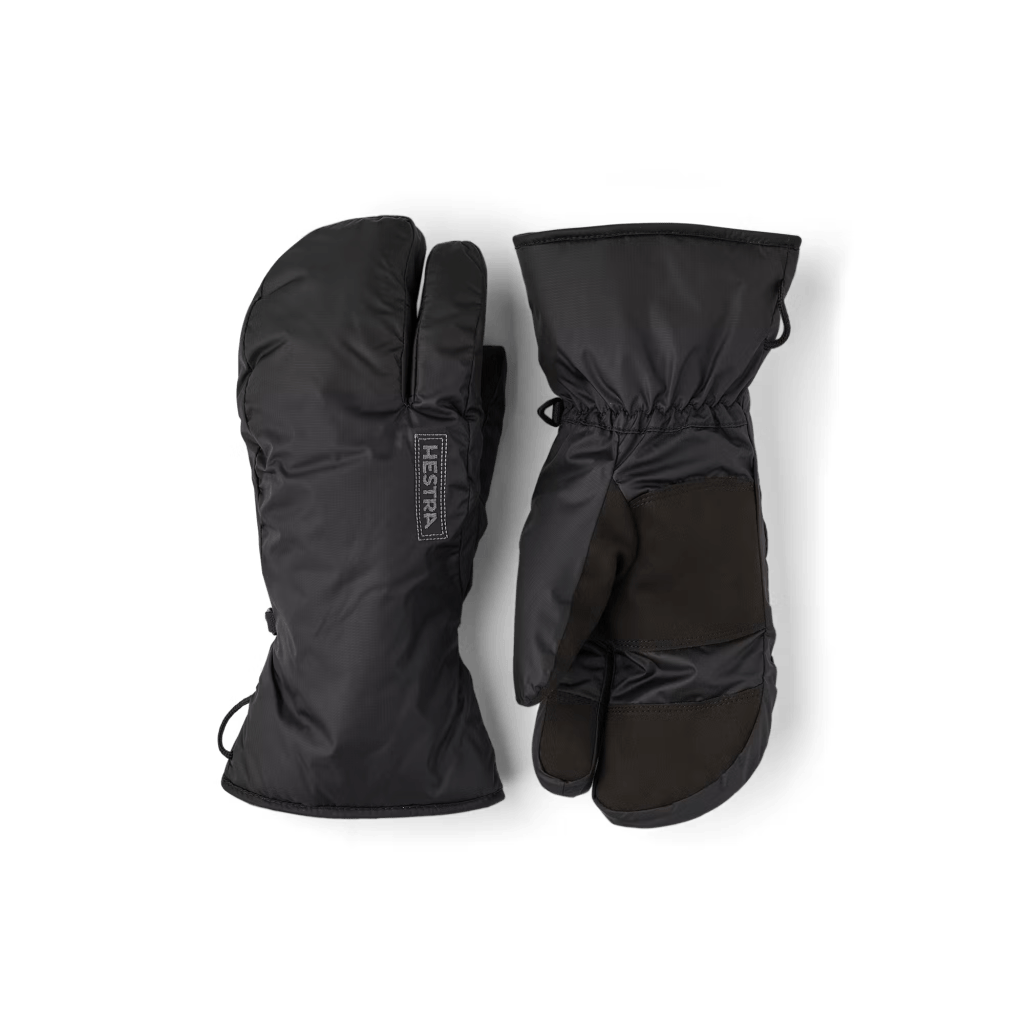
The Mid Layer: My current mid-layer is a pair of modified Hestra Expedition Liner 3-Finger gloves. I use these gloves over the top of the base layer from 66º North when temperatures drop below -5º Celsius. These gloves are incredibly warm and suitable for use (with the liner above) in temperatures down to -35º Celsius, and even colder, depending on your tolerance for the cold. I have modified my pair by making a small 2 cm cut in both the thumb and forefinger on the right hand side so that I can push out my thumb and forefinger to use the I.R touch sensitive pad on the Canon EOS R1.
From the factory, these gloves are not waterproof, but they are quite good at wicking moisture away, and with the addition of a waterproofing treatment, are extremely effective at keeping out snow, sleet and rain in inclement weather. I have not hesitation in using these gloves while lying down in the snow and rain (once treated). They are made from Ripstop polyamide with Primaloft insulation. Reinforced with Chamude in the palm. It has been my experience that Hestra gloves (in general) are extremely well constructed and do not come apart at the seams as many other brands do.
The Outer Layer: My current outer layer is the Hestra Expedition Liner 3-Finger.
Glove Considerations: When assessing the suitability of a glove for my type of photography, I consider dexterity (the ability to control the camera), comfort and warmth for the intended purpose, ease of getting on and off, and long-term durability amongst the most important factors. The ability to withstand water (depending on the intended use) and to keep out snow also plays a major role in my decision-making. Lastly, manufacturer support also plays a role in addressing potential issues. I do not consider price when assessing the qualities of gloves for cold-weather photography since it’s folly to try to save a few bucks at the expense of cold fingers.
Conclusion: Ultimately, the choice of glove is a personal one based on your needs, preferences, and tolerances for the environment in which you work. There are many more gloves on the market that I have not used or tested, and they may or may not deliver great results, depending on your personal needs. There are other gloves I have tested that I feel fail to live up to their claims, so I won’t review or recommend them. The above are products I will stand behind as offering superb performance in their temperature range for cold-weather photography.
Many gloves and liners on the market are not waterproof from the factory, but this does not necessarily make them unfit for cold-weather photography. It is possible, with waterproofing sprays, to make even Marino wool liners highly water repellent. Such sprays typically require reapplication regularly to maintain the gloves’ water resistance. Waterproofing technology has significantly improved in recent years, with many hydrophobic options now on the market. It is possible to treat various fabrics and not just leather for waterproofing and water repellency. ↩︎
I want to tell a recent anecdote about a European company that shall remain nameless (for now) that tried to laughably tell me their photographers’ gloves are not waterproof (a glove marketed specifically for cold-weather photography) because they are designed to be used in temperatures below 0º Celsius when water is frozen. I had to point out to them that it doesn’t matter how cold it is outside; if you get snow on a non-waterproof glove, it will melt from the residual body heat passing through the glove, leaving a wet glove and cold, wet fingers. It took less than five minutes of lying and shooting in the snow with these gloves to end up completely wet through. I also pointed out that photographers can often find themselves on zodiacs in sub-zero temperatures with sea spray, resulting in wet gloves. This was a pair of gloves I (and another photographer I know) returned as ‘unfit for purpose’. To the company’s credit, they did take back the gloves and offered store credit toward other items (which I used for socks, not their gloves!). They have, however, continued to market and sell these gloves to unsuspecting photographers who will no doubt experience wet, cold fingers during field use. ↩︎
Introduction: There is no such thing as the perfect cold-weather boot for photography, as much depends on your needs and the prevailing temperature and conditions you are working in. Likewise, there is no perfect camera bag and no perfect cold-weather gloves. Such things simply do not exist, as different temperatures, shoots, and conditions (and personal tolerances) necessitate different boots, bags, and gloves for optimal performance and comfort. This article (the first of several – Gloves and Bags to come) includes the boots I have found that offer the best performance for a given temperature and condition range based on my experience shooting and working in cold weather climates over the last 25+ years. There are many more boots I have tried over the years that I have ultimately been dissatisfied with. The following represents the best I have tried in cold environments, where I photograph most of the time. You can also listen to Podcast 144, which has a deep dive on this topic.
Transparency: For the sake of transparency, you will not find affiliate links here. The internet is awash with websites that tell you, ‘we have reviewed X products, and these are the best‘. Such websites and reviews are nothing more than thinly veiled attempts to advertise products and make money through affiliate links. I have no interest in selling boots, bags, or gloves under the table to make extra money. What you will find here are my straightforward recommendations based on my experience – nothing more.
How We Experience Cold: It is important to note that we all experience cold differently. For me personally, my feet are the most important part of my body to keep warm. When I get cold feet, my entire body gets cold, and that’s a very uncomfortable experience. Your tolerance for the cold may very well be different to mine, and you should keep that in mind when making any buying decision. Another important point is that Nature photographers (I include landscape and wildlife in that genre) are typically not all that active in the field. We may hike to a location that requires some degree of activewear, but we often spend a long time waiting outdoors for wildlife or the right light. Thus, the choice of footwear is critical to our comfort level in the field. Many products from active-wear companies are simply inappropriate, in my experience, for cold-weather photography because they do not account for the significant time photographers spend inactive and just sitting or standing around in the field.
Battery Heaters: All of the boots below can, of course, be paired with battery-heated socks or insoles to extend their temperature range. Personally, I find battery-heated socks and insoles a real nuisance. The batteries rarely last a full day of fieldwork and require daily charging (I have tried a few different brands over the years). Battery-heated socks and insoles that are ‘app-controlled’ or ‘remote-controlled’ are even more of a nuisance in the field. Have you ever tried to get your phone out of your jacket in -25ºC during a blizzard, remove your gloves, open an app and to try to turn up your socks or insoles? Clearly, the designers of these products have not. Likewise, reviews that espouse the virtues of heated socks and insoles rarely actually review them in any sort of real-world situation where you are likely to actually want or need them. Wearing them around the house to review them like most YouTube reviews? A total joke. At this point, I feel I just don’t need or want anything else in my life that requires daily charging or requires me to open an app to make an adjustment. Chemical toe warmers are a far easier (and cheaper) option if you want to extend the temperature range of any of these boots. You can purchase either a full chemical sole warmer or just a toe warmer and they reliably last 8-10 hours provided they have not passed their used by date.
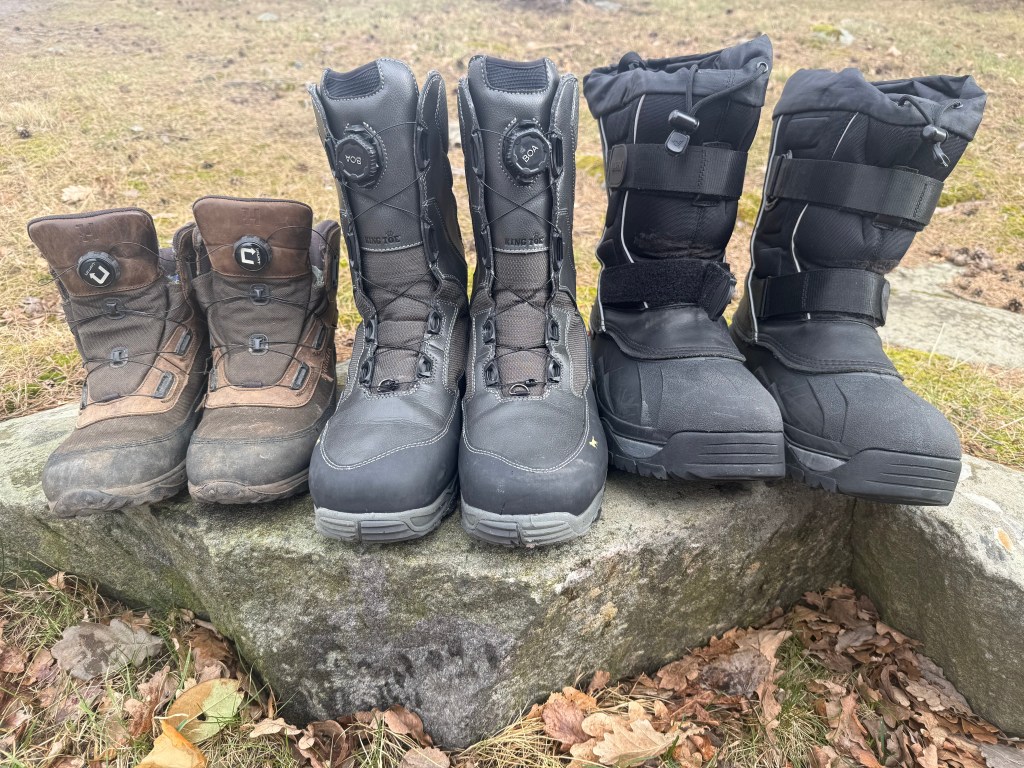
My Cold Weather Experience: Over the last 25+ years, I have tried nearly as many boots for cold-weather photography as I have gloves and camera bags. It has been a never-ending search for the right product that fits the genre of Polar photography I love so dearly. With more than 100 expeditions to the Arctic and Antarctic under my belt, these are my top four boots, based on my own experience with cold-weather photography.
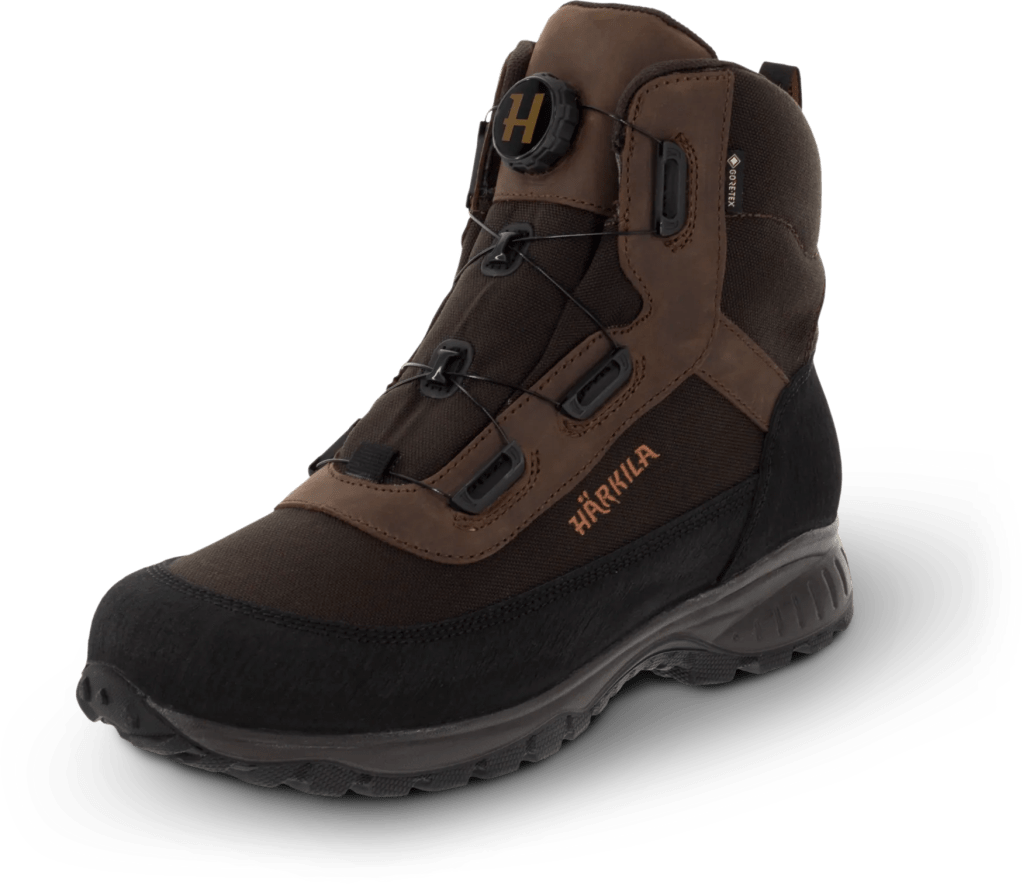
Most hiking boots on the market today fall into this temperature category. It is therefore the most contested for ‘best boot’ and the category in which most people will buy boots. After years of trying different boots from many manufacturers, I have found that the Härkila ATAAMIK GTX boots are my go-to hiking boots for any sort of photography where temperatures may vary from +20º Celsius to 0º Celsius. I use them daily in Sweden when I am walking through the forest, and I have probably walked and hiked more than 500km in my current pair, and they are still going strong. They are dam near indestructible, extremely comfortable and pretty much waterproof. I have walked through ankle-deep water with them on many occasions, and my socks and feet have never gotten wet. They also offer excellent ankle support. My feet feel warm and protected inside these boots down to temperatures at or just below 0º Celsius. They have a super easy twist wire-lacing system, which means they are quick and easy to put on and take off. I have used these boots in Iceland, Mongolia, Sweden, Africa, Australia, Chile, Argentina and Finland and have no hesitation in recommending them to anyone looking for a warm hiking boot for photography.
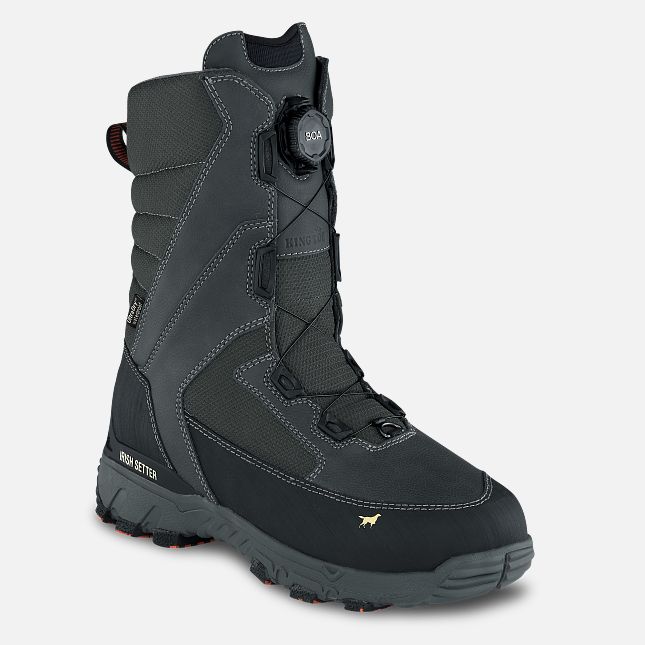
When temperatures drop below 0º Celsius, the Irish Setter IceTrek are my boot of choice. These boots are incredibly warm and durable, offering outstanding ankle support and an uncanny ability to keep snow out when the going gets deep. They are a taller boot than the Härkilas that comes well up the leg, which helps keep out water and snow. I like to wear my base wool-layer pants with wool socks tucked into my boots, then my outer layers on top. Like the Härkilas, these boots use a wire-lace system, so they are extremely quick to take on and off. The boots are marketed and sold as waterproof and, in my experience to date, are exactly that. I have used these boots getting on and off zodiacs in Iceland in Winter and never got wet socks or feet. I have also used these boots in temperatures as low as -38 °C in Winter in western Mongolia while hiking for Snow Leopards. In these extreme temperatures, I did get cold toes when standing around for long periods, so I recommend these boots for temperatures down to -25º Celsius. These boots are built with 1600 grams of Primaloft insulation, so they are suitable for temperatures much colder than the Härkilas. At -25º Celsius, I have no hesitation in recommending these boots for standing around in a non-active state, and if you are active, you can take them into even colder temperatures. I find my feet don’t sweat much in these boots, but I still remove the insoles at the end of the day as a precaution to dry out any residual moisture from sweating. I have used these boots in Winter in Iceland, Mongolia, Sweden, Svalbard, Greenland and Finland and have no hesitation in recommending them to anyone looking for a warm boot suitable for photography in temperatures down to -25º Celsius (and below if you are active). I like them so much, I will often pair them with chemical toe warmers for use below -25º Celsius.
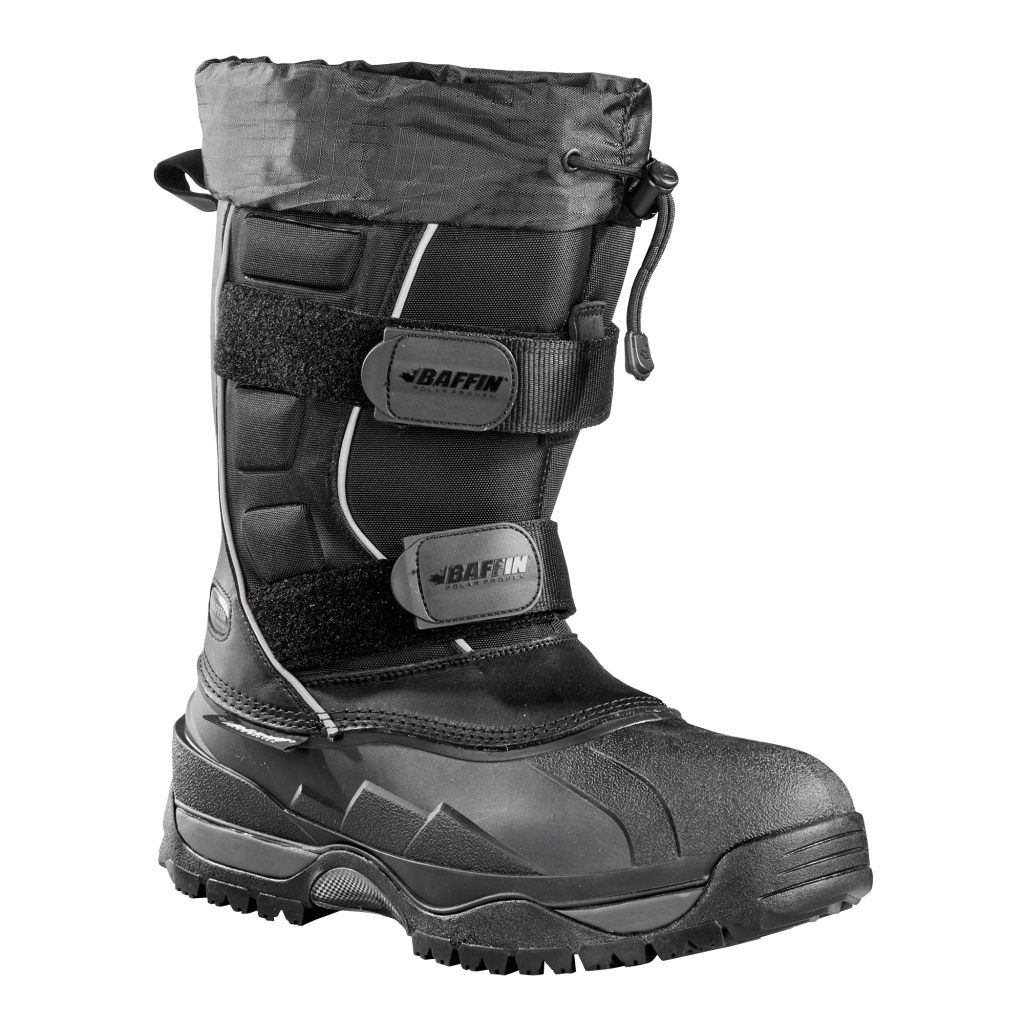
When temperatures really plummet, I reach for the Baffin Eiger boots. These boots are suitable for extreme cold, including temperatures below -25º Celsius, and I have personally used them in temperatures as low as -52º Celsius on Ellesmere Island in Winter. At temperatures above -25º Celsius, my feet just sweat in these boots to the point that I end up with wet socks, so I only reach for them when it gets really cold outside. I tend to sweat through my feet, so I always need to remove the inner liner at the end of every day and dry them thoroughly. Failure to do so always results in frozen toes the next day, as residual moisture freezes, ensuring a cold and uncomfortable experience. The Baffin Eiger boots are not waterproof (though the soles are) and are not suitable for getting on and off zodiacs. But then, in the sort of temperatures you are likely to be wearing these boots, you are unlikely to encounter running water. The marketing material on Baffin’s website says these boots are tested down to -60º C. Whilst I have never experienced a temperature this low, I can tell you that at -52º Celsius on Ellesmere Island in winter, I needed a chemical toe warmer inside these boots to keep my toes from getting cold. The Eigars are quick and easy to put on and take off thanks to the velcro straps, but they do not offer very good ankle support (especially compared to the Härkilas and Irish Setters). I have weak ankles and a tendency to roll them if I am not careful, so I always tread a little more cautiously in these boots than in the other two. They are also not as effective at keeping out snow in deep conditions as the Irish Setter IceTrek boots (despite the inbuilt snow gaiter), but they are warm. It can also be difficult to pull your outer-layer pants over the top of these boots because they are so wide at the opening. I have used these boots in Winter in Iceland, Mongolia, Greenland, Svalbard, Finland and Canada (Ellesmere Island in -52ºC) and have no hesitation in recommending them to anyone looking for a warm boot for photography in the most extreme cold weather.
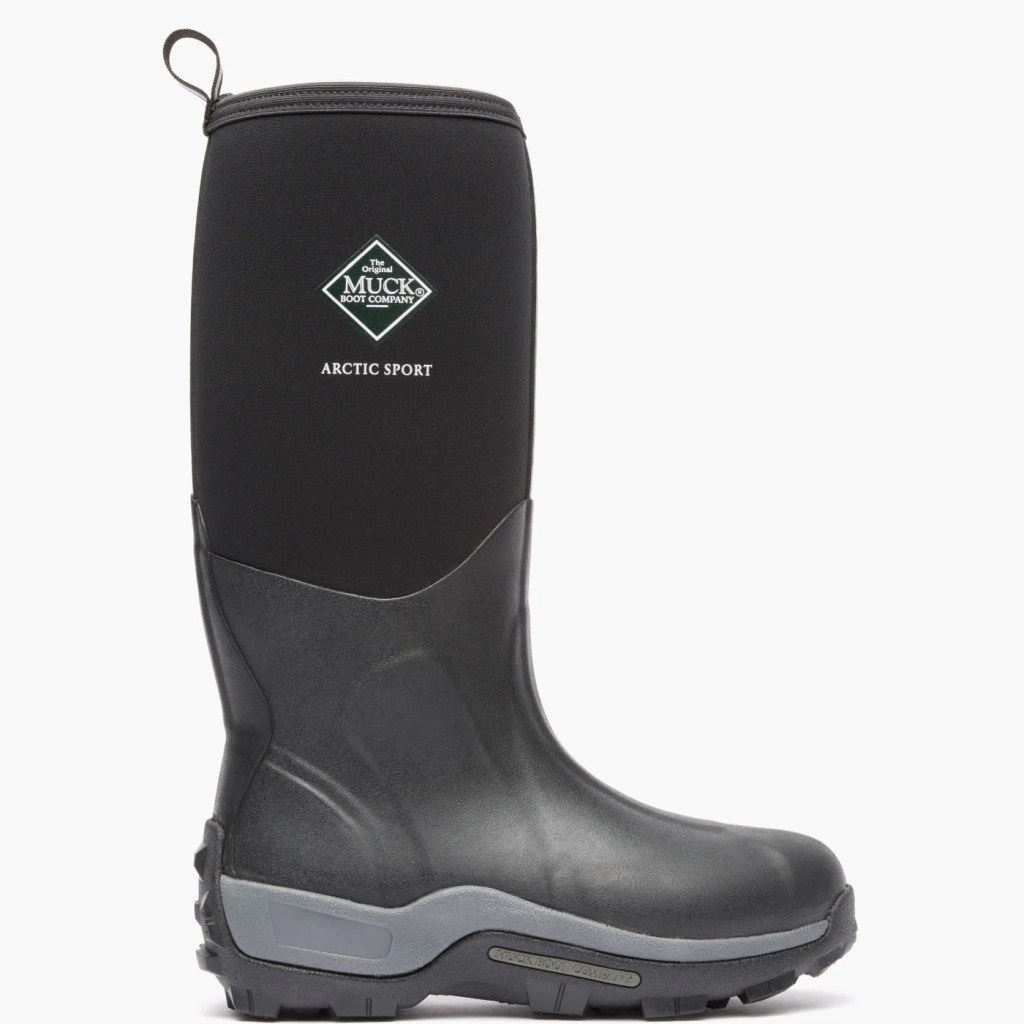
If I know I am going to be working in extremely wet weather, walking through a lot of water, or getting on and off zodiacs frequently, then my boot of choice is the Arctic Sport Muck Boot. These boots are waterproof right up to the very top and are warm in temperatures down to about -10º Celsius. Muck Boots do not specify a temperature range for these boots, but in my experience, they are warm above -10ºC. I do tend to sweat in them quite significantly, so I have to be careful to dry them at the end of the day. These boots are not as easy to take on and off as the others, but what you lose in time spent doing so, you gain in waterproofing. They offer reasonable ankle support (better than the Baffins, but not as good as the Härkilas or Irish Setters). They can be a bit tight around the calves, and if you have larger lower legs you may want to opt for the ‘wide version’. These are an ideal boot for a summer expedition to Antarctica, where temperatures will hover around 0º Celsius, but you will be stepping in and out of water a lot with shore landings. They are also ideal for photographers working in boggy, wet environments or in the Arctic in Summer, especially if you are working in and around water. The only shortcoming I have experienced is that they tend to develop leaks around the seals after heavy use and thus need replacing from time to time (I have been through about half a dozen pairs over the years). They are exceptionally easy to keep clean, however, requiring nothing more than a hosing off and little to no maintenance.
Boot Considerations: When assessing the suitability of a boot for my type of photography, I consider comfort and warmth for the intended purpose, ease of getting on and off, and long-term durability amongst the most important factors. The ability to withstand water (depending on the intended use) and to keep out snow also plays a major role in my decision-making. Lastly, manufacturer support also plays a role in addressing potential issues. I do not consider price when assessing the qualities of boots for cold-weather photography since it’s folly to try to save a few bucks at the expense of cold toes.
Conclusion: Ultimately, the choice of boot is a personal one based on your needs, preferences, and tolerances for the environment in which you work. There are many more boots on the market that I have not used or tested, and they may or may not deliver great results, depending on your personal needs. There are other boots I have tested that I feel fail to live up to their claims, so I won’t name, review or recommend them. The above are products I will stand behind as offering superb performance in their temperature range for cold-weather photography. If you are interested, I dive deeper into this topic and discuss each of these boots in more detail in Episode 144 of my Wild Nature Photography Podcast.
In January of 2026, I ran an all-new Snow Leopard workshop in far northwestern Mongolia. This workshop ran from the 13th of January until the 23rd of January and took us into an all-new region in the Hungai mountains. This location is lower in altitude than the previous location we had been using and has significantly less hiking (although the climbing is still considerable and not for the faint of heart). Like my Pallas Cat of Eastern Mongolia Report, this trip report will be a little different to the norm and includes a number of daily video updates from the field. Due to my heavy travel schedule, I will come back later in the year and update this post with still photographs from the trip as time permits.
Our journey to the snow leopard began in the capital city of Ulanbataar, with a two-hour flight to Khovd in Mongolia’s northwestern region. From here, we then drove seven hours to our remote camp nestled amongst the Margaz mountains (a smaller area of the Hungai mountains) – our cozy home away from home for the duration of the workshop. Each Gyr, or Yurt, is equipped with a coal-fired stove for warmth, a bed, a wash basin, lighting and even wifi. Our base served as the perfect location to search the vast mountainous landscape for the snow leopard.
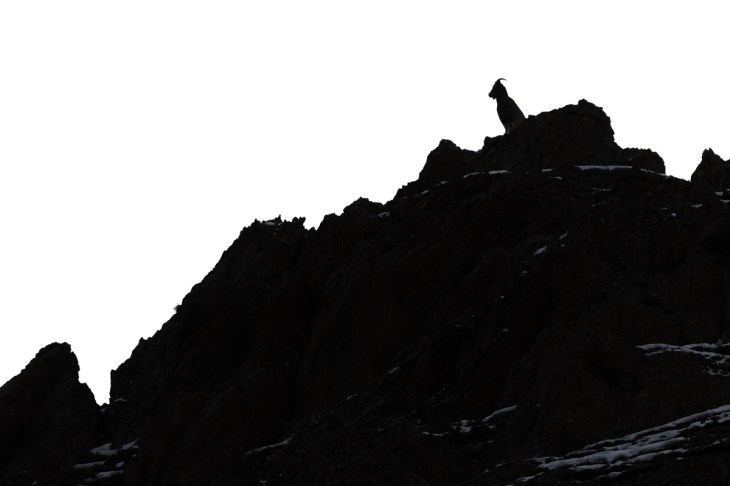
As fortune would have it, we never even made it to camp before our first encounter with a snow leopard. With our spotters and trackers already in the field, we took a short detour not far from camp to see a mother with two cubs our trackers had found high on a rocky mountain just prior to sunset. Although sunset was upon us and it was too late in the day to begin an arduous climb to attempt to photograph them, we still relished the experience. To find and see a wild Snow Leopard with her two cubs so early in our trip was an absolute blessing. The cherry on the cake was several Ibex that posed, silhouetted for us high on the precipitous mountain tops.
Finding and photographing the snow leopard is one of wildlife photography’s greatest challenges, demanding extraordinary patience, endurance, and respect for the harsh environments these elusive cats call home. Often referred to as the “ghost of the mountains,” snow leopards blend seamlessly into vast alpine landscapes, making even a single sighting feel like an extraordinary gift. Days can pass scanning ridgelines and valleys in biting cold and thin air, with no guarantee of success, which only deepens the emotional impact when a snow leopard finally reveals itself. Each encounter is a true privilege—a fleeting moment of connection with one of the planet’s most secretive predators that serves as a powerful reminder of both the fragility and the wonder of the wild. Every encounter is an absolute gift and is never to be taken for granted.
Over the course of the next eight days, we made daily sunrise and afternoon sojourns into the field in search of leopards. From our camp location, we were ringed by mountains, all of which had potential for leopard sightings (as well as Corsak fox and Ibex). Using our team of expert local trackers, we had multiple encounters with snow leopards during our trip. As luck would have it, the very best of these encounters was with a mother and three first-year cubs. We were able to spend most of the day photographing the cubs high on the mountainside with superb results. An encounter such as this is an absolute gift and very much a once-in-a-lifetime experience. In addition to snow leopards, we also photographed Golden Eagle and Little Owl.
Temperatures throughout our workshop were extremely cold, with lows consistently around -40ºC and highs in the afternoon often only rising to -25ºC. It was below -35º Celsius many mornings when we departed in search of the ghost of the mountains. This necessitated proper equipment and dressing to ensure protection against the cold. As we traversed the landscape in 4-wheel-drive vehicles, we stayed warm while searching for wildlife.
At the conclusion of our workshop, we packed up and drove roughly four hours to the nearest town for return flights to Ulanbataar and concluded our workshop in the evening of the 23rd of February.
Photographing Snow Leopard with us offers a rare opportunity to encounter one of the world’s most enigmatic wild cats in an ethical, immersive, and deeply rewarding way. Success with snow leopards is never guaranteed, and it is well worth remembering that even a fleeting sighting can be hard-won, making every potential encounter a very special gift. This is a carefully curated workshop built around our local guides’ intimate knowledge of the landscape, respectful fieldcraft, and small-group experiences that maximise both photographic opportunities and meaningful wildlife encounters. In the vast mountain environments where Snow Leopards live, we prioritise patience, conservation awareness, and time in the field—allowing photographers to move beyond fleeting sightings to genuine observation. The result is not just exceptional imagery of a seldom-seen species, but a richer understanding of its behaviour, habitat, and fragility, making the experience as emotionally powerful as it is creatively inspiring.
Who is this Workshop For? This workshop is designed for photographers who have a deep love of wildlife and a genuine passion for capturing it thoughtfully and artisically in the field. It is ideally suited to those who value time, patience, and observation over crowds and hurried encounters, and who thrive in a small-group environment where individual attention and shared experience matter. Whether you are refining your craft or seeking a more meaningful connection with the natural world, this workshop appeals to photographers who are inspired by rare species, remote landscapes, and the emotional power of storytelling through images, and who appreciate learning in an intimate setting alongside like-minded people who share the same respect for wildlife.
If you would like to photograph this incredible wildcat, please get in touch via email. We limit the workshop to a maximum of five photographers to ensure each has their own private room and to ensure we offer the best possible photographic experience. Groups larger than five are far from ideal for this experience if high-quality results are your goal. Our next planned workshop for the Snow Leopard is in 2028.
This year’s Wild Wolves of the Taiga Workshop promised something different from our usual Arctic expeditions (Read our Trip Reports). In northern Finland, near the Russian border, we sought not polar bears against ice or penguins against snow, but wolves in the dense, shadowed Boreal forests of the north. Alongside them, the mighty brown bear, an apex predator in its own right, roamed this land of lakes, moss, and towering spruce. There is a quietness and tranquillity that hangs in the air in this part of northern Finland, different from the austere, white silence of the polar regions. The forest in this part of Finland is thick with life, an ancient hush, the breath of a primordial forest older than memory. This is a forest that still feels untouched by humans, where wild animals roam, and it is the perfect place to photograph wolves and bears.
The small group of photographers who joined us this year were seasoned travellers and photographers, each hungry for Nature and that blend of patience, anticipation, and wild reward that defines this craft of Wildlife photography. Our base for this workshop was rustic, yet comfortable. A series of wooden lodges tucked into the forest edge by the side of a beautiful lake. After long sessions in the hides, it was a pleasure to return to the lodge, to peel off warm layers, and share a drink and stories into the evening.
Most afternoons began the same. After an early lunch, we packed our gear, prepared thermoses of coffee, and made our way quietly into the forest. The hides are simple wooden structures, each carefully chosen with background in mind, and each with narrow viewing slits just wide enough for a lens and viewing. The hides are not heated, but this time of year, the temperatures have not yet dropped below freezing, and a few warm layers are all that is required to stay comfortable during a hide session. Many of the hides have additional low-angle viewing and photography ports that allow for low-angle shooting at eye level (a preference of mine whenever possible).
From early afternoon until the fall of night, we sat in silence, our cameras ready, long glass poised—500mm and 600mm lenses dominating the lineup at most of the hide locations, with shorter lenses preferred at the lake hides. Typically, wolves are notoriously shy and long lenses are usually chosen to capture images as they move through the Autumn grasses. Patience is the lifeblood of hide photography. Hours pass with only the sound of wind in the branches or the distant call of a raven. Yet within that stillness, a strange transformation occurs: one begins to hear the forest’s subtler voice, and in those moments, we come closer to Nature. It is a reminder that as Nature photographers we should define the success of our day by how we interact with our environment more so than the success of an individual photograph.
The sun never gets truly high in the sky this far north in Finland at this time of year, and days are frequently overcast, providing a natural softbox of light for the wildlife. Autumn colours were also at their peak the week of our workshop, providing the ideal backdrop to photograph both the wolves and bears. It was on the first evening that we saw our first wolf. At first, it was only a shape, an outline moving low among the yellow grasses. Then, slowly, a wolf emerged. Its presence was electric. In the silence, every photographer held their breath. The wolf paused, ears high, eyes alert, framed by the Autumn forest and the soft yellow grasses. These are the moments we live for as wildlife photographers.
In that moment, the forest was no longer merely a backdrop. It was alive, primordial, a cathedral of colour in which this animal was both priest and ghost. The wolf lingered only a minute, perhaps two, before slipping back into shadow. But it was enough. That encounter imprinted itself on all of us, and we thirsted for me. As fate would have it, we would not have to wait long before a second wolf would grace the stage in front of our cameras.
If the wolf is shadow and mystery, the bear is weight and presence. Several evenings, we were graced by the appearance of European brown bears, their hulking frames pushing through the underbrush. The approach of a bear is almost never heard. Their giant weight is carried on huge paws that enable them to tread silently through the forest. This time of the year, the bears are preparing to hibernate and are at their fattest and most hulking.
Photographing them required equal patience and speed. Bears often moved with surprising silence, and when they appeared, it was crucial to react quickly. The 500mm and 600mm lenses gave us reach, isolating the animals against the soft tapestry of forest and mist. At one point, three young bears appeared by one of the lake hides. The young bears were cautious, climbing a nearby tree while foraging on the lake shore. The scene was tender, primal, and moving. To witness such a moment—protective, raw, and timeless—was worth every hour of waiting.
Although the hides were positioned in known territories for wolves, bears, and wolverines, we did not see the latter this year. Wolverines are elusive at the best of times, shadows within shadows, and their absence reminded us of the unpredictability of true wilderness. Some may count it as disappointment. I do not. For me, the wolverine’s absence underscores the authenticity of the experience. This is not a zoo. It is not staged. The forest offers what it will, and we come not with demands but with reverence and thanks for every encounter.
If the wolves and bears were our subjects, then the forest itself was our stage and sometimes, our main character. There were evenings when the mist rolled in, making it seem as though the trees were floating islands, suspended in an ocean of pale grey. In such moments, even without wildlife, there was profound beauty. At other times, the golden light of late afternoon filtered through the canopy, igniting the grasses with a fiery brilliance. To photograph a wolf or bear in such light was almost transcendent—the animal bathed in an atmosphere that seemed half-real, half-myth.
This interplay between animal and environment is where authentic wildlife photography resides, not in the portrait alone, but in the story of creature and place, bound together by light and moment. Background is critical to the simplicity, but must also tell the story of the environment. No one wants a photograph that looks like it was taken in the zoo. Hide photography is not glamorous. It is hours of stillness, cramped legs, whispers, and waiting. Yet it is in this waiting that something rare is found: a kind of meditation. The modern world rarely allows us to sit for four, five, or six hours with no distractions, no noise, but only the wind and the beating of our own heart. In the hide, time stretches. Senses sharpen in anticipation. When the wildlife does appear, the scene comes alive.
The variety of photographs captured on this workshop is always astonishing. Some photographers pursue close portraits with their 600mm primes, filling the frame with piercing eyes and powerful musculature. Others leaned into wider perspectives, showing animals as small figures dwarfed by the immensity of the forest. Both approaches spoke to the diversity of vision that such a place inspires. Running two cameras in an environment such as this is often a good idea, as it can significantly enhance diversity in a portfolio. For me personally, one frame lingers. A wolf, mid-step, crossing a clearing as fog draped around the forest floor. The background is a soft blur of spruce, with a muted palette of greens and greys. Minimal. Poetic. A distillation of the primal soul of this land.
The 2025 Wild Wolves of the Taiga Workshop reaffirmed something I hold dear: Wildlife photography is not only about animals. It is about the connection between us and Nature, between patience and reward, between what is seen and what is deeply felt. The Taiga forest, vast and breathing, reminded us that wilderness is both fragile and unyielding. There are only a few places left on this earth that still feel untouched by man, and that makes this part of Finland exceptionally special. We are returning again next year 2026, and 2027 to this magical forest realm for the Wolves and Bears, and full details are now available on the website at www.jholko.com/workshops. Please contact me for any details.
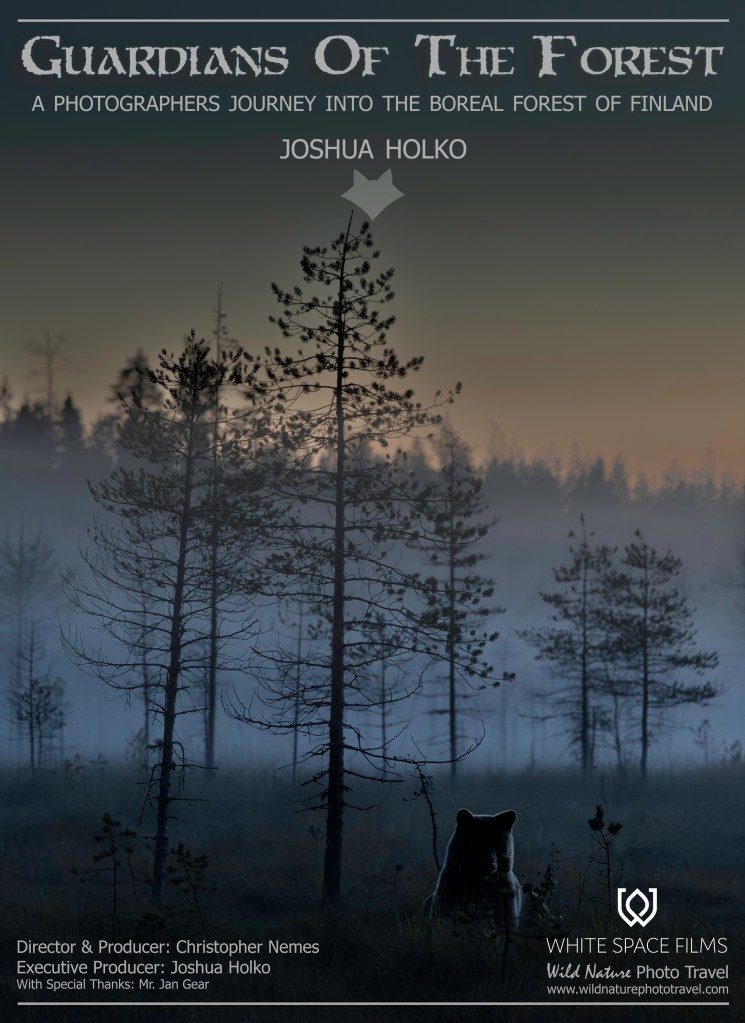
As some of you may be aware, I was also working on a new short film project during this visit to the Taiga forest in Finland with my good friend Chris Nemes from White Space Films. We wrapped filming earlier this month (September) and hope to release the film before Christmas this year, 2025. This short film is a journey into the mind of what it takes to produce a great wildlife photograph. Teaser poster below: