There is now just one Mini-Suite available on my 2023 December Return to Antarctica expedition. Availability of twin-private cabins is now also limited. Twin-Share and Triple share still have some availability.
Our ship for this expedition, the newly refitted Polar Pioneer, with a capacity of just 52 photographers, means we will all be able to all land at the same time and spend hours ashore at each of our landing locations. Our choice time slot of December 8th – December 21st 2023, is absolutely ideal for both ice and snow; whilst providing us with a fantastic opportunity for a potential landing at Deception Island and a subsequent cruise through the spectacular Lemaire Channel – a landscape photographers paradise.
Antarctica is one of the most exciting destinations on the planet for both landscape and wildlife photography. The enigmatic white continent is, without doubt, the premiere and sought-after location for Polar Photography on our planet. With its monumental icebergs, towering mountains and glaciers and plethora of wildlife, it offers the intrepid photographer a unique and powerful photographic experience.
Whether you are a seasoned Antarctic veteran or a first-time traveller, this expedition is sure to offer you unparalleled and unique opportunities not offered anywhere else. You will be one of just 52 photographers on a dedicated expedition designed solely to offer the best possible photographic experiences – A return to the Great White Continent! If you are considering your first Antarctic expedition, read our guide on choosing the proper expedition for you. Download HERE.
For more information or to book one of the remaining places, please email me at info@jholko.com. Bookings are on a first-come, first-served basis.
Photographs are considered evocative and powerful when they generate an emotional response in the viewer – hate, love, fear, anger, envy, curiosity, power, passion etc. It’s counterintuitive to many, but one useful technique to generate an emotional response in your photographs is not to show the subject in all its detailed glory. Instead, give a hint or impression of the subject and let the viewer’s mind fill in the blanks. The power of suggestion and scale will help elevate any photograph. Executed properly, the insinuation is enough, and the imagination takes over, painting something that far transcends any straightforward photograph.
This is actually a full-colour photograph (no desaturation) backlit of a Mongolian Ibex high in the Altai mountains in Mongolia. It was done in camera with just a black-and-white point tweak in post-production. Shot with the Canon EOS R3 with a Canon RF 600mm f4L IS Lens. Sometimes you don’t need to work hard to make a great image. This was shot sitting down, drinking a cup of coffee and resting against some rocks when the Ibex appeared at the top of the mountain. I just saw the opportunity, picked up the camera, set the exposure and made the shot – serendipity.
In a very cool move, BenQ is providing owners of select Photographic Monitors one-year Free access to their Pantone Connect Premium service.
“New BenQ SW and PD series purchasers and existing owners can get one FREE year of the new Pantone Connect Premium, which brings many benefits to your smart device without the need for cumbersome equipment like a colourimeter.”
“BenQ and Pantone: Pantone is the world’s leading authority on professional colour. BenQ shares the same passion for colour accuracy and accessibility. Since 2015, we have worked with Pantone very closely together to ensure BenQ monitors deliver the best colourin the world for photographers, video editors, and designers, especially professionals that work on Mac ® devices. BenQ has received several World Firsts from Pantone acknowledging our commitment to colour accuracy.”
There is a great video here on how to redeem this offer as well as what the benefits are of using Pantone. If you are a portrait photographer working with skin tones or a commercial photographer then there are very significant benefits to working with Pantone colours and the new Pantone Connect makes it easier than ever. More info and to redeem HERE
I have just published Episode #63 of my Wild Nature Photography Podcast. In this episode, I discuss packing and equipment for my Arctic Fox expedition in the Hornstrandir Nature Reserve in north-western Iceland as well as discuss the often maligned Canon RF 100-500mm f4.5-7.1 IS L series lens. This is a lens I was not too keen on initially based on its variable f-stop, but recent tests have made me a complete convert. This lens is a must-have for Canon wildlife photographers.
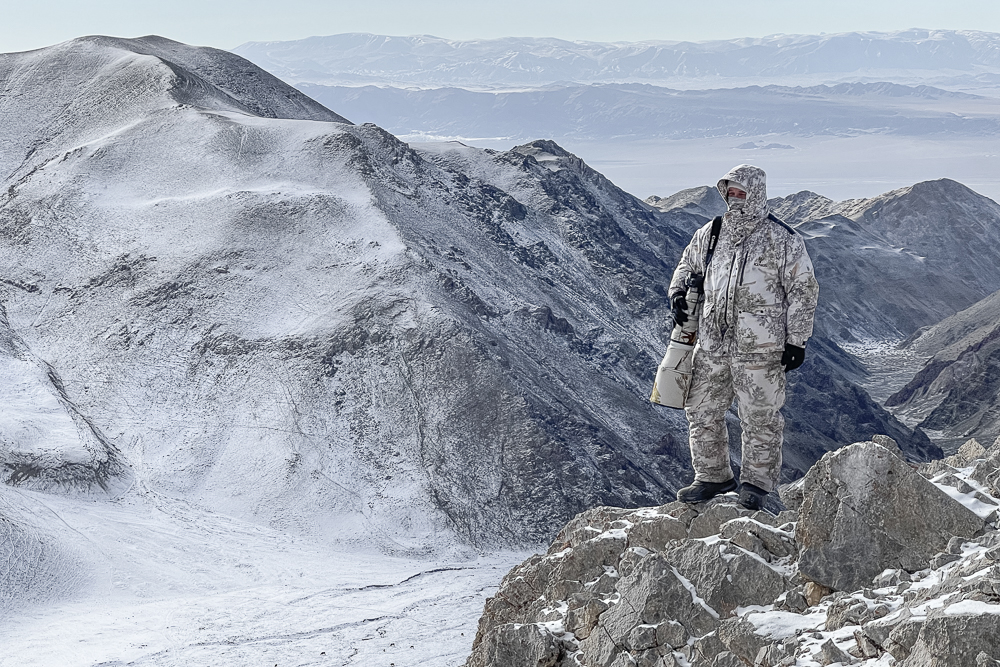
In mid-January of 2023, I led my first expedition with clients to find and photograph the stunningly beautiful and elusive Snow Leopard in the snow-covered north-western region of Mongolia in Winter. This was an expedition that was initially scheduled to run in January of 2022 but was delayed as a result of the COVID pandemic. This was the very last expedition and workshop left for me to catch up on as a result of all the COVID delays.
The snow leopard is one of the most elusive and sought-after animals on the planet by wildlife photographers. It is incredibly difficult to find and photograph in the wild, with the vast majority of attempts failing, or at best, spotting a leopard through a spotting scope at a significant distance. The aim of this expedition was to get close enough to photograph the cat with a long telephoto lens. As it turned out, we were able to get within twenty metres of several Snow Leopard cubs on our very first encounter.
Due to my hectic travel schedule, I have not yet had time to do more than a rudimentary selection of the photographs made during this expedition. I will update this post with more images once I get a chance to process the RAW files.
Our expedition was scheduled to begin with a two-hour plane flight from the capital city of Ulaanbaatar in Mongolia to the small town of Khovd in the northwest. From there, it would be a two-hour drive into the wilds to our remote camp, where we would be situated at the base of the Altai mountains for the duration of the expedition. Unfortunately, there was a mechanical issue with our aircraft, and we were delayed two days in the capital while they attempted to repair the plane. With no resolution after two days from the airline, we decided to scramble together three sizeable 4-wheel drive vehicles and local drivers and then drive the eighteen-and-a-half hours across the vast and extensive Mongolian landscape to our snow leopard camp. I had anticipated potential delays and had built in a couple of spare days to the expedition just in case.
With a long drive ahead, we set out from Ulaanbaatar at a very dark and brisk 4am to avoid the worst of the city traffic and began to make our way West. After a long day in the car, we arrived at our camp around 10pm, had a quick hot meal and turned in for the evening. Our minds buzzed with the anticipation of seeing and photographing the snow leopard the following day.
After an early breakfast, our guides and spotters headed into the field to search for Snow Leopard. Less than a couple of hours later, we received the radio call that they had found a mother Snow Leopard with three cubs sleeping high in the mountains on the edge of a rocky outcrop. We grabbed our gear, piled into the 4-wheel drives and drove up to the base of the nearby Altai mountains. From there, we hiked for about an hour up very steep, loose and rugged terrain in the cold to find a mother snow Leopard and her three cubs sleeping high up on a rocky precipice. After some discussion and advice from our guides, we approached from the back side of the outcrop and closed to within twenty metres, where we spent the next two hours photographing these incredible animals. Being so close to genuinely wild Snow Leopards is an experience that leaves one both breathless and emotional.
Over the next week, we hiked and explored the Altai mountain range extensively, following up hot leads from local herders and shepherds on Snow Leopard sightings. Some of these leads resulted in sightings, and for others, we drew the occasional blank. Our last full day in the field saw us have an excellent encounter with a fully grown female leopard in the mountains.
During this expedition, we also photographed the amazing Mongolian Ibex, which we sighted on several occasions. The photograph below will be my photograph of the month for February 2023.
We concluded our expedition with a two-hour return flight from Khovd to the capital city of Ulaanbaatar. Thankfully our return flight left on time and we were back in time for airport transfers the following day.
By demand and request, I will be offering this expedition again in the summer of 2024 for a small group of just five photographers. If you are interested in photographing wild Snow Leopards, please email me. Places are extremely limited, and once spoken for, that’s it. Several places are already booked. Please note that a high degree of physical fitness is recommended for this expedition as there is a significant amount of hiking at altitudes up to 10,000 feet.




 www.WILDNATUREPHOTOTRAVEL.com