There are few places on Earth that match the wild, remote, and brutally beautiful snow and ice covered landscapes of Svalbard in winter. Nestled deep within the Arctic Circle, this archipelago is a realm ruled by ice, wind, and wildlife. This April, I had the privilege of leading a private snowmobile expedition across this frozen frontier—a journey that would see us travel over 500 kilometres, find more than a dozen Arctic foxes, encounter reindeer and ptarmigan, and face the full spectrum of Arctic weather, from golden light to whiteout blizzards.
From the moment we arrived in Longyearbyen, the sense of isolation and adventure was palpable. The eve of an expedition is always an exciting time with the great unknown ahead. The air was sharp and cold, the light already tinged with the ethereal glow of Arctic spring. With 24-hour daylight just around the corner, we were on the cusp of the long polar day, and we planned to make the most of every usable hour. By April the sun no longer truly sets in Svalbard, which means there are hours of golden light available for photography. It also means we can work well into the night, taking advantage of times the wildlife is at its most active.

Our days were often long—starting at 5 a.m. and often not wrapping up until midnight—but the light was at its best during these hours. As any serious wildlife photographer knows, great light and great wildlife don’t run on a 9-to-5 schedule.
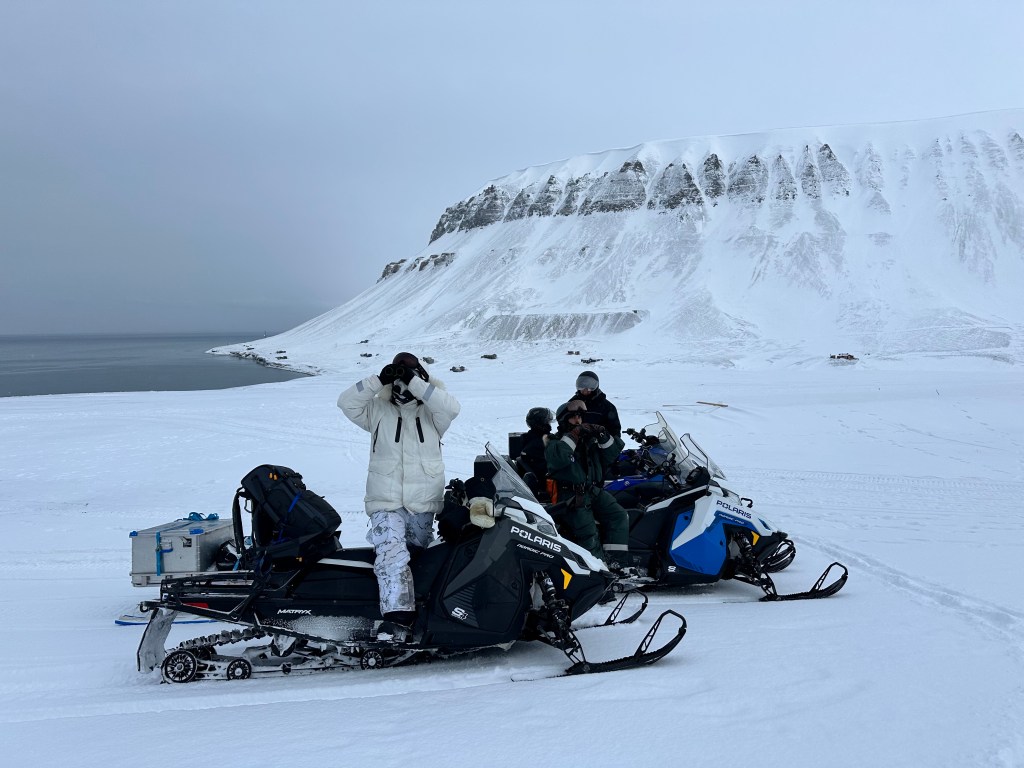
We travelled by snowmobile, fully outfitted in cold-weather gear, carrying camera equipment, safety gear, and enough fuel and supplies for extended runs. We based ourselves in Longyearbyen and made daily sojourns out into the wilderness in search of wildlife. Navigating the ice-covered landscape by snow mobile requires concentration and no small amount of stamina. But the reward? Untouched terrain, and wildlife in its most raw and natural form.
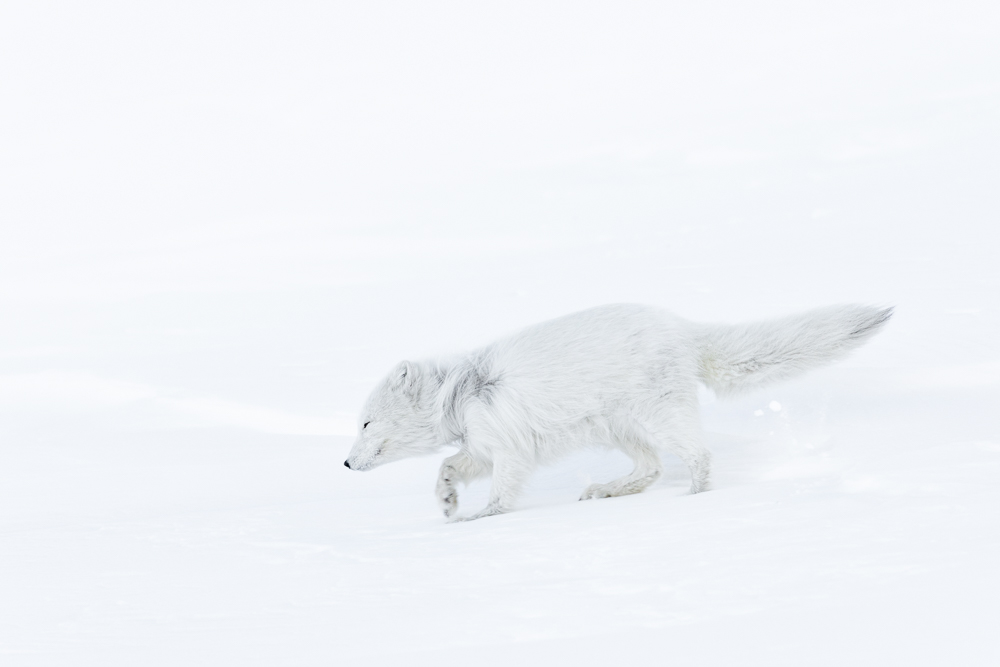
One of the primary goals of this expedition was to photograph Arctic foxes in their natural habitat. By the end of the trip, we had seen more than a dozen individuals—an incredible result in such a vast and challenging environment. These foxes, well-adapted to the cold and the shifting seasons, were in prime winter coat: a thick, snow-white camouflage against the terrain. This makes them hard to spot, but also incredibly photogenic in the snow covered environment.
One particularly encounter took place near a windswept ridge on the outskirts of Barentsburg, where we found a young white morph fox near the coastline. We set up low, using the terrain for cover, and waited. The fox came close—curious but cautious—offering a string of intimate moments that translated into some of the most compelling images of the trip. During this encounter we had to work quickly as there was a freezing wind that plummeted temperatures and numbed the fingers in moments. Despite the cold, some incredible images resulted from this encounter.

Another highlight came in the aftermath of a fresh snowfall. As we neared the town of Barentsburg, we spotted a fox high on a ridge line – watching from above. The soft light and pristine conditions gave the scene a dreamlike quality and a wonderful opportunity to show the fox in the landscape. It’s in moments like these that make wildlife photography in the Arctic such a joy.
While Arctic foxes were our primary focus, we were also treated to many memorable encounters with Svalbard reindeer in absolutely superb conditions. These smaller, stockier cousins of mainland reindeer are uniquely adapted to the harsh environment. We found several groups grazing through the snow-crusted tundra, their thick coats catching the snowfall.
Photographing them in the early hours and during the long twilight evenings, we were able to create evocative portraits against the vast, open white landscape amidst swirling snowfall.

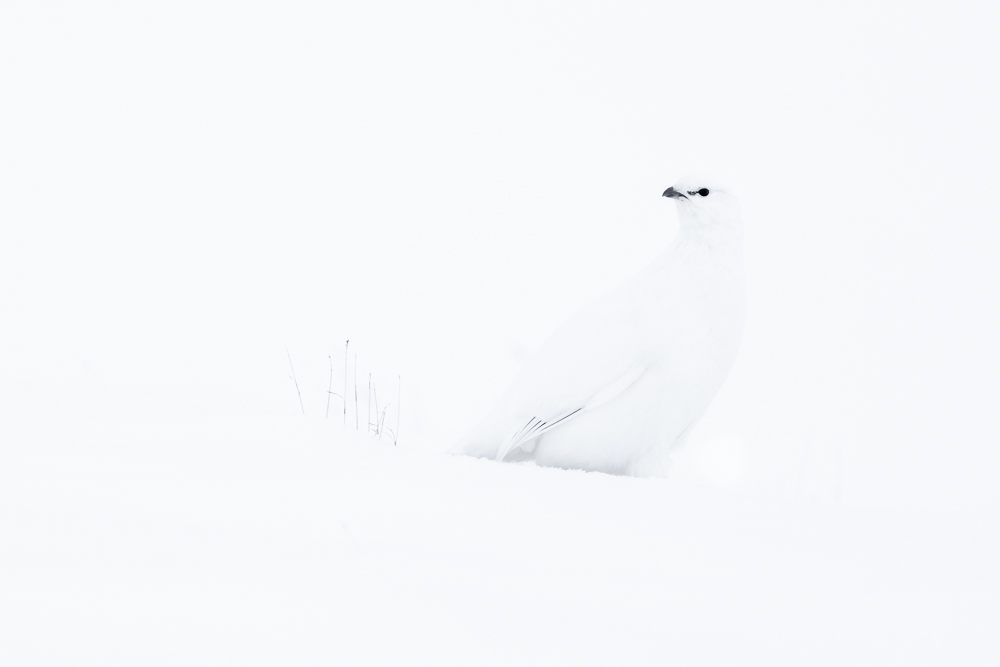
Ptarmigan, often overlooked, became another fascinating subject. With their feathered feet and perfectly camouflaged plumage, these Arctic birds offered opportunities for intimate ground-level compositions. Catching one mid-fluff or just as it shook free a dusting of snow made for dynamic, storytelling frames that added variety to the trip’s portfolio.
Of course, no Arctic expedition would be complete without a taste of the extreme. One full day of our trip was lost to a powerful whiteout winter storm that swept through the region. Winds howled across the open landscape, visibility dropped to near zero, and temperatures plummeted well below -35°C with windchill. Of course, we ventured out to experience the storm, but photography was impossible and we returned to the safety of town after our winter storm experience.
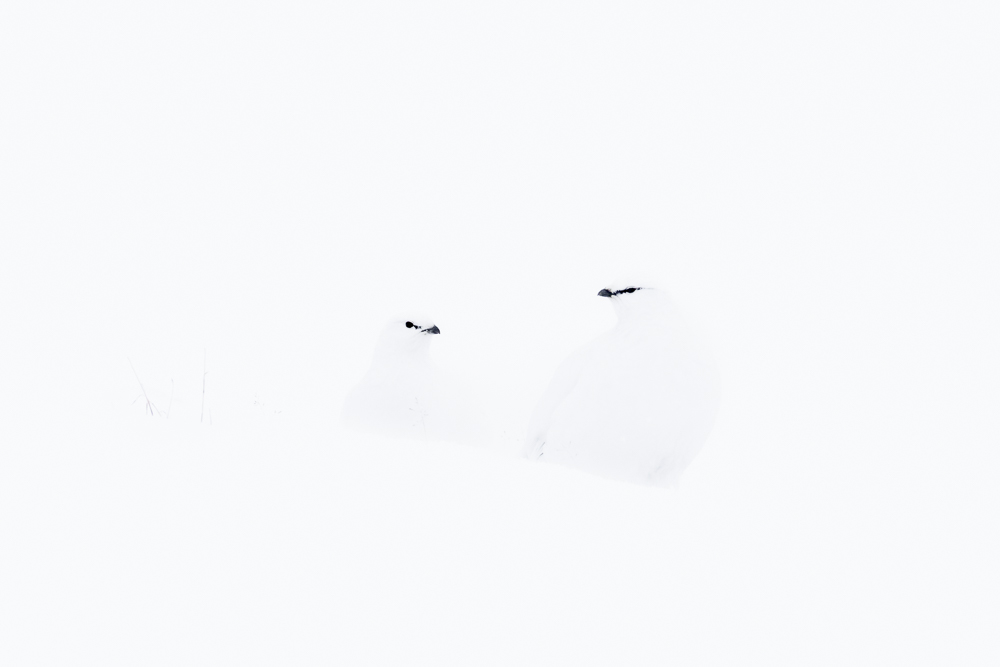
We hunkered down in our base accommodation—frustrated by the lost shooting time, but deeply aware that this, too, was part of the Arctic’s story. When the storm finally passed, it left behind a transformed world. The landscape had been reset—smooth, sculpted by the wind, and freshly dusted with snow. This shift opened new possibilities for minimalistic compositions, and our fox sightings resumed with a renewed sense of wonder.
Our routine became a rhythm of extremes—early starts, long snowmobile journeys, and frequent stops to assess terrain, scout for wildlife, or simply pause and admire the view. The focus was always on maximizing opportunities while respecting the environment and the wildlife. This private snowmobile expedition was not just a photography tour—it was a true Arctic experience. From the exhilaration of racing across frozen fjords to the quiet joy of lying in wait as a fox crests a snowbank, it was a journey that tested us, thrilled us, and left us with a deepened connection to the polar world.
As the snowmobiles rolled back into Longyearbyen for the final time, we were exhausted but elated—changed in ways we hadn’t expected. That, more than anything, is the hallmark of a truly great expedition. We will be running another snow mobile expedition for Arctic wildlife in 2026 in Svalbard. The expedition will again see us based in Longyearbyen, making daily journeys out in the field in search of wildlife. The expedition will run from April 1st until April 5th, 2026 and is limited to just three participants. Full details are now available on the website HERE.
 www.WILDNATUREPHOTOTRAVEL.com