In March of 2026, I ran my annual Winter workshop to Kviar in the Hornstrandir Nature Reserve in far northwestern Iceland to find and photograph Arctic foxes. This is a workshop I pioneered and have been running for more than ten years now. This year, our workshop was scheduled to run from the 7th of March until the 12th of March. However, the weather in early March this year in Iceland was erratic and wildly variable, and we ended up being delayed a day in Isafjord due to strong winds that made the boat crossing and landing at the beach at the cabin impossible. This one-day delay did not dampen our spirits, and early the following morning, we were safely on our way to our cabin in the Nature Reserve. As it turned out, the one-day delay would really pay off in terms of the conditions we would have for the duration of the trip.
With strong winds creating a large shore break that made landing at the cabin difficult, we decided to land a little down the coast at a small sheltered spit area, which necessitated a roughly 1km hike to our cabin. Thankfully, we were able to land our luggage at the cabin so it was only ourselves and camera gear that we had to carry. This is only the 2nd time in over a decade of travelling to this location that I have been unable to land directly at the cabin. The strong winds the day before had whipped the ocean waves up, and the breakers on the beach meant it was unsafe to land a zodiac with people. On arrival at the cabin, the foxes that live in the area were already curious and could be seen and photographed close to the house.
Our workshop accommodation was a cozy but rugged haven where we enjoyed a great atmosphere after a day out in the cold, photographing Arctic Foxes. The house was originally built in 1921. In 1948 (just 27 years later), the last inhabitants left this isolated arctic peninsula for a better life. The cabin was abandoned for many years and has recently been restored. Although no one lives here permanently, the cabin was a great getaway and the perfect place to accommodate us whilst we searched for and photographed wild Arctic Foxes. Curious Arctic Foxes frequently stopped past the cabin to investigate. We often photographed them from right outside the cabin.
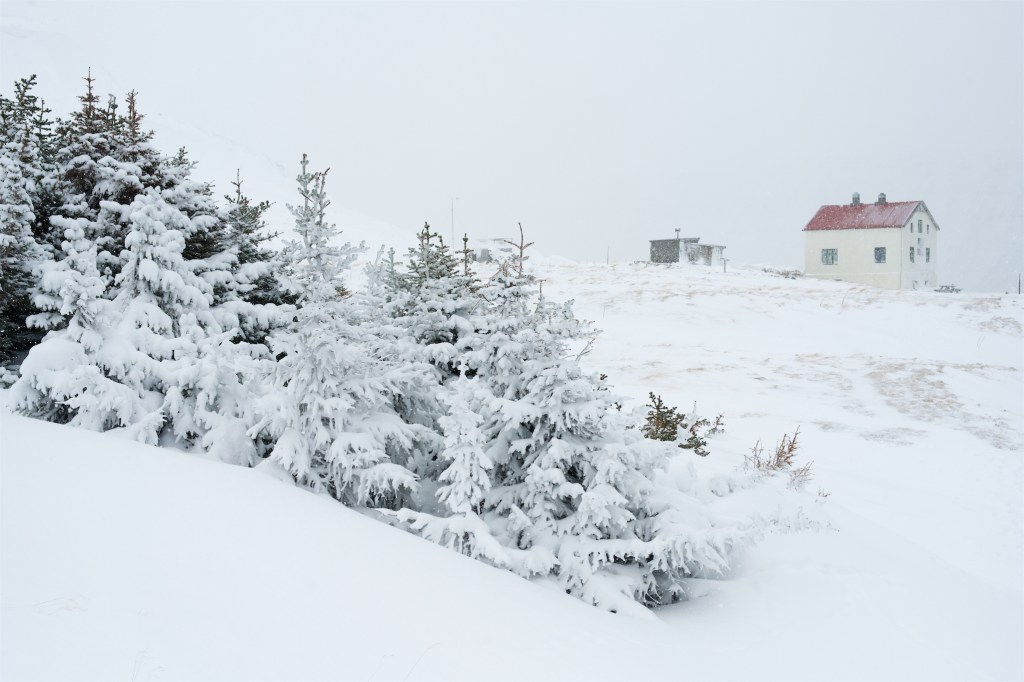
Thank you to Jerry Weimar, who participated in this year’s trip, for the landscape photograph above. The cabin includes a bathroom, toilet, and hot shower. Bunk-bed accommodation with duvets provided, a full kitchen (chef to prepare meals and clean), and Hydronic and log-fire heating. There is power for laptop battery charging (generator provided) and an outdoor sauna.
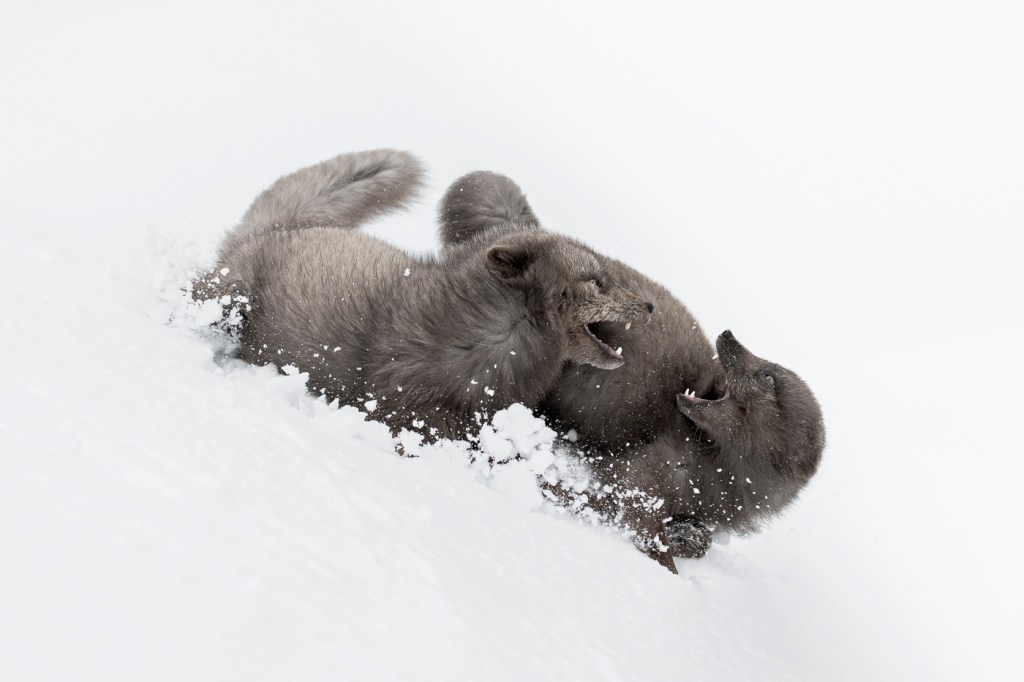
Over the course of the workshop, we photographed four different blue-morph foxes, including three first-year cubs that I had photographed last year, a few days after they came out of the den (Read the Trip Report). This was one of the few opportunities I have had over the years to photograph multiple foxes together, and although the fight looks serious, it’s mostly play between siblings and no harm, no foul.
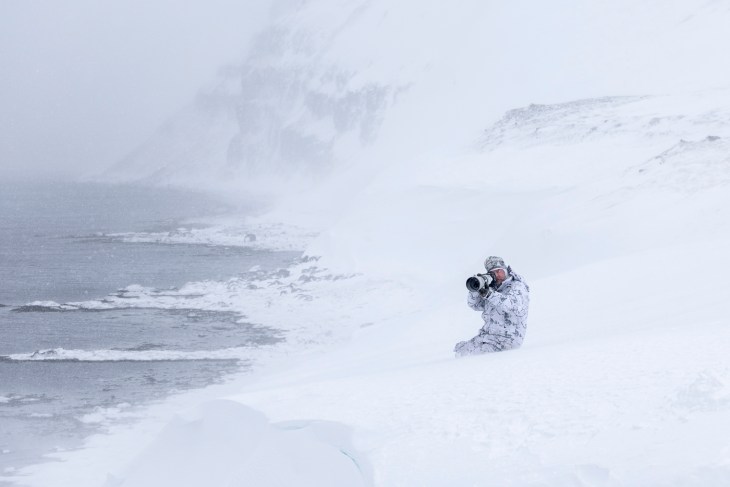
The weather on our second trip also continued its wild variation. We began with good snow cover on our first day, which melted during warm-front rain in the evening, only to be replaced the following day with non-stop snow that continued right up until our departure. This non-stop snow made for absolutely superb, albeit challenging conditions to photograph the Arctic Foxes.
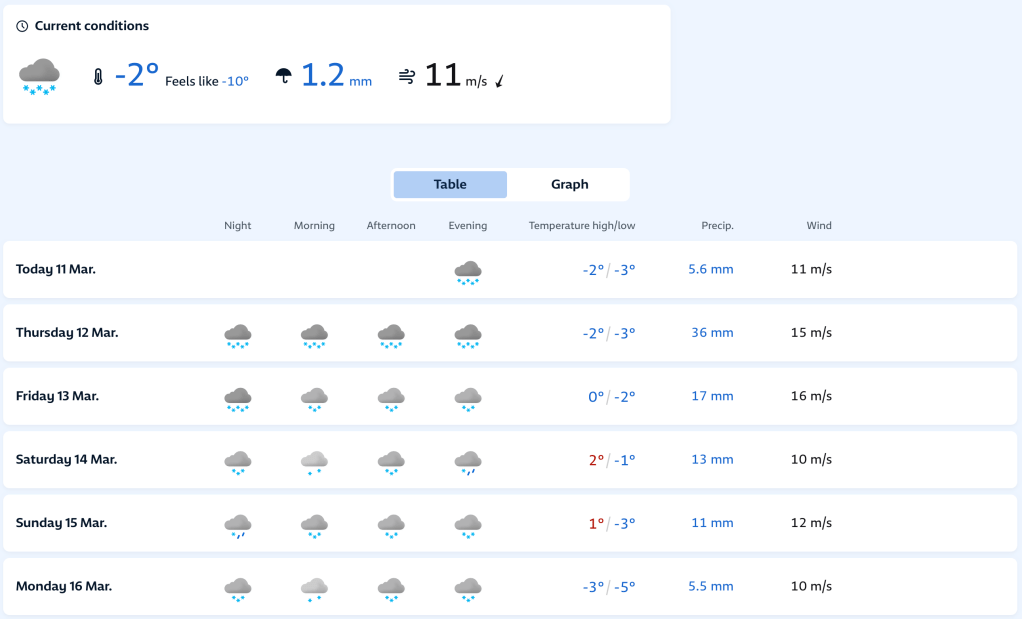
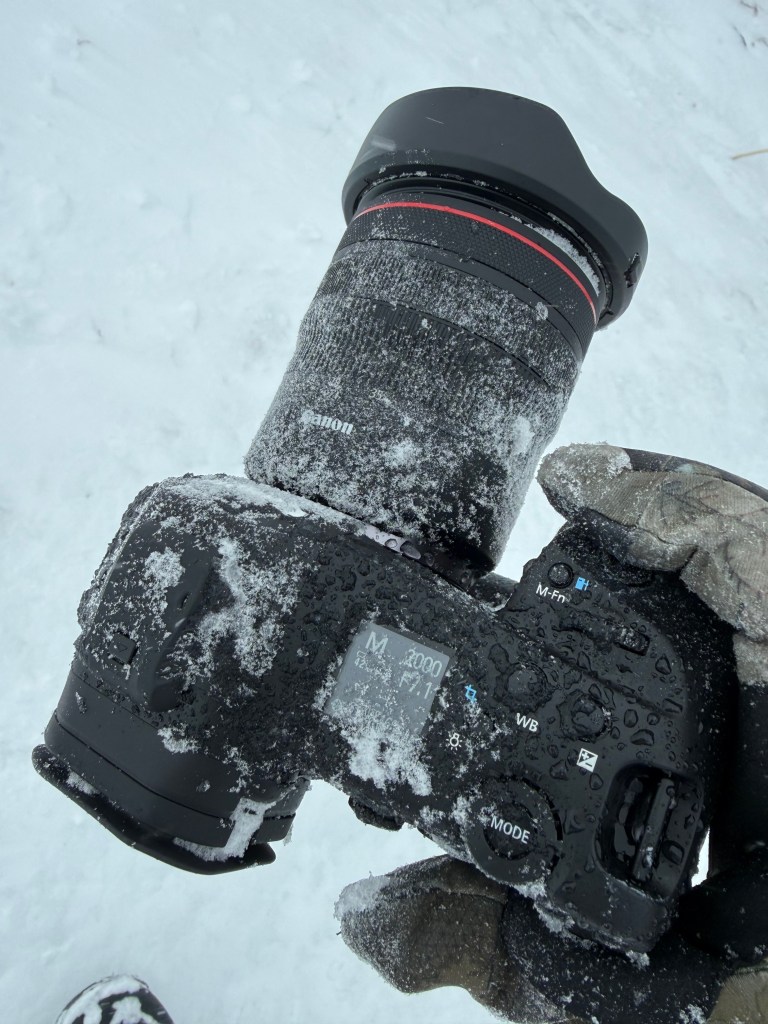
Days three and four, we had continual, intensified snowfall and strong winds, making for incredibly dramatic photography. These are my absolute favourite conditions in which to photograph wildlife in this part of Iceland. The flying snow can make photography a little more difficult, but the results are absolutely worth the effort, and everyone made incredible photographs over the course of the trip.
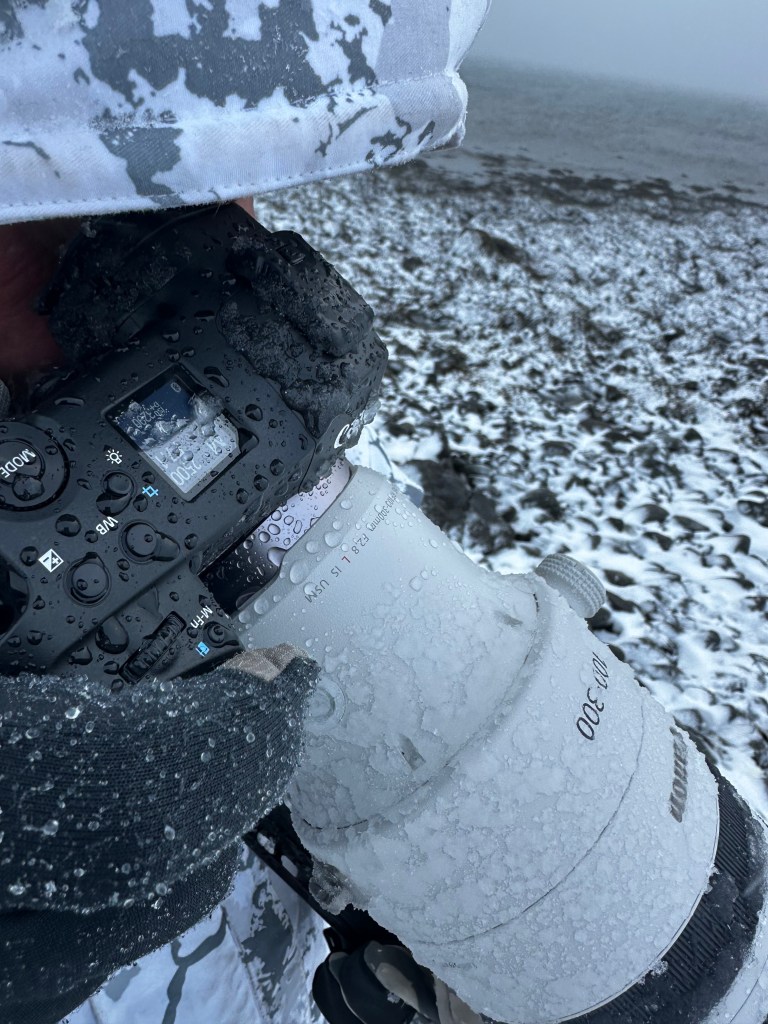
On our scheduled day of departure, Iceland threw another of its winter weather curveballs at us, stranding us an extra day out at our cabin. This turned out to be a blessing, making up for our lost day at the beginning and providing us with more wonderful photographs in the dramatic winter snow conditions. Although it would have been possible to land at the beach on our scheduled departure day, the wind in the channel would have made the crossing impossible.
The Hornstrandir Nature reserve continues to serve up both an incredible experience and a continual opportunity to create powerful, evocative photographs of the Arctic fox. In my many years as a specialist polar photographer, I have yet to find or encounter a location that offers more reliable and better encounters in a winter setting.
We are returning again in February next year, 2027, to photograph these amazing Arctic survivors and will take a small group of just five photographers with us. To reach this unique location, you will first fly to Keflavik International Airport in Iceland, followed by an internal flight to Isafjordur, the official starting point of the workshop. From here, we will take a privately chartered boat to Hornstrandir. This trip also offers a unique perspective of the dramatic coastline, characterised by towering cliffs, deep fjords, and pristine natural beauty. If you would like to join us, please get in touch as places are extremely limited. Reserve your spot on this expedition and return with a portfolio of extraordinary images that few have had the privilege of capturing.
 www.WILDNATUREPHOTOTRAVEL.com