In late March this year (2018) I lead my second ship based expedition to Svalbard in Winter to photograph the wildlife and arctic landscapes of this remote archipelago in a winter setting. The primary reason for choosing late March was at this time of the year (and at this latitude of nearly 80º North) the sun is very low in the sky all day and thus there is hours of golden light available for photography. Dawn and twilight light at this time of year typically last three or more hours and even at midday the sun is still very low in the sky. This situation provides hours and hours of superb light for photography. There is also something about the quality of light in winter at this latitude that translates very well into photographs. The light is soft and ethereal and often has wonderful pink and blue pastel shades not found at other times of the year. For the landscape photographer this combination of light, snow and ice is simply unmatched in my experience.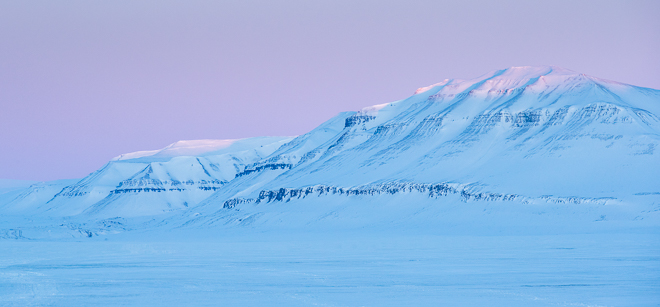 This expedition was for just twelve photographers and utilised the same ice-hardened expedition class ship I have been using for Polar Bear photography over recent years. Amongst the twelve photographers was my surprise special guest for the expedition – French wildlife photographer Vincent Munier. It was an absolute pleasure to host Vincent for this expedition and on a personal note, it was a thrill for me to photograph the wildlife and landscape of Svalbard together (in particular the evening we spent photographing the full moon rising over the snow caped mountains). Our wildlife count for the trip included five Polar Bears, three Arctic fox, seven Walrus, seven Ivory Gulls plus a plethora of Reindeer and other sea birds.
 Temperatures during our expedition ranged between -0º celsius and -28º Celsius plus wind chill factor. Our coldest day was around -35º Celsius with wind of around 7 metres a second and air temperature of -28º celsius. These sort of temperatures can be quite demanding on body and camera. However, the wonderful thing about ship based expeditions such as this is its easy to walk back inside the ship (where its around plus 20º degrees celsius) and warm up with a hot drink. Being outside and making photographs in these sort of temperatures does require some thought and planning in terms of both equipment and clothing but if you are properly prepared its quite possible to spend very long periods of time out on deck making photographs.
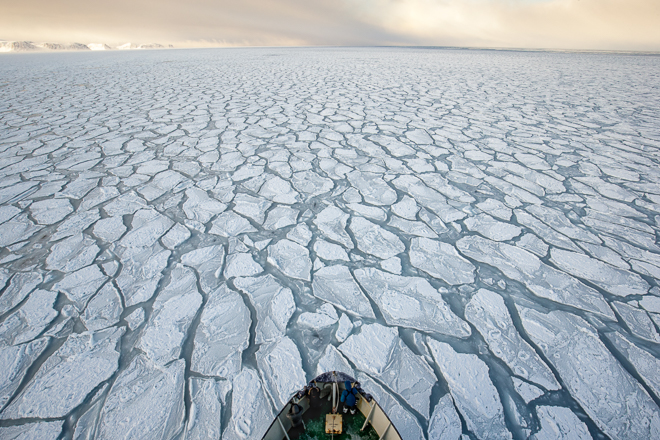 The landscape opportunities in Svalbard in winter rate as the very best I have ever experienced (even better than Antarctica). The formation of new sea ice is nothing short of spectacular and set against a back drop of snow covered peaks and glaciers with sea smoke billowing off the open areas of ocean and you quite literally have one of Natures most dramatic and breathtaking scenes.
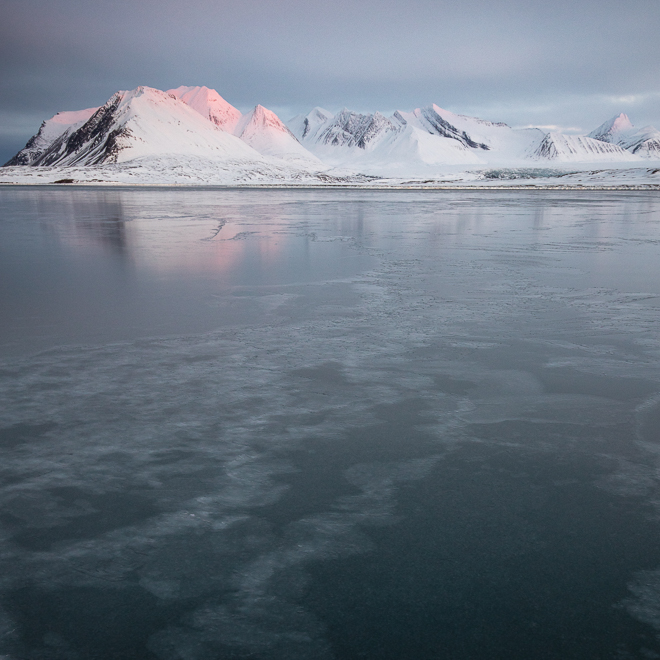 One of the great pleasures of ship based photography is that the scene is constantly changing as the boat moves slowly through the ice filled fjords. Opportunities for photographs are everywhere and part of the experience is watching the incredible landscape roll past. I particularly enjoy this sort of landscape photography as no two images are ever the same.
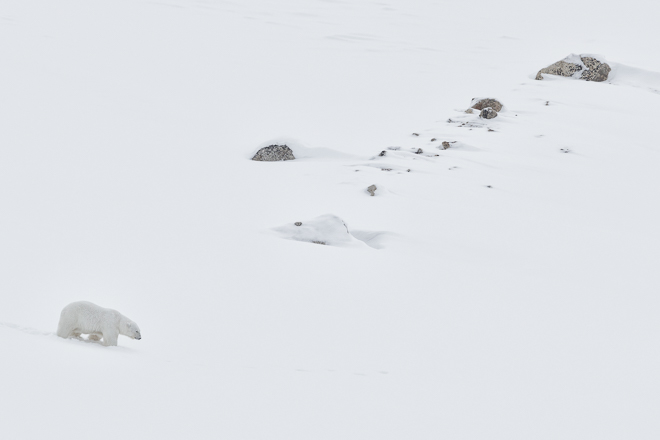 Svalbard (and the Arctic in general) in winter is not for the faint of heart. With temperatures well below freezing it can be challenging to both person and equipment. However, the rewards for those brave enough to take on the challenge are absolutely extraordinary and not to be missed. In my own personal opinion Svalbard in Winter offers the most extraordinary opportunities for dramatic landscape imagery I have had the good fortune to experience. It is quite literally breathtaking.
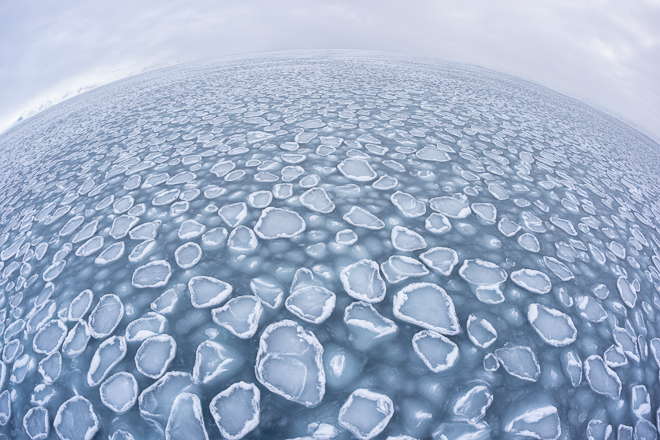 If you are interested in travelling to the Arctic and photographing the incredible landscapes and wildlife of the Svalbard archipelago in a winter setting I am repeating this expedition in late March next year (March 26th – April 3rd 2019). Late March offers us the best opportunity for wonderful light over the dramatic winter landscape. Due to initial registrations and bookings places are already extremely limited – In fact there is only one place remaining before the expedition will be sold out! If you would like more information or a detailed itinerary please just drop me an email.
Category: News and Updates
JHolko Photography Latest News and Updates
Lofoten Island Winter Workshop Report 2018
In March 2018 I led my second winter landscape workshop to the Lofoten Islands in Norway with long time good friend and fellow landscape photographer Martyn Lucas (I was last in Lofoten back in Winter 2016). As I have written previously, the landscape of these islands are really quite something to behold. Precipitous and ominous peaks that rise straight out of the ocean loom over small fishing villages that comprise of bright red houses lining the shorelines. With a dusting of fresh snow and arctic winter light the entire scene is akin to a fairy tail location and subsequently the photographic opportunities can be truly superb. It is just this magical landscape that attracts so many photographers to this spectacular part of Norway. This workshop was a for a small group of just six experienced landscape and nature photographers. We based ourselves primarily in the small town of Reine and made daily excursions to various locations around the Island for photography. Lofoten has been discovered on mass by photographers in recent times and many of the iconic locations are now close to saturated with photographers. I will have more to say on this later, but I personally find it quite uninspiring to watch large groups of photographers all lined up waiting their turn to make the same photograph. I am not sure what it is about the human psyche (and it may be particular to photographers) that compels people to want to take exactly the same photograph as thousands before them. Be that as it may, there are some photographs that can be considered ‘money-shots’ in Lofoten and no trip to these islands would be complete without at least one visit to these locations. Generally though we made an effort to get off the beaten track and visit some of the more hidden gems.
 Like much of the Arctic, photography in Lofoten in winter is heavily weather dependant. It is entirely possible to be socked in for days with heavy cloud and bad weather in this part of the world (a risk you have to be prepared to accept when you venture so far north in winter). Its common on this sort of trip to loose at least one or two days to bad weather – its par for the course. Fortunately, we had very good weather and light for most of our trip with perhaps a few more blue sky days than I would have preferred.
  Being surrounded by water Lofoten offers great opportunities for seascape photography at just about every turn and we took advantage of this by visiting and photographing many different beaches and areas of coastline. Much of the coastline is rocky or dotted with large boulders which provides limitless opportunities for foreground interest. Many of the beaches are also very accessible and only a short walk from car parks or pull off areas. We spent quite a lot time exploring and photographing various areas of coastline and some really interesting photographs resulted. In the right conditions, Lofoten in winter also has the added benefit of snow down to sea level for even more interest.
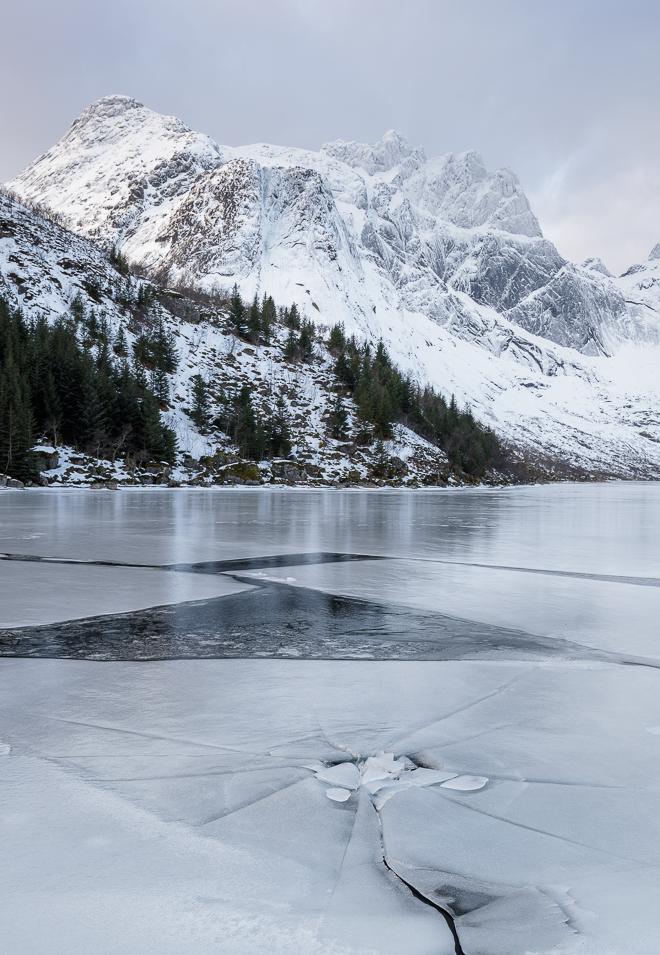 On our last day we mixed things up and took a private charter boat out to photograph White-Tailed Sea Eagles fishing off the coastline. As we discovered in 2016, this proved a worthwhile exercise with a couple of hours of really wonderful eagle photography in mostly soft overcast light. Photographing fishing sea eagles from boat in winter in the Arctic is a lot of fun. We were able to get quite close to some of the eagles (so close my 400mm F2.8L IS MKII was occasionally too much lens and I had to switch out to the 70-200mm F2.8L IS MKII).
 Visiting Lofoten in Winter also provides an opportunity for cultural photography. At this time of year the cod are being fished around the Islands; they are then processed and hung to dry on the many cod racks dotted around the Islands (yes, you can smell them long before you see them). Every part of the cod is used and even the heads are hung to dry. I am personally not a street or cultural photographer but the process is nevertheless interesting to watch and photograph.
To those of you who have already expressed interest in a future workshop to Lofoten in 2019 or 2020: At this stage I will not be running a future trip to Lofoten (due mostly in part to it being overly saturated with photographers). I would however, like to thank Martyn for his assistance in guiding the group to some fantastic locations and to all who participated and contributed to this workshop. We were blessed with some great conditions for photography and some really strong images resulted from our experience and time in Lofoten. Small, intimate groups for this sort of landscape photography workshop are the ideal way to ensure you capture the best possible photographs.
Polar Bears of Svalbard Expedition 2018 – Two Places Remaining
This July (July 25th – August 4th) I am leading my annual expedition to Svalbard in search of Polar Bears, Walrus, Arctic Fox and spectacular Arctic landscapes. Whilst Polar Bears and other wildlife are the main attraction on an expedition such as this it needs to be said that the landscape opportunities in Svalbard are nothing short of breathtaking. Soaring bird cliffs, plunging glaciers and dramatic mountainous scenery means there is quite literally something for every photographer. You can read the expedition report from last year on my blog HERE. 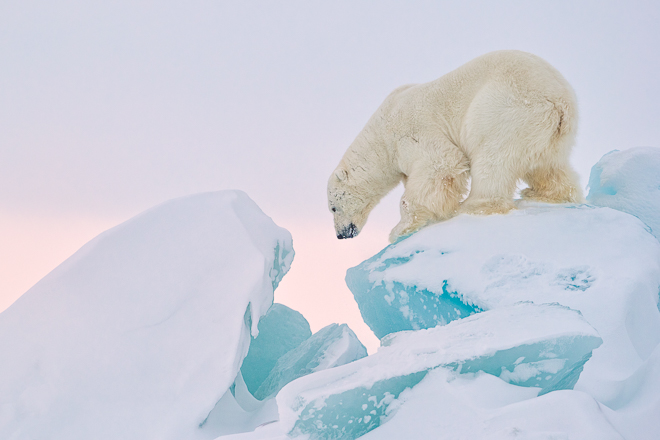 Summer in the high arctic is a very special time for photographers. With twenty-four hours of daylight the photographic possibilities are quite literally as abundant as the day is long. In fact, what would normally pass for night time is actually one of the best times for photography in the Arctic summer as the light is often soft and ethereal with subtle golden overtones.
If you are interested in travelling to the high Arctic to encounter and photograph polar bears and incredible arctic landscapes then now is the time to act. Places are strictly limited to twelve participants (only two places remaining before it will be sold out). To get an idea of what it is like to participate in an expedition such as this be sure to check out the short film Kingdom of the Ice Bear below. You can download a complete PDF itinerary of the expedition HERE or drop me an email to register your interest. 
Iceland Winter Arctic Fox Expedition 2018 Expedition Report
In February 2018 I lead my special small group expedition to the extreme north west of Iceland for a group of just five photographers to photograph what is perhaps Nature’s greatest survivor: Vulpes lagopus – The Arctic Fox. This is only the second time I have taken a small group with me into the nature reserve as this is an area very near and dear to my heart.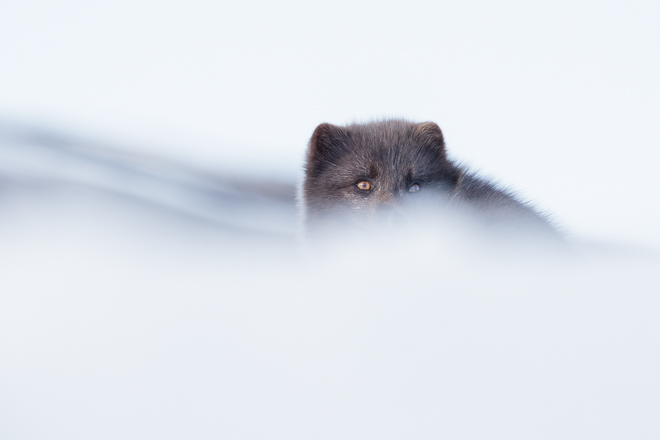 I have been travelling to the Hornstrandir Nature Reserve (Hornstrandir is Iceland’s northernmost peninsula, covering 580 km² at the northern end of the Westfjords, to the north of the Jökulfirðir and to the northwest of Drangajökull) in Iceland during the winter months for five years now specifically to photograph Arctic Fox in winter. I released both a limited edition and open edition book on the Arctic Fox (Melrakki) which was the culmination of three years of winter photography. Prints from this book are now on display at the Arctic Fox centre in Sudavik and the book can be purchased directly through Melrakki Publishing.
 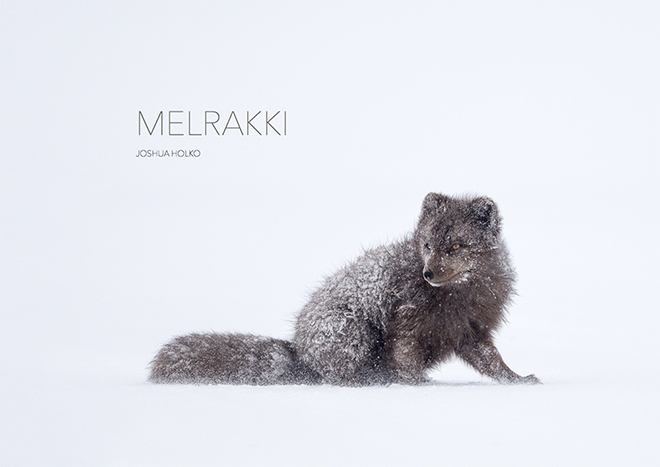 For the uninitiated, Arctic Foxes are unfortunately hunted and shot across most of Iceland making them extremely shy and difficult to find (and even more difficult to photograph). In the remote north-west however the Arctic Foxes are protected inside the Hornstrandir Nature Reserve and can be more easily approached and photographed. What is especially compelling for wildlife photographers is that Iceland is one of the very few places in the world where it is possible to reliably photograph the Blue Morph Arctic Fox (the rarer of the two colour morphs across most of the Arctic). White morphs are also found in Iceland, but in smaller numbers.
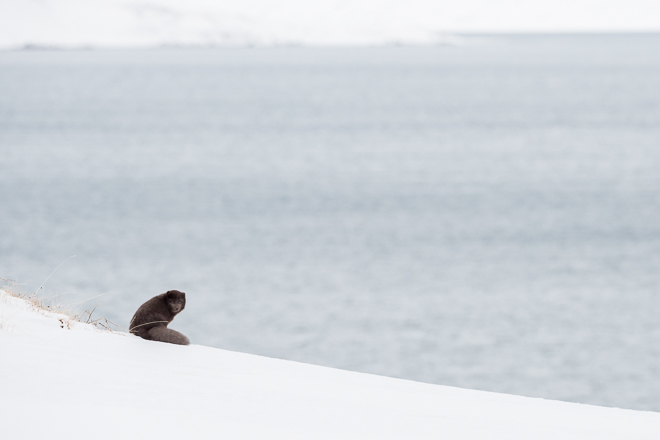 We began our expedition in the small town of Isafjord in the north-west of Iceland with a somewhat delayed start due to a winter storm that made flying impossible on our original planned departure day from Reykjavik. We had planned to have one night in Isafjord before we departed but as it turned out we spent that evening Reykjavik. The next day the weather was still touch and go, but after a bumpy landing we arrived safely in Isafjord. After a quick visit to the Arctic Fox centre in the nearby town of Sudavik where we all had an opportunity to learn a little bit more about the biology and history of the Arctic Fox in Iceland we departed on our expedition in the early afternoon.
 From the small town of Isafjord, we travelled by private charter boat to the remote north-western Hornstrandir Nature Reserve (approximately one and a half hours by boat) where we stayed for the next seven nights in a small remote private cabin. The Hornstrandir Nature reserve can only be accessed by private charter boat (there are no roads or other services into this part of Iceland – and hence no tourists). Once we arrived in the reserve we had no contact with the outside world except via satellite phone for emergencies. The cabin we stayed in for the duration of the expedition is privately owned and facilities include shared bathroom, toilet and shower as well as a kitchen with hot and cold water, a communal eating area and lounge. There is even an outdoor sauna available for use. Bedrooms are a shared bunk bed arrangement. The cabin is heated with both a hydronic heating system and a log fire. During our stay in the cabin we had a dedicated person to clean and prepare breakfast, lunch and dinner for us each day; which enabled us to focus solely on our photography. The house was originally built in 1921. In 1948 (just 27 years later), the last inhabitants left this isolated arctic peninsula in search of a better life. The cabin was abandoned for many years and has only recently been restored. Although no one lives there permanently, the cabin was a great getaway and the perfect place to accommodate us whilst we searched for and photographed Arctic Foxes. Curious Arctic Foxes frequently stopped past the cabin to investigate during our stay and it was even possible to photograph them from right outside the cabin on several occasions.
 Arctic Foxes are predominantly territorial animals that roam and patrol vast areas of the Arctic. The Arctic Foxes of Iceland are particularly tough and hardy. They have to deal with constant freezing and thawing conditions throughout the winter months in areas where this is little or no food available. During our winter expedition we experienced temperatures a few degrees either side of freezing (0º Celsius) plus wind chill. Although this was a low snow year (yet again) we were fortunate to still have sufficient covering during most of the expedition. We also had a real mix of weather and light which provided us with a lot of different opportunities during our time in the reserve.
During our expedition we saw and photographed four individual blue morph foxes. As the foxes are territorial they visited us repeatedly on a daily basis (often several times per day) which provided us with multiple opportunities to photograph them. Arctic Foxes are by their nature inherently very curious animals and on many occasions approached within just a few feet of our cameras. Best of all the foxes are most active in the morning and evening – when the light is usually at its best for photography. Several of us also spotted a white morph fox further down the coast, but it proved shy and elusive for photography. 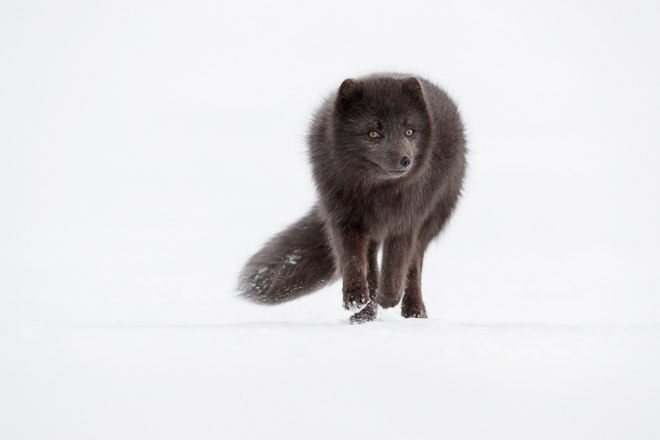 In addition to the Arctic Foxes there was also bird life along the coastline including Iceland Gulls, Eider Ducks, Ravens and Ptarmigan in winter plumage. I have in the past also seen and photographed Gyr Falcon in this area of Iceland and Eagles are also seen on occasion.
The winter landscape in this part of the Hornstrandir Nature Reserve is simply stunning in its wild beauty. As a result, there were also many opportunities to make landscape photographs during this expedition.
We were met by the boat again on the morning of the 1st of March for our return trip back to Isafjord and were transferred to the airport in time for our return flights to Reykjavik. We concluded our expedition in the evening of the 1st of March in Reykjavik.
During the expedition the participants made between ten and twenty thousand plus photographs per person which gives you a really good idea of just how many incredible opportunities and encounters with Arctic Foxes we experienced during our time in the Nature reserve. Many of our encounters lasted several hours and on multiple occasions we had the luxury of choosing our backgrounds and angle of view for our photographs.
If you are interested in photographing wild Arctic Fox I will be repeating this expedition early next year (2019) for a small group of just five photographers (only three places remaining before the expedition will be sold out). Full details are on my website at www.jholko.com or you can register your interest in one of the two remaining places by dropping me an email.
Winner AIPP 2018 Victorian Professional Photography Awards Documentary Category
The 2018 AIPP (Australian Institute of Professional Photography) Victorian Professional Photography Awards concluded last night with the awards presentation at 1140 Studios in Melbourne (Judging was held on Tuesday and Wednesday this week). I was very pleased to be honoured as the overall winner for the EPSON Victorian 2018 Professional Documentary Photographer of the Year as well as being a finalist in the Nature category. I have previously won the Nature Category (formally the Science, Wildlife and Wild Places category) in 2014 and was also a finalist in 2015, 2016 and 2017. I also won the Documentary category last year so its fantastic to back that up with a repeat win.
Like last year I decided to split my print entries across the Documentary and Nature categories for 2018. All of the images were awarded either Gold, Silver with Distinction or Silver awards.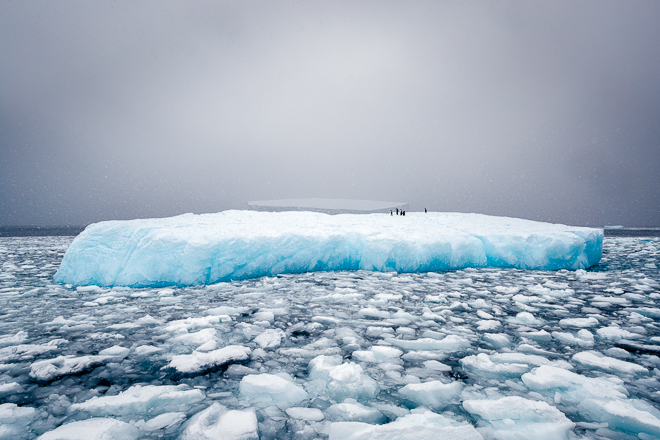 Documentary Category – Adelie Penguins Ride Blue Ice in Antarctica – Silver Award 83
 Documentary Category – Lone Gentoo Penguin Antarctica – Silver with Distinction 86
 Documentary Category – Mother and Cub – Silver with Distinction 89 (one point from Gold)Documentary Category – Male Polar Bear on Blue Ice – 90 Gold Award
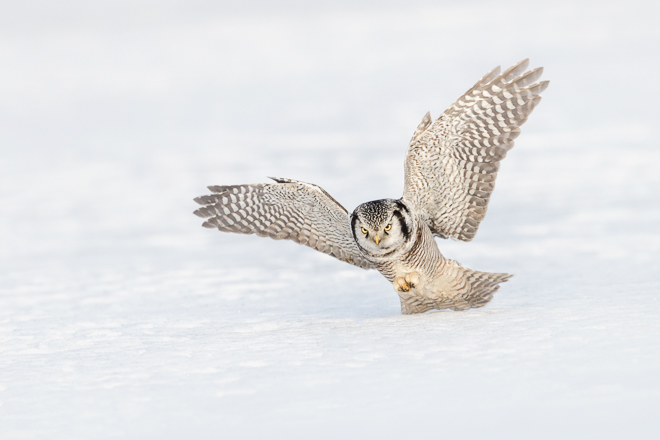 Nature Category – Hawk Owl – 83 Silver Award
 Nature Category – Atlantic Puffin Fly By – 80 Silver Award
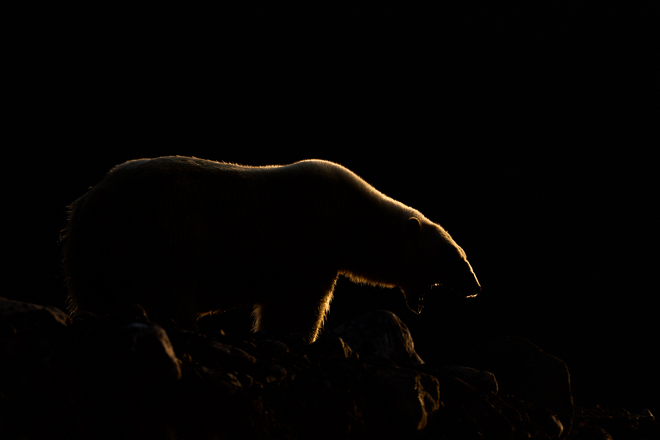 Nature Category – Back Lit Polar Bear – 84 Silver Award
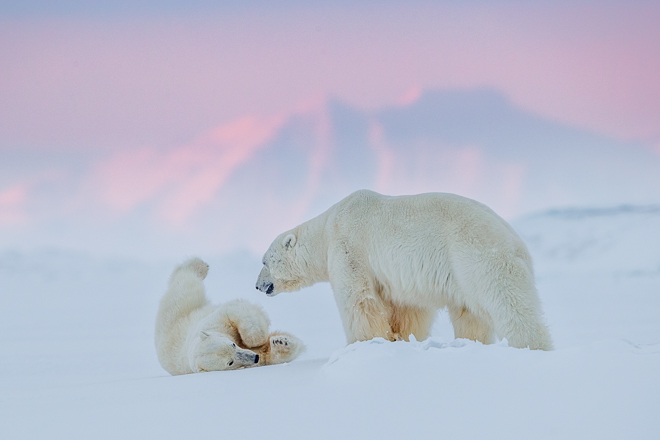 Nature Category – Polar Bears at Play – 84 Silver Award
From my previous post on these awards: The AIPP National and State awards are two of the few remaining competitions to actually judge the finished print and they do so using a panel of judges all deemed experts in their respective genres and accredited as Masters of Photography through their years of success in this arena. Prints are judged in a controlled lighting environment and assessed for their content, originality as well as technical craftsmanship. The judging is enthralling to watch and can be quite nerve wracking if you are a first time entrant as the standard of work is incredibly high.
 www.WILDNATUREPHOTOTRAVEL.com