I wrapped up my 2015 South Island New Zealand workshop a few days ago and am now enjoying a second trip around the island on a back-to-back tour. During the first workshop one of the many photographic discussions we had over dinner was about the process of editing ones photographs and this got me thinking more deeply about being truly objective when self critiquing our own photography.
One of the most important, underdeveloped and most frequently overlooked skills that we photographers need to develop throughout our career is the ability to self-analyse, self-critic and self-edit our own photography. To be clear, the term ‘editing’ does not in any way refer to post production; rather it holistically refers to the ability to choose only the very best images from our shooting session, relegating the remainder to seconds and thirds (which frankly, should probably never see the light of day). The ability to ruthlessly cull and conscientiously edit our own images is in all likelyhood the most misunderstood, and poorly exercised skill practiced by the vast majority of photographers. For just a moment, lets assume you fall into this category. You may, or may not be a discerning expert in editing your images (it would make you a rare commodity), but for the sake of the argument lets assume for a moment you are not. Assuming this is a bridge you are willing and able to cross (vanity and ego need to be put aside at this point if we are to have any hope of actually improving our image editing skills) how does one go about improving this critical skill?
Before I address this question I want to point the finger of blame at Social Media for what what is in all likelihood the primary modern catalyst for many photographers developing such poor editing skills. I touched on this briefly in Part Four of my series of articles on Creating Emotive photographs where I discussed the rush to share imagery through social media platforms at the expense of quality photography; but I want to expand on this further in this article. I also want to discuss why the ability conscientiously edit photographs is such a poorly practiced skill and what you can do to improve your ability to objectively edit your own photography.
It is important to focus particularly on educating oneself on what makes a good photograph before you can have any hope of objectively editing your own images. See Part Three of my series of Articles on Creating Evocative Photographs where I discuss the importance of reading books about photography, visiting galleries and studying art. Learning what a good photograph actually looks like might seem like an easy task at first blush; but I assure you it takes a good deal of experience and maturity as a photographer to truly recognise the image that excels. Learning to separate genius from cliché and emotive and interesting from banal and lifeless is actually a lot tougher than you might think. It only takes a saturated sunset image to wow most people but as photographers who strive for more we know there really isn’t anything more cliché or boring in terms of subject. We are looking for more in our own imagery and we need to know what that ‘more’ is. The problem is we can’t know what that ‘more’ is if we haven’t learned what makes a truly great photograph. We can’t know what makes a truly great photograph unless we have spent the time to learn from those who went before us. We have to actually put our cameras (and cell phones!) down and spend some real quality time educating ourselves.
I stand by my comments that most photographers would be far better off investing the money allocated for their next camera or lens purchase in gallery and museum entrance fees, books and prints so as to better educate themselves on what makes a good photograph. The camera is just a tool to capture a photograph. The quality of the photograph that emerges from the camera is going to depend on the photographer wielding the tool. It is therefore the responsibility of the photographer to educate themselves on what makes a good photograph. Think about that for a second…Education will make you a better photographer. Not the new camera the manufacturers brainwashed you that you had to have because yours was suddenly superseded. If you take this advice to heart I probably just saved you several thousand dollars and improved your photography in a single swipe.
Ask yourself how many contemporary photographers can you actually name who work in your chosen field of interest and whose work you know well? If we are to have any hope of producing high quality photography in our chosen genre we need to know who the leading photographers are in that specific field so we at the very least know and understand where the bar is set for image making. You should be able to rattle off a list of modern contemporary photographers whose work you know and admire. That will give you an excellent starting point when editing your own images. Its not a direct comparison you are going to be making; rather it is an understanding of wether your photograph is really any good or whether is it just the best you were able to do of that particular subject on a given day. There is no shame in putting the images from a recent shoot in the reject bin and instead planning to revisit and retry the location having learned from your past experience. I do this all the time and have lost count of the number of places I have visited and photographed and subsequently decided I need to revisit for take two (or three or four or more!).
I want to share some statistics from my recent scouting trip to the Arctic that might help put this editing process into perspective. I covered over 500 kilometres on snow mobile in the middle of the arctic winter this March in a remote part of Svalbard over a period of a week. I endured temperatures below -30 Celsius with wind chill for more than ten hours a day. I got frost nip in my fingers and nose on several occasions from lying in the snow and ice for hours at a time waiting for wildlife and light. I lived on Drytek freeze dried meals out in the field because it was the only thing that is safe to travel with in Polar Bear country. In short, I suffered to shoot the nearly 3000 frames I took over the period of a week out in the field. NONE of this matters however, and absolutely none of it has any bearing or relevance on wether my photographs are actually any good. Its all superfluous information that might make a good story and ‘making of’, but ultimately contributes nothing to the photograph itself. And here is the rub. You have to have a true quality hit photograph before you can have a good making of story. Here is the really critical element to these statistics that might shock some newcomers to photography. I probably made between three and six photographs that I would consider to be really stand out images out of the 3000 I shot that I will want to put my name to and share. And that is a really good ratio. I probably have several hundred variations on these three or six images as a result of using high speed capture and I probably have several hundred more that are close, but just not quite there in terms of being really stand out images. The rest are frankly rejects that should never see the light of day. And honestly, neither should the previous few hundred that got close or the slight variations that almost make it over the line but ultimately are just not quite as good. This ratio doesn’t make me a bad photographer – it makes me a conscientious editor of my own work. I realise that the back story is superfluous to the photograph outside of my own personal want to record and share the adventure. I have to be objective when I analyse and edit my photographs and put the journey of their capture to one side and focus on wether I actually made a good photograph. This is a hard skill to master when you are the one who has worked and suffered to create; but its an absolutely necessary one to develop and practice if you want to elevate your photography to the next level.
I believe there is a strong lesson to be learned from this example and I encourage you to think objectively and to exercise a ruthless approach to editing your own photography. Try and be objective and truly neutral in the assessment of your photograph when editing your images. Is it really a good photograph? Or, is it merely the best you were able to make on the day at that particular location? There is a marked and critical difference that many photographers would do well to understand.
I appreciate that not everyone falls into the bucket of wanting to produce and share the best that they can do and that some people just want to share their photographic adventure as they journey through life – and thats just fine. But for those of you out there who really do want to take it to the next level I think its worth taking a good look at the skill of editing and asking some tough questions about our images and our ability to objectively edit them. I’ll wager the toughest question you are going to have to ask yourself is do you need to take this advice? Take my advice on this – You do. And So Do I. Once we step down from our pedestal and the ethos of “this does not apply to me because I already know what I am doing” we free ourselves from the shackles of our current editing prison and open the doors to new potential and growth. That next book you pick up might just give you new insight and ideas that you had never considered and that will improve your photography and your editing.
I encourage you to spend quality time learning who the leaders are in your chosen field and genre. Study their photography and learn from their compositions and approach to their image making. I have a number of contemporary photographers I follow whose work I consider exemplary in their field (Ill share their names in a separate post at a later date). I encourage you to dive headlong into as many photography books as you can, free from the distractions of the internet. Take your next lunch break at the local gallery or head to the library and pick up a book on art. I promise you your photography will improve in leaps and bounds and you will become a far more conscientious editor of your own photography.
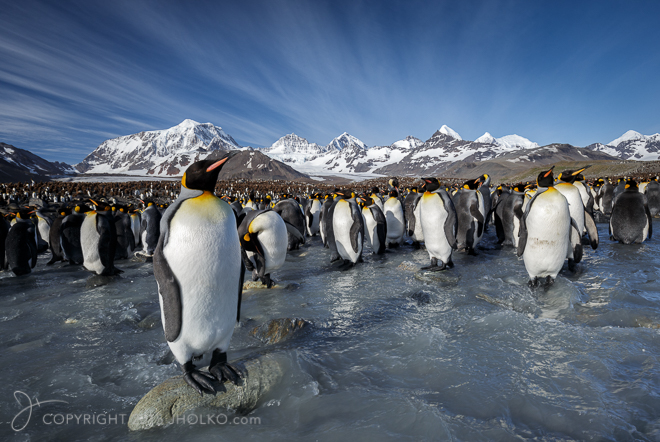
 South Georgia’s remote, untamed landscape is simply stunning. Scattered across the mighty Southern Ocean, the tiny arc of windswept islands and harbours are some of the world’s greatest wildlife sanctuaries set against world class landscapes. Famed for its abandoned whaling stations and Shackleton’s heroic journey, South Georgia is home to literally millions of fur seals and penguins, wallows of elephant seals, and nesting albatross. After we finish photographing in this breathtaking area we will sail back to the Falkland Islands where we will dock on the 21st of November and conclude this photographic expedition.
  We will be using an ice hardened expedition ship that will enable us to get into the best possible locations. Our expedition ship the ‘Polar Pioneer’ is equipped with sufficient zodiacs and crew for all photographers to be shooting simultaneously with plenty of room to spare for camera equipment. If you would like to reserve one of the two available places or would like further information you can download a detailed itinerary and PDF flyer HERE or drop me an email. Please note that once these last two places are spoken for thats it.

 www.WILDNATUREPHOTOTRAVEL.com