The Highlands of Iceland 2016 Workshop Update

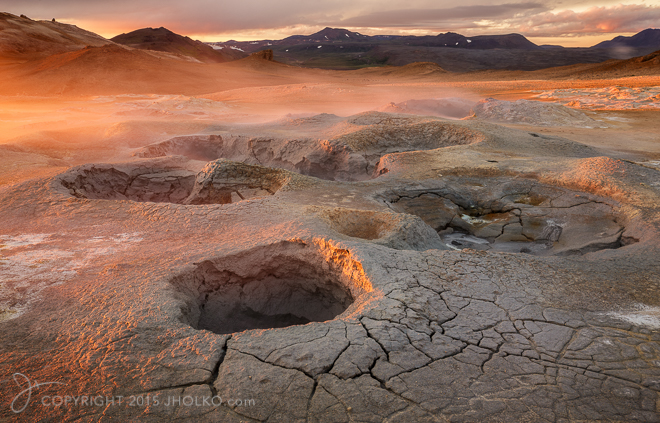
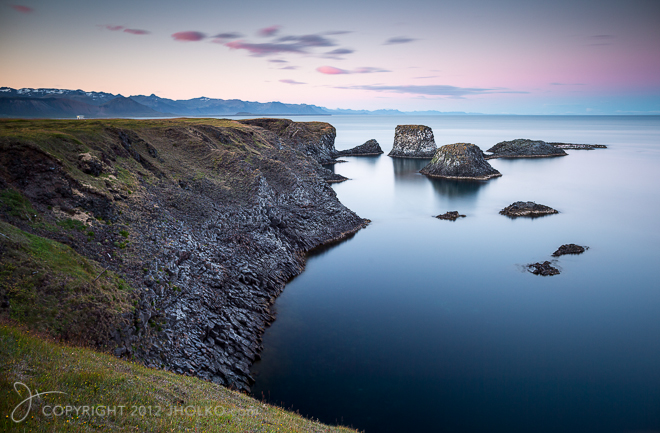
Yesterday Daniel Bergmann and I kicked off the first of two back-to-back workshops in the Highlands of Iceland. We are currently at our base of Hrauneyjar, where we’ll be located for the next three nights. From here we plan to explore the magnificent Fjallabak Nature reserve, which includes the Landmannalaugar area and other less known highland pearls, such as the Veidivotn region. We are particularly hopeful of some spectacular midnight sun light in the Landmannalaugar area as this region can be truly phenomenal when conditions co-operate.Super Moon Rising at Landmannalaugar #2 IcelandWe will then ravel across the Sprengisandur route that crosses the interior of the island and and make our way to Lake Myvatn in the north, where we’ll spend the next three nights. Once there we’ll photograph the waterfalls of Skjalfandi river (Godafoss and Aldeyjarfoss), plus the Dettifoss and Selfoss waterfalls in Jokulsa river. We’ll also explore the geothermal areas close to Myvatn and if the weather allows, make an excursion to Askja, in the northen highlands, where we’ll be able to see and photograph Iceland’s latest lava field at Holurhraun, plus the Askja caldera itself._MG_4121-Edit22014Once we have concluded our stay at Myvatn we’ll travel west along the northern coast and overnight near the Vatnsnes Peninsula. Hvitserkur sea stack will be one of our main subjects at Vatnsnes, along with other coastal features.

The following day we’ll travel to the Snaefellsnes Peninsula, where we’ll spend the last two days of our trip. At Snaefellsnes we’ll photograph the iconic Kirkjufell mountain and the spectacular coast at Arnarstapi and Hellnar, on the southern tip of the peninsula.ArnastapiFrom Snaefellsnes there is a three hour journey back to the Keflavik international airport where we will conclude our trip on the 23rd of August. For now though its time to grab our gear and head out into the Highlands…

Departing for Polar Bears of Svalbard 2016 Expedition

It seems like only last week that I returned from the South Island of New Zealand (I am sure time is accelerating as I get older) but in a few minutes time I will be piling into a taxi with all my gear and heading to the airport for the long haul flights to Oslo and then onto Longyearbyen for my 2016 Polar Bears of Svalbard expedition. Svalbard has become one of my favourite destinations in the world for both Wildlife and Landscape photography. It is an incredible area located deep within the Arctic circle that offers the possibility for fantastic polar bear photography as well as other Arctic species including Walrus, Arctic Fox, Reindeer, Whales and more. The landscape of Svalbard is also very much an untapped gem and there are limitless possibilities for photography in this remarkable Arctic environment.

On this expedition we are using a small ice hardened vessel that will enable us to get in nice and close to drift ice around Svalbard. Importantly, it has nice low decks so we can get down to eye level with our subjects. With this expedition being limited to just twelve participants we will have plenty of room for everyone to photograph at once from both ship and zodiac and I am super excited to share this experience with all aboard. As well as Polar Bears, we will also likely photograph Walrus, Arctic Fox and a great many Arctic sea birds during our expedition.

After I finish in Svalbard I am headed directly to Iceland for two back-to-back workshops in the Highlands. Each of these workshops covers a different area of the Highlands and each has something different and unique to offer. The highlands are the real heart of Iceland and at least to my mind offer some of the most stunning scenery and photographic opportunities to be found anywhere. It is also a wonderful chance to get off the main roads and into less visited areas of the country. Daniel Bergmann and I planned these two workshops more than three years ago now and I am looking forward to sharing the experience of these wonderful locations with all of our participants. I am of course, ever hopeful that the long overdue Hekla volcano might also put on a show for us…You never know!

My 2016 Svalbard expedition has been sold out for some time, but there are still a few places remaining on next years 2017 expedition before it to will be sold out.  If you would like to get an idea of what this expedition is like you can read the trip report from the 2015 expedition. A full itinerary and additional information can also be downloaded HERE. If you would like join us you can register your interest by dropping me an email at any time. Places are filled on a first come, first served basis.

On the way to the End of the World - AntarcticaWatch Kingdom of the Ice Bear Expedition MovieKingdomoftheiceBearPreparing for both Svalbard and the Highlands of Iceland presents some packing and equipment challenges as I need to pack both long telephoto lenses for the wildlife and a more ‘hike friendly’ light weight system for hiking in the highlands. As such I am taking three different camera bodies on these trips. Two Canon EOS 1DX MKII’s will be my primary cameras for the Polar Bears of Svalbard expedition. The Canon EOS 1DX MKII is the perfect tool for Arctic wildlife photography and I am looking forward to using these cameras for the first time in the Arctic (I did recently take them to New Zealand – Read the Trip Report) I am also carrying the 50 mega pixel Canon EOS 5DSR camera for the two Iceland Highland workshops after I finish in Svalbard. The Canon EOS 5DSR is actually more about weight saving than pixel count for me. Its light weight body is preferable for hiking to the Canon EOS1DX MKII; although quite honestly I prefer the files from the new Canon EOS 1DX MKII cameras.

F-Stop Lightroom Roller Camera Bag

  • Canon EOS 1DX MKII Pro Body Camera x 2
  • Canon EOS 5DSR Camera
  • Canon 24mm F3.5L TSE MKII Lens
  • Canon 16-35mm F4L IS Lens
  • Canon 24-70mm F2.8L MKII Lens (The MKII version of this lens is an amazing piece of glass)
  • Canon 70-200mm F2.8L IS MKII Lens
  • Canon 600mm F4L IS MKII Lens
  • 2 x Spare Batteries for the 1DX MKII
  • 2 x Spare Batteries for the 5DSR
  • Canon 1.4 TC MKIII Tele-Extender
  • Leica Ultra-Vid HD Binoculars
  • Cable Release
  • Assorted CF, CFAST and SD Cards totalling around 300 Gigabytes
  • Rocket Blower and Dust Cleaning paraphernalia
  • Complete LEE Foundation and Filter Kit with Soft and Hard ND Graduated filters and LEE Polariser

I am carrying the TSE lens specifically for landscape photography in Iceland. I am primarily carrying the 600m and 300mm lenses for Polar Bears and other wildlife in the Arctic, but also intend to use them to photograph birds at Jökulsarlon in Iceland.

Chobe Bag: (carry on luggage)

  • 15″ Macbook Pro with Lightroom and Photoshop
  • MacBook Power Adapter
  • Canon 300mm F2.8L IS MKII IS Lens
  • 2 x Sandisk Extreme USB3 2TB SSD Hard Drives for in the field Back Up.
  • Various Power Adapters / Chargers and Associated Cables
  • Canon 1DX MKII / 5D Battery  Charger
  • USB CF, CFAST and SD Card reader
  • Passport / iPhone / Wallet
  • A lot of these items I store inside Etcetera cases inside the Chobe. (These cases are fabulous for organising accessories)

Tripod: (checked luggage)

  • Really Right TVC33 Tripod
  • Arca Swiss Z1 Ball Head with Levelling base for landscape work
  • Satchler FSB-6 Fluid Head with Levelling base for long telephoto lens work
  • Really Right Stuff Tripod Spikes (For mossy ground and rock claws for ice and rock)

In addition to the above camera bags I am also packing the brand new F-Stop ‘Red Bull’ Ajna for hiking in Iceland. My thanks to F-stop for supplying me this brand new hiking pack specifically for these workshops.

I am going to do my best as always to update my blog whilst I am away; but posts may be somewhat sporadic, particularly when I am at sea in the Arctic. For now, I have nearly thirty six hours of travel ahead of me and it’s time to make a start. See you in Svalbard.

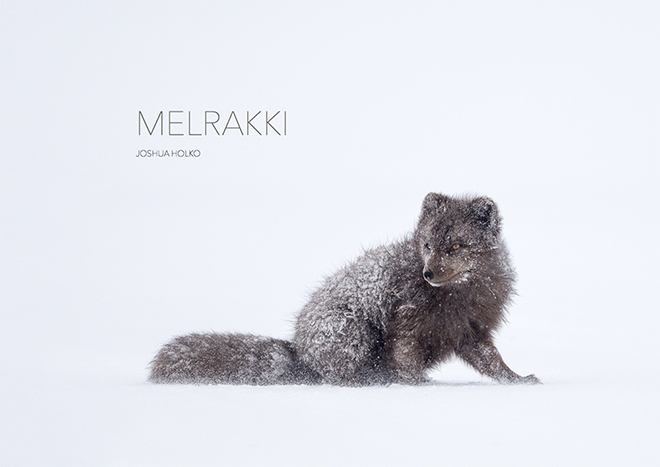
Melrakki – The Arctic Fox Limited Edition Book Now Available for Pre-Order

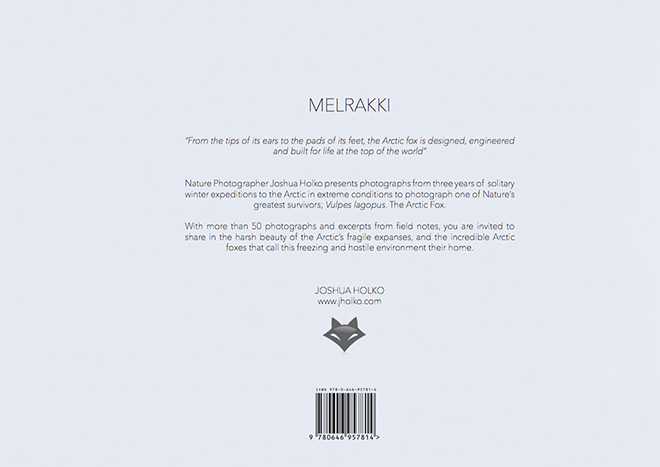
I am extremely pleased and excited to announce today the pre-order release of Melrakki; my brand new Limited Edition Hardcover book on the Arctic fox. The culmination of three years of winter photography in the extreme north-west of Iceland, Melrakki is available now for pre-order exclusively as a Limited Edition hard bound fine-art book. Limited to just 100 copies, each edition is hand numbered and signed and includes an original 11″ x 09″ inch fine-art pigment on paper print.

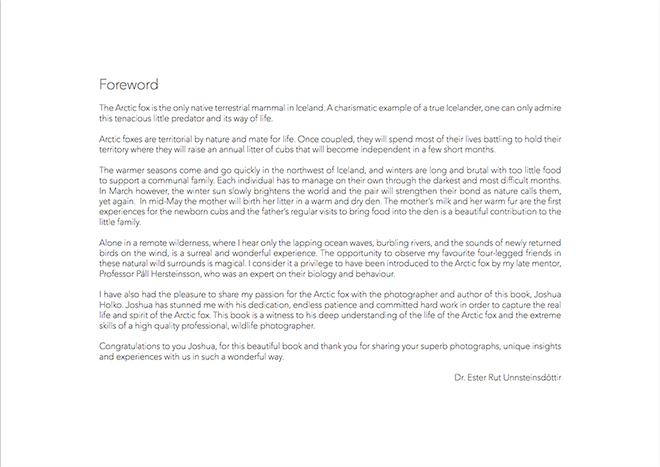
With foreword by pre-eminent scientist and Arctic fox expert Dr. Ester Rut Unnsteinsdóttir, Melrakki includes over fifty photographs and field notes from the three years spent photographing this remarkable predator in the extreme north-west of Iceland.

Melrakki Limited Edition is printed using the highest possible quality Canon Dreamlabo inkjet printer system and is printed on beautiful 250gsm High Definition Lustre paper that fully captures all of the incredible colour and tones of the original photographs. The Canon Dreamlabo represents the current state of the art in book printing and was chosen for this project after extensive testing and proofing as it yielded the highest quality that most closely resembles the original fine-art pigment on paper prints. I am extremely proud to stand behind the print quality in this Limited Edition book.

The included fine-art pigment-on-paper print is printed on Moab Somerset Museum Rag 300gsm paper and is hand signed.

Melrakki Limited Edition is $245 AUD plus shipping and can be ordered online exclusively through my website HERE.

I hope that you enjoy the photographs, insights and field notes from this project into the frozen world of Melrakki – the Arctic fox.

Photographs and Text by Joshua Holko

Approximate Dimensions: 22cm x 30 cm

96 pages (over 50 photographs + field notes)
The photo book & the print are together in a protective cloth sleeve

ISBN: 978-0-646-95781-4CoverForewordIntroductionPhoto

backcoverWatch a short excerpt from the making of Melrakki on VimeoArcticFoxVideo

Guest Photographer: John Hurshman ‘Hot and Cold’

Following on from my recent guest photographer post from Kevin Horsefield – Iceland the Frozen North, I want to share a short interview and photographs from John Hurshman who recently accompanied me on my Iceland Frozen North 2016 Workshop. I have had the pleasure of travelling and photographing with John now in both Iceland and Namibia and am looking forward to sharing an expedition to Svalbard with him for Polar Bears next year. Please enjoy the interview by Digital Transitions and photographs from our most recent Iceland and Namibia trips.

DigitalEditors Note: While most of our clients are professional photographers deriving their income from their craft, we also have many clients for whom photography is a passion, but not a source of profit. We thought we’d share the work of one such client, John Hurshman, who has recently traveled to both Namibia and Iceland. This combination struck us as especially interesting as it highlights the robust nature of Phase One digital backs – from the heat of the African Desert to the cold of the Icelandic winter. We interviewed John by email, with some editing for length, clarity, and focus.1_IcelandDT: What is your relationship to the art and practice of photography?

John: I am a retired corporate CEO who has been involved in photography for 35+ years. While early on, I had work published by National Geographic Books, Audubon Calendar and National Wildlife Magazine, the demands of family, career and business travel precluded much time for photography. It is only since I retired in 2012 that I have had the time to re-establish my involvement in photography. Much of photo time is spent in the environs of Charleston SC, my adopted home. Additionally, I now have the time for photo tours/workshops… Namibia in 2014, Iceland in 2016 and Polar Bear of Svalbard scheduled for 2017.2_Iceland

DT: Have you switched to Phase One or do you use it alongside other cameras?

John: I haven’t really “switched” to Phase One, but use is in conjunction with another system… most recently Fujifilm X-PRO2 mirrorless. My primary reason for adding a Phase One back was to take advantage of more pliable files, improved color and tonal gradation, and greater resolution; I have not been disappointed! I am using my Phase One IQ260 on a Cambo tech camera, and enjoy the slower and more deliberate work flow. As a by-product of working with a Phase One back, I have adopted Capture One as my primary image editor; I prefer the interface, workflow and end product.3_NamibiaDT: Why did you select Digital Transitions to make your foray into medium format digital?

DT: Can you tell us a bit about your trip to Nambia?

John: I first worked with DT when I was having trouble getting answers from another vendor that I had previously worked with. DT has not disappointed; you always respond promptly and clearly. I had a tiling problem with my IQ260, and your tech people quickly helped me resolve the problem.5_Namibia
DT: Your trip to Iceland featured a near polar opposite (pun intended) landscape. What inspired you to travel there, and how did you plan your trip?

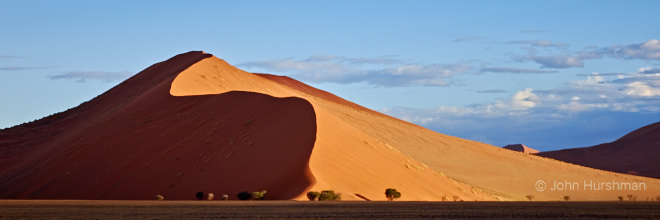
John: In April 2014 I completed a 20 day trip to Namibia to witness and photograph the country’s unique ecosystem with a group led by noted wildlife and wilderness photographers Joshua Holko and Andy Biggs. It’s one of the most arid regions in sub-Saharan Africa. My primary interest was the dunes at Sossusvlei which feature vivid pinks and oranges because of their iron content.6_Iceland
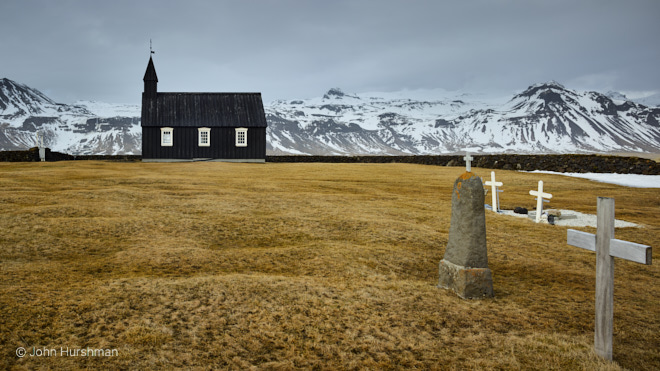
John: Iceland has been on my “Bucket list” for quite a while, due to its stark beauty, harsh conditions and geological history. I also prefer places where I can more closely interact with and get more involved in the environment… and take my time. Regarding planning my trip… that was done for me by the tour organizers, Joshua Holko and Daniel Bergmann. Following that 10 day tour, I hired another guide, Chris Lund, for 2 more days of travel to places that couldn’t be included in the first tour.7_IcelandDT: We especially enjoyed “Long Stretch of Black Sand Beach.” Can you step us through your mindset and process in creating this image?

John: My thought was for strong leading lines and a long depth of focus to convey the expansive nature of the scene. The image was captured with the Phase One IQ260 at ISO 50 on the Cambo Anniversary Edition with Rodenstock 40 HR-W lens at f/11. I wanted to have the patterns on the snow in the foreground illuminated by the sun, so the shadows would lead into the line of snow and wave receding into the distance. Additionally, I was hoping for the more distant section of the snow covered land to have some sunlight in order to draw the viewer’s eye more deeply into the picture. Sometimes, the foreground was illuminated, but not the background – sometimes vice versa – sometimes no illumination. But, there were enough thin spots in the clouds to encourage sticking with it. After about ½ hour of waiting, the thin spots in the clouds lined-up the way I had hoped. Also, the clouds did not clear completely, but thinned so that the sunlight was softened and not harsh. Sometimes you get lucky!8_IcelandDaniel Bergmann and I will be running our annual winter trip again in 2017 and bookings are now open and places are limited. Just drop me an email if you would like to join us.
Guest Photographer: Kevin Horsefield Iceland the Frozen North 2016

Two years ago I started a new segment on my blog for photographers with whom I have travelled before in order to provide an outlet for them to share some of their own writing and photography amongst a wider audience. It has been a while since the last post but I wanted to share some thoughts and photographs from Kevin Horsefield who recently accompanied me on my Iceland Frozen North 2016 Workshop. I have had the pleasure of travelling and photographing with Kevin now in Iceland on several occasions as well as Namibia, Antarctica and South Georgia. Enjoy his thoughts and photographs from our most recent Iceland trip.

Iceland the Frozen North 2016 – Kevin Horsefield

I ventured to Iceland in late Winter of 2016 with Joshua Holko and Daniel Bergmann.  As a veteran of their workshops, I know that we will be in the best possible location at the right time to maximize our photography. Daniel’s ability to read the light and Iceland’s fickle weather patterns are unparalleled.  Once at a location, Joshua can take over and helps his clients fine tune their compositions if necessary.
 
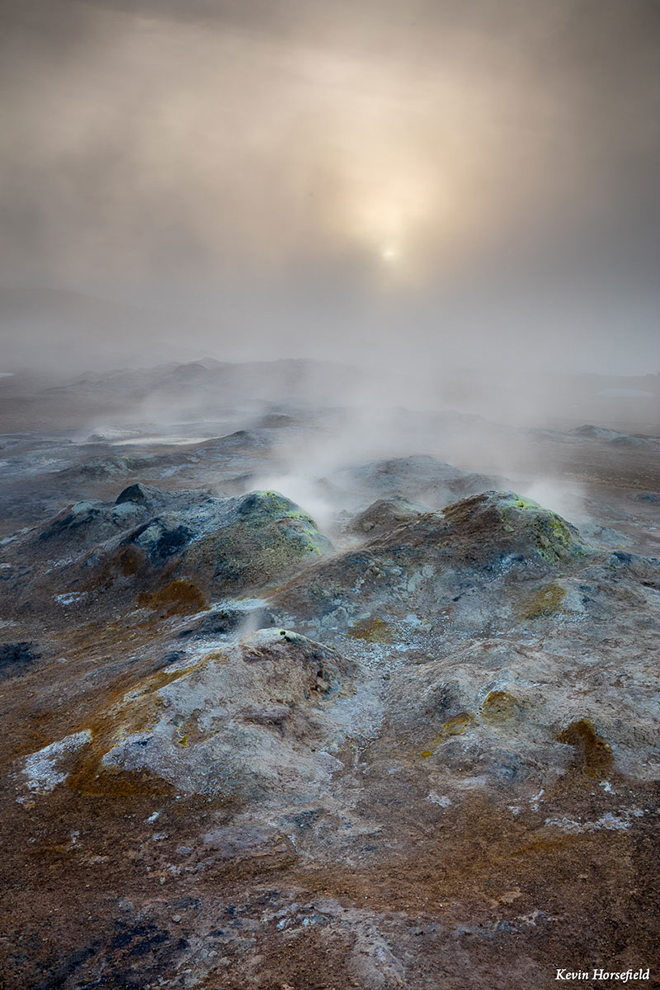
We seemed to be constantly dodging storms on this trip and dealing with rather flat light.  My solution was to shoot into the sun to bring a bit of drama to the scene.  With the sun being somewhat low on the horizon even at mid-day in Iceland, this technique can work well in these conditions.20160304-_N1A169620160307-_N1A1928
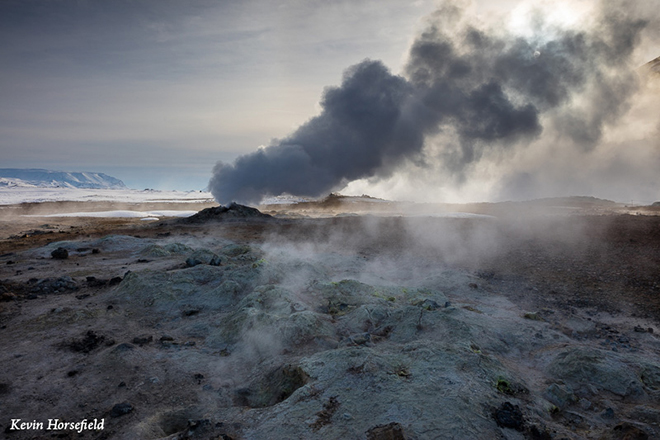
I also employ this strategy when I’m working with thermal areas, such as Hverir.20160309-_N1A206220160309-_N1A2097Backlighting also works well at Iceland’s famous black sand beach with the sun illuminating its translucent icebergs.20160308-_N1A1975
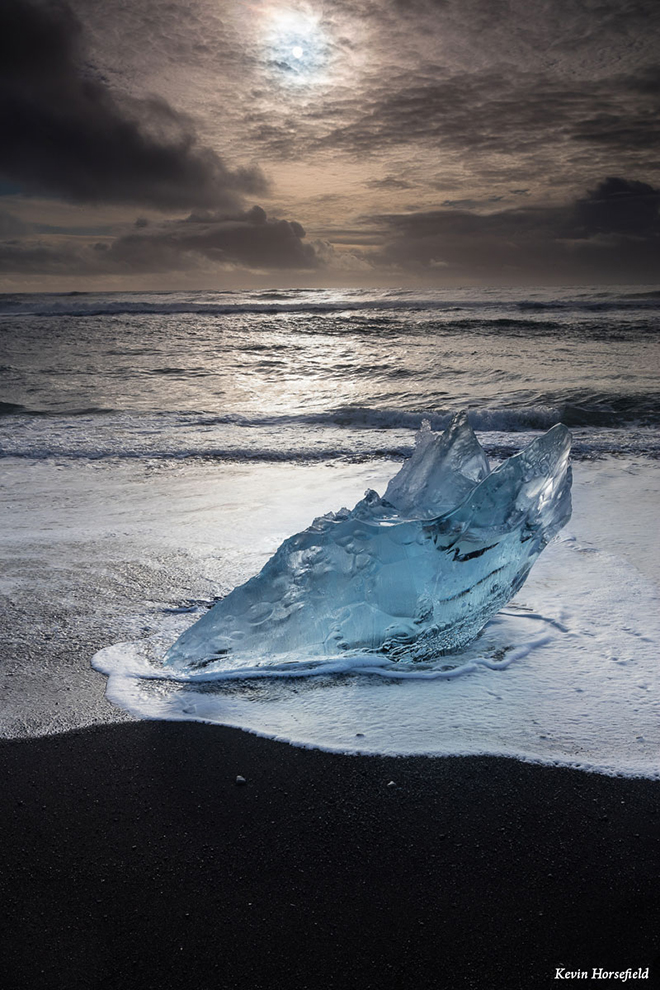
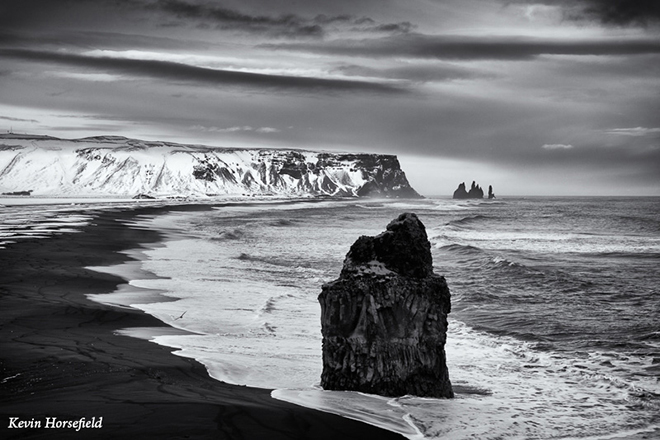
Some images work best with a conversion to black and white.  The color at sunset was so muted on this evening that I decided to strip it all away to emphasize this composition. I also added a slight blue tone to this image to convey the feeling of winter in Iceland.20160304-_N1A1731-Edit
More of Kevin’s Photography can be found at http://kevinhorsefieldphotography.com
Daniel Bergmann and I will be running our annual winter trip again in 2017 and bookings are now open. Just drop me an email if you would like to join us.