Ruins Outside of Charlton – Part One

On the drive back to Melbourne from Perry Sandhills (Part One & Part Two) in New South Wales I stumbled across an old abandoned house not far out of the small town of Charlton on the Calder Highway. It was one of those serendipitous moments when I just happened to glance out the side window of the car at just the right moment to spy the building in a distant paddock, partially obscured by some large trees. Australia’s countryside is liberally sprinkled with old sheds, barns and buildings – but they are usually overly dilapidated and of corrugated iron construction; which generally does not photograph at all well (at least I dont find them photogenic). This building was a good find however as its construction was old brick and its state of disrepair ideal for photography.

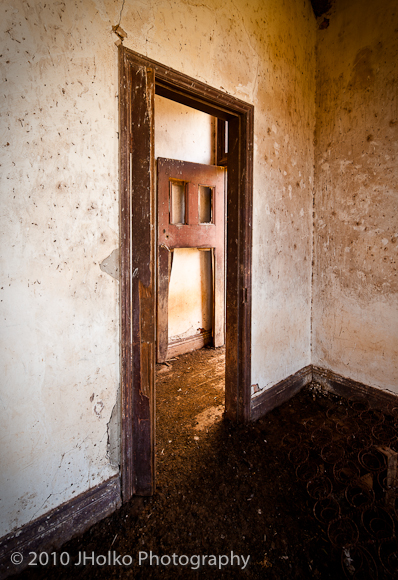
Old buildings such as this are getting harder and harder to find, so I have book marked this one to go back when storms are forecast for some external shots in contextual surroundings. In this photograph, taken from one of the front rooms looking out to the front door I have used the two doorways to stack depth and to try and guide the eye through the shot. I also like the warm light spilling in from the front door. I used the 17mm TSE lens for this photograph; which allowed me to correct for wide angle distortion.
This Way Freedom

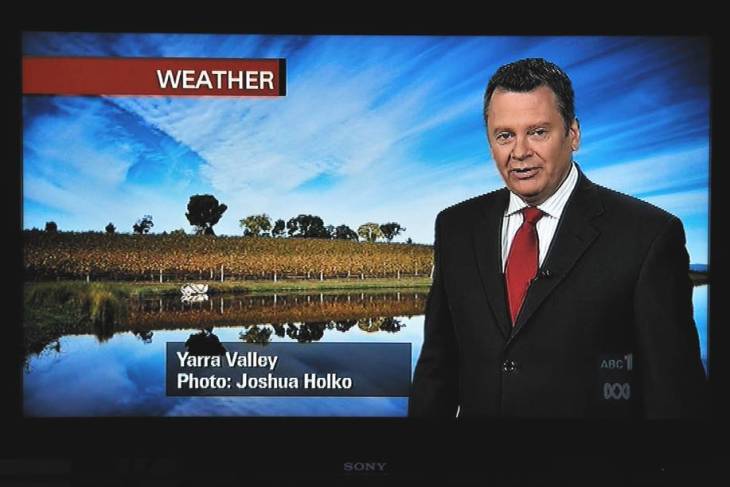
ABC News Weather Segment Photograph

Many thanks to the alert reader and follower of my Blog who sent over the following screen grab from the ABC news on Monday and Tuesday nights this week. Looks like the ABC flipped the photograph in Photoshop so Paul could stand on the right hand side – I will have to remember that next time I submit work for publication to a news station.

ABC News Screen Grab

New South Wales – Perry Sandhills Part Two

This second photograph from Perry Sandhills in New South Wales was taken the following morning about ten minutes before sunrise (although I never saw sunrise – the sun was buried behind layers of thick cloud). The morning was cold, with howling winds, racing clouds and regular rain showers – In short, weather that is far from comfortable (although quite conducive to good light) for outdoor photography. Nevertheless I persevered, stuck out the weather and came away with a second photograph I am very pleased with. I used a similar approach to the previous evenings shoot using a wide angle lens close to the ground with a three stop soft neutral density filter to darken the clouds. The twenty five second exposure has captured the clouds streaking across the sky adding a good deal of drama to the image. I could easily be accused of using LEE’s new Big Stopper ten stop ND filter for this photograph, but the truth is it just wasn’t necessary. The winds were pushing the clouds along at a rate of knots and any long exposure was going to blur them significantly.

In this instance I deliberately chose to leave in the trail of (almost gone) foot prints as they add some mystery to the image as well as the human element to what could have otherwise been quite a stark photograph. Like the previous photograph the sand is heavily pitted from the repeated rain showers; which has added a texture to the dunes that I find very appealing.

New South Wales – Perry Sandhills Part One

This was my first visit to Perry Sandhills near Wentworth in New South Wales. ‘Cap in hand’, I did have a fairly strong preconception about the sort of photograph I wanted to come away with from this location – the iconic first light of dawn playing across the dunes with some spectacular cloud formations lit with sunrise colour. Not to much to ask was it?

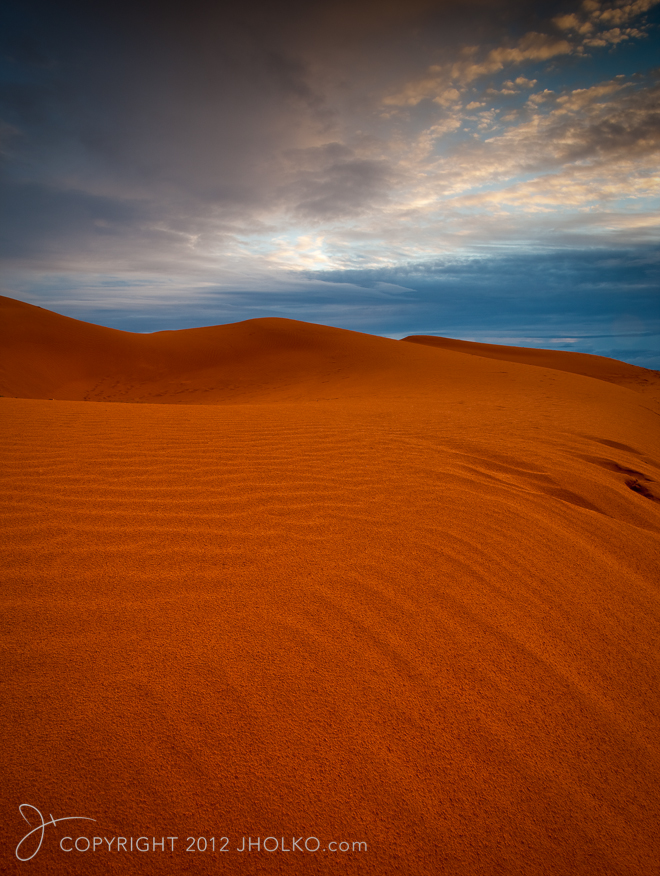
As is so often the case, the preconception is stronger than the reality; and not just because the weather conspired against me – I ended up with rainstorms; which produced some dramatic and unexpected lighting. Landscape photography at Perry Sandhills presents some fairly unique challenges based on its location, surroundings and weather. To start with the Sandhills themselves are surrounded by ugly Mallee scrub and underbrush that detracts from the softness and curves of the dunes. In addition, the dunes are somewhat overrun with weeds and other distracting vegetation. It is quite difficult to frame a shot without this unwanted element intruding into the scene. I found the best solution was to get down low to the ground with a wide angle lens and then some judicious use of the spot healing tool in Lightroom to clean up any unwanted weeds. Landscape photography is often the art of subtraction rather than addition and choosing what to leave out is often more important than what is included.

The other major photographic obstacle is that the Sandhills are a fairly popular tourist destination so the majority of the dunes are literally covered in footprints. Finding a bit of pristine sand involves some fairly arduous hiking into the dunes; being careful not to walk into a potential photograph. Its very similar to my experiences of landscape photography in the snow. In some instances the addition of a human element such as a footprint can really help (with things such as scale); but generally I try to avoid showing the hand or rather foot of man in my landscape photography.

This first photograph was taken just after a rain storm about ten minutes before sunset. The light was quite dramatic and the rain helped greatly with saturation of the dunes. I used a three stop soft graduated neutral density filter to hold back the sky and a two stop coral graduated filter on the bottom half to warm up the sand. It is quite difficult to see in the small jpeg but the pot marks from all the rain are visible at 100% on screen and in a print. I enjoyed my brief stint photographing the Sandhills and will undoubtedly stop off there again on my next trip into the area.