A few days ago I returned home from my scouting trip to Eastern Mongolia in the depths of their frigid winter to try and photograph one of the worlds rarest, least known and most elusive wild cats – the Pallas cat. You can read my introduction to this project HERE. As it turned out, I discovered whilst on this shoot that the local Nature and Wildlife photographers in Mongolia and most of Asia regard the Pallas Cat as much harder to find and photograph than the enigmatic and iconic Snow Leopard. So much for my planning and research. Fate it seems is not without a sense of irony…
It is important to clarify, that this scouting trip was not a precursor to a future workshop. Put simply, the Pallas cat is just too elusive, too shy and too hard to find to be able to reliably run even a small group workshop for this amazing animal. On top of this, the lack of basic infrastructure such as running water, flushing toilets, hot showers and the requirement to tent camp in temperatures between -40C and -15C in the middle of a very remote location mean that it is an exceptionally tough environment in which to work. The only heat I had during my time in the field was provided by burning coal in a small fire stove in my tent. It was, without doubt, the toughest shoot I have personally undertaken.
As this was not an official workshop and I was operating effectively on my own (with a local field guide) I decided to simply publish my raw unedited dot point field notes (along with some raw video journal footage), instead of an offical trip report. These are the notes I made on a daily basis in my tent during the evenings. They are a summary of my days activities and thoughts.
In summary, I believe I found a total of three individual Pallas cats during the two and a bit weeks I was in the field. I photographed cats on five seperate occasions, but I do think two of these cats were on reflection the same cats as I had previously photographed. Pallas cats have little in the way of distinguishing features from what I can tell, and my assertion that two of them may have been the same cat has more to do with their overall size and relative location where I photographed them.
I have not as yet had time to process any of the actual photographs I made during this expedition. Instead, I am including the video logs I made on a semi-daily basis along with my dot point field notes. The actual photographs I will release next year as a portfolio of work on my website at www.jholko.com
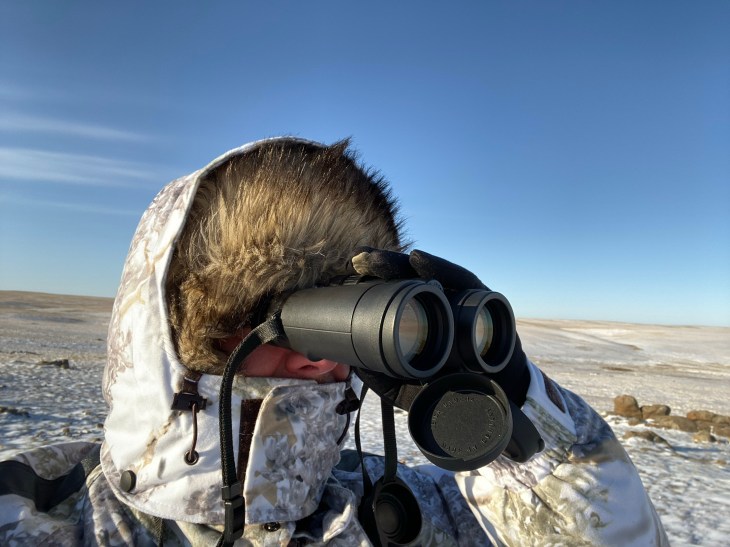
I want to sincerely thank my local fixer and field guide who worked tirelessly with me in the field as we scoured the lunar-like landscape for kilometre after kilometre in search of this rare cat. On a daily basis we walked many kilometres across the frozen landscape in search of this cat in temperatures that were often hovering between -20C and -40C. Trying to put into words the difficulty of searching and photographing in this environment is impossible. All I can really say is that the inner region of eastern Mongolia in winter is as brutal an environment as I have ever worked. The cold is insidious and relentless; the cat elusive and ghost like in its rare appearances.
Pallas Cat Scouting Trip Field Notes
Day 1 – Depart for Beijing. Flight on time. Get a few hours sleep to break the monotony. Arrive Beijing and transit through for international flight to Ulaanbaatar. Why do security make me pull every single camera and lens out of my bag? Is the bag really x-ray proof? Flight departs for Mongolia on time. Its a two and a half hour flight, but we circle the airport at Ulaanbaatar for an hour. Unable to land due to high winds we are forced to fly the two and half hours back to Beijing.
Back in Beijing, we sit on the tarmac for what seems like an hour before they unload us into a transit area. Stuck for four hours we are told we will try again at 18:00 tonight.
Board the plane again for Mongolia. I sleep the two and a half hours it takes and wake as the wheels touch the tarmac in Mongolia. Its -28C when I disembark – frigid. I collect luggage and meet my local fixer who transports me into the city for one night in the hotel. I am tired. I hope I can find this cat.
Day 2 – I wake at 5am; unable to sleep further. I take a shower and check email and go for breakfast and coffee at 7:45am. I am supposed to meet my fixer at 8:30am in reception. I am ready and waiting at 8:15am. 8:30 rolls around and no one shows up; then 9am and then 9:30am. Finally at 10:30am my fixer and local guide arrive. They blame peak hour traffic. Welcome to Ulaanbaatar.
We load the 4WD – a Toyota land cruiser. It is supposed to be about 600km out into the wilderness. We drive all day. The roads are better than I expected, but the going is slow. Lots of snow on the road and we can barely do 80km per hour. We break for lunch at some random truck spot. The noodle soup is hot and hearty. We drive all afternoon and into the evening before we turn off onto a dirt snow covered trail. I have long since lost my sense of direction. Its pitch dark and we are barrelling along a snow covered road like it is the Jakarta rally. Another hour drifts past and then another…We have been driving for nearly ten hours before we arrive at basecamp. There are approximately six gyrs (tents) set up. We have some dinner – I think its beef, it might be horse; I have no idea. But I am hungry and devour it. Outside the Gyr its -35C; but inside its about 20 degrees and quite comfortable. I am shown to my private Gyr where there is a small bed, a wash basin and a coal fuelled fire to warm the tent. I unpack and crash.
Day 3 – I wake at 5am and lie in bed for an hour before getting up to dress. It is still dark. Outside its -35C and I can hear the wind rustling the outside fabric of my Gyr. We head out into the field after some breakfast to begin searching. Its icy cold and the air is super dry. It doesn’t take long; maybe an hour or two before we find a Pallas cat hunkering down between two boulders out of the wind. The Pallas cat must feel cornered as it bolts out of the rocks and into the nearby grass and snow. Out in the open I grab my chance to make some photographs of this incredible cat. The wind blows the snow across the landscape. Is it going to be this easy every day? I had not expected to find a cat so quickly and to be able to get photographs of it out in the open. This feels like a gift.
Day 4 – I am awake by 5:30am and after a quick breakfast am already out in the field prior to sunrise searching rocky outcrops for the Pallas cat. I walk maybe four hours across the frozen lunar landscape. Going from rocky out crop to rocky outcrop searching for signs of passing of the Pallas Cat. It is hard to find fresh prints. There are many horses in the area as well as Corsak Fox and the foot print left by the Pallas cat is small and easily missed.
Finally, in the afternoon after hours of searching I find a cat; hidden deep inside a rocky nook on top of one of the Mongolian Steppes. I set up a hundred metres or so away and wait for the cat to come out near sunset to start to hunt. I only have to wait an hour or so before the cat emerges. It is hesitant and shy. It scans its surroundings and spots me easily; even though I am wearing full camouflage and hidden in the grass and snow. It hisses and backs away slowly. I take the opportunity and grab some photographs. The snow is a bit patchy and the photography is difficult.
Day 5 – Today we plan to take things a little more slowly. I still wake at 5am after a restless night. The small bed in the Gyr is like a plank of wood and it seems hard to get the temperature regulated inside the Gyr. It’s either too hot or too cold. I woke at 1am in a sweat and had to go outside for a few minutes to cool off. By 5am I was freezing cold, despite the many quilt layers.
We head out into the field around 9am. Its warmer than yesterday, nearer to -10C, but I can hear the wind so I know it will be cold out in the field. The plan today is to try and find another Pallas cat, and then set up a portable hide to try and get some photographs of hunting behaviour.
Found a Pallas cat den site with fresh tracks around it, I set up the hide and hunker down to wait. My field guide believes the cat is inside the den; but I have my doubts. Hours drift past.. Nothing. No sign of anything other than a Raven overhead. I can feel frustration starting to seep into my bones and I finally call it quits in the late afternoon. No sign of the cat all day.
Day 6 – The wind is howling outside my tent when I wake at 5:30am. Its going to be frigid and icy out there today. I lie in bed an hour trying to force myself to get up and make coffee.
Spend the entire day searching in difficult conditions; strong wind makes it tough walking. Find one Pallas cat hidden deep in a rocky outcrop and decide to try and wait it out. Hours go past and the cat shows no sign of leaving the safety of its natural wind shelter so I decide to abandon it and keep looking.
Near sunset the wind begins to drop and small snow flakes are falling. The light is magnificent, but there is no sign of the Pallas cat… or any other wildlife. I search until dark before giving up and heading back to my Gyr for the evening. The reality of how difficult this cat is to photograph is starting to seriously hit home. Even when I find a cat, its hidden deep in the rocks and impossible to photograph.
Day 7- Waking at 5:30am seems to be the norm for me now. Breakfast is quick and we are out looking for the Pallas cat before 7am. It doesn’t take very long before we find one, hidden in some rocks as I have come to expect. It becomes a waiting game. Either I am going to get too cold and give up, or the cat is going to come out to hunt. Finally, unable to feel my toes or fingers any more and around 3:30pm the cat emerges and I am able to get some photographs of it amongst the sparse snow and grass. A long day, but worth the wait.
Day 8 – I think I jinxed myself with the 5:30am wake-up as this morning I was awake by 3:30am and could not get back to sleep. I lie in bed for a couple of hours pondering yesterdays shoot before I get up for some coffee and breakfast. Its another blue sky day; so I decide to take the morning off and spend the afternoon trying to find Saker Falcon, Eagle Owl and Little Owl; both of which are regularly spotted in this area.
I get a few shots of Little Owls during the day, but there is no sign of other raptors, outside of a few buzzards.
Day 9 – Searched from 8am until nearly sunset and nothing. Some days the candy bar, some days the wrapper…Super windy all day. I am starting to wonder if I am going to achieve my vision of photographing this enigmatic cat in the snow. I scan the photographs I have already taken in the evening. I have a few I like, but I am missing the iconic shots I really want to capture.
Day 10 – Breakfast at 6am is now my norm and we are out in the field again before sunrise. Another very windy day with freezing temperatures. Just staying warm and hydrated in this environment consumes a huge amount of energy and effort. Searched all day, finally found cat right on sunset in a small snow covered area. I grab the opportunity and photograph the cat in the snow. This feels like mana from heaven after the last few days.
Day 11- Re-invigorated by the success last evening I am out in the field well before sunrise and head back to where I photographed the cat yesterday evening. We find the cat on sunrise not far from our position last night. The light is fantastic and I grab as many photographs as I can before the cat bolts for shelter in the rocks. This morning feels like a bonus and I decide to take the afternoon off and recharge my batteries.
Day 12 – I take the morning a little slow and head out bout 10:30am. Search all day long, but find nothing. Its cold; perhaps somewhere around -30C today. I am starting to feel worn down. Long days in the field, lots of walking in freezing wind and relentless searching. The photographic opportunities seem few and far between.
Day 13 – Head out out early again this morning. After yesterdays bust I am keen to put in the hours and find a cat. I realise I am running out of days. It is a blue Sky day. Its warm, the warmest day so far with temperatures around -10C. I search all day long, going from rocky area to rocky area, but there is no sign of a cat anywhere. I cant even find any prints. I suspect all the cats are out hunting in the warmer weather. The rodents, gerbils and vols are out today and its the first time I have seen them regularly so it makes sense the cats are also out hunting. Yet I cant find one. Frustration.
Day 14 – Today is my final full day in the field. There is loads of fresh snow on the ground from a blizzard last night. Great drifts have piled up against the hills – stunning conditions. I hope I can find a cat today in the snow. The light this morning is stunning. A mix of soft overcast light with pastel colors. Although I feel I have many great photographs I would love one more opportunity with this rare cat. Especially as there is some snow still falling in the air.
Jackpot! Found a cat in the snow early morning. Some wonderful photographs of the cat sitting in the snow as the falling flakes piles up on its fur. This is what I came all this way for. What a way to finish up this trip. I feel deeply blessed to have had this time with this rare cat in such a beautiful environment. This is an incredibly harsh place, lunar-like, sparse, frozen and desolate; yet this cat survives here. Amazing animal.
Day 15 – Final day this morning. Early breakfast and on the road by 7:15am. Eight hour plus drive back to Ulaanbaatar. It has been an incredible trip. I am grateful for the experiences I have had in the field with the Pallas cat and I feel I have the photographs I came for. My thoughts are turning to home.