The latest issue #65 of Extraordinary Vision magazine features one of my favourite Polar Bear photographs (from Svalbard in Winter) on the front cover and and includes an article I recently penned on the Art of Polar Bear Photography. If you are not a subscriber I highly recommend checking out Extraordinary Vision. It remains one of the best digital magazines on photography for the iPad and is a continued source of great inspiration.
If you are keen to photograph Polar Bears in the wild you can register you interest in one of the few remaining places on my Svalbard Winter expedition next March by dropping me an email. A detailed PDF with costs and itinerary can be downloaded HERE. Places are filled on a first come, first served basis.
Category: Workshops and Expeditions
Workshops and Expeditions around the world.
Svalbard in Winter Expedition March 2018 – A Landscape and Wildlife Paradise
This coming winter (March 2018) I will be leading an expedition to Svalbard in search of spectacular frozen landscapes, Polar Bears, Reindeer, Arctic Fox and more. The Arctic in Winter is a place to inspire the imagination. It is a white landscape bathed in golden light.
The main focus of this expedition will be Arctic winter light, landscape and wildlife. In March and April the light conditions in Svalbard are magical. Usually winter trips to Svalbard are limited to day trips on snow mobiles quite close to the town of Longyearbyen. With our expedition ship we will explore a much bigger area including the western and northern areas of Spitzbergen. Expeditions such as this to Svalbard in winter have only really been possible for the last few years. With our ship now fully prepared for an Arctic winter it is possible for us to sail north from Longyearbyen and explore the spectacular coastline of the Svalbard archipelago.
This unique expedition has been designed to provide the very best possible opportunities to experience and photograph Svalbard in winter light. We expect to meet wildlife such as Polar Bears, Walruses, Seals, Arctic Foxes and Reindeer. At this time of year the sea birds will also be returning to their breeding grounds.
This exclusive expedition is for a strictly limited number of just 12 participants plus leader and is dedicated to winter photography in Svalbard. Currently there are only a few places left before the expedition will be sold out.
We will be using the ice hardened expedition ship M.S Origo that will enable us to skirt the edge of the pack ice searching for and photographing landscapes and wildlife. M.S Origo is widely regarded as the best ship in the Arctic for Photography. Our expedition ship is also equipped with suf cient zodiacs (2 x Zodiac MKV models) and crew for all photographers to be shooting simultaneously with plenty of room to spare for camera equipment – So bring what you need!
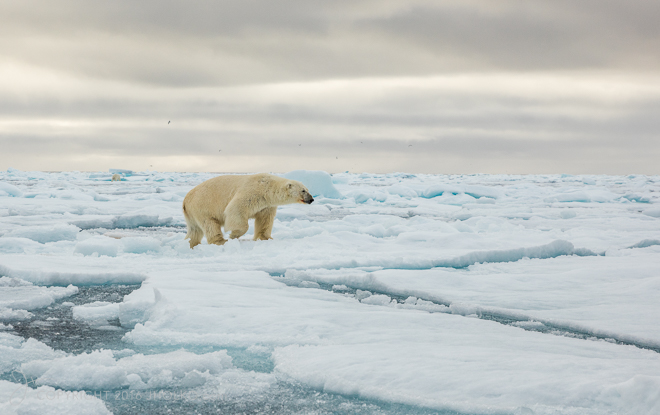
If you are keen to photograph the Arctic in winter you can register you interest in one of the few remaining places by dropping me an email. A detailed PDF with costs and itinerary can be downloaded HERE. Places are filled on a first come, first served basis.
The Art of Polar Bear Photography
There are few animals on the planet that inspire and evoke emotion like Usrsus maritimus – the Polar Bear. The worlds largest land predator, the Polar Bear is actually a marine mammal that spends the majority of its life on the frozen sea ice. Living in some of the world’s most remote and inhospitable regions the Polar bear can weigh up to seven hundred kilograms and during lean times it can go without food for up to six months. With the ability to spread its bulk and weight across its massive paws it is capable of walking on ice that would be far to thin to support a human being. It is one Nature’s greatest feats of engineering.
Not only is the Polar Bear at the top of the Arctic food chain it is also one of the most photogenic mammals the world over. Photographers travel from all corners of the globe in search of powerful and evocative images of this endangered and highly threatened mammal. But how do you get great photographs of such a magnificent and increasingly elusive animal and how do you maximise your chances?
I have spent the better part of the last five years photographing Polar bears in the Arctic during both the summer and winter seasons and I want to share what I have learned about photographing this incredible apex predator. We are going to cover a number of different aspects of polar bear photography and look at how can you maximise your chances of capturing a fantastic photograph of this increasingly endangered and rare mammal. Some of what follows is applicable to wildlife photography in general so you can also apply it to other species as well.
Despite what anyone might tell you, there is no best time of the year to photograph Polar Bears as much depends on your capacity to spend time in the field to actually locate them * (see footnote on location selection). Polar bears do not hibernate (although the female will den when she has cubs) and thus they can be photographed year round. However, there are tens of thousands of square kilometres of sea ice and land mass that form the Polar Bears habitat and an increasingly small number of animals actually living there. Assuming you have the good fortune to encounter a ‘photo-friendly’ bear * (see footnote on Photo bears), the time of year you chose to travel to the Arctic will be the deciding factor on the quality of light you can expect to experience. You should absolutely keep in mind that the quality of light you experience when you are making photographs of Polar bears is going to be very decisive factor in the overall quality of your imagery. So you should consider carefully when you choose to travel.
Both summer and winter can produce great Polar bear images, but if you desire the soft pink ethereal light that many photographers crave you will need to travel on the cusp of winter. Conditions are more difficult in winter (it is obviously much colder in the Arctic during winter) but the light can be truly miraculous and frequently brings with it a magic that simply isn’t available to the summer photographer. If you are interested in landscape photography in the Arctic then you have the added benefit of being in the right place at the right time for the best possible light during a winter cusp expedition. Being totally upfront nothing compares to the light you find at winters edges in the Arctic. It is quite simply stunning and breathtaking. If you want to get an idea what a winter expedition can be like be sure to check out the Ghosts of the Arctic video below:
Summer affords twenty-four hour daylight in the Arctic (the midnight sun) which in effect means you can photograph right through the night and double the amount of time you have available to actively search for Polar Bears. The possibility of golden light with the midnight sun draws many photographers to the Arctic in the summer months. Experience has shown me that the light is often softer at night (although the sun never truly sets). Some areas of the Arctic are prone to fog in summer and the combination of midnight sun and fog can create beautiful atmosphere for photography. Along with twenty-four daylight comes the opportunity to spend more time actually searching for bears and if you are travelling to the Arctic for the very first time I generally recommend a summer trip for your first experience. You can get an idea of what a summer expedition is like by watching the Kingdom of the Ice Bear video below:
Autumn and Spring can offer a little bit of both summer and winter light; although you are unlikely to encounter the sublime rosy pinks of winters frosty edges unless you are right on the winter cusp. Of course the middle of winter it is dark the entire time (depending on how far north you venture) so photography is extremely limited at this time. Typically March is my preferred time for winter light in the Arctic; both for Polar bear photography and Arctic landscapes. The sun crests the horizon but remains low in the sky and there is an ethereal quality to the light that is unmatched during any other season. If conditions are good it is not uncommon to have beautiful soft pink light that lasts for hours. With plenty of ice and snow, conditions are at their absolute optimum for both wildlife and landscape photography.
- Foote note 1: The location you choose to travel to in an effort to find and photograph Polar Bears will increase or decrease your chances significantly. Churchill National Park in Canada for example is pretty much guaranteed to net you a polar bear photograph with organised tours run on a daily and weekly basis. But here is the rub: Polar bears in Churchill photographed high up from the safety of a caged tundra buggy lack power, lack emotion and are frankly in the majority shining examples of mediocrity. Backgrounds in Churchill are also often lacklustre and can be quite problematic for the wildlife photographer seeking clean powerful images that rise above the ordinary. I have heard it said that if you want to photograph Polar Bears go to Churchill; but if you want to photograph wild Polar Bears go to Svalbard. I wholeheartedly agree with this sentiment. In my experience, nothing comes close to photographing Polar bears in the primordial landscape of Svalbard.
- Foot note 2: Not all bears you encounter will be ‘photo-friendly’. A photo-friendly bear is a bear who either chooses to approach you to satisfy its curiosity, or who otherwise does not immediately wander off once it becomes aware of your presence. On average I have found roughly one in five bears proves to be a ‘photo-bear’.
Robert Capa famously once said: “If a photograph isn’t good enough its because you are not close enough”. These golden words of wisdom fit perfectly for wildlife photographers with one slight alteration. Put simply “If your wildlife photograph isn’t good enough its because you are not low enough.”
Getting low is absolutely key to creating powerful intimate Polar bear photographs. You simply cannot achieve intimacy with your subject if you are standing 12 feet up (or more) on the deck of a high ship or locked up in a caged tundra buggy. You don’t necessarily have to be on the ice with the bear (a dangerous place to be), but you do need to get yourself as low as you possibly can; and the lower the better. It is not uncommon for me to lie on the ice and even half bury my camera and lens in the snow in an effort to get as low as possible. If I am photographing from ship then I am very careful to make sure that the ship I select has very low decks so that I can be as low as possible. Getting low not only affords you eye contact with your subject but it connects the viewer with the subject on a far more personal level. It is the key to a strong photograph.
Before you press the shutter consider which direction the bear is facing and how you are composing the photograph. A wildlife image will almost always be more successful if the animal is facing into the frame, rather than out of the frame. Consider carefully the negative space in the frame and how you frame the animal in the context of its environment. A successful photograph should show a symbiotic relationship between the bear and its habitat.
The feet position of the polar bear has a strong part to play in any feeling of movement that might be conveyed in your photograph. Keep in mind that photography is a still medium and that unlike video we have to give the feeling of movement in our photographs (not an easy thing to do).
It is important to have separation between the feet, but also to have them in an aesthetically pleasing position. High speed motor drive can greatly assist with feet position and it is better to shoot more frames in the field and be able to sort it out later than to just shoot one or two and end up with frames that have less than ideal foot positioning.
Keep in mind that the Polar Bear is one of the most powerful predators on the planet. If you can capture some of this power in your photograph you have far more chance of creating a strong, powerful and emotive photograph. Facial expressions and body position / body language play a large part in conveying a sense of power in an animal. A bear with its head titled slightly sideways is probably going to look curious. A bear with its head point straight on to the photographer with strong eye contact is going to convey much more power. One isn’t necessarily better than the other, but you should know what you are trying to say with your photograph when you click the shutter.
When it comes to ‘frames per second’; frankly, the more the better. Polar Bears often close their eyes as they walk along (or keep them partially closed). They also often look down at the ground so any eye contact opportunities you may get will probably be fleeting. Having a high speed camera gives you more frames to choose from if and when the polar bear makes eye contact with you. It also allows you to choose the best feet position of the bear when you are later editing your photographs. Capturing an image of a Polar bear with eye contact and just the right feet position is not easy.
If you are fortunate enough to encounter more than one Polar bear then look for interaction between them. Polar bears are on the whole solitary animals and interactions between them are fleeting and rare. Should you encounter two or more bears together (a Celebration of Polar Bears) try and capture moments when they interact. These rare moments are usually full of emotion and can make very strong and powerful photographs.
If you have the opportunity to re-position yourself you should consider strongly the direction of light in relation to your subject. Do you want front light, side light or back light? Back light is the hardest to work in from a technical perspective but can also create the most evocative imagery. Back light also often adds an element of mystery to a photograph that significantly increase its impact. I like to try and work with back light as often as I can as I find this sort of light the most dramatic and it often creates the most mystery and interest.
Front lit subjects can appear quite flat and usually this sort of light is preferred purely for documentary purposes. Side light can be extremely effective depending on the time of day and angle of the sun. We don’t always have the luxury of being able to position ourselves to obtain the perfect lighting angle, but it is worth serious consideration should you have the opportunity. When leading expeditions to photograph Polar Bears I aways work very closely with the captain of the ship (or the zodiac driver) to position ourselves for the best possible light in consideration of the bears movement and behaviour. Just a small aside, if you are choosing an expedition to photograph Polar bears make sure the trip is dedicated to photographers and that the leader has significant experience with Polar bears. General tourist trips will not afford you the requirement to position for best light and leaders with little or no experience photographing Polar bears will be more interested in making sure they get a photograph than in ensuring you have the best possible lighting angle. You should also ensure that the ship you choose has very low decks. Avoid ships with very high bows and sides that will prevent you from being able to connect properly with your subject.
In overcast light conditions you have the benefit of natures ‘soft-box and these sort of conditions can produce really beautiful imagery. Overcast light can be exceedingly beautiful and will really bring out the soft and subtle tones in the snow and ice. I tend to try and avoid direct overhead sunlight as it creates extremely hot highlights on the snow and ice and usually the overall contrast level is too harsh.
It is always worth taking a moment to consider your composition before you start firing the cameras shutter. Take a moment and take a deep breath (you will be very excited if it is your first Polar bear). Look around carefully and try and predict where the bear is going to be for the ideal photograph. Madly firing the shutter without consideration of the composition and story is going to result in nothing more than hundreds of documentary images. Often a few moments consideration of the conditions and landscape before you compose and press the shutter can dramatically improve a photograph.
Lens selection plays a huge role in the overall look of your Polar bear photograph. A long telephoto lens is going to compress the distance between you and the bear and the bear and its background. This sort of lens can be used to great effect to not only create the illusion of bringing the subject closer to the photographer and subsequently the viewer, but also to throw the background way out of focus to help isolate the subject. You do have to be careful to avoid creating photographs that look as though they were taken in a zoo; but used carefully and with due consideration to the background a telephoto lens can be used to great effect.
Wide angle lenses can be used to convey a strong sense of environment in your photography. It is worth remembering that no one wants to travel to the Arctic in search of Polar Bears and come back with photographs that look like they were taken in a zoo. Wide angle lenses will allow you to place the bear in context and show the subject in its environment. A sense of environment can add a great deal of life, emotion and context to a photograph and its importance should not be underestimated. Look carefully at the landscape the bear is moving across. Are there graphical elements in the landscape you can use to help frame your photograph? A leading line of ice for example can be used to great effect. Using the landscape to help frame your image can really add significant impact and balance to the final photograph. Simple imagery that utilises geometric shape and line will almost always result in a strong photograph.
Typically you will want to reach for a long telephoto lens first to capture photographs of the bear at a distance. If you are fortunate to have the bear approach you can then switch to wide angle. I like too work with two cameras at the same time; one with a telephoto lens and one with a wide angle. This way I can quickly switch between them without having to change lenses.
Try and keep in mind that a successful photograph is going to be one that conveys the story of the Polar bear. The world really doesn’t need another head and shoulders shot of a Polar bear. The aim is to try and tell the animals story with your photographs, rather than simply documenting for the sake of it.
Lastly, remember to put the camera down and drink in the experience of being in the vicinity of the world’s largest land-based predator. Polar bears are incredible animals and moments shared with them are extremely special.
Departing for Greenland Expeditions 2017
Time has rolled around all too quickly (I feel as though my feet have not touched the ground in Australia) and as soon as I finish this post I am heading back to the airport to start to the long trek to Iceland and then onto Greenland for my two back-to-back expeditions to the east coast and the spectacular Scoresby Sund fjord system. I have been looking forward to returning to the east coast as it has been a few years now since I last visited Greenland. It will be interesting to see how the area has changed and in what sort of state of disrepair the glaciers are now in. With more water melting off the Greenland icecap in a day than France uses in an entire year I am expecting to see some significant change.
As is my custom I like to do a packing list of what photographic equipment I am taking with me. Although these are primarily landscape expeditions we will also be doing quite a lot of photography from zodiac (the east coast of Greenland is home to some of the worlds most dramatic icebergs) and as such I am taking equipment for both the tripod and hand-held work. I am packing my Really Right Stuff Tripod with the new Arca Swiss D4 geared head as well as a full set of LEE filters for land-based work and a couple of Canon EOS 1DX MKII cameras for zodiac work. I am also packing my 300mm F2.8L IS MKII lens in case of any wildlife encounters.
Lightroom Roller (Carry on Luggage)
There is one other important piece of documentation I will be taking with me on this expedition and that is an Australian Customs Declaration form. If you are travelling internationally from Australia you can read about the benefit arming yourself with this documentation HERE.
I am fortunate to meet and travel with some fabulous people who are not only talented photographers in their own right but also a source of continual inspiration. Many of these participants have become friends (and there are quite a few across these two Greenland expeditions) and I just want to take a moment to acknowledge their photography and thank them for their participation and input.
See you in Greenland!
P.S For those of you who have contacted me asking if I will be running a future expedition to the East Coast of Greenland: The answer is not in 2018 – but I have now confirmed a charter for 2019 and will have more details later this year.
Major Workshop / Expedition Update 2017 / 2018
With August almost behind us (just where is the year going?) I felt it time for an update on workshops and expeditions for the remainder of 2017 and into 2018 (with a sneak peak into 2019).
In a little under two weeks time I will be heading north to Greenland for two back-to-back expeditions to the remote east coast of Greenland. These expeditions into the remote and wild Scoresby Sund fjord system have been in planning for more than two years now and I am really looking forward to setting sail from Constable Point in Greenland to start our photographic expedition. Both of these expeditions have long been sold out, but I will be returning to Greenland in 2019 and will have more details on that expedition later this year.
After I finish in Greenland I am heading down to Antarctica for my White Nature expedition. Timed as the first of the season we have planned our expedition to take advantage of dramatic and variable weather as well as giant icebergs and lots of snow and ice. I have been travelling to Antarctica annually for many years now and have found early November to consistently offer the best photographic experience for all aboard. I recently published a full guide on how to choose the right photographic expedition to Antartica and it can be downloaded for free HERE. This expedition is sold out.
2018 will kick off with sold out expeditions to Lofoten for Winter landscapes and Iceland for Arctic Fox in winter. My last workshop to Lofoten was in 2016 and I am looking forward to returning to this incredible archipelago. The rising and precipitous mountains that climb directly out of the sea and the rugged coastal landscapes make for a photographers paradise. And of course, the chance of Aurora Borealis (northern lights) only sweetens the pot and adds that magic element to what is one of the most picturesque places I have ever been fortunate to visit and photograph.
My annual expedition to photograph Arctic Fox in winter in the remote and wild Hornstrandir reserve in Iceland has also long been sold out (Read the 2017 Expedition Report). I will be returning to Iceland in 2019 for this expedition and am now taking expressions of interest from those interested in photographing this incredible survivor. I will have full details including dates and costs for 2019 soon.
After Iceland I will travel to Svalbard to lead a winter expedition north of Longyearbyen in search of polar bears and dramatic winter landscapes. Svalbard in winter is an absolutely breathtaking location. With newly formed sea ice, snow and ice covered mountains and chance encounters with the worlds largest land predator in a stunning white environment this expedition rates as one of my absolute all time favourites (Be sure to check out the Expedition Trip Report from March this year). At this stage there are still a few places remaining before the expedition will be sold out. If you are interested in joining us and exploring the winter white wonderland of this Arctic archipelago you can register your interest by dropping me an email. The remaining places are filled strictly on a first come, first served basis. To get an idea of what winter is like in Svalbard be sure to check out the new Ghosts of the Arctic short film by clicking on the image below.
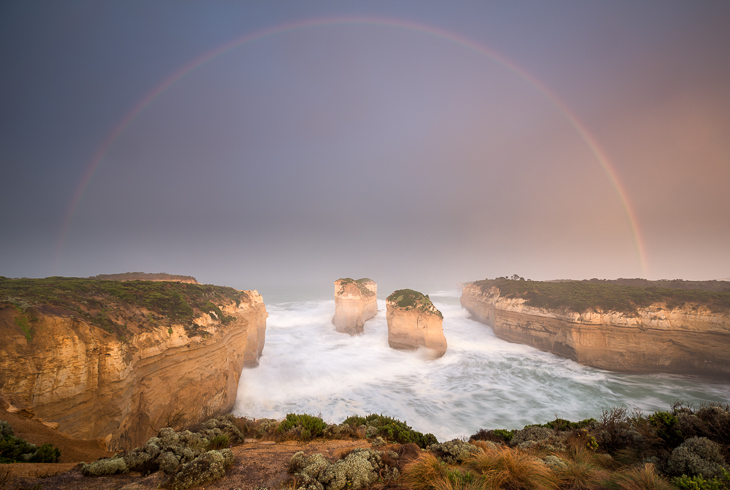
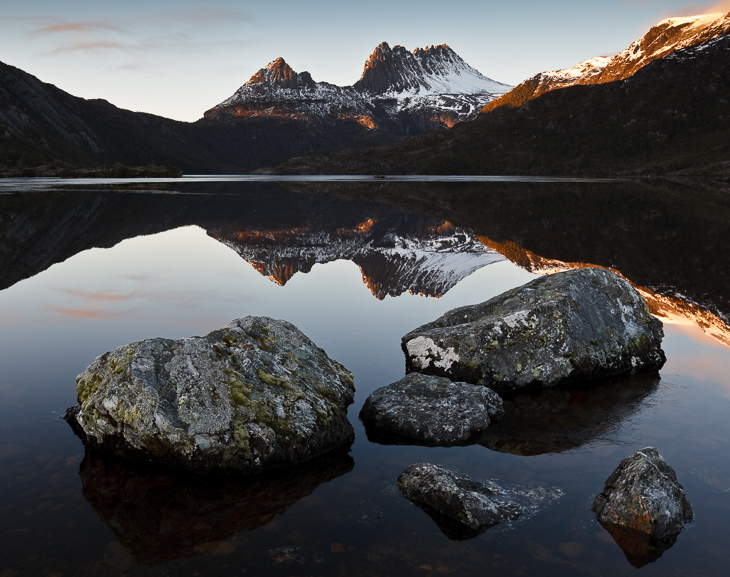
In late April / Early May I will lead my annual New Zealand South Island Masterclass workshop. This will be the last year I offer the South Island workshop as I plan to switch gears in 2019 with a brand new Van Diemens Land Tasmania Landscape workshop that will also include an optional extension to the Great Ocean Road in Victoria Australia (more details on this to come at a future date). The New Zealand South Island Masterclass has been an eagerly anticipated workshop over the last few years. For the final year my co-leader Phillip and I are including even more helicopter time over the spectacular southern alps with doors off photography to enable us all to capture some truly stunning imagery. Strictly limited to just six participants there are now only a few places remaining before the workshop will be sold out.
Earlier this year, Daniel Bergmann and I completed a brand new workshop to photograph Atlantic Puffins and other Arctic birds at several different locations in Iceland that included the remote northern Grimsey Island, inside the Arctic circle. (Read the trip Report). The workshop was a great success and as such we have decided to offer a new workshop in May next year that will take us back to Grimsey Island to photograph both the wildlife and incredible landscape of this remote island. As well as Grimsey Island we will also spend time in Myvatn in the north of Iceland – One of the best places in the world to photograph Arctic birds. Grimsey Island in particular is one of the most spectacular locations I have visited in Iceland with towering cliffs that rise hundreds of feet out of the ocean and incredible basalt columns. It is a wild and primordial landscape that is rarely visited and even less rarely photographed. If you are interested in photographing the loveable and comical Atlantic Puffin and other Arctic bird species this workshop is not to be missed. Only two places remaining before the workshop will be sold out.
In July I will return to Svalbard for my annual summer Polar Bear expedition. This expedition has been designed from the ground up to provide the very best possible opportunities to Photograph Polar Bears in their natural environment. With the reduction in Arctic sea ice the Polar Bears in Svalbard are dwindling in number and the number of years left to photograph them is unfortunately now extremely limited. Late July and August are the ideal times to photograph Polar Bears north of Svalbard due to the dwindling ice around the archipelago. On this expedition we will be carrying a naturalist/biologist who specialises in locating Polar Bears and an expedition leader and captain who have years of experience in placing us in the ideal position to make the best photographs. Their expertise will allow us to approach the king of the Arctic as closely and safely as possible and make incredible photographs under the spectacular midnight sun. To get an idea of what this workshop entails be sure to read the 2016 trip report.
In October I will return to the gigantic sand dunes of Namibia for a new Desert Fire Safari. This will be my fourth visit to Namibia to photograph the ancient sand dunes of the worlds largest and oldest desert. It is the perfect juxtaposition to my usual polar landscape and wildlife photography and offers an alternate landscape of extremes. Our workshop will sea us visit the giant red sand dunes of Sossusvlei, the eerie ghost town of Kolmonskop as well as the relentless Skeleton coast and the Etosha wildlife reserve. Places are now limited. For more information please send me an email.
Finally in November 2018 I will return to the sea ice of Gould Bay in Antarctica for my Emperor Penguin expedition (Read the 2016 Expedition Report). There are plenty of species the world over that are much harder to find than Emperor Penguins. To my knowledge however, none is as difficult or as expensive to reach as the Emperor Penguin; and thats the conundrum of Emperor Penguin photography. We know exactly where they are located, we just cant get to them without great difficulty and significant expense. Living on the sea ice in remote and difficult to reach areas of Antarctica the Emperor Penguin is therefore as difficult to reach as the enigmatic snow leopard is to locate in the wilds of its mountainous territories. This expedition will see us fly to Union Glacier deep in the Interior of Antarctica where we will set up our base camp before we take smaller twin otter aircraft out to the sea ice for our advance camp where we will live with the Emperor Penguins during our time on the sea ice. Strictly limited to just eight photographers there is only one place remaining before the expedition will be sold out (Read the 2016 Expedition Report).
Peaking into 2019 I will be leading a brand new workshop to the north of Finland in February in search of Golden Eagles, Hawk Owls, Wolves and wolverine (full details coming very soon). The workshop is going to include a significant amount of photography from private hides and will afford opportunities to photograph rare species not often seen and even less often photographed. I am not quite ready to start taking bookings for this new workshop but you are welcome to register your interest by dropping me an email.

A final sneak peak into 2019 includes a new workshop to photograph the landscapes of Van Diemens land (Tasmania) with an optional extension to the Great Ocean road in Victoria Australia. More details to come soon….