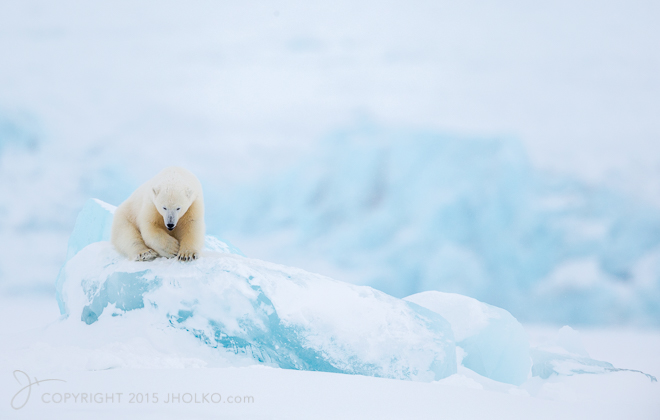
In July 2016 I am leading a very exciting expedition to the permanent pack ice north of Svalbard to photograph Polar Bears living and hunting in their natural environment on the sea ice. This expedition has been designed from the ground up to provide the very best possible opportunities to Photograph Polar Bears in their natural environment. With the reduction in Arctic sea ice the Polar Bears in Svalbard are dwindling in number and the number of years left to photograph them is unfortunately now extremely limited. Late July and August are the ideal times to photograph Polar Bears north of Svalbard due to the dwindling ice around the archipelago. On this expedition we will be carrying a naturalist/biologist who specialises in locating Polar Bears and an expedition leader and captain who have years of experience in placing us in the ideal position to make the best photographs. Their expertise will allow us to approach the king of the Arctic as closely and safely as possible and make incredible photographs under the spectacular midnight sun.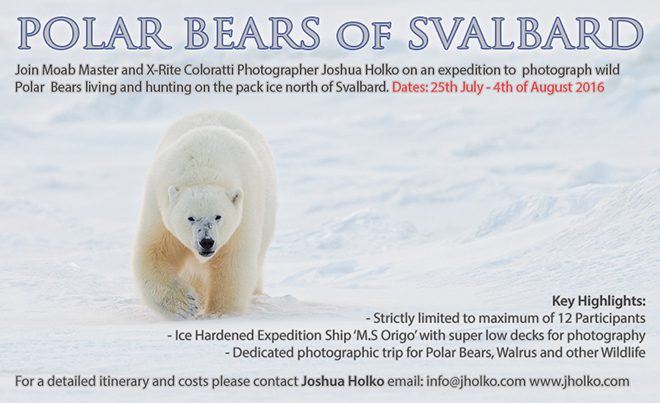 The expedition is for a strictly limited number of just 12 participants (only four places remaining) plus leader and is dedicated to the photography of Polar Bears living and hunting on the sea ice. Our intention is to sail directly north from the small town of Longyearbyen in Svalbard to approximately 80 degrees North to the very edge of the permanent pack ice. At our northerly most point we will likely be less than 600 miles from the North Pole.
  We will be using the ice hardened expedition ship M.S Origo which will enable us to skirt the edge of the pack ice searching for and photographing Polar Bears. M.S Origo is widely regarded as the best ship in the Arctic for Polar Bear Photography and has been my ship of choice for this expedition for the past three years. With its super low decks and operable portholes a mere 50cm above the water line we can photograph at eye level with wild Polar Bears. Our expedition ship is also equipped with sufficient zodiacs and crew for all photographers to be shooting simultaneously with plenty of room to spare for camera equipment – So bring what you need! On this expedition we will also likely photograph Walrus, Seals, Whales, Arctic Foxes and the many Arctic sea birds including the rare and angelic Ivory Gull. To get an idea of the sort of wildlife photographs you can take on this expedition please visit the Svalbard portfolio on my website. All of the Polar Bear photographs on this website were taken from the very same ship we will be utilising for this expedition.
 Due to initial registrations from those who missed out on the 2015 expedition there are only a few places left before the expedition will be sold out (2015 Sold out in just a few days). If you are excited by the idea of travelling to the edge of the permanent pack ice to photograph Polar Bears in their natural environment with a small group of dedicated photographers now is the time to register and secure your place. Places are very limited and once they are spoken for thats it. If you would like more information you can download a detailed PDF itinerary from my website at www.jholko.com. To register your place please just email me at info@jholko.com or use the register link on my website.
 This brand new expedition has also just been featured in Hong Kong’s Jetsetter Magazine.

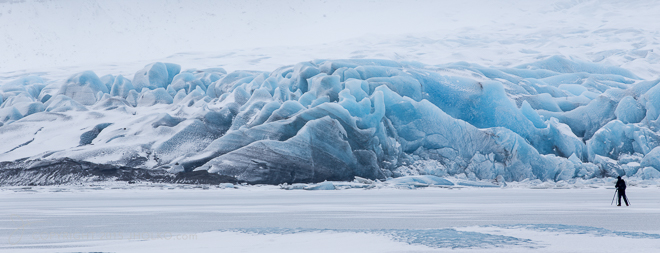 During our ten days on the southern peninsula we experienced snowfall down to sea level which provided us some magical opportunities for landscape photography. We also had some of the best light I have yet to experience during the winter months in this amazing country. Our timing in this regard was absolutely spot on as several days either side of our workshop would have been sub optimal with strong winds and rain.
 We spent several days in the Jökulsárlón glacial lagoon area; photographing at Fjallsárlón as well as the black sand beach and Jökulsárlón glacial lagoon areas. Winter at the lagoon is wonderful with many of the icebergs frozen in place it is possible walk out a short way onto the ice when the conditions are safe.
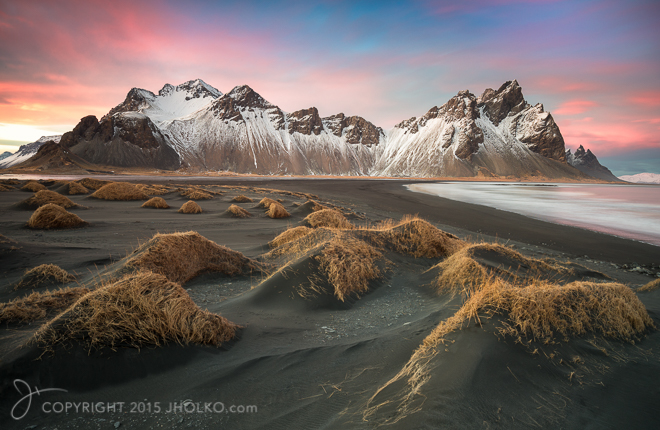
 We also visited the precipitous mountains at the Stokksness peninsula where we were treated to some spectacular evening light that made for incredible images. Stokksness is a wild place and this was the first time in four years of visiting this location that I can recall experiencing such amazing light and conditions.
 During our workshop we visited a huge ice cave in the south of Iceland where we spent several hours photographing the incredible texture and color that is found in these amazing natural structures. We were fortunate that there had been heavy snow fall a few days earlier and all footprints from previous visitors had been erased.
 We also saw and photographed the Aurora Borealis (Northern Lights) over Hekla volcano as well as the Jökulsárlón glacial lagoon during our time in the south of Iceland. If you have ever wanted to see and photograph the northern lights and see the stunning landscape of Iceland covered in fresh snow and bathed in winter light I will be leading another trip to Iceland in winter in March 2016 (only a few places remaining before it will be sold out). The 2016 workshop will focus on the frozen north of Iceland. We will see and photograph places rarely visited during the winter months including geothermal areas, waterfalls, mountains and more. You can download more information including a detailed itinerary from my website at
 www.WILDNATUREPHOTOTRAVEL.com