
Over the last twelve to eighteen months I have made a concerted effort when speaking with other photographers to ask them the seemingly obvious question: “Do you collect other photographer’s work?”
The responses have been very interesting to say the least, with the vast majority saying, “Yes. I have quite a lot of photography books.” To this end, I don’t think I know a photographer worth his or her salt who does not own even a modest collection of books on photography.
At this point I have to clarify myself by adding: “What I mean is, do you collect or own any Fine Art Prints from other photographers?”
I am often greeted with either a blank stare or a confused look, sometimes with a “No” and only occasionally with a “Yes”.
When I ask them why they do not own any other photographer’s work, on the whole they can’t give me a reasonable response. Many of them clumsily stumble over their words before regrettably admitting they have no good reason for not owning any other photographer’s work. This response has been almost universal.
As a result, it seems to me there is somewhat of a strange “disconnect” between photographers who produce fine art prints and those who actually collect or own any outside of their own work. I want to use an analogy to try and put this into perspective.
Musicians are also by definition artists. And yet, all musicians collect the music of other musicians without exception. They collect what they appreciate and enjoy. They also want to see what their peers are producing. Why should it be any different for photographers?
I would certainly be keen to hear from other photographers who have had a different experience. It seems reasonable to me that if you produce art, you should share in the ownership of the art of others. It is one thing to peruse it in a book, quite another to live with it in your home. I would argue it is when we live with a piece of art that we truly learn to, not only appreciate it, but also potentially fully understand it. Viewing a print in a gallery is also a very different experience to passing that print in your home a dozen or more times a day.
I do not believe for a second that any of the photographers I have spoken with appreciate only their own art. If this was the case they would not own or purchase so many photography books or they would not enjoy viewing the work of other photographers at galleries, or online.
No; there is something else at work here that is responsible for the “disconnect”. Before I try and dissect what is going on I just want to make a quick comment on photography books at this point. I love and own many books by many different photographers. I regularly enjoy perusing them and enjoy the photographs immensely. However, they are all, without exception poor facsimiles of the original fine art prints. Offset printing cannot yet match the colors, tonalities and subtleties of an original fine art print. Offset printing is getting better all the time, but realistically it still has a long way to go before it can encapsulate the fine art print.
You are probably thinking to yourself at this point, Do I own any fine art prints from other photographers?
The answer is yes; I do, though my collection still excludes many photographers whose work I greatly admire. However, I am proud to count several well known photographers amongst my art collection and quite a few others whose names are far less well known. These are actual hand signed (sometimes limited edition) fine art photographic prints. My collection also includes fine art prints from photographers I have swapped work with over the years, either through mutual respect and admiration for our work, or because we have visited the same locations and wanted to see each other’s interpretations in a finished print. Indeed, this is one of the great pleasures of making prints for me.
There is no better yardstick to gauge the quality and standard of your own prints than to be able to compare your work with that of other photographers whose work you respect and admire.
So I encourage you – if you like art, and in particular photographic art, then do yourself and the art world a favor – buy a fine art print from a photographer whose work you admire and respect. It doesn’t have to be one of mine and this piece is not in any way intended to promote my own fine art prints. Just find a piece of photographic art you like and start your own collection. Your life will be far richer for the experience.
Addendum:
I have subsequently shown this piece to a good photographer friend of mine whose opinion in these matters I highly value. He has made the following comments which I feel are worthy of inclusion as both a potential explanation and as one experienced individual’s conclusions.
I, too, am “guilty” of not collecting the prints of other photographers. In fact, the ONLY print I have EVER purchased made by another photographer was the one by Brooks Jensen, and I have never hung it on a wall. The truth is I believe it is beautiful art, but the real reason I bought it was that it was inexpensive. And yet, around the same time, I purchased a print (reproduction) of one of Vettriano’s paintings for around $250, which was proudly hung on the wall in a central position where nobody entering my lounge could miss it. I once said to you that I wished I could take photographs the way he paints. It is the people in his paintings and their actions that holds one’s eye.
So, your article has forced me to ask myself the same question you have raised. I think it has something to do with the fact that there can be only one painting, but there can be many photographic prints. And yet, that also isn’t quite right, because Vettriamo’s painting in my lounge is just a print, the original having been sold at auction for around $500,0000! You will recall that I also have around 8 of my own photographs on the walls, framed and proudly presented. I know this is also true of you.
I think there are a couple of things happening here:
Firstly, I doubt there are many painters who collect the paintings of other painters, so I don’t believe photographers are unique in this regard. Frankly, I believe all artists, whether they be photographers, painters, or sculptors want to surround themselves with their own work, because it’s their “stuff” and that’s what they want to display to others.
I find your analogy of musicians may not be an accurate one. Of course, musicians collect the works of others – this is so they can exercise their art by playing the music of others, either to go on exercising their playing skills on their various instruments or simply to listen to music they like and learn from it. This is an auditory thing, involving literally thousands of tunes, whilst our problem is optical, and there is only so much wall space available..At the same time, I bet that if you asked a musician to play you a tune on, say, his piano, he would either play one that he had composed himself (presuming he was a composer and not just a player, a distinction you may want too make in your article). This raises an interesting question in itself – is a musician an artist who can play well on,say, a piano, or does he have to be a composer? In my humble opinion both are artists, but the composer is the supremo/maestro.
So, when you get behind the lens you are definitely playing at being the maestro – or are you? Because the composition is already there before you and when does the transition take place from your just being a good player to being an actual composer?
The REAL question that has haunted me since I began serious photography in 1984 is why, especially in Australia, photography prints do not seem to be considered as high-end art? I think it has a lot to do with how simply I can go out and buy an excellent print of a $500,000 painting very well framed for only $250. Given this situation, why should anybody buy a photograph whose value is unknown at, say $600 or a more reasonable $6000, even if they are originals?
In my modest opinion, the real market is the general public (1% are photographers, 99% want something nice to hang on the wall). I just haven’t been able to find a way to convince Australians to consider photographic images as serious, high-end art that they should buy to decorate their walls….
What do you think?
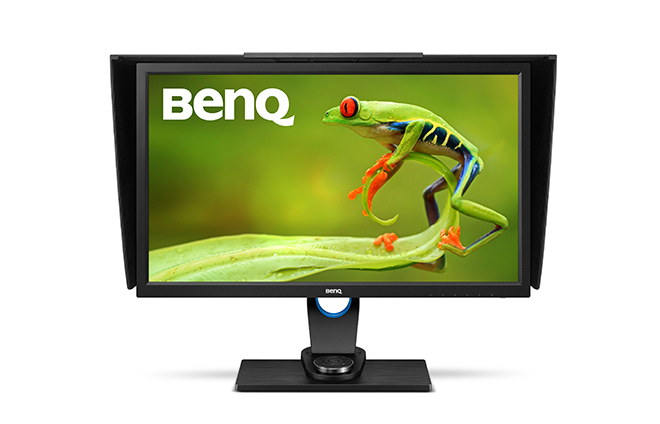 Enter, BenQ who now have a solution for photographers on more modest budgets in the form of the
  Key Features
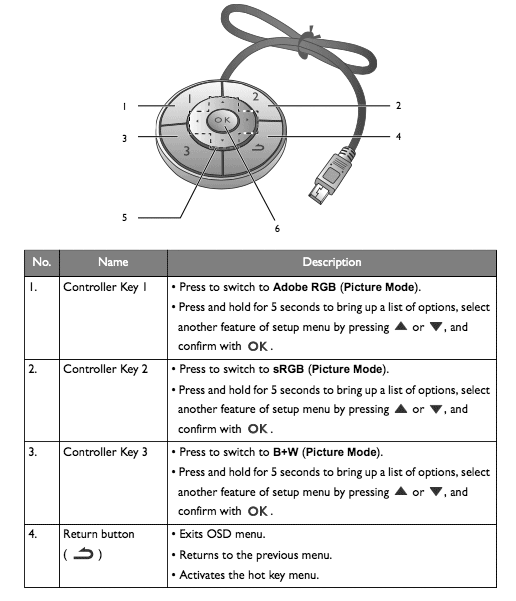
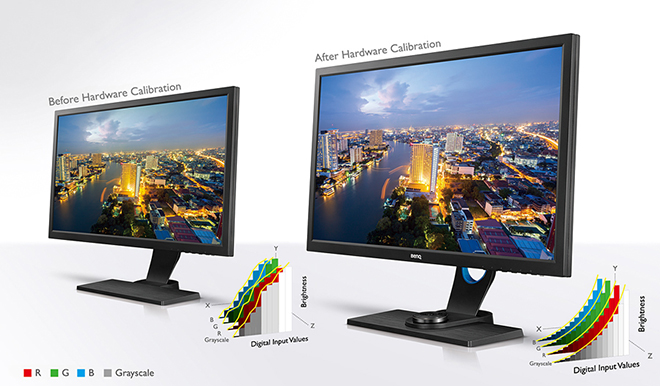
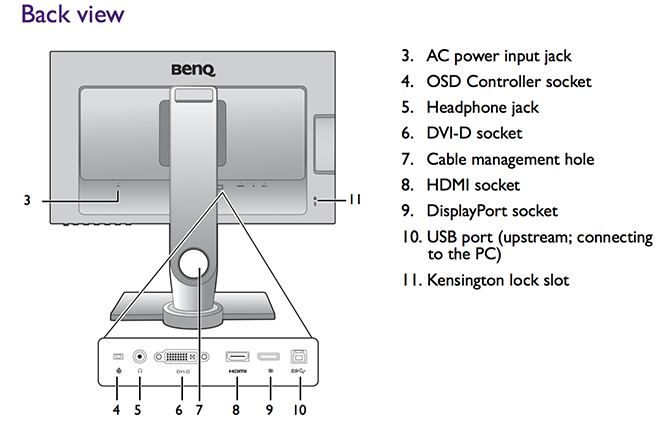 Like the Eizo, the BenQ SW2700PT is a hardware calibration equiped monitor. Hardware calibration allows you to adjust the monitor’s image processing chip without changing graphics card output data. Calibration keeps images consistent with originals without being affected by graphic card settings. Two monitor preset modes allow calibration results to be saved directly into the monitor. As discussed in the review on the
  In terms of both sheer colour range and accuracy of colour reproduction, the BenQ’s performance is excellent. Testing shows superb SRGB performance and approximately 99% of the Adobe RGB gamut range is successfully displayed. The much larger Adobe RGB space is much harder to reproduce and most monitors don’t reach even 80% of it. At this price point the BenQ sets a new standard in my experience.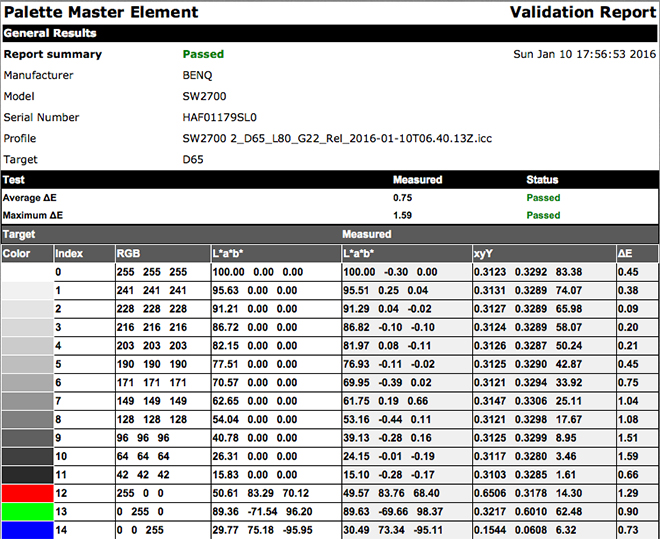
 REAL WORLD USE
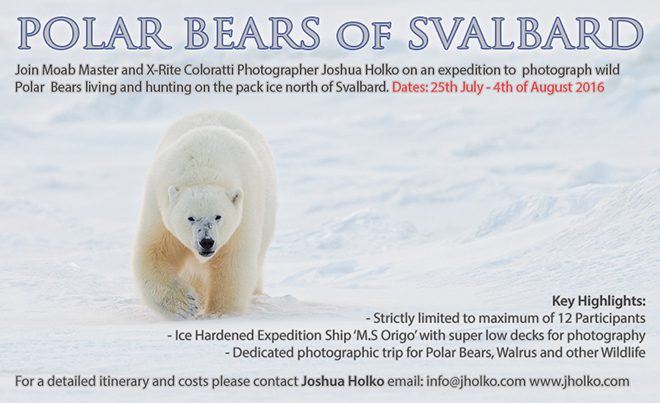 This expedition has been designed from the ground up to provide the very best possible opportunities to Photograph Polar Bears in their natural environment. With the reduction in Arctic sea ice the Polar Bears in Svalbard are dwindling in number and the number of years left to photograph them is unfortunately now extremely limited. Late July and August are the ideal times to photograph Polar Bears north of Svalbard due to the dwindling ice around the archipelago. On this expedition we will be carrying a naturalist/biologist who specialises in locating Polar Bears and an expedition leader and captain who have years of experience in placing us in the ideal position to make the best photographs. Their expertise will allow us to approach the king of the Arctic as closely and safely as possible and make incredible photographs under the spectacular midnight sun.
 Our intention is to sail directly north from the small town of Longyearbyen in Svalbard to approximately 80 degrees North to the very edge of the permanent pack ice. At our northerly most point we will likely be less than 600 miles from the North Pole.
 We will be using the ice hardened expedition ship M.S Origo which will enable us to skirt the edge of the pack ice searching for and photographing Polar Bears. M.S Origo is widely regarded as the best ship in the Arctic for Polar Bear Photography and has been my ship of choice for this expedition for the past three years. With its super low decks we can photograph at eye level with wild Polar Bears. Our expedition ship is also equipped with sufficient zodiacs and crew for all photographers to be shooting simultaneously with plenty of room to spare for camera equipment – So bring what you need! On this expedition we will also likely photograph Walrus, Seals, Whales, Arctic Foxes and the many Arctic sea birds including the rare and angelic Ivory Gull. To get an idea of the sort of wildlife photographs you can take on this expedition please visit the

 www.WILDNATUREPHOTOTRAVEL.com