It really is hard to believe that Christmas and New Year have come and gone and that in a few days time we will already be in February. In less than two weeks time I will be flying out of Australia on my first two workshops of the year – Yellowstone Winter Wonderland Experience and Iceland in Winter. I will also be spending time on a new scouting trip to the Arctic in Winter as well as my Arctic Fox project. It is going to be an exciting couple of months.
It has been nearly ten years since I was last in the United States and I am very much looking forward to returning and photographing in a Yellowstone Winter with a small group of great friends and passionate photographers. The Yellowstone workshop is about both wildlife and landscape opportunities and I am really excited about what we may encounter during our time in the park and surrounding areas. We are also visiting the Grand Tetons and National Elk Refuge at the end of our workshop.
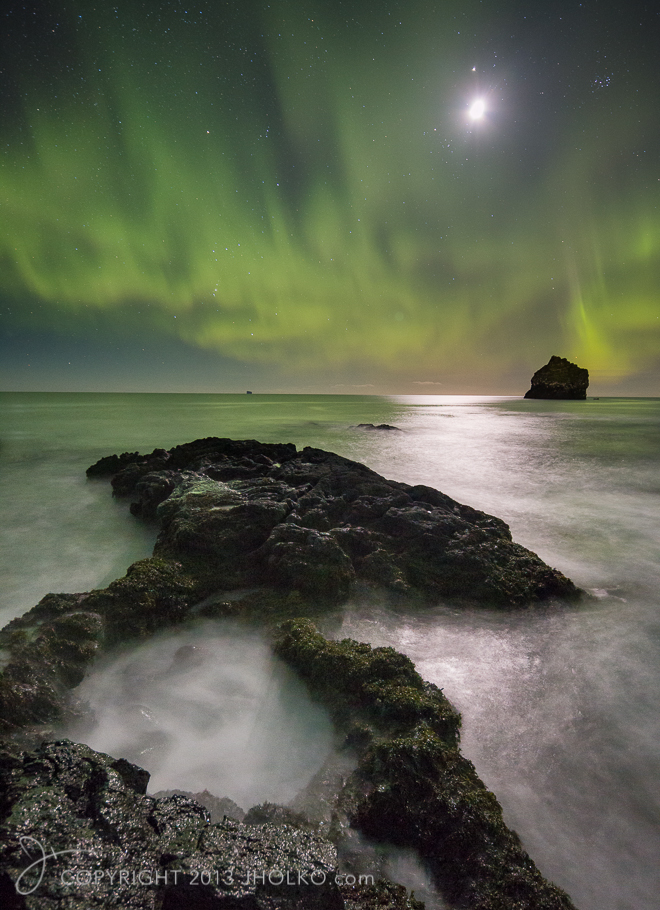
After I finish in Yellowstone I am flying directly to Iceland to co-lead my annual 2015 Winter Aurora workshop with Daniel Bergmann. As I have written before Winter is wonderful in Iceland with snow covered landscapes, partially frozen waterfalls and with a little luck we will see and photograph the Aurora Borealis. We are focusing our efforts during this workshop on the landscapes of Southern Iceland and will be visiting many fantastic locations for photography in these areas including ice caves. The 2016 Winter workshop will focus on the Northern landscapes of Iceland. I opened the 2016 workshop for bookings a couple of days ago and there are now only a few places left before we will be sold out. At the conclusion of the Winter Iceland workshop I am going to travel to Svalbard for a week long scouting expedition to photograph Polar Bears and Reindeer in winter light. This is a very exciting opportunity and I will have more to say about this expedition in a few weeks time.
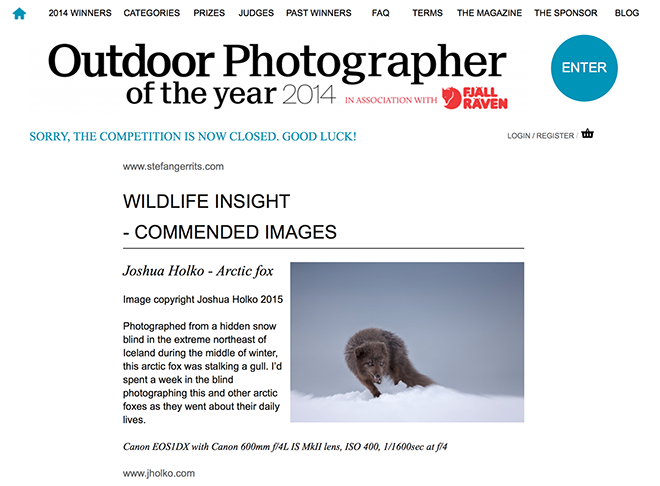
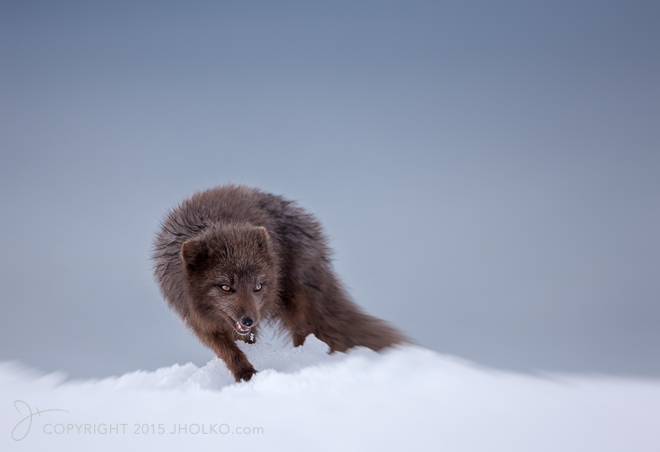
After completing the Svalbard trip I will fly back to Iceland and spend a week and a half in the extreme northeast of the country photographing Arctic Foxes for my Arctic Fox Project. I will then fly back to Australia at the end of March. As is customary I like to do a packing list of what I am planning to take with me on these workshops and for my time away – it helps me make sure I have not forgotten anything. Unlike my 2014 Iceland Winter Workshop I am not heading to Namibia in Africa directly afterward and so can pack only cold weather clothing, leaving the shorts and sandals at home. In fact, given I am spending time in Yellowstone and the Arctic in Winter I will be packing all of my best cold weather clothing. I am expecting temperatures of -20º celsius and below in Yellowstone and Svalbard – Iceland should be a warm bath by comparison. My Sorell Caribou winter boots are currently in storage in Iceland so I intend to purchase a new pair of winter boots in Bozeman before we start our Yellowstone workshop.
In terms of camera gear I am packing the usual gear for this trip including two long lenses for wildlife. As much as I would also like to take my TSE lenses the reality is I simply do not have enough space and already have considerable weight to manage. On top of the below I am also packing the new Lens Coat 600mm F4 Camera backpack which I can use to store the 600mm when not in use. This clever new bag packs flat and takes up almost no room in my luggage.
 At the beginning of March the darkness of the Icelandic winter is starting to lift and the days are becoming longer. We will have up to ten hours of good light during the day and with a little bit of luck the spectacular Northern Lights will increase our photographic opportunities well into the night. Winter conditions in Iceland can be stunningly beautiful: the glacial lagoons freeze, some of the waterfalls are partially frozen, the glaciers appear more blue with fresh snow on top, the landscape of the north is covered in fresh snow and with fewer visitors. With true darkness in winter comes the possibility of seeing the awe inspiring Northern Lights (Aurora Borealis). We plan to make photographs of them whenever there are clear skies and intense Aurora activity.
 You can download a complete itinerary and information PDF


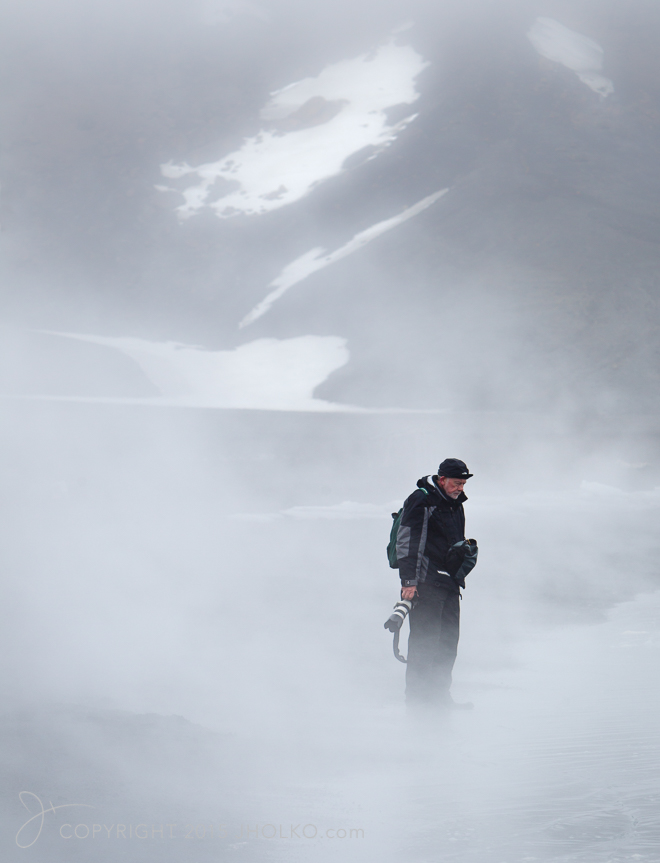 The volcano caused serious damage to local scientific stations in 1967 and 1969. The island is perhaps best known historically for its whaling station; although it is now regarded as a tourist destination with a scientific outpost. Interestingly there are various countries that havee claimed sovereignty over the Island but it is thankfully administered under the Antarctic treaty system.
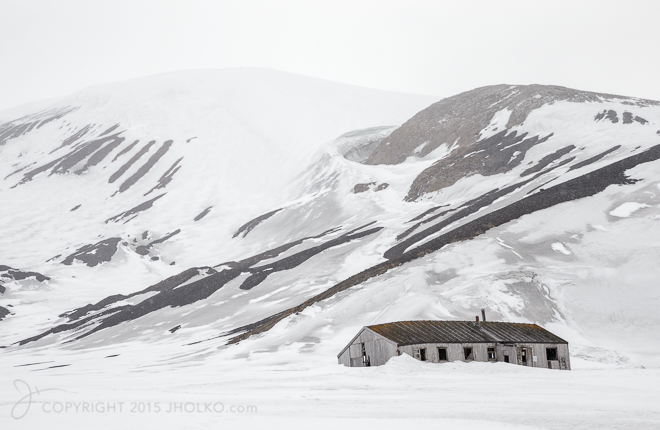 I have been fortunate to visit Deception Island and Whaler’s Bay now on several different occasions. In fact, I actually posted a series of images here on my blog I titled ‘
 These three photographs were made during my recent expedition to Antarctica at the end of 2014 (the first photograph of the photographer on the beach was taken in 2011). They summarise for me the feeling of this abandoned location and capture something of the haunting atmosphere that seems to hang so low over the land. Interestingly all of these photographs were made during heavy snowfall. I have visited Deception Island in a range of different weather, but it is the images captured in the driving snow that best convey the feeling of this location for me.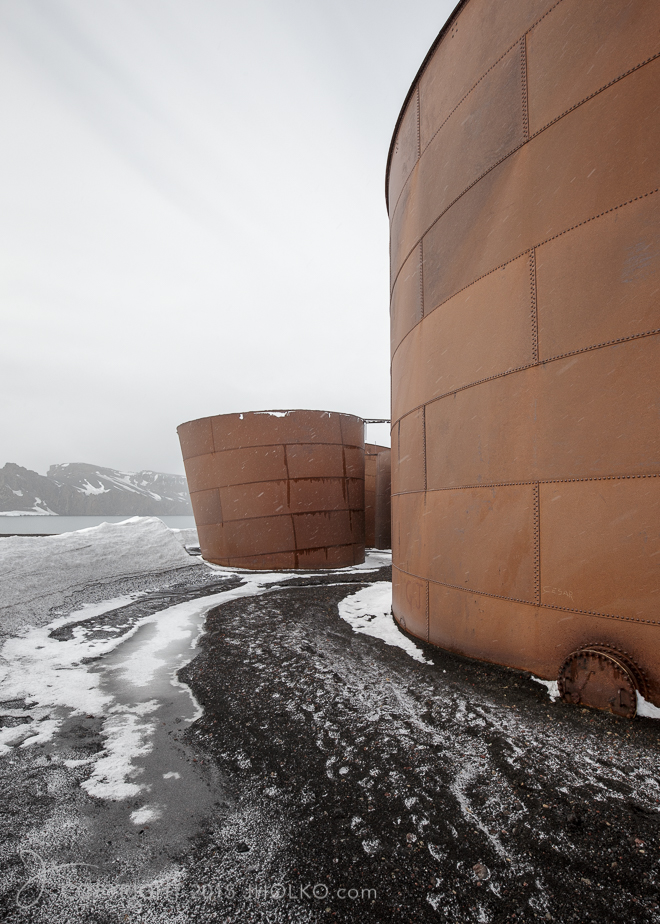
 www.WILDNATUREPHOTOTRAVEL.com