Creating Intimate Wildlife Photographs

One of the easiest things you can do to dramatically improve your wildlife photography is to get down low. Chris Gamel who was a participant on my photography expedition to Antarctica last November touched on this briefly with his ‘Alter the Perspective‘ tip in his guest post here on my blog a week or so ago. It is worth emphasising the importance of this advice as getting down low allows the photographer to connect with the subject and create a far more intimate photograph than one taken at the average human standing height. When you get down low (to eye level) with the wildlife you have a much better chance to connect with your subject and to create a photograph that tells the viewer much more about the life of the critter and the environment in which it lives. Many banal wildlife images could easily have been improved if the photographer had made the effort to get down to the perspective of the subject. Getting down low is not always the answer of course. There are occasions when raising the perspective is the preferred approach and these instances should be relatively obvious.

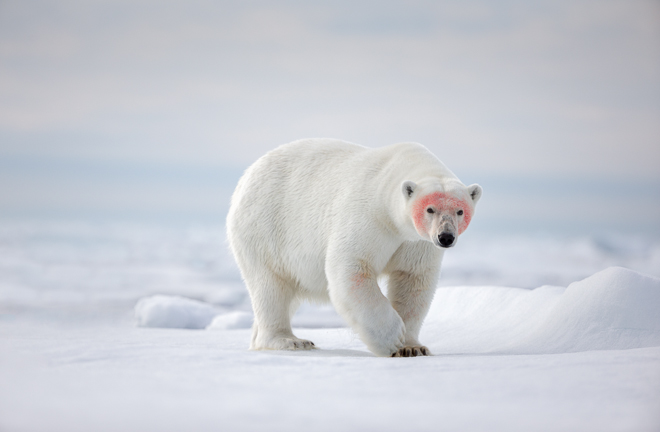
I am including an example below that illustrate the importance of getting down low and connecting with your subject in wildlife photography. I want to place particular emphasis on ‘connecting with the subject’ as this is something professional portrait and street photographers often talk about and with good reason. When you connect with your subject you have a far better chance to successfully capture their character and personality. You are going to create a photograph that tells the viewer something about the subject and perhaps gives an insight into who they are.  Connecting with a subject does not always mean you have to make eye contact either. Connecting in this case simply means you are shooting the subject in a manner in which you are trying to tell their story. When it comes to telling the story of wildlife my preference is often to shoot landscape photographs that include wildlife rather than head and shoulder portraits. Photographs that include the animal in the landscape tell the viewer something about the environment in which the animal lives and helps place the critter in context. In this example I am including a photograph that is more portrait orientated to better illustrate the importance of perspective. I photographed this Polar Bear at 80º North of Svalbard at the edge of the permanent pack ice. This bear showed no fear whatsoever of the small ship (with only twelve photographers aboard) I was travelling on and approached within just a few feet of us. The opportunity to create a great photograph was a combination of being in the right place at the right time, but just as important as actually being there was getting down low. In this instance I got down as low as I possibly could and waited until such time as the bear and I made eye contact before I pressed the shutter and took the photograph. The result is an intimate and personal photograph that speaks volumes about the environment in which the animal lives and how it perceives its surroundings. The viewer perceives the sea ice and surroundings from the perspective of the bear which helps connect the viewer with the subject. In this instance, eye contact with the bear helps draw the viewer into the photograph and emphasises the connection with the subject.
I want to emphasise that getting down low and connecting with your subject starts long before you arrive on the scene and take a photograph. You have to consider the location you are going to be shooting from and how this relates to where your subject might be when you press the shutter. And of course you have to take into account the all important background amongst a myriad of other technical, aesthetic and compositional concerns and challenges.  Some forward planning can go a long way when you are planning your next wildlife photography sojourn. Give serious consideration to the places you will be able to take photographs from and the opportunities that location will provide you. Your chance to get down low and connect with wildlife could be more than hampered by a poor choice of vessel or vehicle. Large cruise ships with hundreds of people and big buses that place the photographer high up are not ideal shooting platforms if you want to get down to eye level with your subject. Be it an African Big Cat Safari or an expedition to Photograph Polar Bears take a moment and find out what your real options are for connecting with your subject. It could well be the difference between an outstanding wildlife image and just another snapshot.

Limited Edition Gura Gear Bataflae 32L Camera Bag in Stone Green

The good folks over at Gura Gear who design and manufacture my favourite camera bags have just announced a new limited edition Stone Green version of the Batalfae 32L (The Bataflae 32L is my primary camera bag for international airline travel, workshops and expeditions. I usually just order my camera bags in black, but there is some real benefit to having a limited edition colour when you are reaching for your camera bag on a trip or expedition amongst a myriad of other ‘black’ camera bags. Stone Green was inspired by Gura Gear’s recent work in the field and will be available exclusively in the Bataflae 32L beginning in Mid-January 2014. The limited edition Grey and Tan colors of the Bataflae 32L were discontinued last fall. There are still limited quantities remaining of the Tan Bataflae 32L (Grey is sold out). You can Pre-order the new Stone Green today to receive it in the first shipment later this month. If you are wondering just how much gear you can actually fit inside one of these Bataflae 32L bags be sure to check out the VIDEO I did late last year.

Iceland Elves and Roadwork Delays…

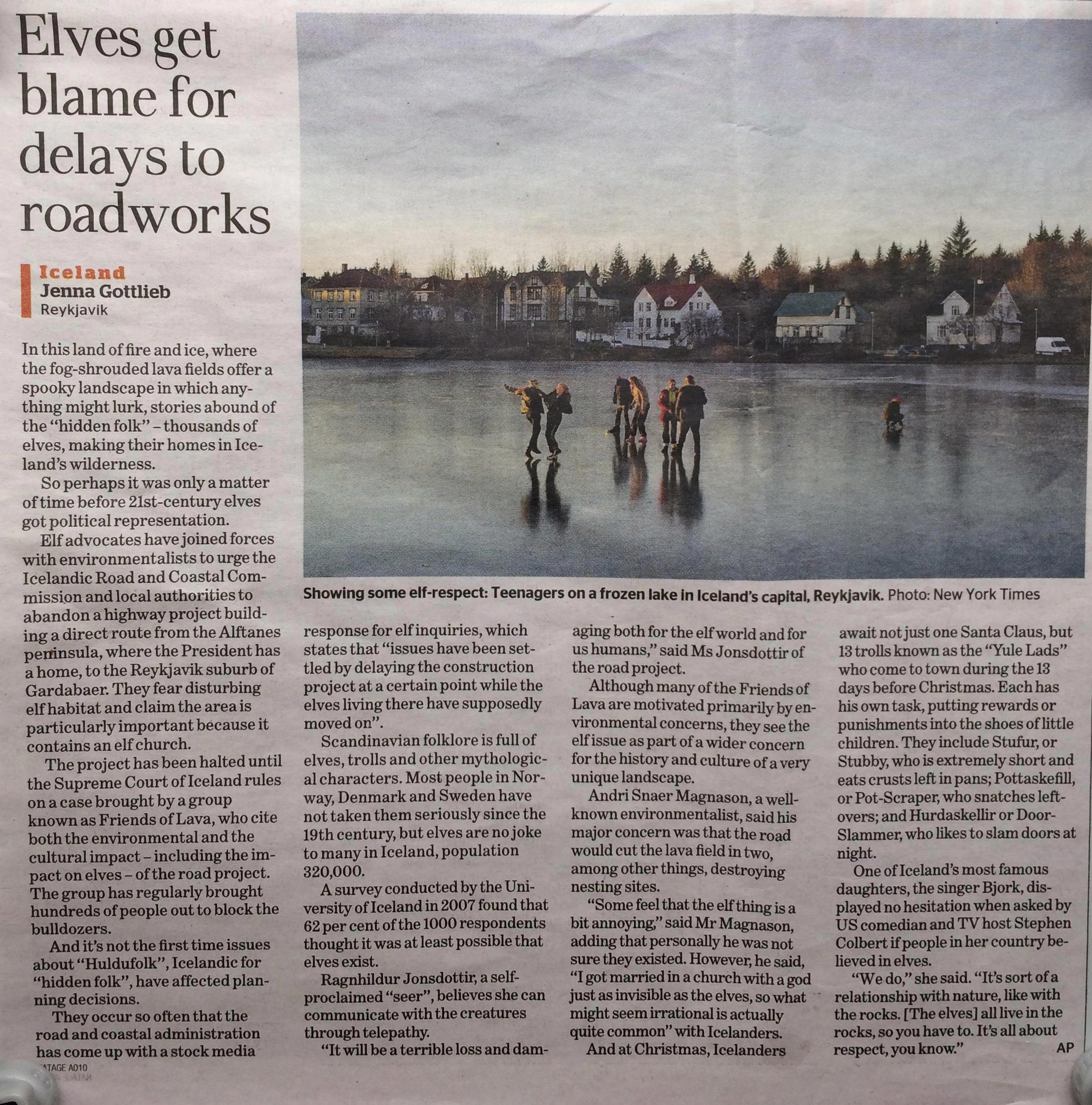
Ok -This is not a photography related post by any means (you are just going to have to forgive me this once). But, this news does pertain to my favourite country in the world and therefore I just could not resist sharing this article that appeared in the World Correspondents section of the Australian Age Newspaper on December 24th last year. I can’t say I have seen any Elves in my many visits to Iceland, but having experienced Iceland’s fantastical and primordial landscape you can count me amongst the believers. Any country that has the thirteen trolls of Christmas including one named Stubby who eats the crusts left in pans gets my nod of approval. Bless them all. Just click the image for a larger easier to read version.

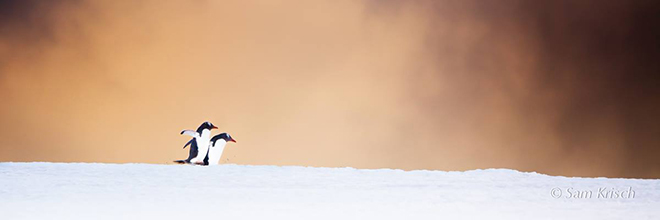
Testimonial from Sam Krisch – Antarctica 2013

In 2013 I traveled twice with Joshua Holko and Daniel Bergmann: To Iceland and to Antarctica. I am a veteran of many photography tours and workshops. I have experienced both the best–and the not-so-best–of trip leaders and instructors.

Joshua and Daniel do their utmost to make sure that all of the participants have the best photographic experience. They are always available for questions and help for those that need it. They have the sensitivity to enable those participants who do not like or prefer instruction to get the maximum image-making opportunities.

While they are exceptional, inspirational photographers themselves, they always put their own work on location on hold for others. I will be glad to travel with them again and highly recommend that others enjoy the high quality tours they operate. I would rank them as two of the best anywhere. Sam Krisch – www.samkrisch.com

Guest Photographer: Chris Gamel – Better Wildlife Photography

I am kicking off a new segment on my blog in 2014 for guest photographers with whom I have travelled before to share some of their own writing and photography. The first to do so is wildlife photographer and biologist Chris Gamel. Chris accompanied me late last year on my expedition to Antarctica is an accomplished wildlife photographer in his own right. Today he shares five useful tips for better wildlife imagery.

Better Wildlife Photography

I want to begin by thanking Josh for letting me write this guest blog post.  I have learned quite a bit from Josh and I appreciate the opportunity to give something back. This past November, I joined Josh on his Antarctica photo tour.  As would be expected, the photographic opportunities were amazing.  Our days were filled with giant icebergs, playful penguins, slumbering seals, and dramatic landscapes.  Interestingly, one of the most rewarding aspects of attending such a tour is the opportunity to interact and share with other photographers. Over time, photographers tend to develop niches, specialising in a particular type of photography.  Each is an expert in his or her own niche, and serve as a ready source of information about that niche.  Attending a photographic tour provides a wonderful opportunity to plug into that expertise and improve your own photography. Despite the benefits, not everyone is able to attend a photographic tour.  In the spirit of photographic tours everywhere, I would like to share some tips that you can use to improve your wildlife photography.

Tip #1: Alter the PerspectiveWe spend most of our lives viewing the world from five and a half feet (more or less).  It is what we see every day, and after the first few years that view begins to lose its charm. Show your viewers something different!  Challenge their perspective!  Climb up a tree, crawl through the mud, or simply kneel down to capture a penguin’s view of the world.  With that in mind, a good rule of thumb for photographing living creatures is to capture the image from the subject’s eye level.  If the subject is shorter than you, drop down.  If it is taller than you, find a way to get higher. Take the penguin image above as an example.  It was the first penguin I photographed in Antarctica and I took it while lying on my stomach in the snow.  The low angle provides a different perspective then is usually seen and it helps to emphasise just how large these birds are.

Tip #2: Eliminate DistractionsToo often we try to include too much in our images.  Amazing events are unfolding in front of us and we want to capture everything.  The problem is that while our eyes are great at ignoring visual distractions, our cameras are terrible at it.  To greatly improve your images, try this little trick.  Ask yourself what you are taking a picture of.  The fewer words you use to answer that question, the better.  Once you have identified your subject, fill the frame with it.  This might mean getting closer, or using a longer lens. For example, look at the penguin image above.  The subject can be easily summarised: “jumping penguin.”  Once that subject was clearly identified, I did everything possible to remove any distracting elements.  The only things included in the frame are the jumping penguin and the ice it is jumping on.  The result is a clean image showcasing an animal’s behaviour.

Tip #3: Get the Eye in FocusWhen photographing wildlife, what part of the animal should be in focus?  The obvious answer is all of it, but that’s not always realistic.  Long telephoto lenses produce a very shallow depth of field and there are times when either equipment limitations or creative choices means only part of your subject will be in focus. The general guideline when dealing with wildlife and select focus is to make sure the animal’s eyes are in focus.  If only one eye can be in focus, focus on whichever eye is closer.  As long as the eyes are sharp, the viewers will accept that the image is sharp.  This is true even if other parts of the image are out of focus.  If the eyes are out of focus, the perception will be that the entire image is out of focus.

Tip #4: Watch the BackgroundBackgrounds can make or break an image.  As wildlife photographers, we often get so excited about the subject in front of us that we forget to consider the background.  Sometimes an image calls for a clean background.  Other times, the background will contain elements that complement the subject.  When composing the image, slow down and look at each element of the image, including the background.  Ask yourself these questions.  Does the current background add or detract from the image?  Will moving the camera help to improve the background?  Will a different lens produce a different result? The image above is an example of a simply, clean background.  During a landing in Antarctica, I observed penguins walking through a ray of sunlight as the crossed a small ridge.  The warmth of the golden sunlight created a beautiful contrast against the blue wall of ice behind the ridge.  By moving a few feet to my left and dropping onto my stomach, I was able to remove all distracting elements from the background.

Tip #5: Wait for the BehavioursOne of the joys of wildlife photography is that you never know exactly what your subject is going to do.  Sure, a knowledge of animal behaviour helps, but if you want to capture images of animal behaviour, you have to use the most important tool in your toolkit: patience. Wildlife animals don’t perform on command.  They rarely do what you expect, and if you want to capture behaviours you need to be ready to press the shutter at a moment’s notice.  I regularly sit and watch wildlife through my lens with my hand on the camera’s shutter button.  I might have to wait for minutes to hours, but when the action starts, I am ready. The image above demonstrates the rewards that come from patiently waiting for animal behaviour.  By composing the image and waiting, I was able to capture this brief moment in time when the penguins looked up at the full moon. While this post is not a comprehensive introduction to wildlife photography, my hope is that these tips will provide a little guidance the next time you try your hand at wildlife photography.

Chris Gamel is a storyteller who combines photography and filmmaking to tell stories about the natural world. His wildlife research and award-winning photography has taken him to all seven continents as he shares the beauty and biology of the natural world.  To see more of Chris’s wildlife images, and to learn more about wildlife photography and filmmaking, visit his website at http://www.ChrisGamel.com.  Sign up for his free newsletter and receive a free copy of Transitions: 10 Tips for Transitioning from Photography to Video.