In mid January 2025 I ran a workshop to the Altai mountains in Western Mongolia to find and photograph the ghost of the mountains – the Snow Leopard. This was my second workshop to this region of Mongolia in Winter and it included a number of incredible sightings and photography sessions with this stunningly beautiful cat.
We kicked off our workshop in the capital of Mongolia with a two-hour flight to the small town of Khovd in Western Mongolia. From here we took our pre-arranged 4-wheel drives another two and a half hours into the wilderness to our base camp on the upper steps of the Altai mountain range. The altitude at base camp is around 2100 metres, so quite comfortable for day-to-day living. Operational altitude is quite a bit higher toping out around 10,000 feet or just over 3000 metres.
This year the snow conditions in this part of Mongolia were superb with an excellent covering of snow at both base camp and on the mountains. Snow conditions are extremely unpredictable from year to year and even when conditions are ideal, the snow often doesn’t last long. Even though temperatures are frequently below -20º Celsius, the snow melts fast due to a combination of direct sun exposure and extremely dry air. The snow often goes straight to gas form, meaning there is no melt water lying around. We witnessed an astonishing amount of snow sublimate in just two days when it was below -20º Celsius with constant sunshine.
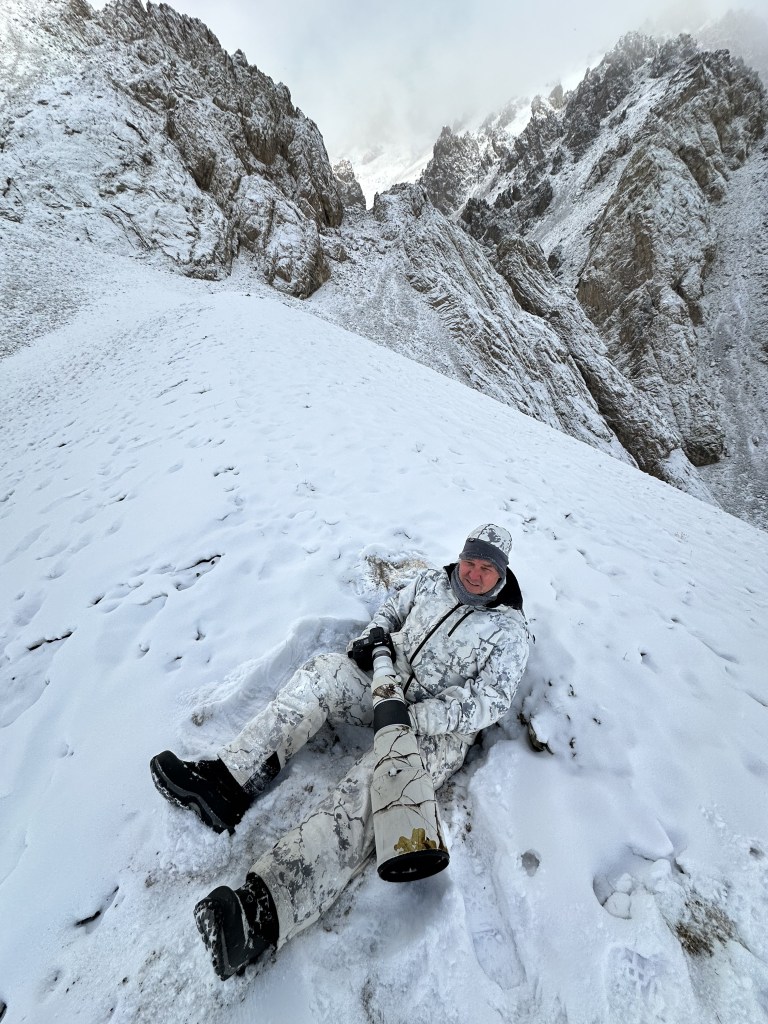
Snow Leopards are notoriously difficult to find and even harder to photograph, so to give us the best possible chance we utilised three fit young local trackers who live in the mountain region around base camp. Equipped with radios and fit as navy seals on pay day our trackers would go up into the mountains every day before sunrise and search for signs of recent passing of Leopards. It wasn’t long on our first day before our trackers sent back word of a leopard high in the mountains. We quickly grabbed our camera gear and began a one hour plus hike up the steep sides of the mountain screen slope. After some difficult climbing we reached a small snow covered plateau of sorts where our trackers advised us to wait. The Leopard was now on the move and no one (including the trackers) knew exactly where it was.

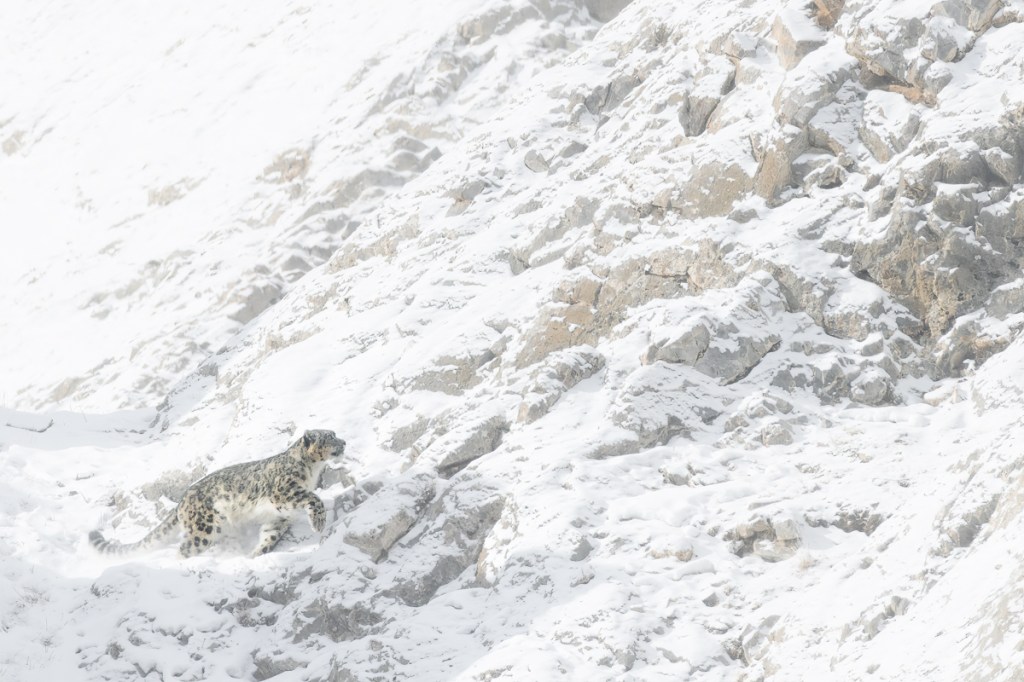
From our vantage point on the side of the mountain we were limited in what we could see due to the incredibly steep rocky terrain, low cloud and significant ice crystals in the air that hampered visibility. Nevertheless I was determined to try and locate the leopard and after roughly half an hour of searching with my binoculars I found it on the move between a rocky ravine covered in snow. The Leopard was moving quickly and after getting everyone onto the leopard with their cameras I managed to grab a photograph I am extremely pleased with. What I love about this photograph is the environment surrounding the leopard. Many photographs of Snow Leopard have less than ideal backgrounds, but in the snowy conditions we were able to capture the leopard in wonderful context.
Over the course of the next week we had several other sighting and encounters with Leopards in the area that included an incredible display of interaction between a male and female high on the near vertical sides of one of the mountains. This encounter was mesmerising to watch, as the male leopard tracked the female across the side of the mountains. When they finally came together we could hear female growling from the base of the mountains. This sort of interaction is incredibly rare to witness and was a real highlight of the trip. Photographically it was challenging as the leopards were at a significant distance and on a near vertical rock face that was impossible to reach – nevertheless, the encounter was enthralling.
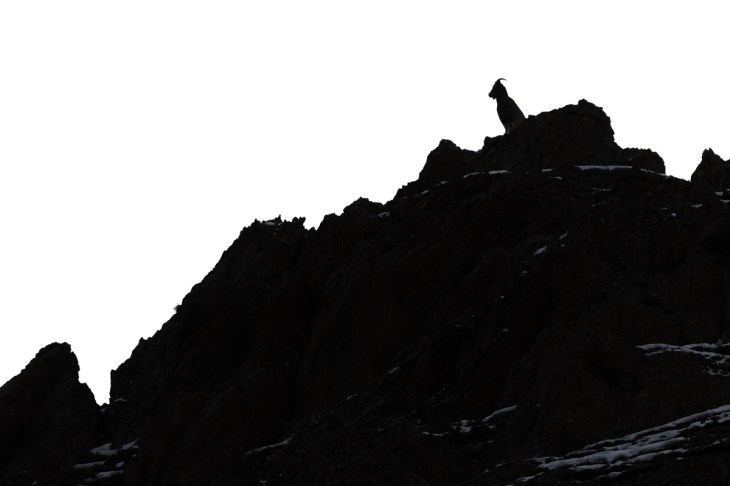
The photograph of the month I recently posted for January 2025 was also shot during this workshop. Although this is not an image of Snow Leopard, it is probably my favourite wildlife photograph from this trip. The silhouette is of a Mongolian Ibex that appeared at the very top of this mountain range for a few moments while we were milling around the vehicles at the base of the mountains. At the time the Ibex appeared, my camera was packed up in the car as we had just returned from hiking in the mountains. Hastily I grabbed my camera bag and pulled out the R1 with the 600mm and 1.4 TC. I immediately recognised that this photograph was going work best as silhouette and set my exposure accordingly. Mercifully, the Ibex remained and posed for the perfect silhouette before disappearing again over the ridge. This sort of photograph is pure serendipity and can never be planned. The key takeaway for me is not just to remain prepared in the field, but also to recognise opportunity when it presents for this sort of silhouette.
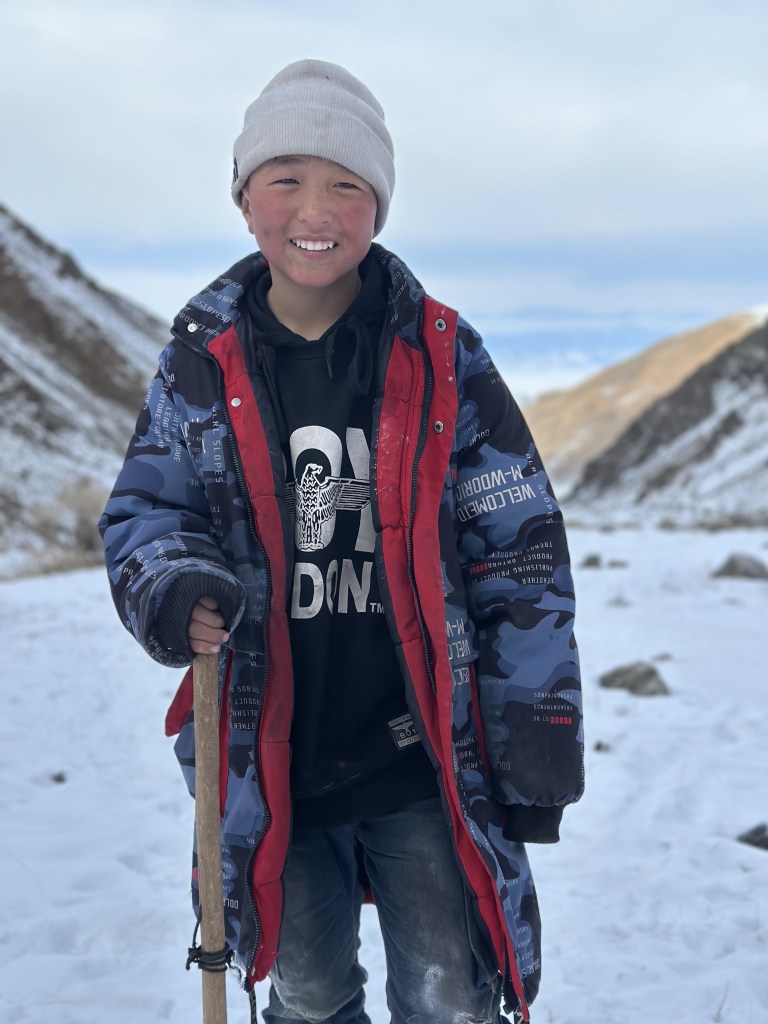
On our last day we also spotted a wolf high on top of a distant snow covered mountain – unfortunately too far to photograph, but absolutely wonderful to see and experience. This was my first encounter with a wolf in Mongolia. We also had some superb cultural experiences and opportunities and although people photography is not my thing, I could not resist the chance to photograph one of our trackers young kids before he set off into the mountains to shepard the sheep and goats.
I will return to the mountain regions of Mongolia again early next year in January 2026 in search of this incredible ghost of the mountains. If you would like to join myself and Wild Nature Photo Travel on this unique experience in Mongolia please get in touch to register your interest. Places are filled on a first come first served basis. The 2026 workshop will run from the 13th of January until the 24th of January which is the perfect time for winter conditions to photograph this powerful cat. We will be taking just four people on this workshop to ensure the best possible photographic opportunities and experience for all.
 www.WILDNATUREPHOTOTRAVEL.com