BBC News Features Travel Photographer of the Year Images

I just wrapped up my 2015 Wild Polar Bears expedition in and around the Svalbard archipelago in the Arctic and was very pleased to learn on my return to Longyearbyen yesterday that BBC News had just featured the best images from the 2014 Travel Photographer of the Year Awards including one of my own from Svalbard.Seal KillI will have a full travel report later in September when I return to Australia on the Wild Polar Bear expedition. In brief: During the ten day expedition we encountered numerous Polar Bears on the pack ice around the archipelago including three individual bears on separate seal kills which resulted in some really incredible images from all participants. We also saw and photographed Walrus, Reindeer, Arctic Fox, numerous sea birds including the rare and angelic Ivory Gull as well as dramatic arctic landscapes. I am really looking forward to editing and processing some of the photographs from this expedition when I return to Australia as well as seeing some of the finished images from all aboard the expedition.

I am now headed to Iceland for my 2015 Highlands Expedition before I return to Svalbard for one more Polar Bear expedition (The Kingdom of the Ice Bear) this year. See you in Iceland.
Departing for Wild Polar Bears and the Iceland Highlands 2015

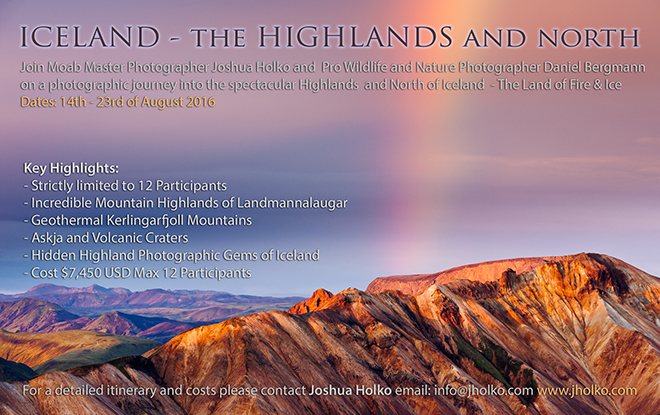
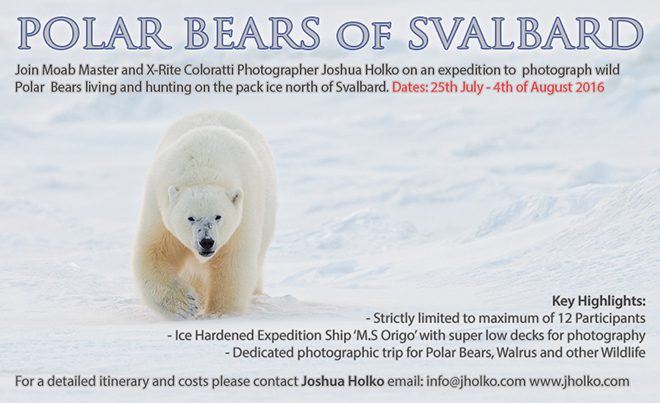
I am not exactly sure where the time has gone since I returned home to Australia from New Zealand a month or so ago, but tomorrow I will make the long journey back to Svalbard in the Arctic for my 2015 Wild Polar Bear expedition. I have been looking forward to this expedition for quite some time now and have been eager to get back to Svalbard and the land of the Polar Bear since my winter expedition earlier this year. Svalbard is an incredible place and one of the best places in the world to see and photograph wild Polar Bears living and hunting at the edge of the permanent pack ice. On this expedition we are using a small ice hardened vessel that will enable us to get in nice and close to drift ice around Svalbard. Importantly, it has nice low decks so we can get down to eye level with our subjects. With this expedition being limited to just twelve participants we will have plenty of room for everyone to photograph at once from both ship and zodiac and I am super excited to share this experience with all aboard. As well as Polar Bears, we will also likely photograph Walrus, Arctic Fox and a great many Arctic sea birds during our expedition.Svalbard-8864-Edit12015After we finish up our Polar Bear Expedition I am heading to Iceland for my 2015 Highlands workshop. The Highlands of Iceland are the heart of the country and the jewel in the crown of Iceland’s landscapes. I am really looking forward to the opportunity to photograph in the highlands again with a passionate group of photographers and to be able to put the new Canon EOS 5DSR 50 mega pixel camera through its paces in this active landscape of colour and light. It has been just over a year since I was last in the Highlands and although I have visited this area many times it remains my absolute favourite place in Iceland to Photograph. The only thing better than actually photographing in this incredible location is getting to share it with other passionate photographers! The 2015 Highlands workshop has long been sold out – but if you are interested in photographing in this incredible part of Iceland I will be leading two workshops to the Highlands next year in late August and September with Daniel Bergmann and there are still a few places available. Just drop me an email to register your interest.Once we finish up our Highlands workshop I am heading back to Svalbard with Daniel Bergmann for our Kingdom of the Ice Bear expedition. Also accompanying us on this expedition will be a two person film crew from Untitled Film Works and we hope to produce a short film of our experiences during the expedition similar to what we produced in Greenland and Svalbard two years ago – Watch the previous video HERE. Both the Polar Bear expeditions have been sold out for many months, but there is a single place remaining on the 2016 expedition and details are on my website at www.jholko.com  The ice conditions in Svalbard this year have been better than the previous ten years and I am hopeful we will have some really fabulous photographic encounters with Polar Bears during both expeditions.PolarBearsofSvalbardIn terms of equipment for these expeditions I am taking everything from 11mm (Canon’s new 11-24mm) to 600mm lenses as well as two Canon EOS 1DX cameras (specifically for wildlife) and the new EOS 5DSR camera (specifically for landscape).
Just as an aside: Over the last twenty four months of international travel the airlines have managed to destroy two of the  expensive North Face Rolling Thunder duffles; which I had been using for my checked luggage. These are some of the toughest and largest rolling bags I have come across and come with a lifetime warranty (and to North Face’s credit they have replaced the bag both times). It amazes me that the airlines can actually be rough enough to destroy these bags (it really would take some pretty serious effort). Rather than risk a third bag I have switched back to the normal North Face Expedition Duffle (lets see how they go with this one). Whilst these duffles don’t have rollers, they are slightly larger and significantly lighter than the rolling version; which is always a bonus. I will carry both a Gura Gear Bataflae 32L and a Gura Gear Chobe for my camera bags as well as a large Ortlieb waterproof duffle for zodiac excursions. See you in Svalbard.

How to Improve your Wildlife Photography without Spending a Lot of Money

During the first lecture I presented on Arctic Wildlife Photography at the AIPP Event in Perth Western Australia earlier this month I caught a number of people off guard in the audience when I explained my process for going out to photograph a particular species. It is an approach that will cost you much less than a new camera or lens and is guaranteed to help you get better photographs during your next wildlife outing. It is also an approach that requires a little investment in time, but its time well spent that will ensure you capture better images than you otherwise might have.

When I leave for a photographic expedition to photograph wildlife (it doesn’t matter what sort of wildlife) I don’t just pack my bags and head off into the wilderness to photograph a given animal with the latest and greatest gear. I do an extensive amount of research into the animal’s ecology so that I not only know where to find them, but also so that I am fully armed with knowledge of their behaviour. This knowledge is critical to capturing intimate images that would otherwise be impossible to realise. It enables me to read the many subtle signs an animal often displays and even predict their behaviour. Most of us know that a house cat is usually agitated or afraid when it flattens its ears. And we use this knowledge to deal with the cat accordingly. This same knowledge is a critical component to effective and successful wildlife imagery. It is far more important than a faster focusing lens or a camera with one stop more dynamic range. Those technical aspects of equipment are irrelivent if you have not equipped yourself with the right knowledge of your subject.

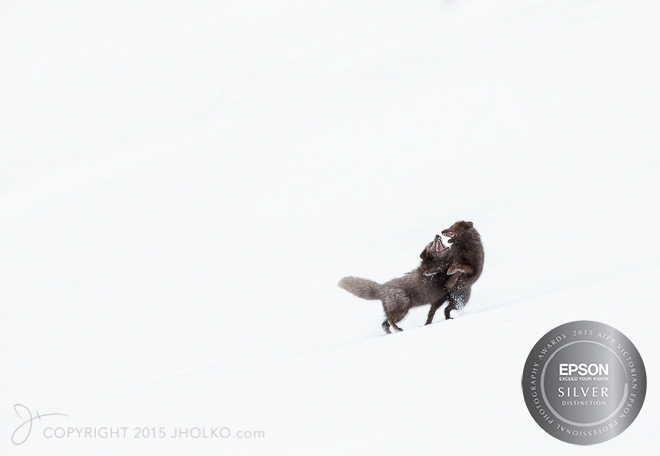
To cite an actual recent example of this in practice – When I set out on my Arctic Fox project (now coming into its third year) I went out and purchased every book I could on the ecology of Arctic Foxes so that I could learn as much as possible about their behaviour long before I ever pressed the shutter on my camera (I own not less than half a dozen different books on Arctic foxes). I wanted to arm myself with knowledge of the foxes behaviour so that I could recognise subtle signs and cues in their behaviour as I worked with the animals in the field. Wildlife give a great many clues about what they are going to do next through their behaviour and if you know and can recognise these clues you can predict the animals behaviour and greatly increase your ratio of quality keepers.Hornvik-9988-Edit42015The other thing you can do in addition to researching and reading about your subject is to enlist the help of someone studying the animal you want to photograph. A scientist or even a PHD student working with a particular species is likely to posses a lot more knowledge on your subject than you can probably otherwise acquire in a short period of time. Their assistance can be invaluable in the field in locating hard to find wildlife and in understanding wildlife behaviour.
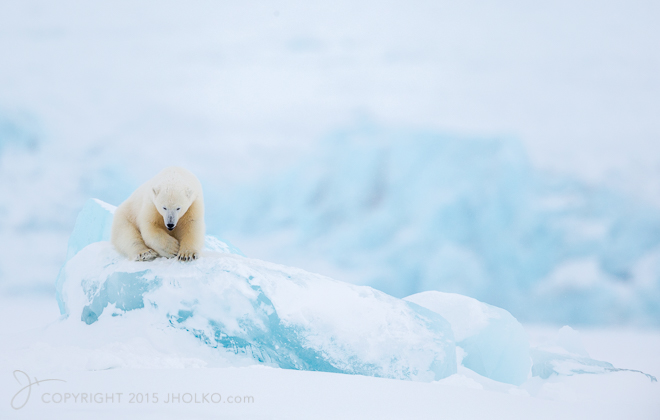
Now I grant you, spending time purchasing books, researching and reading about your photographic subject is not nearly as glamorous as a purchasing a shiny new lens or camera and running straight out into the field, but it does cost a lot less money and provides a far great return on investment in photographic terms. The next time you plan to go out and photograph wildlife it is well worth taking some time out and doing some research and reading on your chosen subject. You will almost certainly learn something about your subject and you will capture better photographs as a result. I will be leaving for the Arctic in a couple of days to lead two photographic expeditions for Polar Bears and I will certainly be brushing up on my reading with a couple of new Polar Bear books on the long flights from Australia. Happy Reading…

Svalbard Governor fines Tourists for Death of Polar Bear

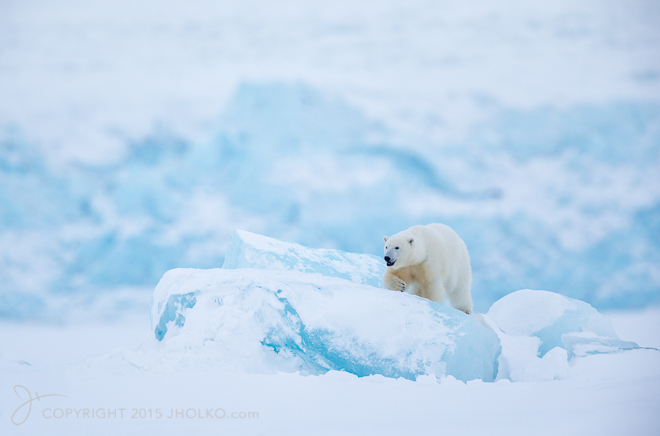
If you have been following my blog for sometime you will know that earlier this year I spent some time north of Longyearbyen in Svalbard photographing Polar Bears and other wildlife during the Arctic winter. One of the Polar Bears I photographed was very sadly shot dead only a few days after I made the image below as a direct result of irresponsible tourist behaviour (you can read my original post on the shooting). At the time this occurred I was extremely upset by the stupidity of the behaviour that led to the death of this bear. Not only was it an unnecessary shooting, but it was also completely avoidable. Local guides and visitors were aware the bear was hunting in the area where the camp had been set up. There has been an ongoing investigation into the tragedy and the findings have now been released by the Governor of Svalbard. I was very pleased to learn late last night that for the first time in Norwegian history a person has been fined for putting both people and polar bears in danger in Svalbard.

“For the first time in Norwegian history, a person gets fined for having put people and bears in danger on Svalbard.”

There are questions about the required safeguards. We feel that they had not. They did not have a guard/watch, and they had only one activated tripwire placed so high that the bear could go under, said deputy Sysselmann, Jens Olav Sæther, NRK.”

“The decision is evaluated against the new penal provision to Svalbard Environmental Act of 2012. “

Although I am still upset by the unnecessary death of this bear I am pleased to hear that a fine of $10,000 dollars has been levied against those deemed responsible. A precedent has now been set that it is not ok to act irresponsibly in Svalbard in the domain of Polar Bears. You can read the full report ONLINE.

Polar Bear Blues


July Photo of the Month Winner: Peta Horsten and Additional Bonus Winners!

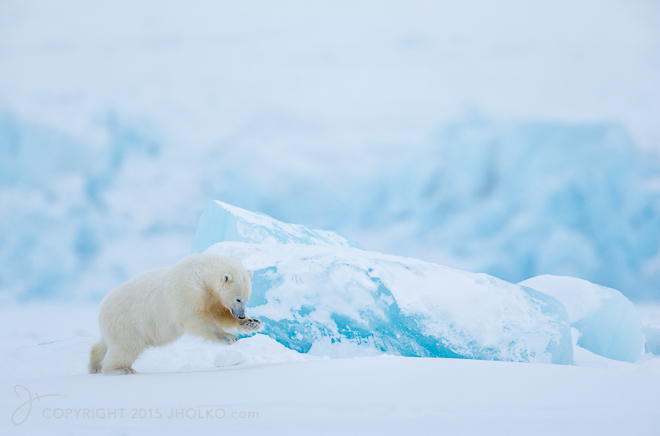
Congratulations to the seventh print winner ‘Peta Horsten’ for the photograph of the month for July 2015: ‘Polar Bear Pounce’.

What Peta said: Absolutely exquisite image capturing the frivolity of animals in the wild. It is a dream of mine to photograph Polar Bears – would love to have a print of yours on my wall to remind me of that dream!.

There were several other comments that came in within seconds of each other and I have therefore decided to give away two additional prints to the two runners up, Frede Lamo and Hulia Boz. What Frede and Hulia said:

Frede:  I would really would like a fine art print of this photo Joshua. I think this picture has a very special and sad story. I observed and photographed this polar bear a couple of times before it was killed, but they did not turn out this great.

Hulia: Its poetry… it’s magic and it’s taken in a special location with a special animal by a special photographer! why would I not want to win an amazing print!
Svalbard-9056-Edit12015
Congratulations Peta, Frede and Hulia, your prints will be sent to you in the next few days. Keep an eye out on my blog for the next print giveaway with the August photograph of the month. Remember the best way to get instant updates is to subscribe via email.