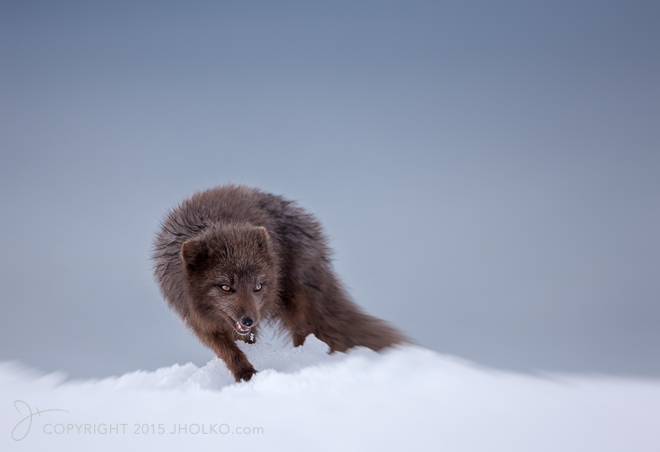
It is definitely competition season at the moment in photographic circles with many Landscape, Nature and Wildlife competitions either opening for 2015 or announcing their winners for 2014. I was very pleased to learn yesterday that one of my photographs has been commended in the 2014 Outdoor Photographer of the Year competition in the Wildlife Insight Category. I was fortunate to win this competition in 2013 in the Spirit of Adventure Category for a photograph of mountain climbers near the summit in an approaching storm and it is a great thrill to have my work recognised again this year with a commendation for the Wildlife Insight Category. The photograph I chose to enter was of an Arctic Fox stalking a gull from behind a snow drift. I took this photograph early last year in winter in the extreme north east of Iceland in a place only accessible by boat. This particular image was taken with the Canon EOS1DX and Canon 600mm F4L IS MKII.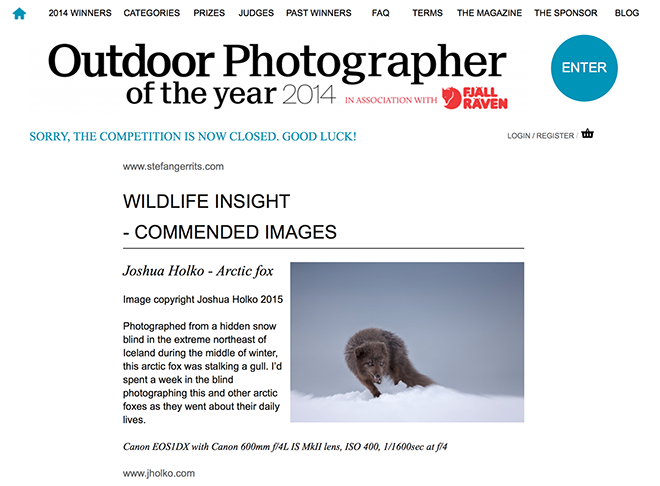
Category: Travel Photography
Photography from around the World
Deception Island Antarctica – The Hand of Man
Deception Island is an island in the South Shetland Island archipelago off the Antarctic Peninsula. It is renowned as one of the safest harbours in Antarctica and has been for me a regular stopping point during Antarctic expeditions. The island itself is actually the caldera of an active volcano and geothermal sulphur still rises along the waterline. 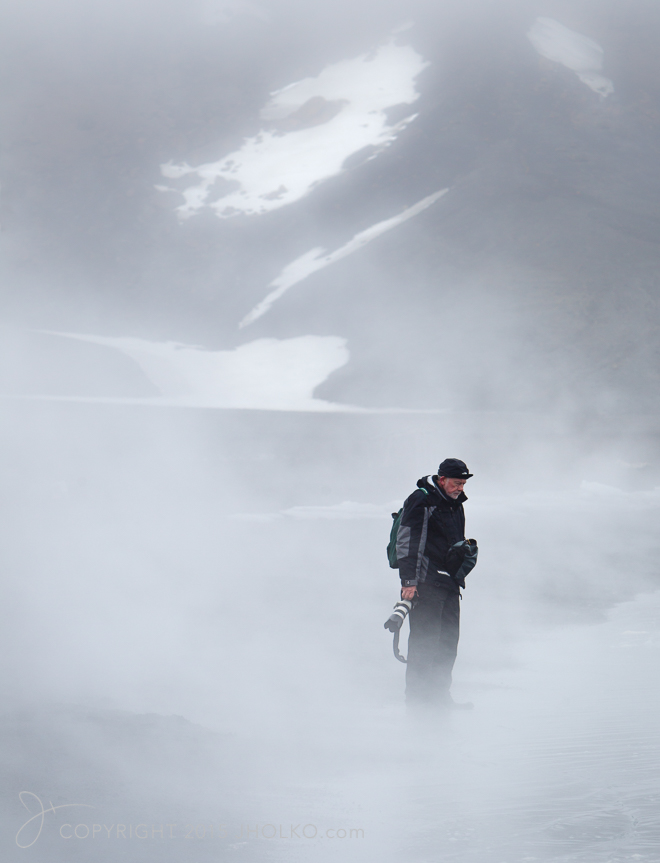 The volcano caused serious damage to local scientific stations in 1967 and 1969. The island is perhaps best known historically for its whaling station; although it is now regarded as a tourist destination with a scientific outpost. Interestingly there are various countries that havee claimed sovereignty over the Island but it is thankfully administered under the Antarctic treaty system.
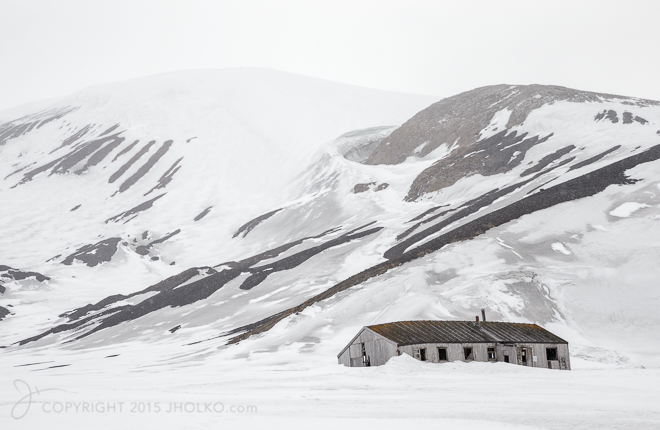 I have been fortunate to visit Deception Island and Whaler’s Bay now on several different occasions. In fact, I actually posted a series of images here on my blog I titled ‘Made of Steel‘ from my first visit back in 2011. There is a palpable sense of grim history to this location and I have heard many first time visitors remark on the impact this location has had on them. Having visited this location many times now it remains for me one of the most sombre locations I have ever photographed with its dark whaling history. I feel a strong sense of foreboding at Whalers Bay, although I have enjoyed the photographic opportunities at this location very much. Whaler’s Bay is in many ways a a stark reminder of the way we were. Its rusting whaling remnants are a poignant reminder of humanities injustices on Nature. It is said, that at the height of the whaling in this area there were so many whales slaughtered that the bay turned red with blood. Now, many decades on from the injustices of human action the rusting remains of the whalers activities serve as some very interesting photographic subjects.
  These three photographs were made during my recent expedition to Antarctica at the end of 2014 (the first photograph of the photographer on the beach was taken in 2011). They summarise for me the feeling of this abandoned location and capture something of the haunting atmosphere that seems to hang so low over the land. Interestingly all of these photographs were made during heavy snowfall. I have visited Deception Island in a range of different weather, but it is the images captured in the driving snow that best convey the feeling of this location for me.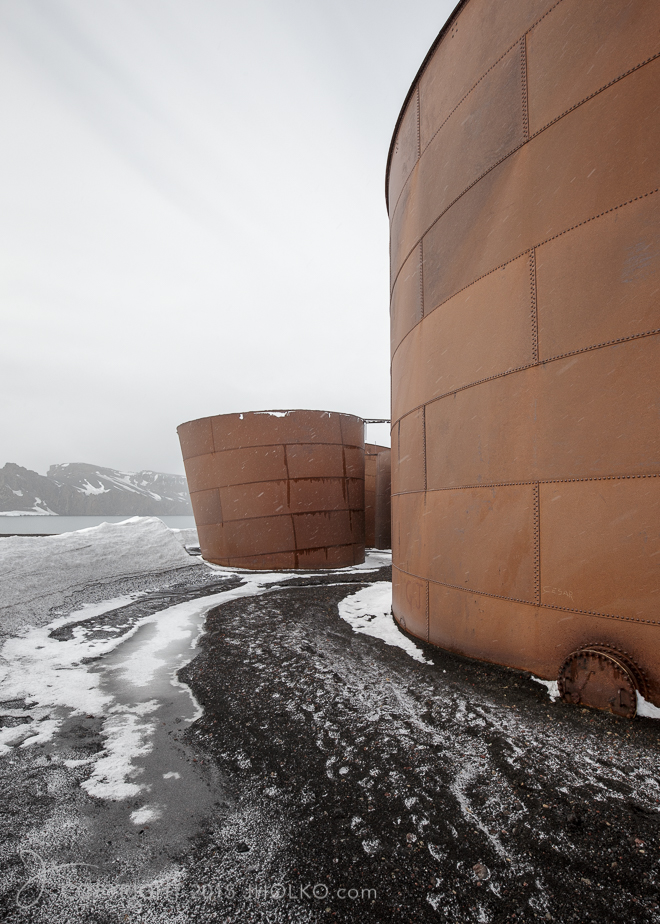
South Georgia Island and Antarctica Expedition 2014 Report
In November 2014 I led an extensive twenty-one day landscape and wildlife photographic expedition with good friend Andy Biggs to the Falkland Islands, South Georgia Island and Antarctica. The purpose of this extended expedition was to provide the definitive Antarctic and sub-Antarctic experience. We planned to take in the best of the Falklands, South Georgia Island and Antarctica and experience not only the diverse landscape and wildlife, but also some of the historic relics and history of these amazing places.
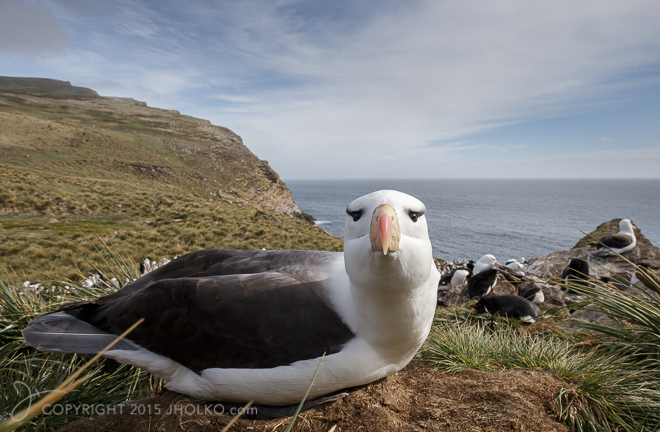
Our expedition saw us cover more than 3400 nautical miles in a round trip from Ushuaia, to the Falkland Islands, South Georgia Island, The South Shetland Islands, Antarctica and finally return to Ushuaia. We experienced the full range of weather and conditions from brilliant sunshine to gale force winds on our approach to Antarctica. As a photographer who prefers the drama of overcast skies and storm conditions I relished the opportunities that we had to shoot in inclement weather. Those of us who preferred calmer conditions were likewise blessed with some wonderful weather during much of our time in the Falklands and South Georgia. Unfortunately for me, I did suffer (not alone ) a good dose of seasickness during this expedition that more or less confined me to cabin during our sea days on this expedition. This was the first time I have succumbed in such a manner to sea sickness and I can now completely sympathise with anyone has been unfortunate enough to suffer from this uncomfortable condition.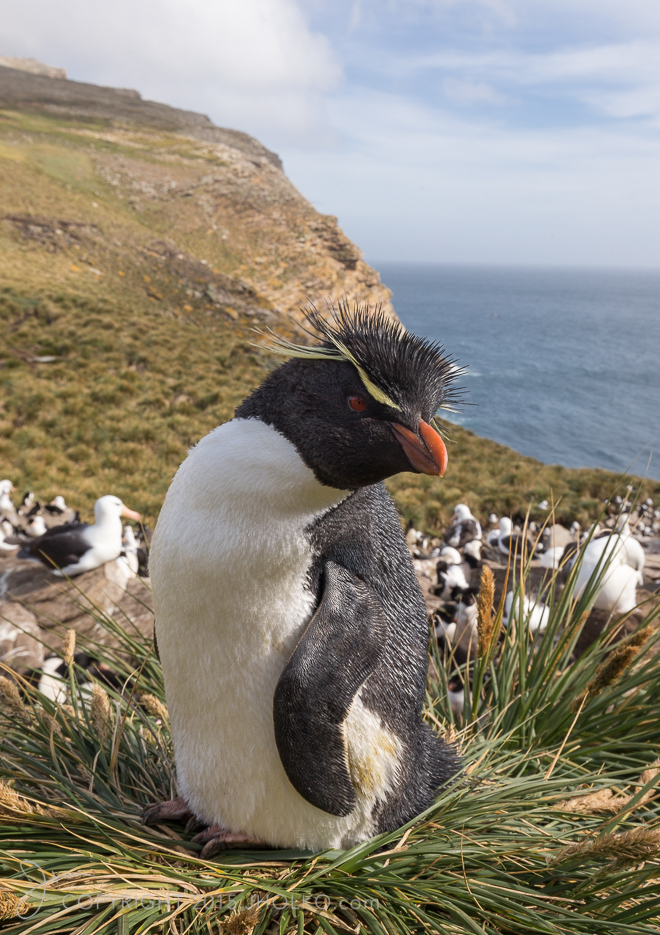 In the Falklands we visited West Point Island and New Island where we photographed majestic Black Browed Albatross and Rock Hopper Penguins. Rock Hopper Penguins are the rock stars of the penguin world and are extremely photogenic with their wild hair and cool looks. We were fortunate to have some fabulous light and incredible access in the Falklands and were able to photograph nesting Black Browed Albatross up close. Some of us were also fortunate to see and photograph the very rare Striated Kara Kara. Although I did manage to grab a couple of snaps of this rare raptor for documentary purposes the images themselves are more record photographs and not considered compositions. Nevertheless it was a real thrill to see and photograph this rare bird of prey.
 We also stopped in Stanley, the capital of the Falklands where we refuelled on coffee and took in some local sights. Keen to make our way to South Georgia our stay in the Falklands was brief and we were soon underway for three days sailing to South Georgia Island.
South Georgia is one of the most remote islands on the planet and is a full three days sail from the Falkland Islands. It is also host to an incredible biomass of wildlife that makes it not only unique but also incredibly special. The sheer mass of wildlife on tap in South Georgia is a wildlife photographers dream and the opportunities are infinite. South Georgia is nothing short of a complete sensory assault with tens of thousands of nesting King Penguins, penguin chicks, Fur Seals, Elephant seals and a virtual cornucopia of birdlife. At first blush South Georgia can be so overwhelming that simply making sense of it can be difficult and it pays to spend some time simply enjoying the experience as well as photographing.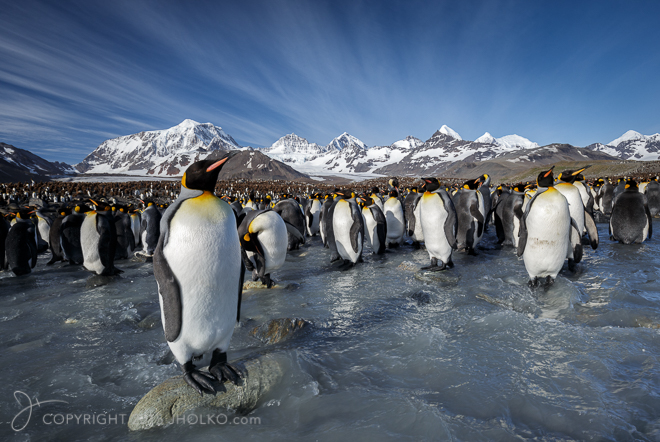 South Georgia island is strictly controlled in terms of number of visitors permitted on the island, where they are allowed to land and the hours they can be ashore. The purpose of these restrictions is to keep South Georgia as pristine as possible and to give wildlife a chance to rest away from the disturbance of human visitation. As such it is not permitted to land in South Georgia before 4am and you must depart by no later than 10pm. In order to take advantage of the best light possible we frequently commenced our zodiac operations at 4am so that we could not only maximise our time ashore but also ensure we experienced the best of the light available. These long hours usually enabled us three landings per day which meant we could squeeze in a great amount of photography during our time in this amazing location.
Our first stop in South Georgia was Grytviken where we explored the old whaling remnants that lie scattered amongst the small settlement. Fur seals and elephant seals greeted us as our zodiacs landed amongst the rusty whalers remnants. I chose to focus my efforts at this location on a very playful baby elephant seal wallowing in the shallows of the harbour. This photograph was taken with a Canon EOS1DX with a 16-35mm F4L IS lens in an Aquatech underwater sports housing with wide angle dome port. The seal seemed intent on kissing the camera and I had to wipe seal slobber off the dome port on several occasions. My sincere thanks to Aquatech for the loan of the underwater housing for the duration of this expedition. One of the greatest attractions in South Georgia are the majestic King Penguins. These elegant birds are the Kings of South Georgia and can be found by the tens of thousands at Salisbury Plain, Gold Harbor and Saint Andrews – all of which we visited during this expedition. Larger than the Gentoo, Chinstrap, Rockhopper and Macaroon they are also the most colourful and to my mind at least, the most elegant and photogenic.
 We also visited Little Moltke harbour, Hercules and the Drygalski fjord in South Georgia. All of these offered incredible landscapes and wildlife opportunities. I hope to share more photographs from these locations over the coming weeks and months.
As we sailed from South Georgia Island to Antarctica through the Scotia sea we passed gigantic tabular icebergs slowly drifting out of the Weddell Sea. The largest of which measured an enormous twelve kilometres on the ships radar. Icebergs of this size and magnitude generate their own local weather system and are always dramatic to photograph.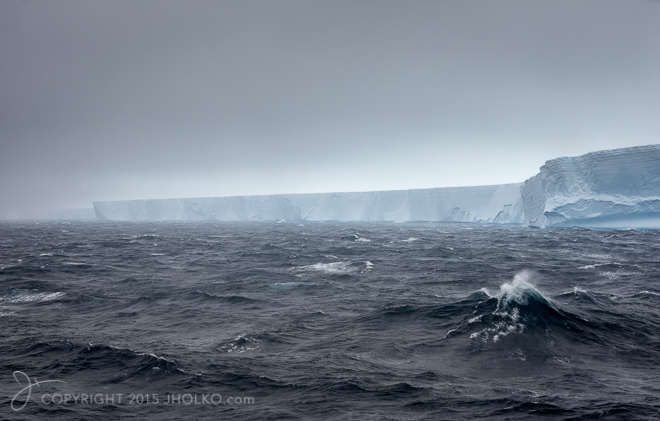 Our approach from South Georgia to Antarctica presented us with nearly 50 knots of howling wind which prevented us from landing at Deception Island. However, we were able to land briefly at the historic Point Wild in rising Catabolic winds. This is the first time I have been able to actually place a foot on rock at this location having been blown out on all other attempts. Point Wild is home to a colony of Chinstrap penguins and was the location where Antarctic explorers huddled for three months before rescue.
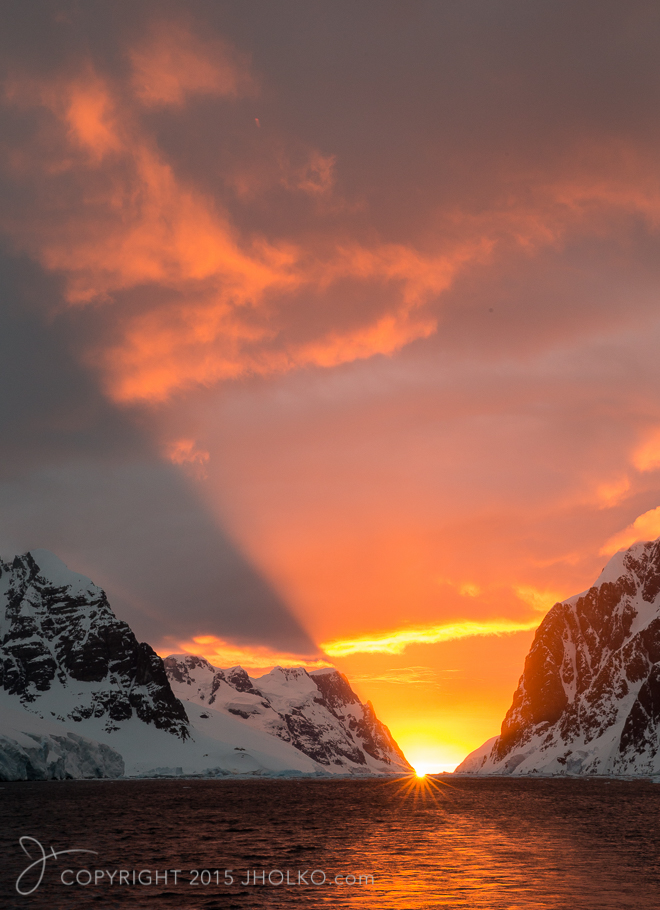
 During our time in Antarctica our most southerly point was the breathtaking Lemaire Channel which we cruised through during a magnificent polar sunset. The Lemaire channel is always a dicey bet this early in the season but with the experience of our Russian Captain we were able to navigate the ice strewn waters and experience one of the most amazing sunsets I have ever witnessed in polar waters.
 We also explored Neko Harbour, Paradise Bay, Cierva Cove and more. We cruised on zodiacs amongst spectacular icebergs as well as landing and exploring on foot. We were regularly greeted during our landings by our comedic friends the Gentoo penguins.
Our final landing in Antarctica was at the penguin festooned Cuverville Island. Cuverville has become one of my favourite landings in Antarctica with its stunning dramatic scenery, extensive Gentoo penguin colonies set against precipitous mountains and incredible glaciers hanging between mountains. It provides the perfect backdrop for Antarctic photography. Add a liberal dose of inclement weather and the island comes alive with drama. Cuverville was our coldest landing with 20-25knott winds and a significant wind chill. The resulting images bore out a taste of just what Antarctica can truly be like. It is hostile in its magnificence. There were some fantastic photographs that resulted from this expedition by many of the photographers who participated. Personally, I shot over 7,500 images during the course of the expedition and as is usual it will take me many months to mine the jewels from this expedition. For now the photographs in this report are just a few of my initial favourites. During the course of the expedition the ships crew prepare a report of the previous days activities as well as what to expect for the coming day. You can download the daily trip reports as a SouthGeorgiaReport PDF.
 We also had a videographer aboard to document our expedition and I hope to share the video from this expedition in a few months once all of the editing and post production work is complete.
If you are interested in travelling and photographing in South Georgia Island I will be leading a dedicated fifteen day expedition in November this year that departs from the Falkland Islands and that will spend more than eight days in this wondrous location. There are now only two places remaining before this expedition will be sold out. If you would like any additional information you can register your interest by dropping me an email at info@jholko.com
Nature’s Best Photography Highly Honoured – Polar Experience Video
2015 has arrived with a bang and I am very excited to announce that the short film – A Polar Photography Expedition Experience, that I produced last year with Untitled Film Works has been Highly Honoured as a finalist in the most recent Nature’s Best Photography Awards. Video is a new category for the Nature’s Best Photography Awards and it is a fantastic thrill to have been highly honoured as a first time entrant into this new category. Untitled Film Works will be joining me again this year on my Kingdom of the Ice Bear expedition to produce a new video of our experiences as we photograph the king of the Arctic – the Polar Bear. Look for the new video toward the end of this year. You can watch the highly honoured Polar Photography Expedition Experience video by clicking on the image below.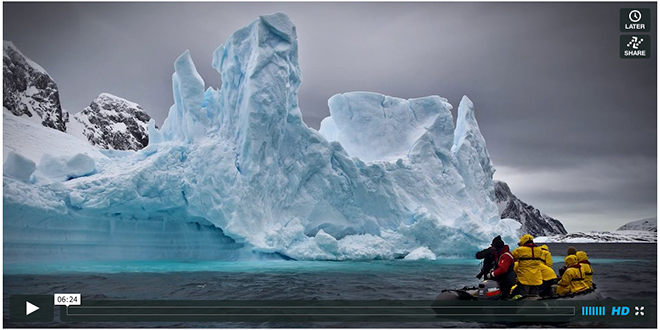
January Photo of the Month Winner: Fred Jennings
Congratulations to the first print winner ‘Fred Jennings’, for the photograph of the month for January 2015: ‘Maelstrom’
What Fred said: I know I won’t be the first, but what really impresses me is the layering of the different levels in the berg. I image the history stored in these layers over thousands of years and wonder what had transpired in the world during each of these layers. The movement of the snow blowing off the top of the berg is in such contrast to the timeless movement of the berg.
Great colour and great photo, I wish I cold learn directly from you. Thanks for sharing such a great story.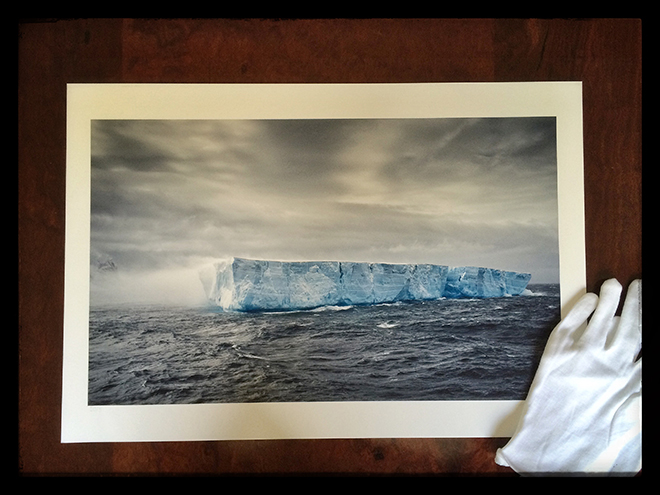
Congratulations Fred, you were the first, and your print will be sent to you next week.
Keep an eye out on my blog for the next print giveaway with the February photograph of the month. Remember the best way to get instant updates is to subscribe via email.

