In January and early February of 2020 I guided a small group of photographers to the sub Antarctic Islands of New Zealand and Australia that included Enderby Island, MacQuarrie Island, Campbell Island and Snares Island on a twenty-eight day voyage that subsequently took us on a planned expedition deep into the southern reaches of the Ross Sea region of Antarctica. This unique itinerary also provided us with the opportunity to visit the historic hits of Scott and Shakelton. This expedition was a joint co-operation between my company Wild Nature Photo Travel and Heritage Expeditions from New Zealand.
By way of some background; tourism in Antarctica has grown exponentially in recent years and this year the Antarctic peninsula will receive in excess of forty-thousand visitors alone (mostly by boat from Ushuaia in Argentina and Puerto Williams in Chile). By comparison, the Ross Sea region of Antartica will receive fewer than four hundred visitors this year. This makes the Ross Sea region of Antarctica incredibly special and an area that is a real privilege to travel to and experience. This region of Antarctica is very remote and requires a considerable commitment in time to reach – hence the requirement for a twenty-eight day expedition.
Our journey began from the port of Bluff in Invercargill in the South Island of New Zealand. From here we boarded our ice-class ship (the Spirit of Enderby) and set sail into the Southern Ocean for the highly protected sub-Antarctic islands. It was our plan to first visit the Snares group of Islands but the weather conspired against us with 35-50 knot winds and swells that exceeded thirty feet – welcome to the Southern Ocean! The Snares islands (home to the endemic Snares penguin, the Tom Tit and Fern bird) would have to wait for our return trip.
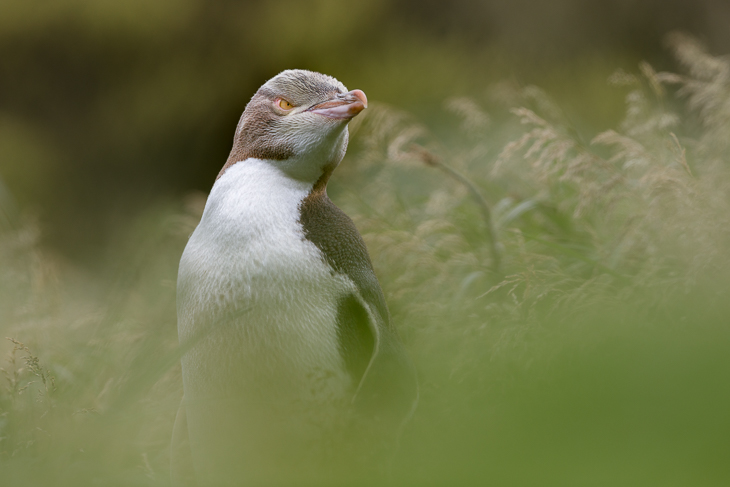
With Snares off limits due to the inclement weather we instead set our sites on Enderby Island where we safely landed on two different locations. Enderby Island is home to the rare and endangered Yellow-eyed penguin (the world’s rarest Penguin) as well as the New Zealand Hooker Sea Lion and is also the nesting place for Wandering and Southern Royal Albatross. We were able to photograph all four species during our landings. Enderby is also home to a great many other birds including the flightless Teal, the Snipe and Pippit; all of which are endemic to the island. There were also several sightings of Falcon during our first landing (although I personally did not see it).
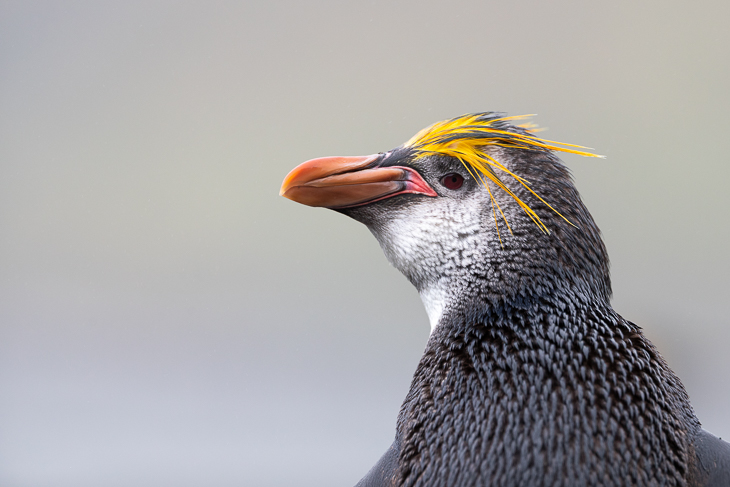
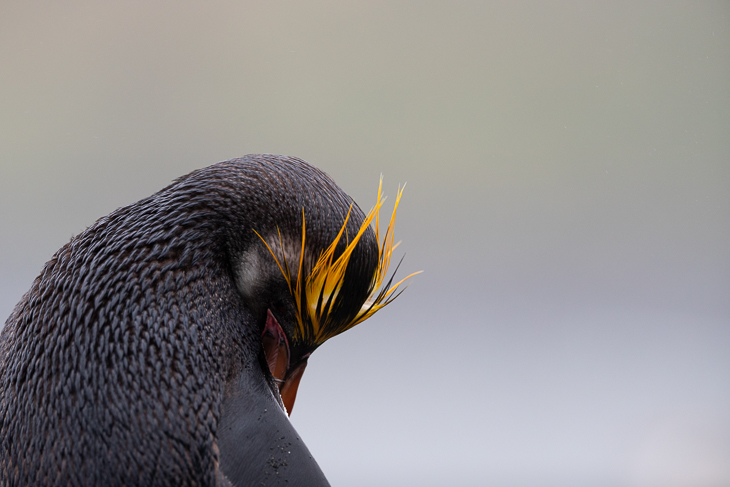
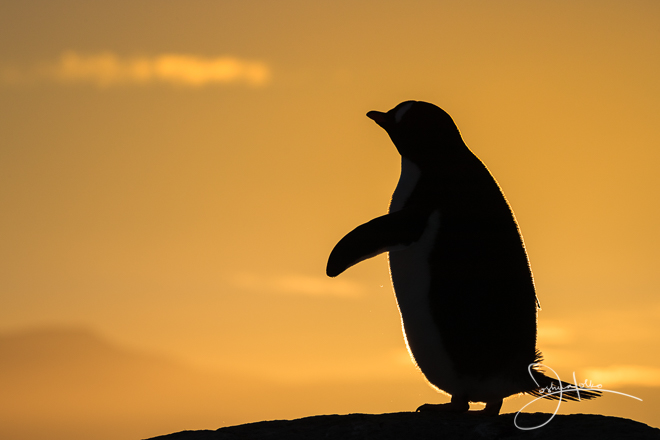
From Enderby Island we set sail south for MacQuarrie Island (Australian territory). It is a full days sailing from Enderby to MacQuarrie across the notoriously rough southern ocean and thankfully we had far more cooperative weather for the crossing with only light winds and a small moderate swell. At MacQuarrie island we also landed twice – once at Sandy Bay where we photographed the thousands of Royal and King Penguins that call the island home and once at the islands base where we toured the facility and photographed the Gentoo Penguins, Giant Petrels, Skuas and elephant seals. All of our landings at Enderby and MacQuarrie were several hours in length that gave us plenty of time for contemplative photography. We were mercifully blessed with heavy overcast skies and light drizzle during our time in the sub-antarctic islands which made for wonderfully soft light.
From the sub-antarctic islands we set our waypoint south for the three plus day steam to the Ross Sea region of Antarctica. To help give you an idea of how remote this area of the world is there was only one other ship on our radar during our time in this region – our sister ship that operates with us for safety in a ‘buddy’ system (there was also an American Ice Breaker ‘The Polar Star’ treading water near McMurdo after cutting a channel through the ice for its re-supply ship). By comparison there were more than forty-five ships operating on the Antarctic Peninsula.

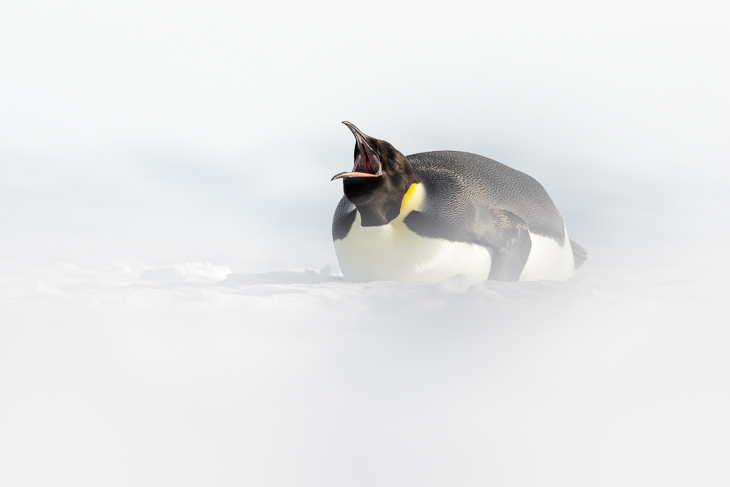
During the crossing south we had sightings of Orca, dolphins and whales (including Minke, Fin and Humpback) as well as countless albatross that followed in the wake of our ship as we made our way south. Antarctic Petrels, Snow Petrels, Wilson Storm Petrels, Prions and Diving and Cape Petrels were also present from time to time. As we pushed through the pack ice we had many sightings of Crab Eater and Weddell Seals; as well as many Adelie Penguins on open drift ice. We also had our first Emperor Penguin sighting. Although we searched hard, the elusive Ross Seal alluded us the entire expedition. We spotted our first iceberg early on our fourth day south as we set our sights on a landing at Cape Adere. Cape Adere is hope to the largest colony of Adelie Penguins in the world and is also home to Carsten’s historic hut. We landed at Cape Adere and spent some time photographing the penguins before a zodiac cruise amongst the ice and our subsequent return to ship. Cape Adare was also a continental landing for those who had never traveled to Antarctica before.
From Cape Adare we travelled south where we hoped to land at the Possession Islands. Thick ice surrounding the islands prevented us from approaching and a potential landing so we turned our attention further south again for the 300 nautical mile steam to Terra Nova bay.
At Terra Nova bay we landed in perfect conditions late in the evening in great light at Gondwana where we photographed Adelie Penguins and South Polar Skuas. With perfect conditions we worked well into the early morning hours before relocating to inexpressible island. Local catabatic winds delayed our landing until after 4am, but we landed briefly.

From Inexpressible Island we relocated and visited the Italian Antarctic research base where we were greeted with some wonderful hospitality including good coffee, biscotti and pizza (God bless the Italians and their penchant for coffee). Although I personally find these type of landings at Antarctic bases to be somewhat banal it was nevertheless appreciated to have some time on terra firma to stretch ones legs and enjoy some hospitality.

Continuing south we landed at Franklin Island in near perfect conditions with soft morning yellow light on the horizon. Franklin Island is home to a huge Adelie penguin colony and we spent several hours photographing the penguins porpoising in the glassy water against beautiful morning light.
After Franklin Island we continued even further south past Beaufort Island, passing Mount Errabus and Mount Terror bound for Ross Island and McMurdo. We cruised the ice edge of McMurdo Sound before photographing large pods of Orca and an Emperor Penguin before landing at Hut Point late in the evening. Mount Errabus is still an active volcano with clear and open caldera that puffs smoke on a slow but steady basis. McMurdo was the furthest south we could reach with a position of 77.5 degrees south. Dense pack ice prevented any further travel south.
From McMurdo we travelled north to Cape Evans where we visited the historic Scott hut. This was a highly emotional and powerful experience for me. I remember as a young boy watching the movie, Scott of the Antarctic and later reading about his adventures and final ending in Antarctica only eleven kilometres from shelter and safety. The hut itself has been immaculately restored with thousands of artefacts still in place. The dark room still includes all of the chemicals, trays, aprons and materials used to process the film from the parties expedition. This was an absolutely fascinating location to visit and a real time warp. The hut and contents are near perfectly preserved in the sub zero temperatures. Surrounded by a protective asper the entire area is heavily managed and controlled with no more than eight individuals (including guide) allowed in the hut at one time.


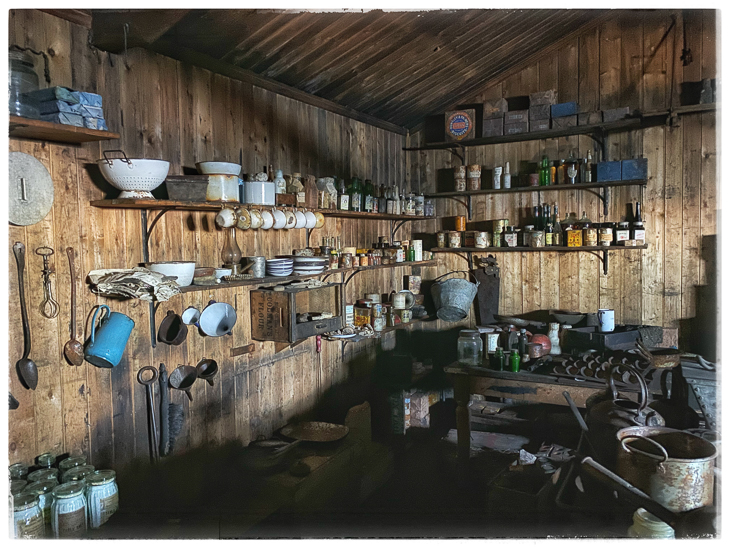
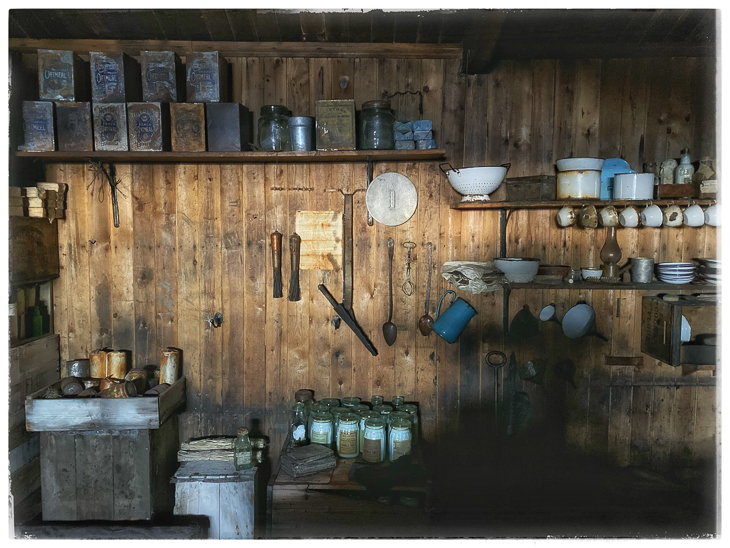
After our landing at Cape Evans we repositioned to Cape Royds where we landed ashore in the afternoon to spend some time visiting the restored remains of Sir Ernst Shakelton’s hut. Like Scott’s hut, Shakelton’s hut has been immaculately restored and offers a first hand glimpse into what life was like for the early explorers. Shakelton’s socks still hang from a clothesline inside the hut.

From Cape Royds we made our way slowly out of McMurdo sound to the Ross Ice shelf. It was my hope that we would encounter a great number of cetaceans of whales in this area as we cruised the impressive ice shelf (I was particularly hopeful for Blue Whales), but it was not to be. We did however have large numbers of Killer Whales cruising the edge of the ice pack on several occasions as well as a large pod of twenty or so Minke Whales as we began our journey north. Crab Eater seals and Adelie penguins were also in abundance.
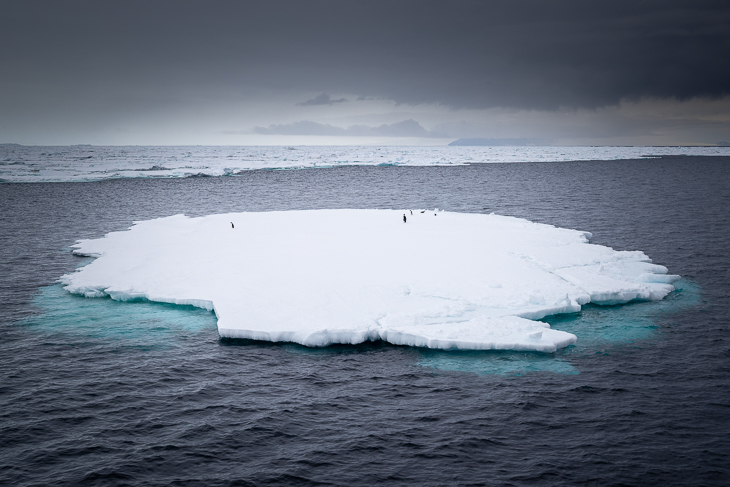
We left Antarctica in the evening of the 29th of February with a waypoint set for the Bellini Islands; a distance of some 400 nautical miles. The Bellini islands offered a chance for Chinstrap penguin sightings as well as possible landscape opportunities. On arrival we had our first Chinstrap sighting on an ice flow, which was followed by a zodiac cruise of the glacier face for landscape work. One of the chinstraps took the opportunity to hop aboard one of the zodiacs as it cruised the glassy seas!
After the Bellini islands we set our course north for Campbell island; a three and a half day steam that provided some fabulous birding opportunities from the rear deck of the ship (especially as we left the Bellini islands and approached Campbell island).
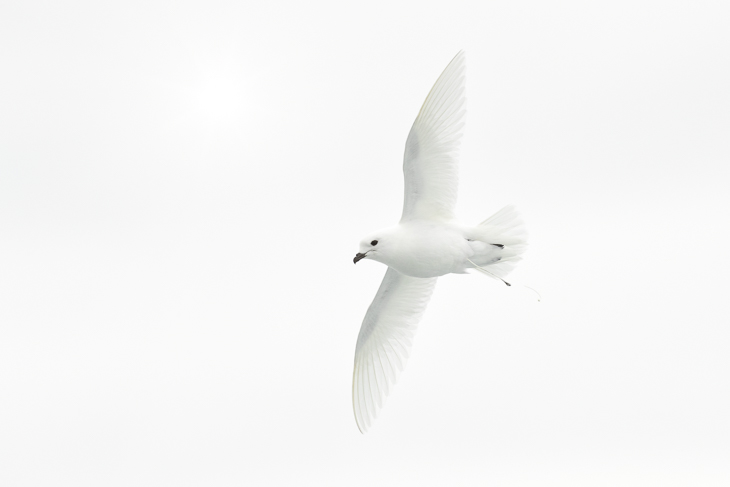
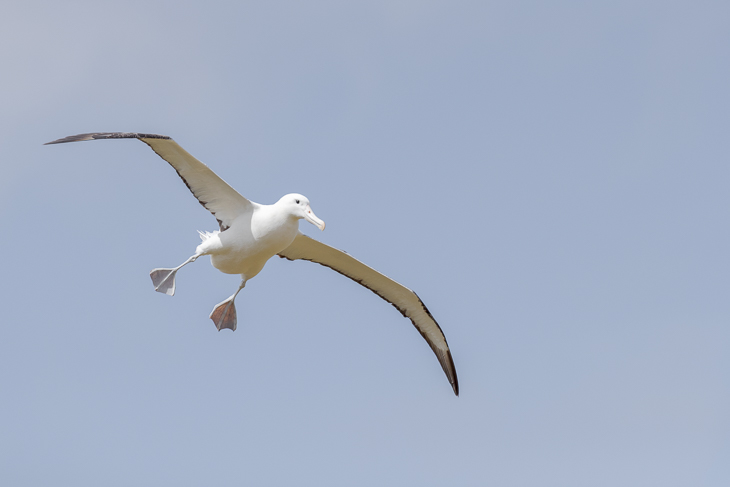
On arrival at Campbell island we landed in good conditions and hiked up to a large Southern Royal albatross colony where we spent several hours photographing the birds as they preened, displayed and soared overhead. This was a magical experience for those with an interest in birds as there are few places on earth where one can get so close to Southern Royal Albatross. I had hoped we would see the Yellow-eyed penguin again at Campbell Island but it was not to be. We did however site both the endemic Snipe and flightless Teal. Strong winds outside the protective bay prevented us from zodiac cruising the western side for Southern Rockhoppers.
With time running out we set a waypoint north for the Snares series of Islands – home to the rare and endemic Snares Penguin. This was a big hope of mine as I am now closing in on photographing all eighteen of the worlds Penguin species. Landing is forbidden at Snares and conditions must be near perfect for zodiac cruising due to the granite islands exposure to the ocean. There is no safe harbour at Snares and no anchorage. Given we had missed the Snares on the way south my hopes were high we would pull off a close encounter with the Snares penguin on our return.
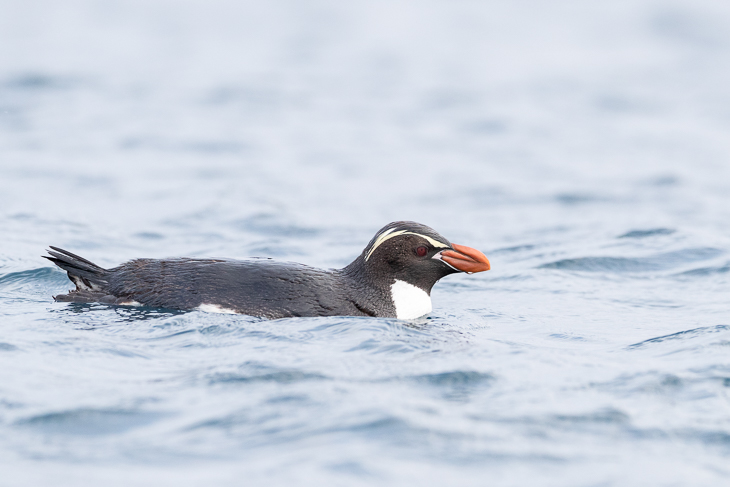
The weather gods were on our side and on arrival at the Snares islands we put zodiacs in the water at sunrise for an early morning cruise of these jurassic like islands. Landings are strictly prohibited on Snares, so all photography is from zodiac. Honestly, this makes it extremely tough to photograph the Snares Penguin. Ideally, one could land and take the time to choose clean backgrounds; but with the inability to land and the penguins resting on rocky shores there are very limited opportunities for clean backgrounds. Nevertheless it was a wonderful experience to see and photograph this endemic penguin species.
All up we spotted and photographed a amazing total of ten different species of Penguins on this expedition that included: Gentoo, Adelie, Emperor, Royal, King, Yellow-eyed, Southern Rockhopper, Chinstrap, Snares and a vagrant Fjordland Crested penguin we found at the Snares Islands.
The Ross Sea region of Antarctica offers breathtaking landscape, wildlife and experiences. It is not without its difficulties however; extensive days at sea, highly variable wind and weather and of course the unknown of wildlife sightings. However, for the intrepid explorer / photographer, the Ross Sea region of Antarctica offers a very unique experience that few on the planet will ever undertake.


 www.WILDNATUREPHOTOTRAVEL.com