My 2018 expedition to photograph Polar Bears on the pack ice north of Svalbard this July is now sold out. Thank you to all those who enquired on the last two places that became available. I am very much looking forward to this expedition!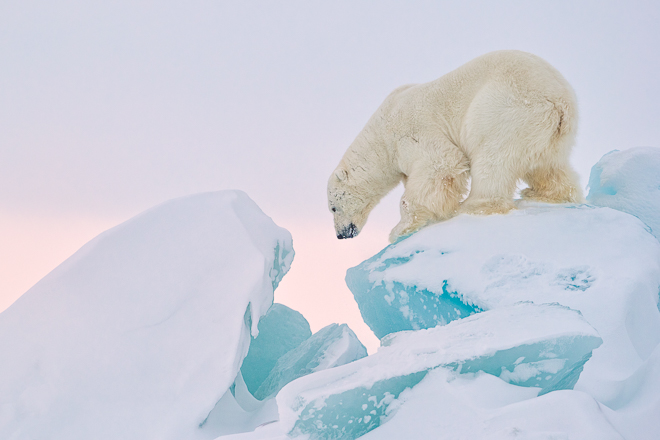 Bookings are now also open for my 2019 High Arctic Expedition. If you couldn’t make 2018, and would like to venture into Arctic territory to photograph the wildlife and landscape of this incredible region please drop me an email to register your interest – no obligation. I will also shortly be announcing a prior expedition with good friend Daniel Bergmann that will have a great emphasis on the birdlife of the Arctic – more details to come shortly.
 A friendly reminder that I am also appearing as the keynote speaker on both Saturday and Sunday at the big VAPS convention this coming weekend in Warnambool. If you are coming down for the event be sure to say hello. More details are available HERE.
Category: Workshops and Expeditions
Workshops and Expeditions around the world.
Polar Bears of Svalbard 2018 – Two Places Available
I have just had two places become available on my Polar Bears of Svalbard expedition this July. If you are interested in photographing wild Polar Bears on the pack ice north of Svalbard this is absolutely the expedition you want to be on. With our small ice-hardened ship with low decks (enabling us to get to eye level with Polar Bears) and with just twelve participants in total we are poised to ensure the best possible opportunities. This photograph taken on a previous years expedition. These last two places are filled on a first come, first served basis. If you are interested in joining, or would like more information please drop me an email at info@jholko.com
The High Arctic Expedition 2019 Now Open for Bookings
Today I am excited to announce my new expedition to the High Arctic in July 2019. This brand new expedition will run from the 13th of July until the 22nd of July and will begin and end in the small town of Longyearbyen in Svalbard. I have been leading and guiding expeditions to the High Arctic of Svalbard for many years now and this new expedition encompasses all that I have learned in the way of the best time to visit, the best ship to travel on and the best locations to be at, at the right time, when the light is at its absolute best.With our ice hardened expedition class ship our plan is to sail directly up to the pack ice north of Svalbard in search of Polar Bears and spectacular arctic landscapes. This expedition offers a complete Arctic experience for photography: zodiac photography cruises near calving glacier fronts, pack ice with Polar Bears, Walrus, Arctic Fox and a lot more. It is going to be a truly spectacular photographic trip for a very limited number of photographers aboard an ice hardened expedition class ship.
There will be plenty of opportunity for one-on-one instruction for those who wish it throughout the length of the trip. As well as informal side by side shooting from the deck of the ship, on zodiac and during shore landings there will be lots of opportunity to discuss all aspects of photography and image making with like-minded individuals. If you are keen to travel and photograph in the high Arctic now is the time to secure your place. A detailed itinerary PDF can be downloaded HERE. There are only twelve places available and once spoken for, thats it.
Departing for New Zealand South Island Masterclass 2018
Tomorrow evening I am making the short hop across the pond to New Zealand where I will guide my 2018 Masterclass workshop in the South Island with friend Phillip Bartlett. This is the last year I am offering and guiding this masterclass in New Zealand for the foreseeable future. Next year I will have a brand new offering to the Great Ocean Road and Tasmania for a small group of just six photographers (more details on that later).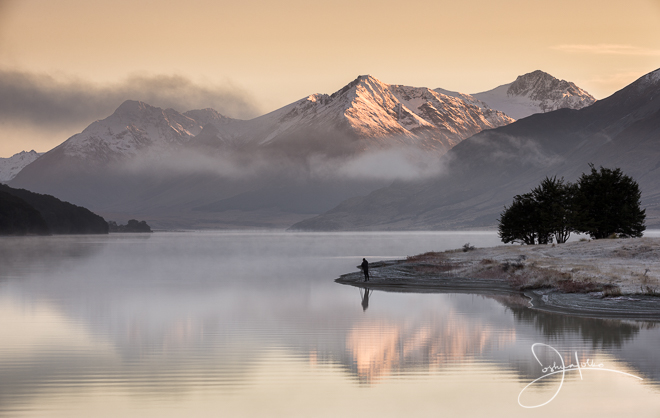 As a few of you are aware I am currently nursing a torn lateral tendon in my right elbow which precludes me from lifting or carrying anything heavy (including cameras). As such, I am sort of restricted to shooting on a tripod at the moment and will be travelling quite light (by my standards anyway). Since this workshop is predominantly all about landscape there is no need for big fast (and heavy) telephoto lenses so I can cut down my luggage quite considerably. I am going to take my two tilt and shift lenses as I find I really love these for landscape work on the tripod, as well as my 100-400mm lens for any long lens requirements. I am sure it is going to be quite liberating to travel this light.
F-Stop Red Bull Anja (Carry on Luggage)
– 1 x Canon EOS 1DX MKII body (with spare battery)
– 1 x Canon 17mm TSE F4L Lens
– 1 x Canon 24mm TSE F3.5L Lens
– 1 x Canon 24-70mm F4L IS Lens
– 1 x Canon 100-400mm F4.5 – F5.6L MKII IS Lens
– 1 x Canon 1.4 TC MKIII
– 1 x LEE Filter Kit with Assorted Filters
–
The South Island of New Zealand is always a spectacular place to visit and photograph and my hope is that this year we have timed our trip perfectly with the peak of Autumn colour. There was a large dump of snow over the last few days so it should be at its most picturesque! See you in New Zealand…
Svalbard in Winter 2018 Expedition Report
In late March this year (2018) I lead my second ship based expedition to Svalbard in Winter to photograph the wildlife and arctic landscapes of this remote archipelago in a winter setting. The primary reason for choosing late March was at this time of the year (and at this latitude of nearly 80º North) the sun is very low in the sky all day and thus there is hours of golden light available for photography. Dawn and twilight light at this time of year typically last three or more hours and even at midday the sun is still very low in the sky. This situation provides hours and hours of superb light for photography. There is also something about the quality of light in winter at this latitude that translates very well into photographs. The light is soft and ethereal and often has wonderful pink and blue pastel shades not found at other times of the year. For the landscape photographer this combination of light, snow and ice is simply unmatched in my experience.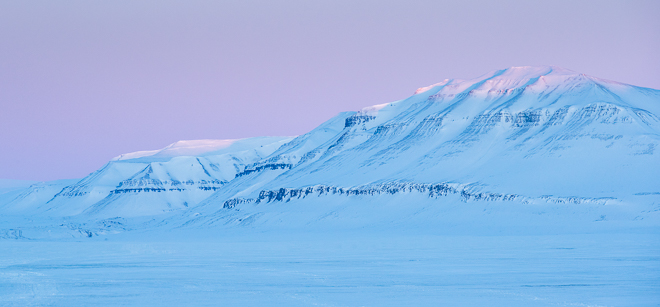 This expedition was for just twelve photographers and utilised the same ice-hardened expedition class ship I have been using for Polar Bear photography over recent years. Amongst the twelve photographers was my surprise special guest for the expedition – French wildlife photographer Vincent Munier. It was an absolute pleasure to host Vincent for this expedition and on a personal note, it was a thrill for me to photograph the wildlife and landscape of Svalbard together (in particular the evening we spent photographing the full moon rising over the snow caped mountains). Our wildlife count for the trip included five Polar Bears, three Arctic fox, seven Walrus, seven Ivory Gulls plus a plethora of Reindeer and other sea birds.
 Temperatures during our expedition ranged between -0º celsius and -28º Celsius plus wind chill factor. Our coldest day was around -35º Celsius with wind of around 7 metres a second and air temperature of -28º celsius. These sort of temperatures can be quite demanding on body and camera. However, the wonderful thing about ship based expeditions such as this is its easy to walk back inside the ship (where its around plus 20º degrees celsius) and warm up with a hot drink. Being outside and making photographs in these sort of temperatures does require some thought and planning in terms of both equipment and clothing but if you are properly prepared its quite possible to spend very long periods of time out on deck making photographs.
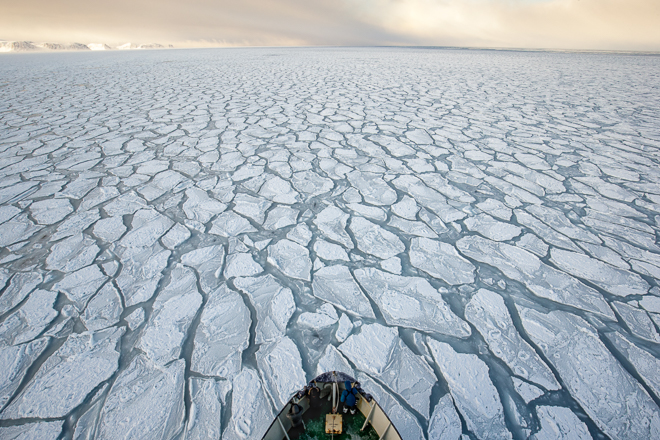 The landscape opportunities in Svalbard in winter rate as the very best I have ever experienced (even better than Antarctica). The formation of new sea ice is nothing short of spectacular and set against a back drop of snow covered peaks and glaciers with sea smoke billowing off the open areas of ocean and you quite literally have one of Natures most dramatic and breathtaking scenes.
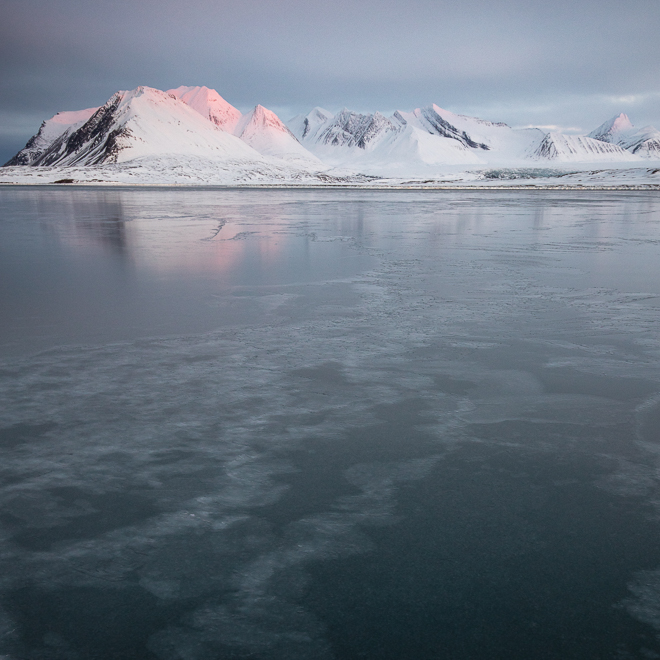 One of the great pleasures of ship based photography is that the scene is constantly changing as the boat moves slowly through the ice filled fjords. Opportunities for photographs are everywhere and part of the experience is watching the incredible landscape roll past. I particularly enjoy this sort of landscape photography as no two images are ever the same.
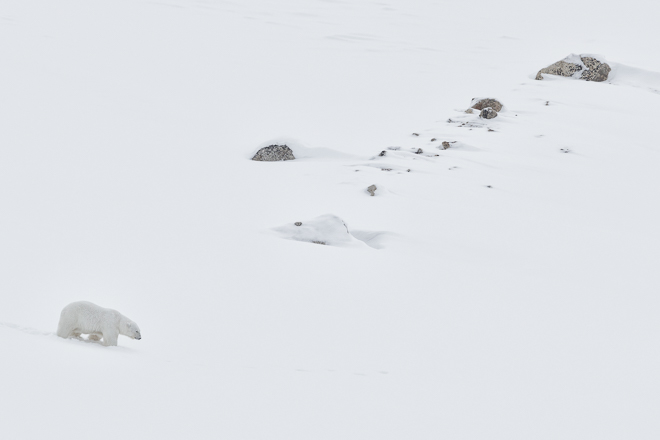 Svalbard (and the Arctic in general) in winter is not for the faint of heart. With temperatures well below freezing it can be challenging to both person and equipment. However, the rewards for those brave enough to take on the challenge are absolutely extraordinary and not to be missed. In my own personal opinion Svalbard in Winter offers the most extraordinary opportunities for dramatic landscape imagery I have had the good fortune to experience. It is quite literally breathtaking.
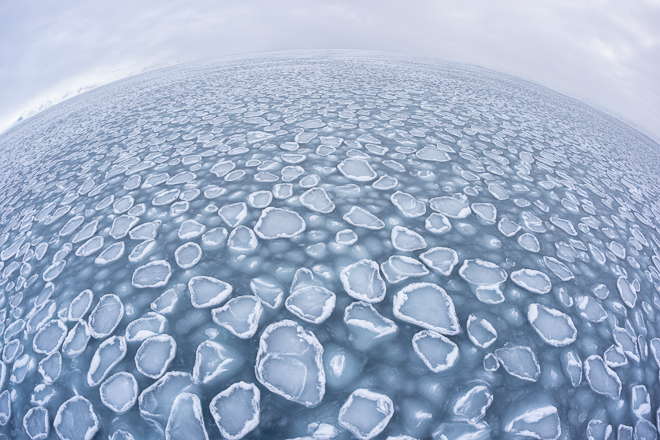 If you are interested in travelling to the Arctic and photographing the incredible landscapes and wildlife of the Svalbard archipelago in a winter setting I am repeating this expedition in late March next year (March 26th – April 3rd 2019). Late March offers us the best opportunity for wonderful light over the dramatic winter landscape. Due to initial registrations and bookings places are already extremely limited – In fact there is only one place remaining before the expedition will be sold out! If you would like more information or a detailed itinerary please just drop me an email.

