There are few places on our planet as spectacular as the remote and wild east coast of Greenland. Its precipitous and towering glacier scarred mountains that line the many divergent fjords have created an otherworldly landscape that is just about photographic nirvana. The entire primordial setting is festooned with a plethora of gigantic icebergs that drift slowly on currents through the system and that provide an endless and ever-changing series of subject matter for the photographer.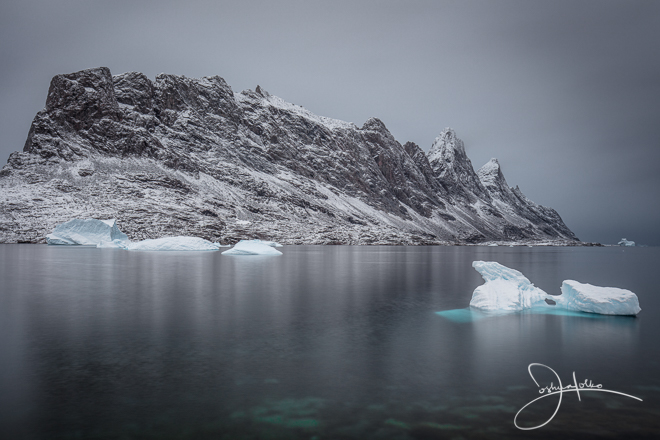 It was this incredible, dramatic and dynamic landscape that first attracted and drew me to travel and photograph in Greenland (now many years ago). I had been itching to return since my last 2015 visit and so in September and October of this year (2017) I ran two back-to-back expeditions with my friend Daniel Bergmann to the remote east-coast and the incredible Scoresby Sund fjord system – The worlds largest fjord system. The expeditions were carefully timed as the last of the season in order to ensure Autumn colour in the dwarf birch, dramatic light (with real sunset and sunrise) and the first snows of winter. As it happened, we encountered all of this and much more. The first snows of winter was a key ingredient and with the mountain peaks garnished with a dusting of fresh snow during both our expeditions the stage was set for some superlative image making.
 Both expeditions began with a private charter flight from Iceland to Constable Point on the East Coast of Greenland. Flying from Iceland saved us the better part of two days sailing each way and enabled us more time for exploration and photography. With a private charter flight we also did not have to worry too much about airport carry on and could bring what we needed. From the tiny airport at Constable Point we boarded our ship, the beautiful schooner, the Rembrandt Van Rijn and we began our exploration of the world’s largest fjord system – Scoresby Sund. Image credit below: Harvey Lloyd-Thomas.
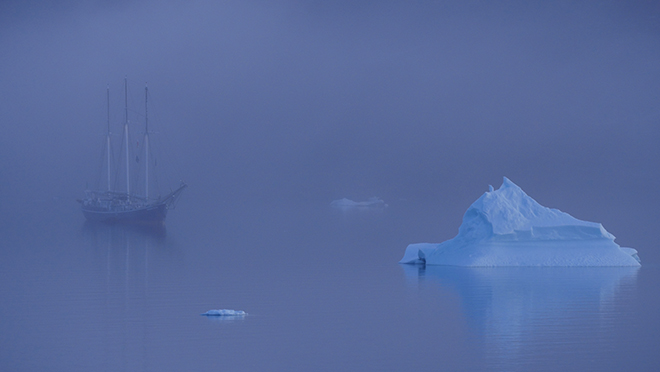 Our intention was to plot a course through the fjord system that would see us circumnavigate a large area as we explored for landscape photographs. We knew from our previous experience in this area of Greenland that Scoresby Sund was a virtually untapped jewel and that with the right light and conditions it was going to be possible to make some very powerful and unique photographs.
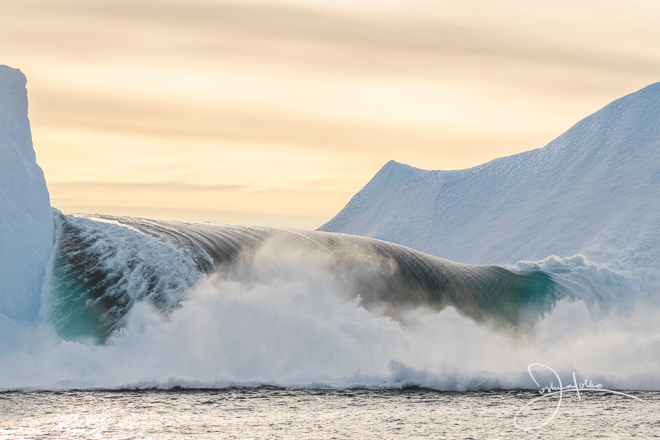
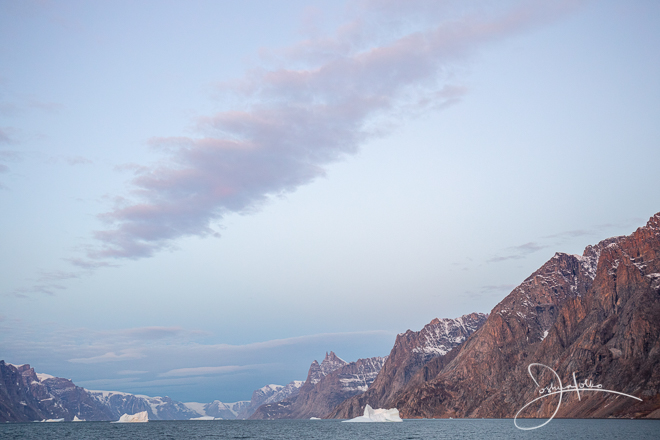 As I mentioned above, the landscape opportunities in Greenland are absolutely incredible and during both expeditions we had superb opportunities for photography with outstanding subject and light. One of the highlights for me personally was the experience of watching an iceberg the size of a city block roll over and disintegrate right in front of our ship. Watching millions of tonnes of glacial ice that towers over a hundred feet high and that plunges many hundreds of feet into the ocean reducing itself to ice cubes in mere seconds was breathtaking (and incredibly exciting). The collapse created so much turbulence in the surrounding water that it triggered a chain reaction with another nearby monster berg which similarly disintegrated right in front of us. Not only were we in exactly the right location to witness and photograph both collapses but both occurred during some wonderful golden / yellow light! It was just an awe inspiring sight to witness and we celebrated the experience on the deck of our ship afterward with several bottles of champagne.
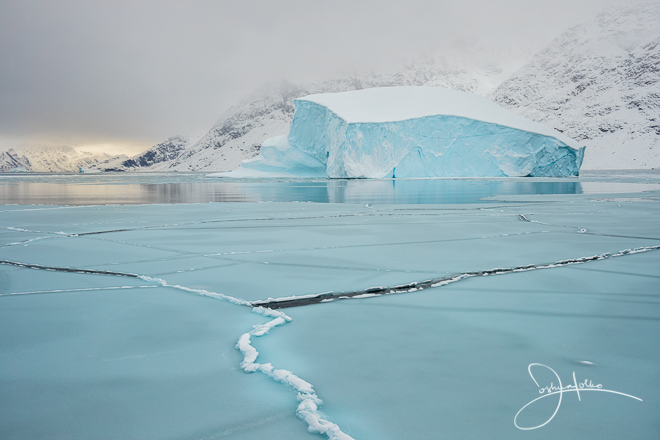
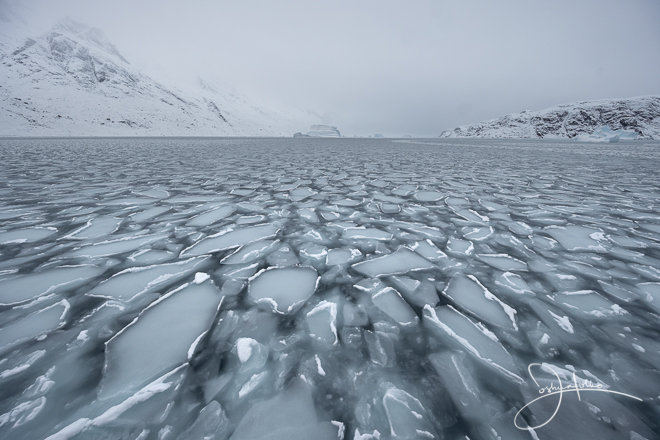
 On the second expedition we brushed the cusp of winter and had some absolutely superb leopard pattern pancake sea ice which offered us a seemingly never ending array of leading lines and patterns amidst the icebergs and moody mist that draped itself like a soft veil across the mountain tops. These sort of conditions are my absolute favourite to photograph and I spent many hours on the deck of the ship (along with many others) making hundreds of photographs of this phenomena.
 Greenland is home to some of the most amazing geology I have ever seen. The mountains, boulders and alien-like terrain is a virally limitless playground for landscape photographers and there were some really beautiful photographs made during both expeditions by all who participated. Perhaps, best of all, much of the landscape has not been photographed before in good light and it was incredibly refreshing to see so many new, evocative photographs created that will remain unique for many years to come. The ability to explore on land with tripod and camera in good light makes all the difference and as such we had many landings during both expeditions.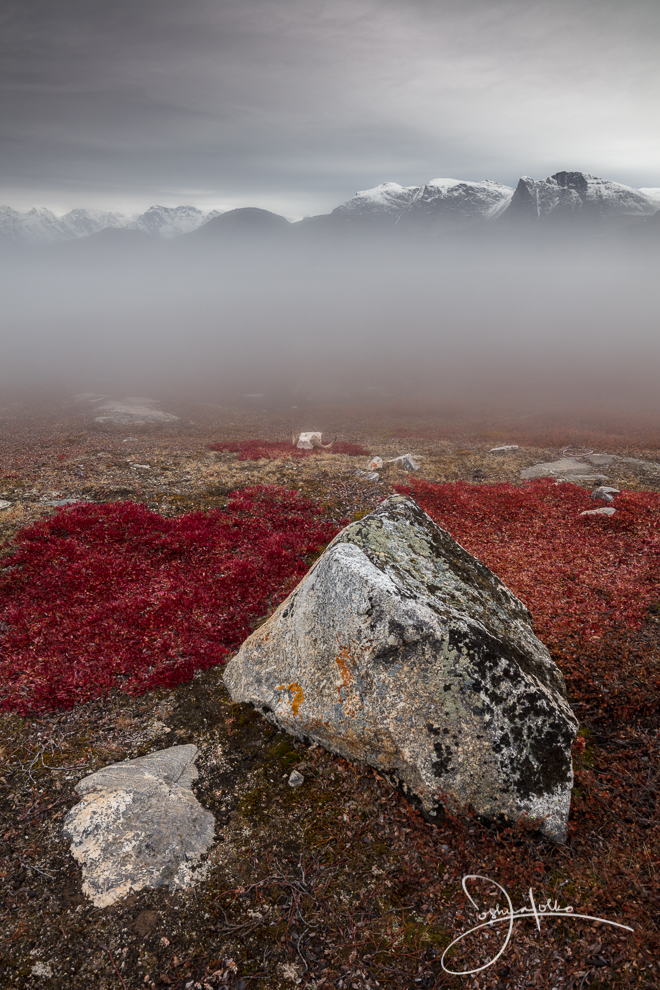
 In terms of wildlife, Greenland is nowhere near as rich as Svalbard and so it is important to set an expectation that wildlife is not guaranteed and any encounters are a real bonus. As these two expeditions were predominantly landscape orientated our focus was very much on working in the best possible light and not spending our time continually searching for wildlife. However, we did have some really incredible encounters during both expeditions that included several ‘first sightings’ for both myself and many others.
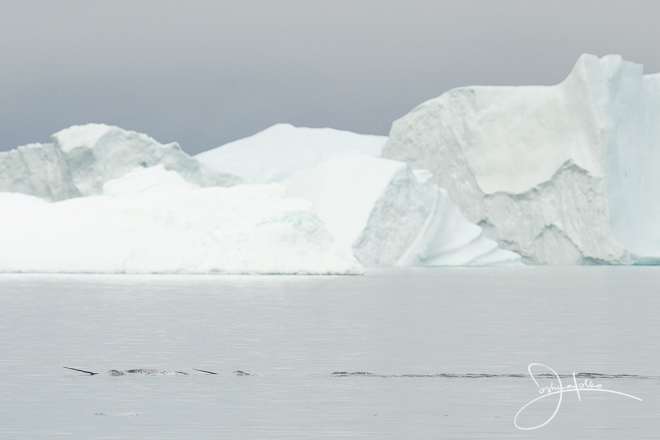
 On the first expedition we encountered a large pod of narwhale (the mythical whale with the unicorn horn – Yes they do exist!) which was incredibly exciting. This was a first for me and was a species I had been wanting to see for many, many years. During our encounter we counted approximately twenty whales that approached within about a hundred metres of our boat. Narwhale are notoriously very shy and are not known for approaching vessels too closely (they are still hunted by the Inuit in Greenland). In an effort to try and get them to come a little closer we shut down all the boat engines and generators in the hope they would get curious and approach more closely. True to their reputation though they passed us by at a safe distance. Nevertheless it was an incredible encounter and one I know all participants will remember forever.
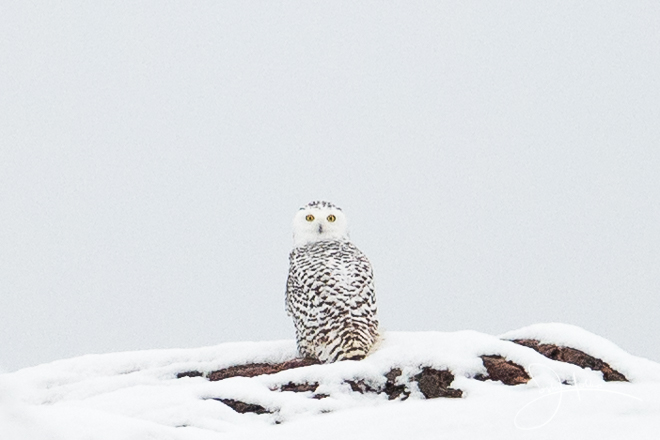
 During one landing we were also very fortunate to encounter a juvenile Snowy Owl. We had just landed at Bear Islands for our evening session and had split up into two groups to photograph the landscape. I was leading one group on a short walk up a ridge when I spotted the Owl perched on a large boulder surveying the large open area in front of it for food. Several of us had to rush back to the ship to grab longer lenses (wish I had my 600mm F4 with me!) and were subsequently able to grab some record shots of the encounter. This was my first encounter with a Snowy owl. A species I have wanted to find and photograph for many years.
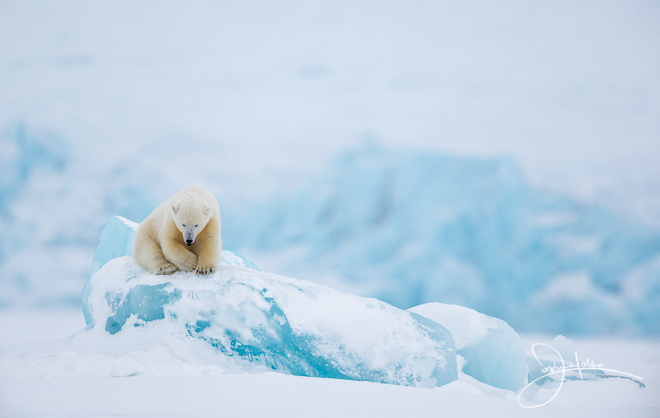
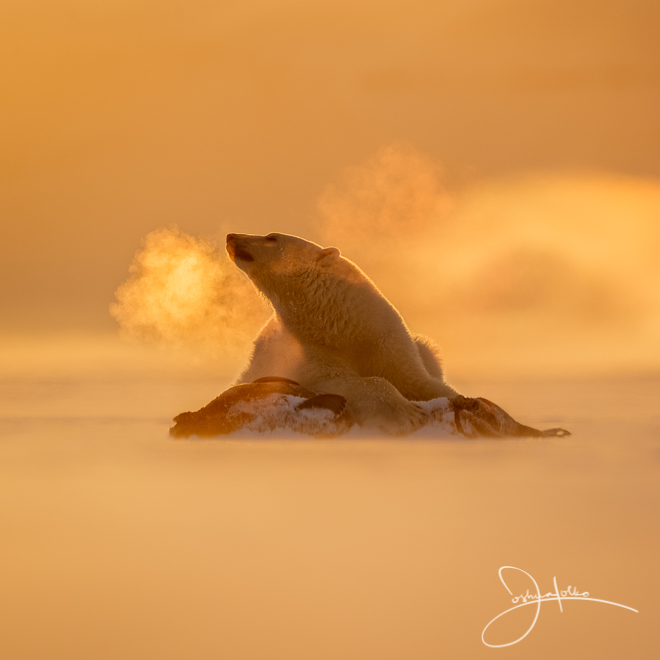
 On our second expedition we were lucky to find a juvenile male Polar Bear resting on a piece of blue ice near the face of one of Greenlands many glaciers. We were unable to approach very close due to heavy brash ice but we were still able to get some great shots and enjoy the experience of a very healthy polar bear in its natural environment.
During both expeditions we also had land-based photographic opportunities with Musk Oxen. Like many species in Greenland, the Musk Ox are still hunted by Inuit and as a result are quite skittish and difficult to approach. Nevertheless we were able to get close enough that it was possible to get some great photographs. Several of us also spotted an Arctic Hare during one landing and we had a great many seal sightings from our ship as well as a Bowhead whale.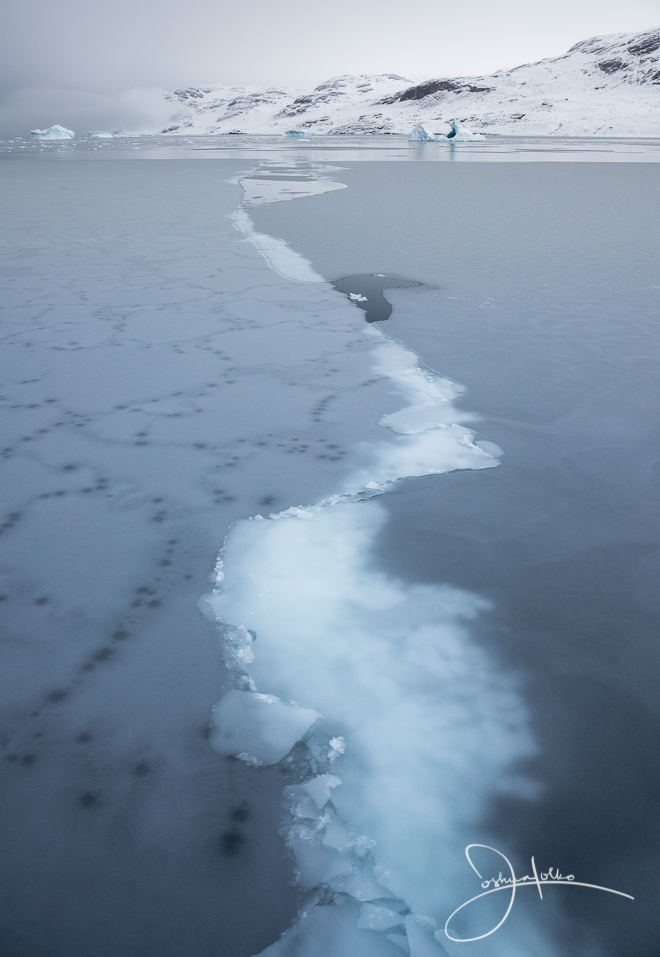 I did not count the total number of bird species we encountered but it did include: Glaucous Gulls (a lot of juveniles), Ravens, Snow Buntings, Iceland Gulls, Snowy Owl, Peregrine Falcon, Gyr Falcon and more. The Peregrine Falcon were quite numerous (and unexpected) with several sightings during both expeditions. Daniel counted a total of twenty-two different bird species in total across the two expeditions. His list included: Raven, Common Eider, Glaucous Gull, Black Guillemot, Long-tailed Duck, Arctic Skua, Purple Sandpiper, Great Northern Diver, Peregrine Falcon, Arctic Redpoll, Pink-footed Goose, Northern Wheatear, Iceland Gull, Great Black-backed Gull, Lesser Blacl-backed Gull, Red-breasted Merganser, Snow Bunting, Little Auk, Fulmar, and black-legged Kittiwake.
Both expeditions were run-away successes both from a photographic perspective and from the point of view of sheer adventure, excitement and overall experience. I want to thank all those who participated on the expeditions for their input, friendship and commitment to making both the expeditions such a great success – thank you. And thank you Steven for the selfie stick! (How did I ever live without one!)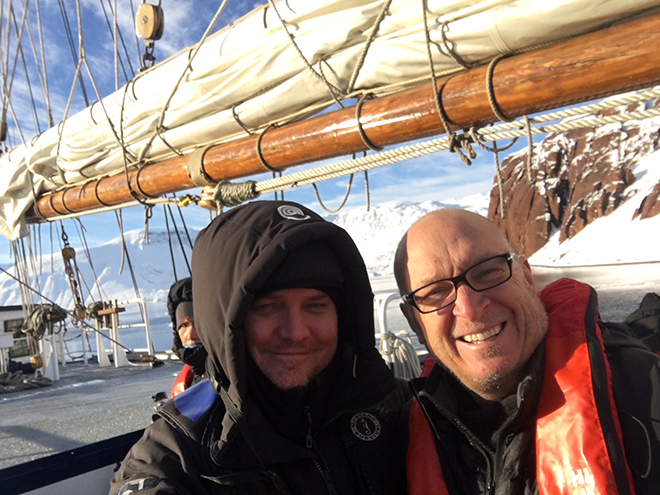 Personally, both these expeditions to Greenland exceeded my expectations for both landscape and wildlife opportunities. With first sightings for me of narwhale and Snowy Owl as well as the monumental iceberg collapses and incredible leopard pattern pancake ice it was absolutely an experience I will not forget.
 Daniel and I are planning to return to the east-coast of Greenland in late Autumn of 2019 and will have details on this new expedition later this year / early next year. As always, you can get the drop and be amongst the first to be notified when we announce the expeditions by registering your interest via email – no obligation at this point. Keep an eye out for more images from Greenland both here and on my website over the coming months.


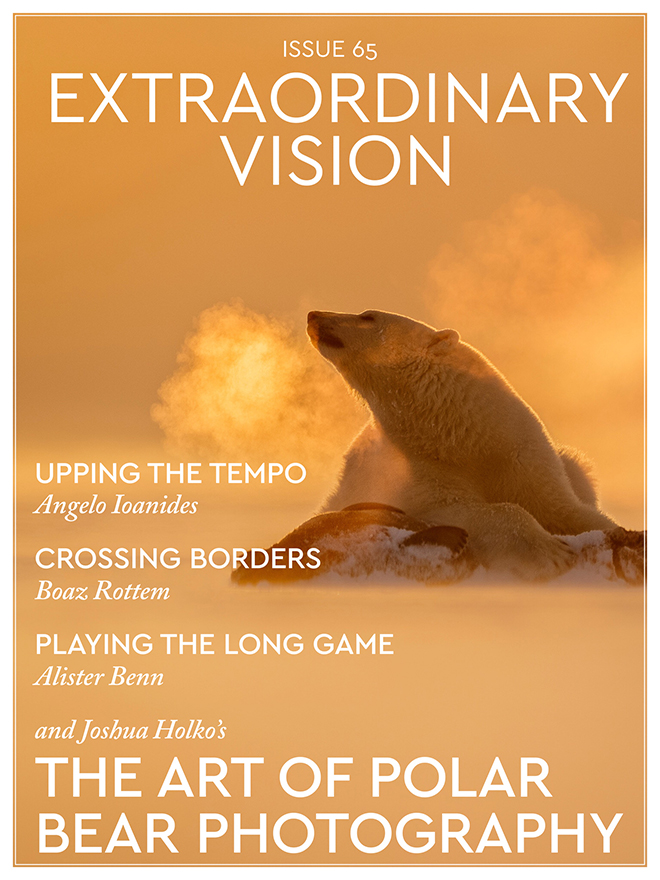
 If you are keen to photograph Polar Bears in the wild you can register you interest in one of the few remaining places on my Svalbard Winter expedition next March by
  The main focus of this expedition will be Arctic winter light, landscape and wildlife. In March and April the light conditions in Svalbard are magical. Usually winter trips to Svalbard are limited to day trips on snow mobiles quite close to the town of Longyearbyen. With our expedition ship we will explore a much bigger area including the western and northern areas of Spitzbergen. Expeditions such as this to Svalbard in winter have only really been possible for the last few years. With our ship now fully prepared for an Arctic winter it is possible for us to sail north from Longyearbyen and explore the spectacular coastline of the Svalbard archipelago.
 This exclusive expedition is for a strictly limited number of just 12 participants plus leader and is dedicated to winter photography in Svalbard. Currently there are only a few places left before the expedition will be sold out.
 If you are keen to photograph the Arctic in winter you can register you interest in one of the few remaining places by