In November 2015 I co-lead an extended 15 day expedition to South Georgia Island with my good friends and partners Ole Jorgen and Roy Mangersnes. As is customary for me I like to write up a trip report on our experiences; both, so that there is a record of the trip for the photographers aboard, but also so I can share the experience with a wider audience.
I have lead expeditions to South Georgia Island in past years, but this was the first time I had spent an extended period of time at the Island. Our plan for a 15 day expedition took a fair amount of logistical planning and permitting, but the end result was a fantastic amount of time for photography in what is in all likelihood the best location in the world for wildlife photography. As it so happens South Georgia is also home to some incredible landscapes with soaring Himalaya style peaks that provide the perfect back-drop.
At the conclusion of the South Georgia Island expedition I lead a week long extension in the Falkland Islands for a small group of photographers. During this expedition we flew to both Saunders and Sea Lion Islands where we spent a number of days exploring the area and photographing the bird life. I will have a seperate report on this trip in the coming days.
Photography guide and co-leader for the South Georgia trip Roy Mangersnes has actually beaten me to the trip report writing on this occasion so I am going to share his report from our expedition as it provides a really nice day by day insight into the expedition. I have added in my own thoughts and comments where appropriate.
South Georgia Expedition 2015 Trip Report Notes by Roy Mangersnes
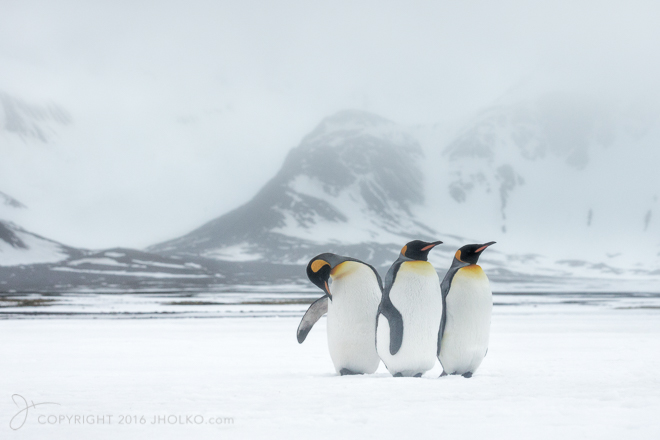
Day 1-2 – 7-8.11.2015 We had very favourable winds and not much swell so the majority of people on board enjoyed the crossing eastwards. Unfortunately the lack of wind resulted in fewer seabirds following the ship, but some Wandering, Southern Royal, Black-browed and Light-mantled Sooty Albatross were photographed. Also different petrels were sighted and documented including the Diving Petrel. Day 3 – 9.11.2015 In the morning of day three we passed Shag Rock (which was hidden in fog) and soon after we spotted Bird Island and the north western point of South Georgia. After lunch we headed to shore in Right Whale Bay for our first landing of the trip. On the beach we were welcomed by a good number of Fur Seals, Elephant Seals and King Penguins. With some snow still on the ground several of us took the opportunity to photograph the Kings against a white backdrop. During the afternoon it started to snow lightly and the clouds covered the dramatic mountains. The last Zodiac left just as it was getting dark. A Great start.
 Addendum: This was in my opinion our best landing during the expedition. The opportunity to photograph King Penguins in snow was something I and many others aboard had really been hoping for. I personally spent my entire landing with the King penguins in the snow and made several photographs that I am extremely happy with.
 Day 4 – 10.11.2015
Strong winds and a bit of rain made landing at Salisbury Plains at dusk difficult and we waited until after breakfast before heading to shore. As we landed the wind died of and the clouds scattered, leaving us with beautiful weather. As photography in these conditions rarely is rewarding several of us took the opportunity to enjoy the extreme wildlife density at Salisbury by talking walks in the area. In addition to the King penguins and the seals on the beach there was also a good number of the endemic South Georgia Pipit and South Georgia Pintail. Both seem to do well, as the final rat culling has been very successful.
Addendum: I was extremely pleased to note the significant increase in the South Georgia Pipit as a result of the rat cull. Just twelve months prior on my previous South Georgia voyage I spotted very few of these small birds. Now, with the rats gone their population seems to be rebounding.
In the evening we were lucky to get access to Prion Island. Here we would follow the boardwalk to the top of the hill. The view over Bay of Isles is amazing up here, but the target was the breeding Wandering Albatross. Everyone was treated with a couple of large chicks on the nest near the trail, being very photogenic. The size of this bird is difficult to grasp until you stand next to it. With a wingspan of 3,5 meters it has the widest reach of any bird in the world.
Day 5 – 11.11.2015
After breakfast we headed for the old Norwegian whaling station at Grytviken to register with the authorities. During the few hours we spent ashore several of us enjoyed shooting the local wildlife that has taken the bay back after the whalers left it in the late 60’s. Pintails and Antarctic Terns were numerous, and also seals and penguins were found among the rusty buildings and stranded ships. Some also took the opportunity to update themselves on the dark history of whaling in the southern ocean at the local museum.
The evening was spent in the small bay of Godthul. Some took the opportunity to hike up to the Gentoo rookery and got some really nice sunset colours up there. Others shot birds and seals from the zodiac while others spent all the time on the beach with Gentoos and seals. The last boat returned to the ship long after sunset.
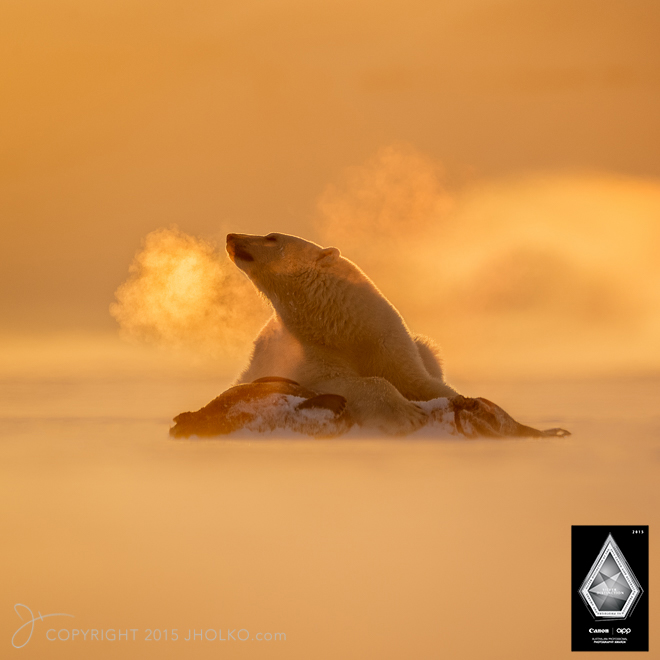
Addendum: Personally I hiked to the top of the cliff to photograph backlit Gentoo Penguins at sunset with several other photographers. This was a fabulous shooting session that resulted in some really interesting images. Back light is something I look for more and more in my wildlife images. Used effectively it can make for some really dramatic images. It was back light that lit the Polar Bear on the sea ice in Svalbard in winter that helped me win the 2015 Global Arctic photographer of the Year award. Day 6 – 12.11.2015 St. Andrews Bay is possibly the best wildlife destination in the world and after detailed planning and a bit of luck with the weather we were able to land everyone on the beach long before sunrise. The operation started before 2am and by 3 o’clock everyone was ready to shoot. 15 minutes later, when the sun washed over the beach, thousands and thousands of King penguins and seals were covered in golden light. The photography was out of this world and we were only back for breakfast 5 hours later.
Addendum: I would agree with Roy that St. Andrews Bay is quite possibly the best wildlife location in the world. The opportunities at this incredible Bay for both wildlife and landscape photography are breath taking. After a well deserved rest mid day we landed on Moltke Harbour after lunch. This small beach is a peaceful place compared to St. Andrews, but the many Elephant seals kept everyone busy until the night.
Day 7 – 13.11.2015 The weather was good and the team was on a roll, and already the next morning we did another sunrise landing. This time we had moved to another hotspot – Gold Harbour. A bit of drizzle in the early morning didn’t stop us, and as the sun broke through we were even rewarded with rainbow in front of the classic glacier backdrop. The King penguins were lined up along the river and displayed eagerly as the sun sent warm light through the colony. People spent the time onshore well and went for hikes to discover their own little paradise. Gold Harbour has many of them.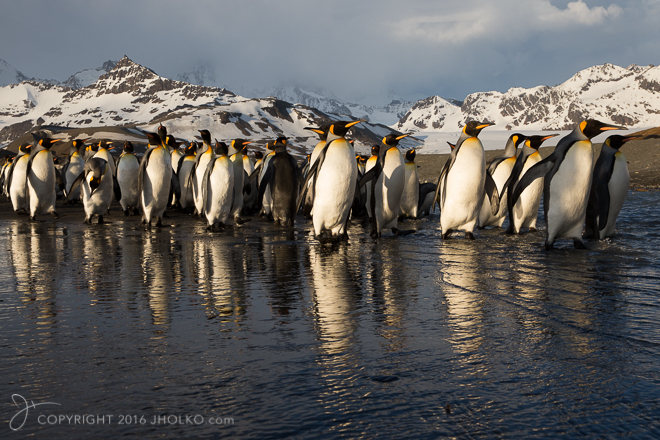 Mid day we arrived in Cooper Bay. The area is exposed to the weather and since the conditions were favourable we went for a mid day landing at the Macaroni penguin rookery. This is one of the easiest places to see this flamboyant bird at the nesting place. A short climb over snow and tussock grass we found ourselves pretty much in the colony. Heading out some of us were also treated with a Chinstrap penguin on the nearby rocks.
As expected the wind picked up as we headed for the Drygalski fjord in the evening. All around we saw large icebergs coming up from the Antarctic Penninsula, and they made perfect subjects for photography in the rough conditions. We decided to spend time with the icebergs and not go into the dark fjord. As the evening came to an end we were lucky to spot a small group of Chinstrap penguins on a beautiful iceberg, and we all enjoyed some great photography in the last hour of the day.
Day 8 – 14.11.2015 As the conditions seemed to improve during the night we went for another sunrise morning at St. Andrews Bay. As the sun was painting the mountains in the background everyone was scattered around the beach and enjoying their own little paradise. It was incredible to think that many travel down here without being able to land on St. Andrews due to heavy swell and strong wind, and we were able to land twice before sunrise.
As a slight contrast from St. Andrews we landed late in the evening at Ocean Harbour. The wind had picked up, but this bay was nice and sheltered. Here we photographed seals and cormorants, as well as some nice landscapes from the zodiacs. Day 9 – 15.11.2015 We did try for our fourth sunrise landing, but the weather was grey and wet when we got up. Therefore we waited until after breakfast before landing at Salisbury Plains. Its was still wet, but after a couple of hours the clouds lifted and we had some very nice moods as the mist and clouds covered the nearby mountains. Just as we packed up and started bringing clients back, the katabatic winds came falling from the mountains and within minutes we had 60 knot winds offshore. It did make our departure difficult, but with a sturdy expedition leader everyone was relaxed on the beach.
The evening was rather windy and we cruised with the ship in the Bay of Isles, shooting petrels following the ship in beautiful evening light.
Day 10 – 16.11.2015 The morning was rather brutal with a landing at a very dense Fur Seal colony. When we made it through the first ranks of territorial seals, the valley was perfect for a scenic hike or for shooting seals and Giant Storm petrels.
Being able to spend this much time on South Georgian beaches is quit unique and we wanted to make the most of it. Therefore we went for one more landing at Salisbury Plains in the afternoon on our last day. The light was very nice, but some clouds deprived us from the sunset we were hoping for.
Addendum: The opportunity to spend so much time in South Georgia was a very special experience that provided us multiple opportunities for different landings. We were able to choose based on location, weather and light when really maximised our time in the area.
Day 11-14 – 17-21.11.2015
The forecast for our crossing back to the Falklands was not very good, with strong winds straight ahead. We decided to start one day early to make sure we reached the only flight that leaves the Falklands per week, but as we started our crossing the storm died of as we were looking. It turned out to be just another normal crossing with a bit of rock and roll, but nothing big. We think most people were happy for this.
South Georgia can be a quit challenging destination due to exposure to heavy weather systems. This is one of the reasons we wanted to spend more days here, and make sure we could land on all the prime locations. In the end we were extremely lucky and spent a total of 60 hours on the beaches and did 14 landings in just over 8 days. This must be some kind of record!
Addendum: To those of you who have already enquired about the possibility of a future expedition to South Georgia Island. I will be leading an expedition this November to both South Georgia Island and Antarctica – Photographers First Light. The expedition will run from the 19th of November until the 6th of December. I will have details on my website (which is about to be updated) in the workshops section within the next week. If you are interested in joining this expedition you can also email me for further information.
 Access to these two islands is only obtained by first flying into Mount Pleasant near the capital Stanley and then taking a much smaller B-2 Islander plane out to the smaller Saunders and sea Lion Islands. The weather around the Falklands is a constantly changing variable and as such flights to these islands are never assured – everything is a weather dependant. Our first stop at Saunders Island was roughly a forty five minute flight from Stanley. We were touch and go for this flight due to very low cloud and fog in the area, but in the end we made it by flying under the cloud and super close to the water. I knew we were low when I looked out the window at the passing cliffs and saw a flock of sheep looking down on us.
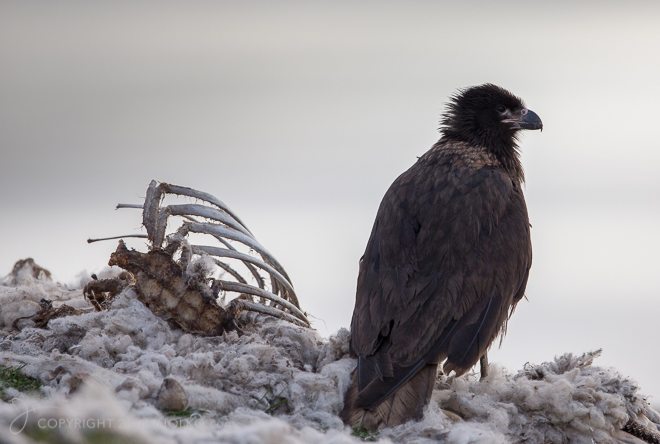 On arrival at Saunders Island we made the 45 minute drive by 4-wheel drive out to the ‘Neck’ area which would be our home for the next few days. The Neck is a remote part of the island with only basic self contained accomodation. The wonderful thing about this location however is the sheer plethora of bird life literally right outside the window. The Neck is really a very special area and we certainly got our moneys worth with changing conditions and amazing wildlife. In addition to Gentoos, Magellanic and Rockhoppers there was also a group of King Penguins out here, as well as one pair of Macaroni Penguins in the Rockhopper colony. The Caracaras (Johnny Rooks) and the Turkey Vultures were also very active here and there were a great many small birds including Meadowlarks, Black Throated Finches, Plovers and more. In addition there were Oyster Catchers, Gulls and other sea birds. Some of us also made the trek out to two of the remote ponds where we were able to photograph Black-headed Swans and the beautiful Silver Grebe. At the Rookery we enjoyed the Rockhoppers and also a huge number of breeding Black-browed Albatross in spectacular landscapes. I know of no other place in the world where you can photograph Black-browed Albatross in flight with a wide angle 16-35mm lens!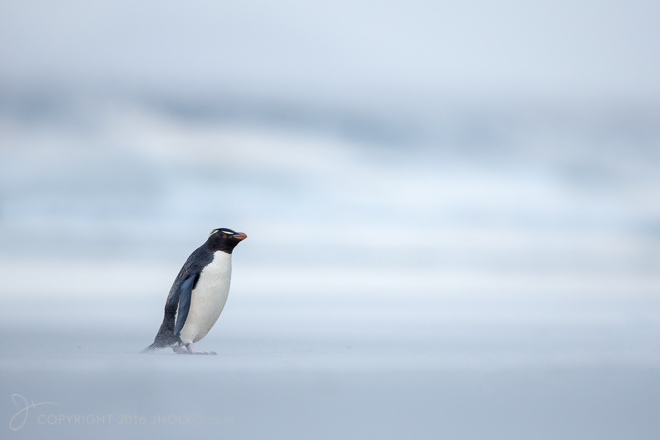
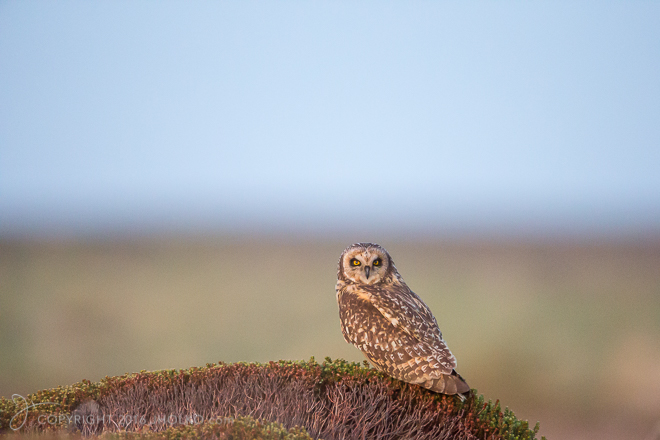
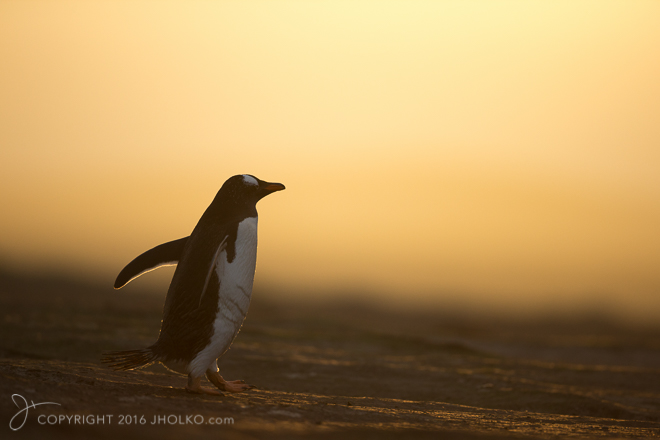 When we had finished at the Neck we took another small plane ride to Sea Lion Island where we spent three more days photographing Gentoo and Magellanic Penguins and also Rockhoppers and Cormorants a short drive from the lodge. In addition we had some fantastic shorebirds, Caracara, Blue Eyed Cormorant as well as several different species of the wetland birds found in the Falklands (several of them endemic to the islands). One of the highlights for me personally was the short-eared Owl which I spent the better part of two days to locate and photograph.
 The Falkland Islands is a world class location for bird photography and is a remarkable location for any wildlife photographer to spend time. With so many of the birds being approachable the photographic opportunities are extensive. As yet I have only had time to process a small handful of the photographs I made in the Falkland Islands, but hope to find time to work through many more over the course of this year. I am also looking forward to returning to the Falklands for a future workshop.
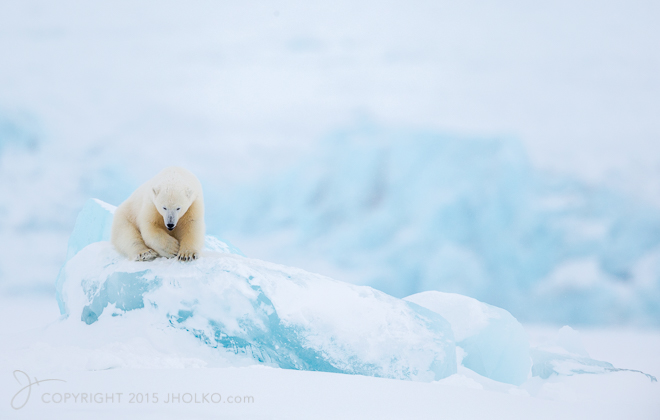
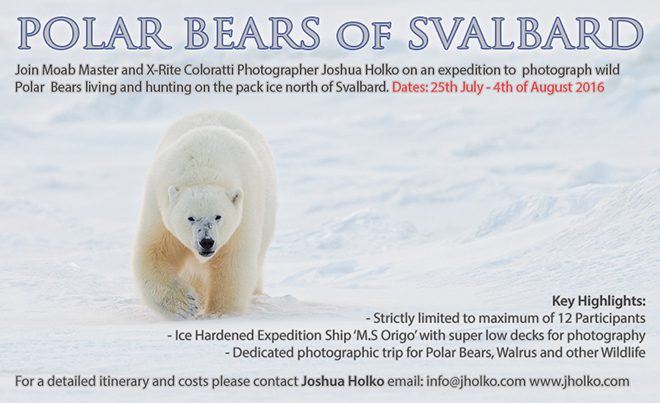 This expedition has been designed from the ground up to provide the very best possible opportunities to Photograph Polar Bears in their natural environment. With the reduction in Arctic sea ice the Polar Bears in Svalbard are dwindling in number and the number of years left to photograph them is unfortunately now extremely limited. Late July and August are the ideal times to photograph Polar Bears north of Svalbard due to the dwindling ice around the archipelago. On this expedition we will be carrying a naturalist/biologist who specialises in locating Polar Bears and an expedition leader and captain who have years of experience in placing us in the ideal position to make the best photographs. Their expertise will allow us to approach the king of the Arctic as closely and safely as possible and make incredible photographs under the spectacular midnight sun.
 Our intention is to sail directly north from the small town of Longyearbyen in Svalbard to approximately 80 degrees North to the very edge of the permanent pack ice. At our northerly most point we will likely be less than 600 miles from the North Pole.
 We will be using the ice hardened expedition ship M.S Origo which will enable us to skirt the edge of the pack ice searching for and photographing Polar Bears. M.S Origo is widely regarded as the best ship in the Arctic for Polar Bear Photography and has been my ship of choice for this expedition for the past three years. With its super low decks we can photograph at eye level with wild Polar Bears. Our expedition ship is also equipped with sufficient zodiacs and crew for all photographers to be shooting simultaneously with plenty of room to spare for camera equipment – So bring what you need! On this expedition we will also likely photograph Walrus, Seals, Whales, Arctic Foxes and the many Arctic sea birds including the rare and angelic Ivory Gull. To get an idea of the sort of wildlife photographs you can take on this expedition please visit the
  I also gave away more than a dozen fine art prints over the course of the year that have gone around the world and that have found their way onto the walls of homes and offices. The chance to give something back in 2015 has been something I have very much enjoyed and the feedback I have received from those who have won a print throughout the year has been incredibly fulfilling. I would very much like to continue this series going forward, but due to a very heavy travel schedule next year I will just not have time to regularly make and send out the prints. I will return to this print giveaway at a future date however.
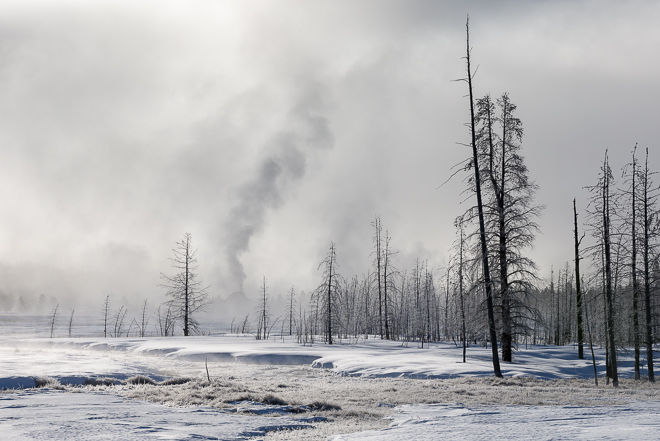 After Yellowstone Daniel Bergmann and I ran our annual Winter Iceland workshop (
 After Iceland I travelled to Svalbard where I participated in a small group snow mobile expedition for Polar bears and other wildlife in the winter landscape of Svalbard. This exploratory expedition resulted in some remarkable photographs and is something I hope to repeat early in 2017. I will also have a new offering in 2017 to photograph from small ship in the middle of winter – Details to come soon.
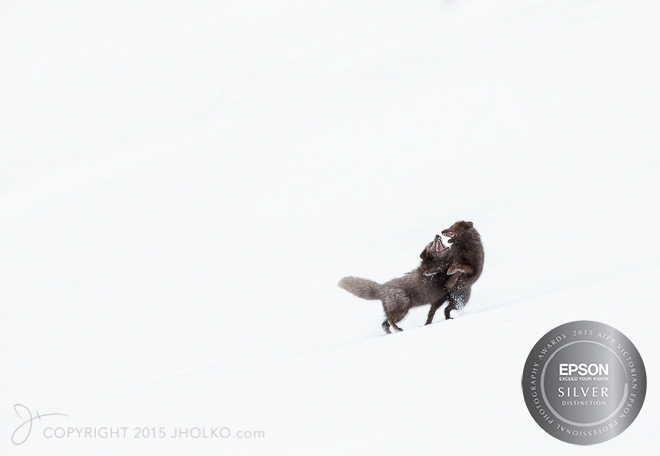
 After Svalbard I returned to Iceland and continued work on my Arctic Fox Project. I am getting close to completing the project now and hope to finish the project in 2016.
 After Iceland, I ran my annual two week New Zealand South Island workshop which saw us circumnavigate the South Island via private 4-wheel drives and that included significant helicopter time over the spectacular southern Alps as well as the Teanu region. We visited Milford Sound, Queenstown, Fox Glacier, Mount Cook and a great many other off the beaten track locations during the workshop. We also visited the now very popular Moraki boulders area where I was able to make this image that for me really captures the essence of these amazing rocks. (
 After a short break, I then travelled back to Svalbard for my Wild Polar Bears expedition (
 After the Falklands I travelled to Punta Arenas in Chile where I boarded a Soviet Ilyushin jet (The Russian equivalent of an American Hercules) and flew down to Union Glacier in Antarctica where we landed on a naturally occurring blue ice runway just 500 nautical miles from the South Pole. The purpose of this scouting trip was in preparation for the Emperor Penguin expedition next year. This was a truly remarkable experience and I will have a lot more to say about this experience in future posts.
 I then lead one final expedition to the Antarctic peninsula to finish up the 2015 year before arriving home two days before Christmas. All up I led a total of ten separate international workshops and expeditions in 2015 spread across the globe (not including some local private workshops to the Great Ocean Road as well as one-on-one Print workshops). A brief count tallies up more than thirty five international plane rides and well over thirty thousand exposures (wish they were all keepers!) and a lot more than thirty hours of lost sleep. It was a fantastic year and I just want to thank all of you who I was fortunate to meet, travel and photograph with throughout the year. It was real privilege to share in such remarkable destinations with so many fantastic photographers – thank you.
 After the Weddell Sea I will travel directly to Iceland where I will spend ten days in the remote north working on my project on the Arctic Fox. This will be my third year working on this project and I hope to gather the final images from this trip and complete the project in 2016. A portfolio of prints celebrating this remarkable animal will be available early in the new year, followed up by a book in the later part of 2016.
 After I finish in the north of Iceland I will lead my annual
 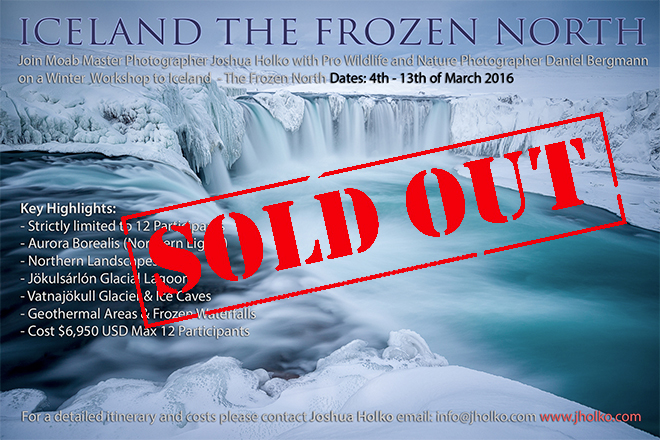 After Iceland I will travel to Lofoten in Norway where I will lead a brand new workshop for winter landscapes in this spectacular part of Norway. The Lofoten Islands have long been on my wish list to visit and photograph and I am very excited to be travelling to these spectacular islands in winter with a small group of photographers.
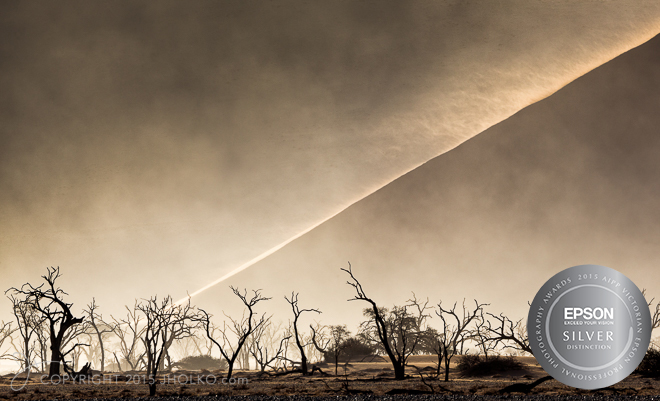
 After Lofoten I am heading straight to Namibia in Africa for a private small group overland safari. We are planning to visit a number of different areas for landscape photography including the ghost town of Kolmonskop as well as the incredible sand dunes of Sossusvlei and the salt pan of Dead Vlei. This safari has long been sold out, but due to a recent cancellation there is now one single place available. Please drop me an
  In May I am going to make the short hop across to the South Island of New Zealand to co-lead a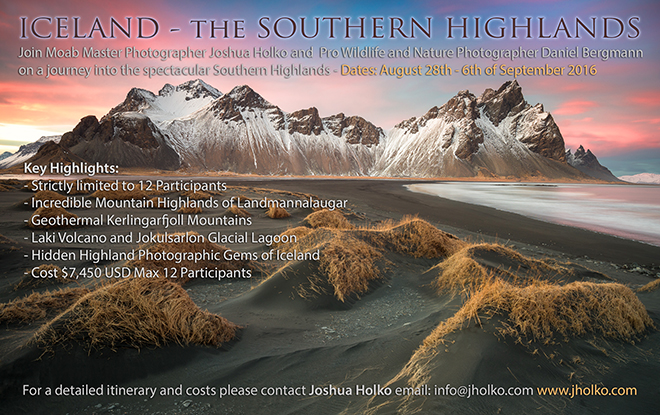
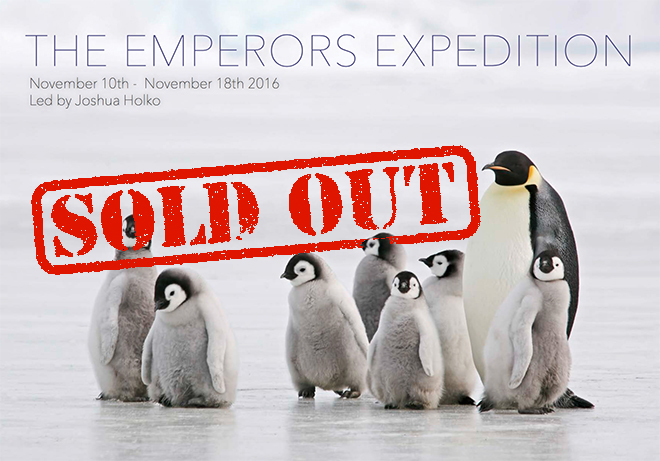
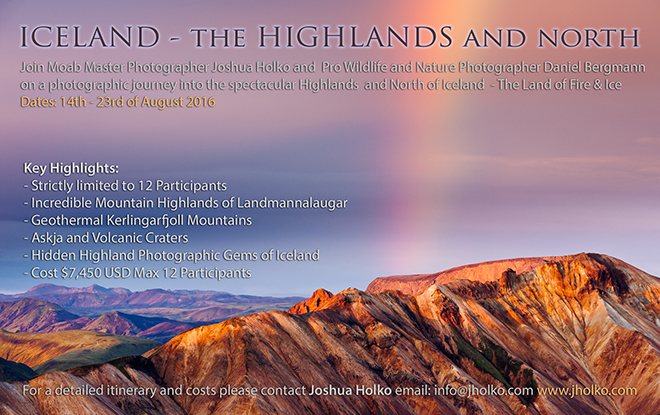 In November 2016 I will travel deep into the interior of Antarctica where I will lead a small group on a dedicated expedition for photography of Emperor Penguins (Sold Out). This expedition has been several years in the planning and I am extremely excited to be taking a small group of passionate and dedicated photographers on this trip. The opportunities for photography in this incredibly remote part of Antarctica are nothing short of breath taking.
  In late November I will travel to the Falkland Islands (our departure point) for a photographic expedition to South Georgia Island and Antarctica. Unlike the expedition I led in 2015; which visited only South Georgia, this expedition will also take us down to Antarctica. Its going to be a very busy and hectic year and I am keen to make a start in Antarctica in the Weddell Sea in just a few weeks time.
