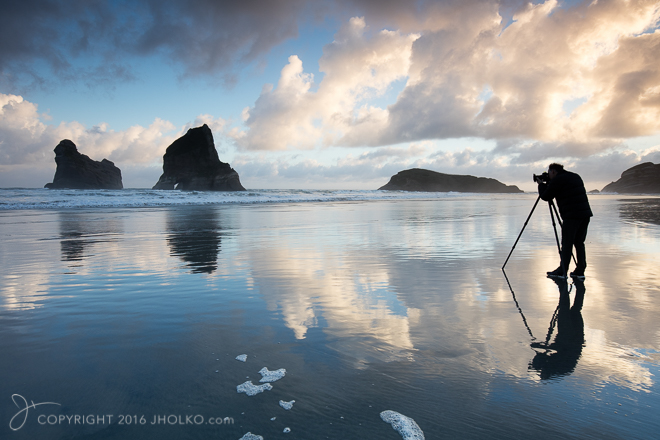
A single place has just become available on my New Zealand South Island Masterclass workshop in May next year. The workshop runs from the 1st of May until the 12th of May and is fully inclusive of all in country transport (private 4WD’s), food, helicopter flights, tuition and more. If you are interested in travelling to New Zealand and photographing in the spectacular South Island you can register you interest in this last available place. Like the 2015, and 2016 workshops, the 2017 Masterclass workshop also includes extensive use of helicopters for accessing some of the most remote and spectacular country as well as aerial photography of the spectacular Southern Alps and glaciers. Full details of the workshop are available on my website as a PDF HERE. You can read a trip report from the 2016 Masterclass HERE.
Travel and Outdoor Photographer of the Year Finalist 2016
On the eve of my departure for South Georgia and the Antarctic peninsula this November I received the very exciting news that a number of my photographs had been selected for the finals in both the 2016 Travel Photographer of the Year and the 2016 Outdoor Photographer of the Year competitions. This is the fifth year in a row I have made the finals in Travel Photographer of the Year (with multiple photographs) having first entered back in 2012 and subsequently 2013, 2014 (winner in the Wild and Vibrant category) and 2015. This year I am honoured to have two photographs in the final round of judging (currently underway). I am continually inspired to enter the Travel Photographer of the Year competition as it is one of the few photographic competitions remaining today that still judge the ‘print’ rather than a compressed jpeg. I wrote several years ago of my disillusionment with so many of the photography competitions that make their judgements solely on a compressed jpeg file. The craft of producing a beautiful fine art print is one of the most enjoyable aspects of photography for me and is how I prefer to have my work viewed.
I first entered Outdoor Photographer of the Year back in 2012 and subsequently won the Spirit of Adventure category in the same year with my photograph of mountain climbers near the summit of a spectacular Antarctic peak. I went on to make the finals again in 2014 (commended in the Wildlife insight category), 2015 and now again in 2016. I am especially thrilled to have had a total of thirteen (out of fourteen entered) images shortlisted this year in the competition. I cant as yet share which images are in the final round of judging for Travel Photographer of the Year, but I look forward to doing so in the coming days.


Photo of the Month December 2016 – King Penguins on the Move
This morning I returned home to Australia after two incredible back-to-back expeditions to the Emperor Penguins in a remote part of Antarctica and a South Georgia / Antarctic Peninsula expedition on board Polar Pioneer. I will have full trip reports on both expeditions in the coming weeks (once I catch up on my back log and overcome another bought of jet lag). In the meantime, I wanted to post up the belated December photograph of the month (and final image for the 2016 year). This particular photograph was taken on my South Georgia expedition last year (November 2015 – Read the Full Report) and is of King Penguins all in a row and on the march (or belly slide) to the water. It was snowing heavily when I made this photograph. What really appeals to me about this image is not just the gesture and position of the penguins, but also the abstract nature of the mountain snow patterns in the background and the monochromatic pallet. There is just the slightest hint of yellow in the Penguins to give away that this is a colour photograph. I chose the background when I was composing the photograph and made a series of images as the King Penguins moved through the scene. The photograph scored a coveted Silver with Distinction at the 2016 Australian Professional Photography Awards.
Global Arctic Photographer of the Year Special Guest Judge
Late last year I was fortunate to win the 2015 Global Arctic Photographer of the Year and have subsequently been invited as special Guest Judge for the 2016 Awards. The only downside to being a judge of course is that I cant enter the awards this year! That said, I am very honoured to have been asked to judge and very much looking forward to judging this years competition. The standard of work in this competition is incredibly high and in many ways is the bench mark for how high the bar is set for Nature photographers. I cant wait to see the amazing photographs entered into the 2016 competition!
The purpose of the Global Arctic Awards – 2016 contest is to show the magnificence of the diverse North and Arctic world through photography. The contestants works represent the beautiful variety of northern nature and wildlife, depict the peculiarities of the “icy” world of the Arctic, and narrate unforgettable photo stories about the culture, life and centuries-old customs of the Northern minorities . Through the prism of photographic lenses the coldest, deeply frozen Earth regions, covered with ice and snow, will appear in a new perspective.

Greenland East Coast 2017 Expedition Announcement – Extremely Limited Availability
As some of you are already aware in September and October of next year (2017), Daniel Bergmann and I are conducting two back-to-back landscape photography expeditions to the Scoresby Sund fjord system on the remote East Coast of Greenland. I have been meaning to formally announce both of these expeditions here on my blog for many months now, but have had so little studio time this year that I have just not been able to get around to it. Now, with a few sea days downtime between the Falkland Islands and South Georgia Island I have been able to get all the details online and post up the trip from the ships satellite internet connection.
A few words on Greenland: Home to some of the most extraordinary geology to be found on earth, the red and orange glacial scarred landscape of Greenland stands in stark contrast to the electric blue icebergs that carve off its many glaciers and drift slowly down its precipitous fjords. It is a remote land of untamed and unbridled beauty that is rarely visited and even less rarely photographed. It is an incredible place to inspire the imagination and fuel your photographic desires.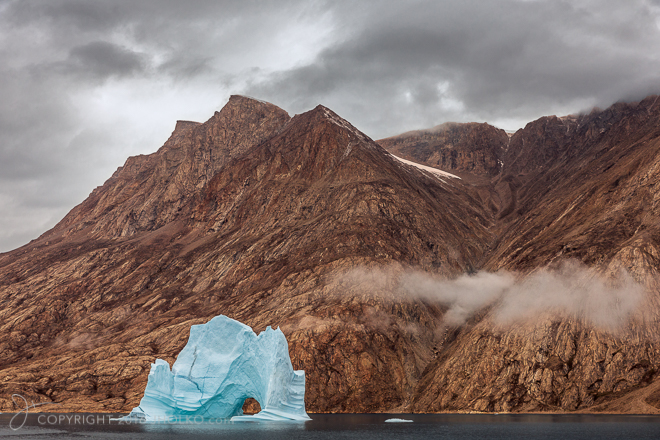 The landscape and geology of the East Coast of Greenland is both stunning and extraordinary. Photographing this incredible landscape under soft golden Arctic light is our main objective. In fact, our entire expedition has been planned around us being on location at the best time of year for soft golden light. We will also see and photograph incredible castellated icebergs that have calved off the many glaciers of Greenland. Dramatic glaciers, plunging cliffs and beautiful drift ice formations will be present as well.
 These expeditions have been more than two years in the planning and have been structured to provide the very best possible opportunities to photograph the incredible landscapes of the remote East Coast of Greenland in the Scoresbysund fjord system. With the sun low in the sky and at an oblique angle, late September and early October are the ideal times to photograph this region of the Arctic. Working during the best light of the day we will maximize our time for photography with daily shore excursions with plenty of time to scout, setup and photograph under the midnight sun.
 The photographic opportunities in the Scoresbysund fjord system are limitless and we intend to take maximum advantage of our time in this area. We will use zodiacs to make daily shore excursions for contemplative landscape photography as well as utilize zodiacs for iceberg photography as we cruise amongst the icebergs and brash ice.
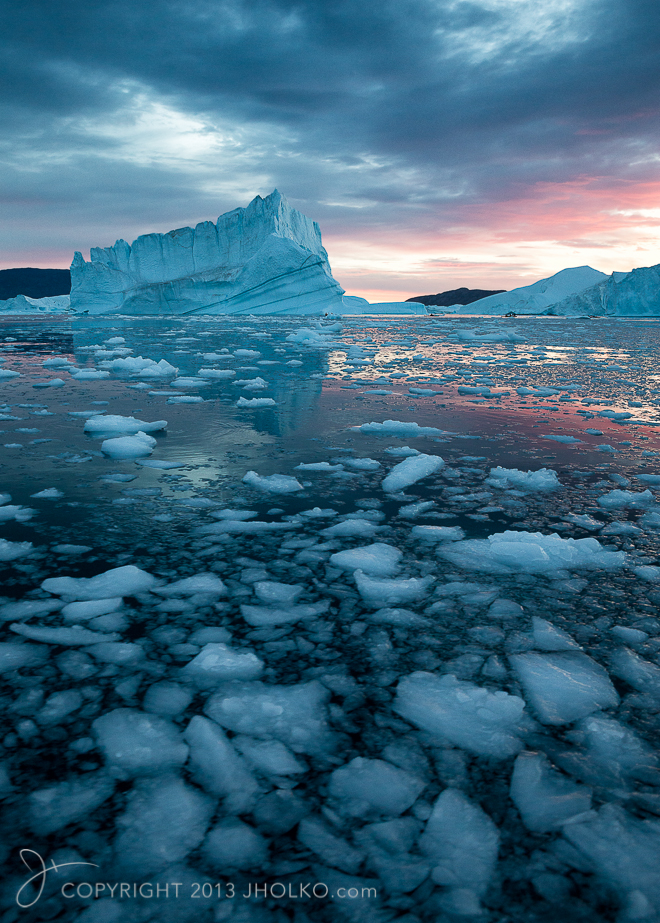 The Scoresbysund fjord system is home to some of the most incredible iceberg formations to be found anywhere in the world. As a result of the constant thawing and freezing of the glaciers there is an abundance of icebergs of infinite variety to be found drifting in the fjord system. Many of the icebergs are heavily castellated with electric blue cracks and fractures that are a photographers dream come true. The juxtaposition of these natural sculptures against the orange and red rock scarred landscape is not only awe inspiring in its primordial nature but completely unique. Nowhere else in the world can this combination and beauty be found on such a scale. In photographic terms the landscapes of the Scoresbysund fjord system are virgin ground. Very few expeditions venture into this area of Greenland and even fewer carry photographers.
 Although our ship for these expeditions is capable of carrying up to 33 people, the maximum number of participants on these two expeditions has been capped at eighteen. By limiting the number of participants on the ship we ensure sufficient room for photography equipment, shooting positions and zodiac photography for all participants without having to compromise. It also allows us to offer many single rooms without the need for additional cost.
If you are excited by the idea of traveling to the remote East Coast of Greenland to photograph the incredible landscapes of this country with a small group of dedicated and passionate photographers now is the time to secure one of the few remaining places. Due to the initial registrations and bookings there are already only three places remaining on the first expedition and only one place on the second before both expeditions will be completley sold out. Full details including dates, costs and a detailed PDF itinerary can be downloaded from my website at www.jholko.com.
 www.WILDNATUREPHOTOTRAVEL.com