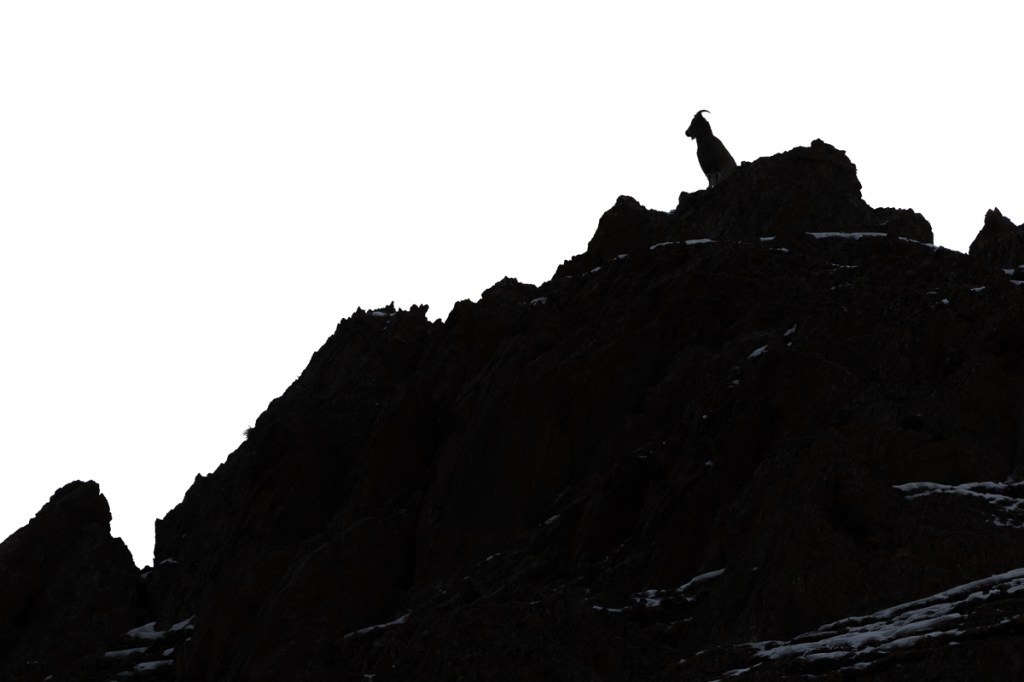
Kicking off the 2025 year, the photograph of the month for January comes from my just completed expedition to Western Mongolia for Snow Leopard (Trip Report coming soon). Although this is not an image of Snow Leopard, it is my favourite wildlife photograph from this trip. The silhouette is of a Mongolian Ibex that appeared at the very top of this mountain range for a few moments while we were milling around the vehicles at the base of the mountains. At the time the Ibex appeared, my camera was packed up in the car as we had just returned from hiking in the mountains. Hastily I grabbed my camera bag and pulled out the R1 with the 600mm and 1.4 TC. I immediately recognised that this photograph was going work best as silhouette and set my exposure accordingly. Mercifully, the Ibex remained and posed for the perfect silhouette before disappearing again over the ridge. This sort of photograph is pure serendipity and can never be planned. The key takeaway for me is not just to remain prepared in the field, but also to recognise opportunity when it presents for this sort of silhouette.
In July of 2024, I ran my first workshop for Pallas cat kittens in the far east of Mongolia. I am no stranger to travel and photography in Mongolia, having led multiple winter workshops to this fantastic country (for both Pallas cat and Snow Leopard) over the last 7+ years, but this was the first time I have run a summer workshop that was dedicated to the photography of Pallas cat kittens. It was a fantastic experience with many sightings of Pallas cats and their kittens! There is also something to be said for the packing requirements for a summer workshop that dictates shorts and a T-shirt!
During our nine-day workshop, we were fortunate to have numerous captivating encounters with Pallas cat kittens and their mothers. The absolute highlight was the rare chance to conduct multiple photographic sessions with a Pallas cat and her extraordinary litter of six kittens. Such a large litter is a rare occurrence, only happening in years with abundant prey. This year, the area was teeming with voles, ensuring a plentiful food supply. We also had the privilege of encountering another litter of five kittens and several smaller litters.
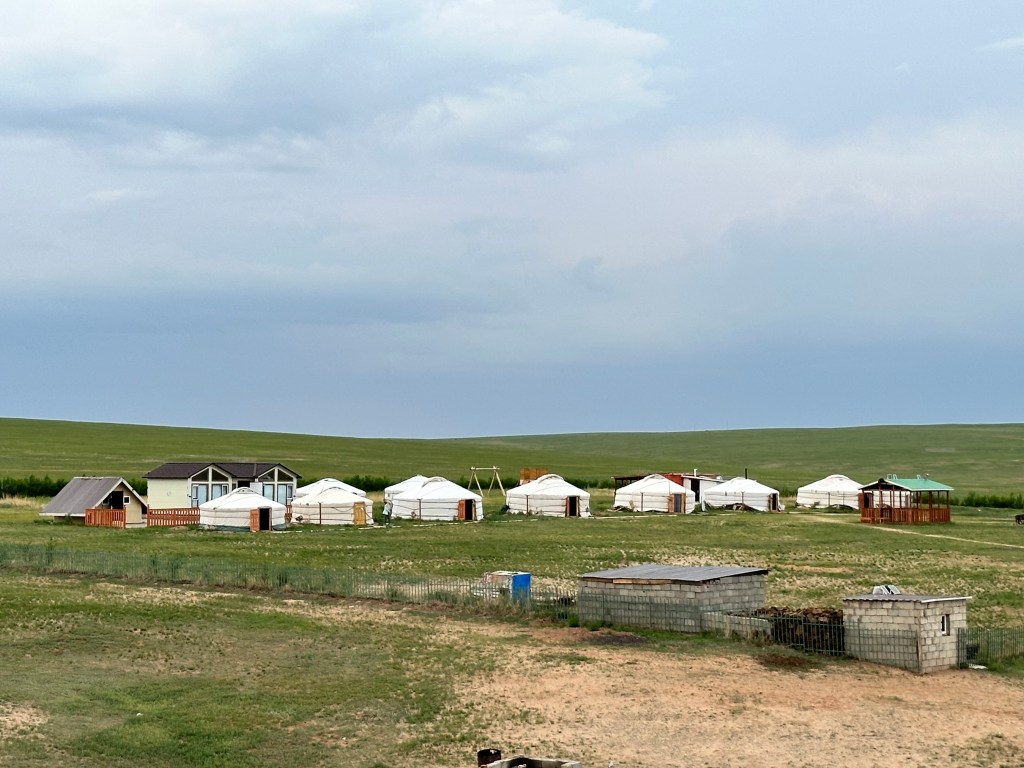
For the duration of this workshop, we are based in a permanent wildlife camp set up specifically to study and photograph Pallas cats. The camp is approximately eight hours’ drive east from the capital of Ulanbataar and is located in a region known as the Steppe. This area boasts the highest density of Pallas cats to be found anywhere on earth. It is a stunning location that comprises endless grass-covered rolling hills that stretch to the horizon in all directions.
For the duration of the workshop, we stay in traditional Mongolian Gyrs. Each Gyr is equipped with a comfortable bed, a small basin with clean, fresh water for washing, and power for charging via a generator. With average daily temperatures ranging from 25 to 35º Celsius and cooling down in the evenings, there’s no need for heating in the summer. The facilities include western-style pit toilets, a dedicated living and dining Gyr, and 4-wheel drives for exploring the Steppe region.
The photography of the Pallas cat kittens is done from portable blinds that we set up at a location out in the field. These blinds, which are quickly assembled on site, and allow us to photograph the cats and kittens without disturbing their natural play and hunting behaviour. As the blinds are portable, we can position them for the best possible backgrounds, light angle and to ensure the best opportunities. Telephoto zoom lenses are ideal for this workshop with focal lengths between 100 and 600mm.
The days are long this time of year in Mongolia, with sunrise around 5:00 a.m. and sunset around 8:30 p.m. As the cats are most active first thing in the morning and just prior to sunset, this means we are out in the field from 4:30 a.m. until 7:30 a.m. and then again from 4 p.m. until sunset. Time in between is lunch and downtime to download images and review the day’s shooting.
Toward the end of our workshop, we experienced two days of stormy weather and some heavy rain, which made locating the cats more difficult as they tended to relocate to higher ground at this time. Nevertheless, we managed some interesting opportunities of the kittens playing high in rocky areas.
On our final day, we were treated to an unforgettable morning and evening session with a different Pallas cat and her litter of five kittens. During the sunset shoot, the cats disappeared for a while, only to re-emerge during the best light of the day. It was a valuable lesson in the importance of patience and perseverance in wildlife photography. We also had several opportunities to capture the mother hunting voles near her den.
I will return to Mongolia in July of 2026 to lead another workshop for Pallas cat kittens in the Far East of this fantastic country. The workshop will be strictly limited to a maximum of five. Please drop me an email if you would like to register for this opportunity.
In January of 2024, I ran an expedition to Mongolia’s far eastern Steppe region to find and photograph the stunningly beautiful, rare and enigmatic Pallas Cat. This was my third expedition to this remote region of Mongolia, and it proved no less productive than the previous two (Read the 2023 Trip Report).
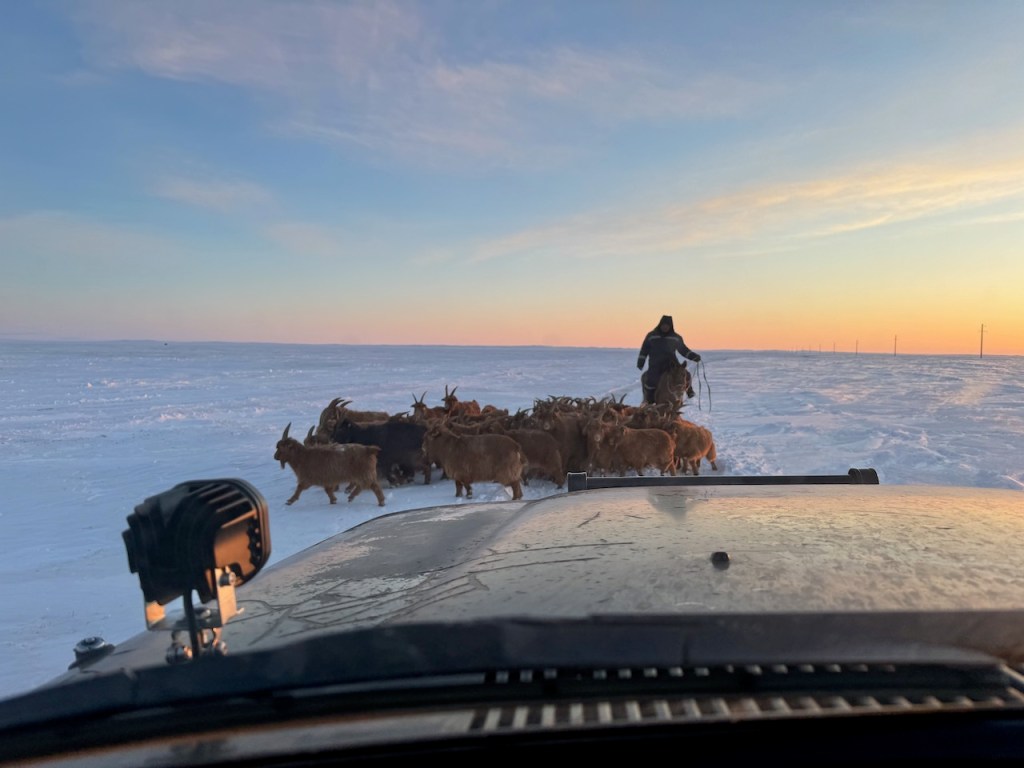
The camp where we based ourselves to find and photograph Pallas Cats resides in Mongolia’s far eastern Steppe region, nearly 700 kilometres from the capital, Ulaanbaatar. We used three large 4-wheel drive vehicles to reach the camp and to search for cats in the field. In good conditions, the drive is around 8-10 hours. The drive took us nearly twelve hours this year due to heavy snowfall. This year, I am including more behind-the-scenes photographs in the trip report to help paint a better picture of the overall experience of visiting and living in this remote region.
Widely unknown by many, the Pallas cat is a small wildcat roughly the size of a domestic house cat that is found in Mongolia, parts of China, Russia and Tibet. Typically, it is an ambush hunter living off small rodents such as vols. Unlike most cats that have an elliptical pupil, what makes the Pallas cat unique and special is its round pupils. Affectionately known as the ‘Grumpy cat’ by many, Pallas cats always tend to have an annoyed look that is undoubtedly part of their charm and appeal.
For 2024, Mongolia’s far east Steppe region has been buried under heavy snow, making for absolutely ideal conditions for finding and photographing Pallas Cat. Most years, the snow coverage is sparse in this region, and it is not uncommon for there to be little or even no snow. The lack of snow makes for easy driving conditions but can be problematic for photography. This year, the reverse proved true, with outstanding conditions for winter photography and adverse driving conditions that slowed us down on more than one occasion.
Over the week-long expedition, we photographed approximately six different Pallas Cats and sighted another half dozen or so as we traversed the landscape in our 4-wheel drives. Pallas cats can be challenging to distinguish, so it is impossible to be sure of the exact number of individual cats we sighted. Our local guides again showed their eagle-vision superpower of spotting the small cats at huge distances across the landscape. Finding Pallas cats in the vast, seemingly endless Steppe region would be impossible without their skilled eyes.
During this expedition, we also had a fantastic photographic encounter with a Corsak fox. This encounter was the first time in my visits that I could get close enough to Corsak Fox to photograph them. Completely relaxed, the fox allowed us to get close enough to fill the frame with a 600mm lens and a 1.4 teleconverter. Typically, the foxes in this region of Mongolia run away before you can get out of the car. This particular fox was found quite close to a nearby small village, and I suspect it was somewhat habituated to human activity. Nevertheless, it proved an incredible encounter.
During the trip, we also saw many raptors, including the Upland Buzzard (a fantastic black morph was also sighted), Golden Eagle, Saker Falcon, and the Cinereous Vulture.
Our final encounter for the expedition provided terrific images of a Pallas cat in backlight just as the winter sun was setting. This encounter was to be our last shoot for the trip, with the following day being lost to a snowstorm with poor visibility and high winds. In these sorts of conditions, Pallas cats prefer to hunker down in the rocks or fox and marmot burrows to seek shelter from the winds.
The following day, Our return to Ulaanbaatar took far longer than usual due to the heavy snow, which slowed us down considerably. The first part of the return journey (a distance of approximately 70 kilometres) is all off-road driving through the steppe region, and thanks to heavy snow, high winds and a snowstorm, this drive took us five and a half hours instead of the usual hour and a half. We left camp at 6am, anticipating the drive would be slow in the prevailing conditions. Indeed, the deep snow drifts saw us bogged down or stuck eleven times in our 4-wheel drives. Even once we made the main road, we were frequently slowed down by road closures and snow and ice conditions. Thanks to the tireless work of our local guides and drivers, we got moving each time and finally made it safely back to the capital an epic sixteen hours after our departure. Although this proved a very long travel day, the resulting photographs from the expedition were superb and totally worth the long hours in the car to and from the capital.
I will return to Mongolia this July for an expedition to photograph Pallas Cat and Pallas Cat kittens in the warm summer sun. This workshop is now sold out, but I am taking bookings for January and winter 2025. If you are interested in photographing this beautiful wildcat in winter snow conditions, drop me an email for more information or to register your interest.






 www.WILDNATUREPHOTOTRAVEL.com