Australian Photographic Prize Wildlife Category 2026 Results

The second stage of the Australian Photographic Prize in the Wildlife category has now been run and judged. This was the primary category I chose to enter into this year’s awards (I also have one photograph in the Natural Landscape Category and two in the Birds category yet to be judged), and I was absolutely thrilled to have all five of the photographs I entered be selected as part of the ‘Top 30‘ in the category. The competition this year was particularly solid, with some really superb photographs, so even making the top 30 was a great result.

The second and final stage of the judging was online and livestreamed to YouTube just a few days ago. Just click the link above if you want to watch the judging for the scores and judges’ comments.  I always find it fascinating to listen to experienced judges discuss photographs. While we won’t necessarily agree with every comment or score, there is invariably something to learn from hearing how different judges respond to an image and what they value in the judging process. One of the highlights for me was hearing Matt Palmer’s comments on my Reindeer photograph. It was especially rewarding because he connected so closely with the mood and story I had hoped to communicate when I made the image. As photographers, we often wonder whether what we’re trying to express is actually reaching the viewer, so hearing that feedback was incredibly encouraging.

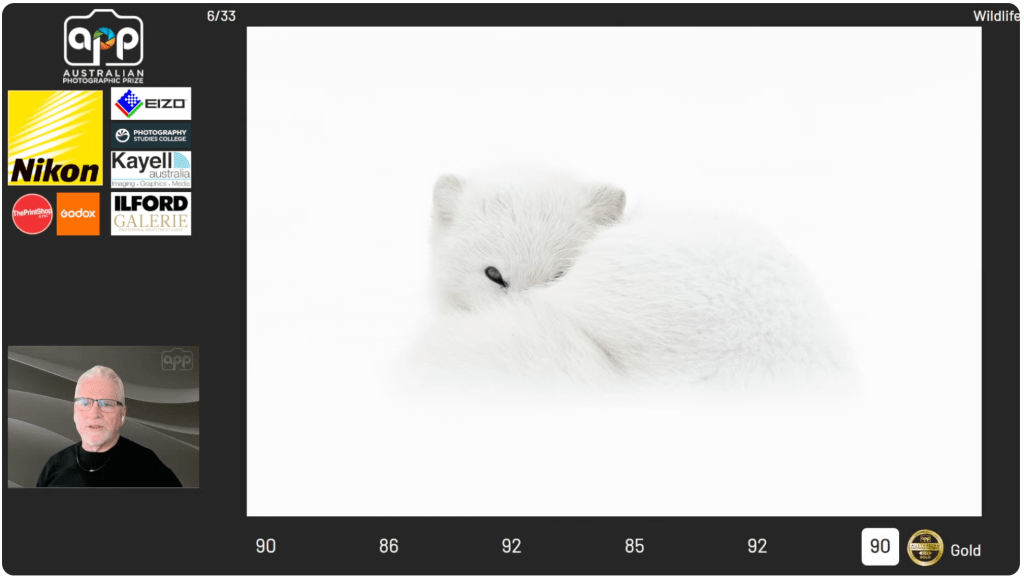
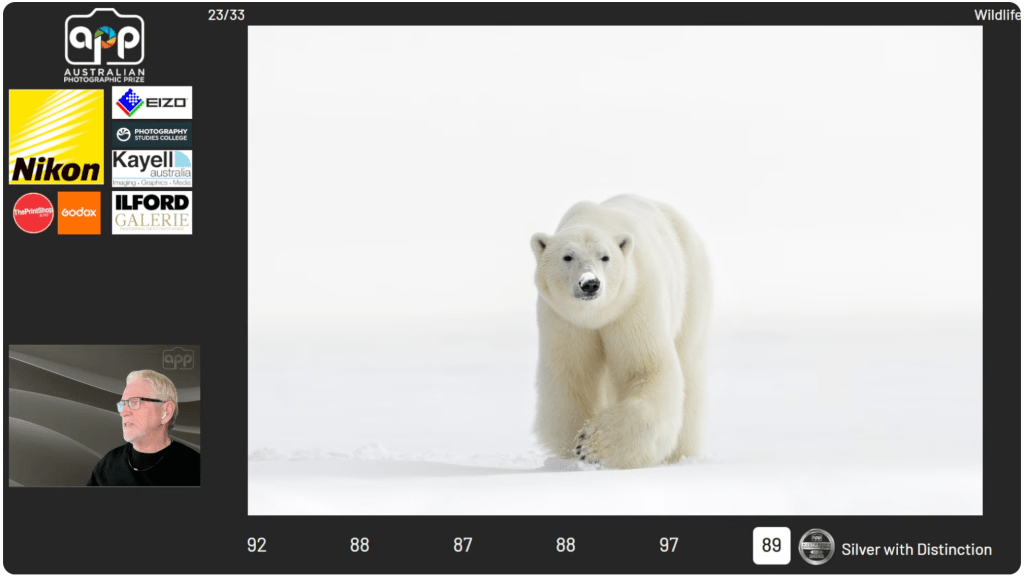
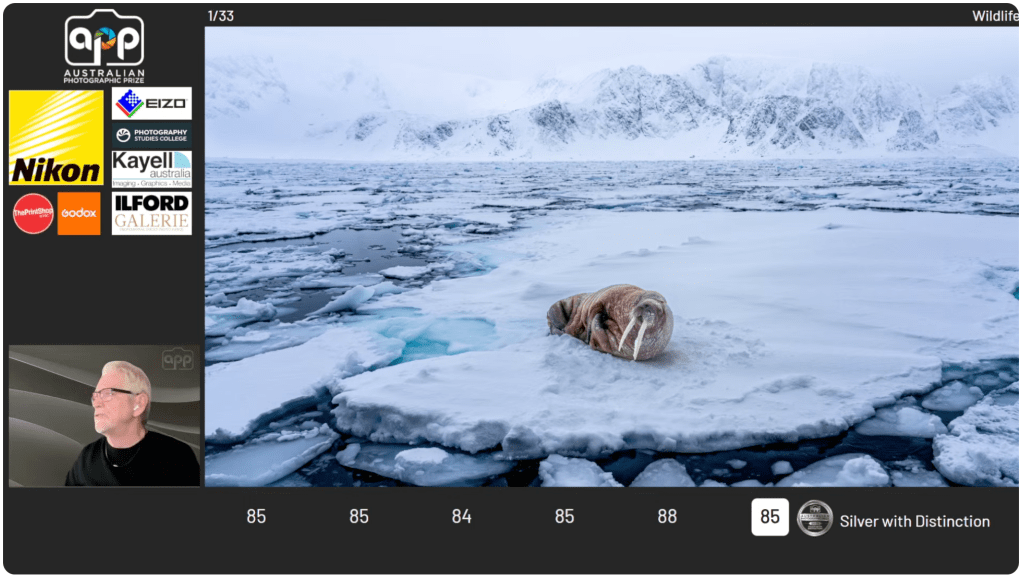
Four of the five photographs I entered went on to earn highly coveted Gold Awards, with two of those Gold Awards advancing to the loftiest Gold with Distinction category. A category reserved only for the most powerful photographs that showcase the highest levels of technical prowess, artistry, and emotional impact. I am blown away to have the four highest-scoring images in the entire category! With my fifth image still achieving a very strong Silver with Distinction.

The overall Wildlife category winner will be announced on 13 August. Although my photographs received very high scores during the public judging, the category winner is selected separately during a final private deliberation by the judging panel, with each finalist considered again on its own merits. Whatever the outcome, I already feel enormously fortunate with the results so far, and I’m simply grateful to have had my work recognised alongside so many outstanding photographs. The final scores for each photograph are included below:

Australian Photographic Prize 2025 Wildlife Single Capture Gold Awards

The Australian Photographic Prize Wildlife category was judged on Saturday, 19 July. This year, I decided to enter the single-image Wildlife category of the Australian Photographic Prize at the last minute due to my hectic travel schedule. I just caught up on the results on You-Tube this morning during some downtime here in Melbourne. Of the four photographs I chose to enter this year, all four made the final round of judging (top 35 entered images in the category). Two of the four received highly coveted Gold Awards, and the remaining two images both earned Silver with Distinction awards, with the Polar Bear being only 1 point shy of a third Gold award. I am not sure what held back the Polar Bear from Gold, as the average scores from the judges is 90.4, which should be a Gold Award? Screenshots of the judge’s scores and images are included below. The overall winner of the category will be announced in the next few days.

Zululand South Africa 2025 Ground Level Masterclass Workshop Last Places!

Only two places remain on our 2025 Zululand, South Africa ground-level Wildlife masterclass this May before it will be sold out. This exclusive workshop will run from May 7th – May 16th, 2025 and is fully inclusive of luxurious accomodation, private game drives, private hides and all photographic tuition. This is a full camp takeover, meaning it will be just us in the entire reserve – no one else. This maximises the time we have available for game drives and hide sessions giving you the best possible opportunities. You will not be limited to the usual one hide session, but will have many opportunities over the course of the workshop. During this workshop you can also expect to get out of the safari vehicles and walk with Cheetahs (an incredible photographic experience). You can get an idea of what to expect from this workshop by reading the 2024 trip report HERE and by checking out the portfolio on my website HERE. This is the workshop for you if you have ever wanted to photograph African wildlife at ground and eye level and create truly incredible wildlife images. For more information, please drop me an email. First in best dressed.

Optimally Calibaring Apple Liquid Retina XDR Displays for Photography

Those who know me know I always advocate for the highest quality photographic display you can afford. It should be the first purchase you make after a digital camera. A wide-gamut, high-quality, calibrated photographic monitor is the difference between optimally processing your RAW files and standing blindfolded, throwing darts at a board. But what do you do while in the field on a laptop? Or, how do you otherwise make do if you have an Apple Liquid Retina XDR display and have neither the budget nor space for an external display? I should footnote this: If you can afford an Apple Liquid Retina XDR display, you have no excuse not to own a significantly better photographic display such as those from BenQ (Read our Recent review on the new BenQ 4K display).

Jeremy Daalder over at Image Science recently published the best piece I have read to date on optimally calibrating an Apple Liquid Retina XDR Display. If you own an Apple laptop with a Liquid Retina XDR display or one of Apple’s hugely over-priced external displays then you owe it to yourself to take five minutes out of your day, and read his article. This is the first piece I have read on the internet that accurately documents the process for a successful calibration of these displays.

INTRODUCTION

Apple’s newest XDR Liquid Retina displays, such as is seen inside the new 14” and 16” MacBook Pro (and the XDR Pro Display) are a completely different ball game when it comes to calibration. The new XDR Liquid Retina displays (hereafter referred to as XDR displays) are different than their predecessors in that they employ a full array local dimming miniLED backlight. The issues at play here are essentially two-fold. Because of Apple’s decision to implement:

  1. A miniLED backlight (which older calibrators just weren’t designed to calibrate), and
  2. the forced usage of Reference Modes (both their clunky implementation of them and specifically the inability to NOT use them)…

…both the required calibration technologies and the process for calibrating them is completely different to ALL older Apple displays (including all older external displays, any iMacs, any Intel-based Laptops, any Macbook Air’s, and even the newer Apple Silicon based 13” and 15” MacBook Pros).

READ ON HERE

Canon EOS R3, EOS R5MK2 and More Firmware Updates September 2025

During my last few days in Greenland (I am currently in Iceland wrapping up the extension trip), Canon updated firmware for the EOS R3, EOS R5MK2 and many other cameras in the line-up. Most of the updates are bug fixes, although some cameras got support for the new LP-E6P. You can download firmware updates through the Camera Connect app or directly from a Canon website. Personally, I find the Canon Camera Connect app to be the easiest and fastest. I updated my R3 in the field in less than ten minutes with my iPhone while waiting for the clouds to gather after the morning shoot here in Iceland.

Firmware Updates: