Greenland Hidden Gems September 2024 Expediton Report

In September of 2024, I ran my semi-annual Polar landscape expedition to Scoresby Sund (the world’s most extensive fjord system) in Eastern Greenland. This has been an expedition I have been organising, leading and guiding for more than a decade now and is one I always eagerly look forward to. Scoresby Sund is not only the most extensive fjord system in the world but also the most extraordinary. Monolithic icebergs drift like silent sentinels on gentle ocean currents set against a backdrop of precipitous glacial scarred mountains, making for surreal, otherworldly imagery. It is a breathtaking arena of icebergs unmatched anywhere on earth.

This expedition was a fly-in, fly-out trip that saw us fly by private charter plane from Keflavik in Iceland to Constable Point in Greenland. Although flights into eastern Greenland can often be delayed by weather, flying across the Denmark strait takes less than two hours and saves the better part of three days sailing in either direction across a notoriously rough stretch of water. Having sailed these waters multiple times, I much prefer to fly and spend the extra time cruising the calm waters of the fjord system. This year, we were blessed with good weather for flying, and our outgoing and incoming flights were on time.

On arrival at Constable Point, we had a quick briefing before embarking on our expedition vessel, the Rembrandt Van Rijn. Although the Rembrandt is a comfortable schooner and can take a maximum of 32 passengers, I always prefer to take just 16 and provide private cabins for everyone – this also offers more space on the decks for photography. With a group size of 16, it is also possible for all participants to utilise zodiacs simultaneously. After the mandatory safety briefings, we were quickly underway and made our way across the channel in calm seas to Vikinbukt.

In Vikinbukt, we had our first glacier sighting, several stunning blue icebergs, and six Polar Bears. Most of the bears were high up on the moraine slopes, where they seemed to feel safe to rest when not active and while they waited for the sea to freeze to resume hunting on the ice. During the expedition, as the sun set, I decided to put zodiacs in the water to achieve a sense of scale with the enormous icebergs juxtaposed against our expedition ship. These sorts of opportunities are only possible on dedicated photographic expeditions such as this and make all the difference to the final portfolio of photographs one takes away from an expedition such as this.
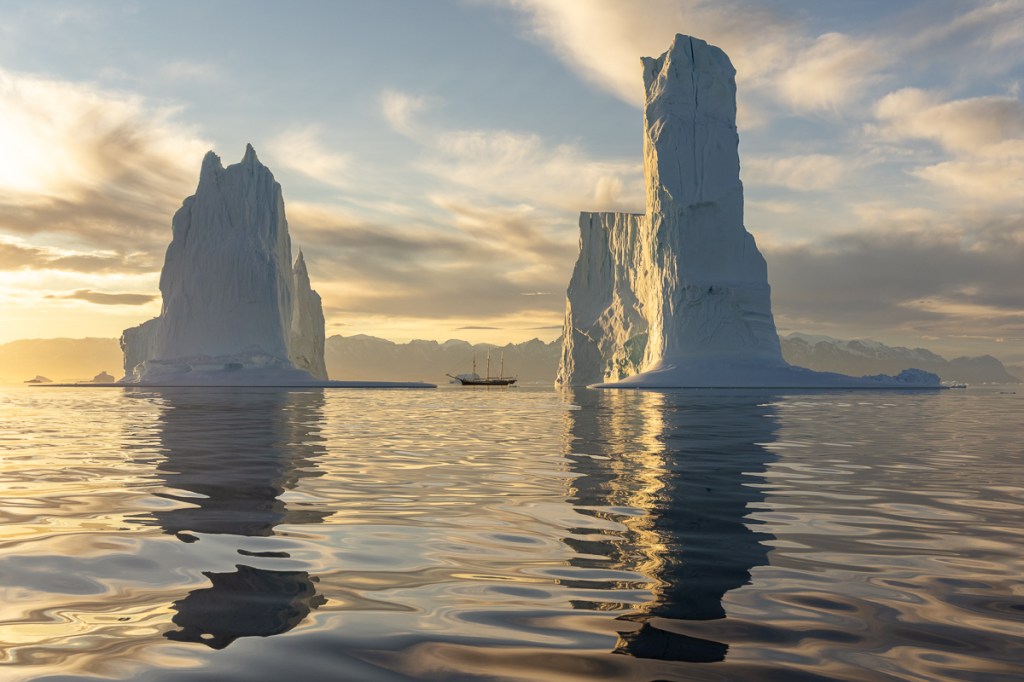
During the expedition, we had some extraordinary sunrises and sunsets with beautiful, soft, pastel light painting the sky and icebergs. The weather is always a mixed bag in Greenland. Frequent dramatic lenticular clouds perfectly complement the mountain peaks and stunning icebergs. We were extremely fortunate to have outstanding conditions for the duration of our expedition, with snow falling only on our very last day. We also had northern lights on multiple nights. This time of year, the Arctic tundra was also at its peak colour. Having now completed more than three dozen expeditions to Eastern Greenland, I have learned that by far, the best time to visit is September when the sun is low in the sky and there are proper sunrises and sunsets. Expeditions earlier in the season are typically lit by 24-hour daylight and blue sky days, making photographing problematic. By travelling in the late Autumn of September, we ensured stunning Arctic tundra and soft pastel light.

We had multiple photographic encounters with Musk Oxen during the expedition. On our landing at Ingmikertikajik island, we encountered a lone Musk Oxen that posed for us on the edge of a rocky prow. I always prefer to photograph Musk Oxen when silhouetted against the sky as they blend into their surroundings when photographed against the Arctic Tundra. This young male provided us with some beautiful opportunities.

Below is a map of the trip voyage and the locations we visited during the expedition. The astute and experienced Greenland travellers will note that we did not visit Rhode Island (the Red Island). Recent changes to restrictions in this area mean it is unfortunately no longer possible to visit this location (a restriction designed to avoid disturbing local Narhwales – which are still hunted and slaughtered by the local Inuit). Those of you who may have visited it in the past can rest comfortably knowing that you visited one of the most incredible iceberg graveyards on earth. For those of you who have never been there, there is always hope that restrictions will lift in the future. For this expedition we sailed around the back of Milne land, visiting the other side of the iceberg graveyard. We also encountered our first sea ice in this area in combination with some beautiful light.

Towards the end of our expedition, we made the short sail back to Constable Point, where we disembarked the Rembrandt and flew by private charter plane back to Iceland. After the short hour-and-a-half flight, we bid farewell and concluded our expedition.

Wild Nature Photo Travel will return to Greenland again in October of 2026 to lead a small group expedition to Southeastern Greenland. The landscape and geology of the East Coast of Greenland are both stunning and extraordinary. Our main objective is to photograph this incredible landscape under soft golden Arctic light. We will also see and photograph incredible castellated icebergs that have calved off the many glaciers of Greenland. Dramatic glaciers, plunging cliffs and beautiful drift ice formations will also be present. We intend to fly from Iceland to the remote East Coast of Greenland, where we will be based for the duration of this expedition. We will make day trips on our expedition boat and spend our time exploring and photographing some of the world’s largest and most spectacular icebergs. If you are excited about travelling to the remote East Coast of Greenland with a small group of dedicated photographers, now is the time to register your place by dropping us an email. Places are very limited, and once they are spoken for, that’s it.

Photograph of the Month October 2024 – Greenland Pastel Light Icebergs

The photograph of the month for October 2024 comes from my just completed East Greenland Scoresby Sund expedition (trip report coming soon). Photographed from the deck of our expedition schooner, the Rembrandt Van Rijn, this image directly resulted from positioning the boat in the best location at the best time. It’s a great example of the key difference between a dedicated photographic expedition and a general tourist trip. With time on our side and a team of participants all dedicated to making great images, I decided to simply stay with these two icebergs and wait for the best light of the day. This soft pastel light post-sunset is a wonderful example of what makes Greenland alluring to photographers. These types of photographic opportunities are abundant in Greenland and easily made from the deck of a suitable expedition-class vessel. In this instance, I used a 24-105mm F4 RF lens at F5.6 ISO800 hand-held. As we slowly circled the icebergs (numerous times!) I made many different photographs from different angles so that I could choose my preferred angle in post-production.

WNPP Episode 104 – Canon EOS R5 Mk2 Musings from the Arctic

I have just published episode 104 of my Wild Nature Photography Podcast. In this episode, I discuss my thoughts on the new Canon EOS R5 MK2 camera now that I have had an opportunity to use the camera in the Arctic for several weeks of intense photography (Eastern Greenland and South Western Iceland). I first tested the camera back in September in Australia over three days of landscape photography down the Great Ocean Road. During this shoot, I was photographing only from a tripod and had not yet shot handheld with the camera in my preferred polar environment. My initial impressions from this shoot in Australia were all positive, and I was very keen to get the camera up to Greenland to see how it performed. After shooting with the camera in Eastern Greenland and Iceland for the last three weeks, I have (perhaps surprisingly) concluded that this camera is not for me. The files are excellent at low to moderate ISO (ISO800 and below) but fall far short of those from the EOS R3 at ISO800 and above. Since most of my photography is at moderate to high ISO (typically 800 and above), this is a significant factor in my decision-making process. Of more importance, however, is that the ergonomics of the EOS R5MK2 just don’t suit my size hands or my style of shooting. It is a wonderful camera that will undoubtedly make many people happy – but it isn’t for me. Find out more in this podcast.

Greenland Winter Dog Sled Expedition Report 2024

In March 2024, I ran an all-new winter dog sled expedition to eastern Greenland in search of Arctic wildlife and stunning winter landscapes. Eastern Greenland is one of our planet’s most remote and pristine areas. In Winter, it is a hostile, frozen world with temperatures that frequently plummet below -40º. Frozen oceans, glaciers, and precipitous mountains are more akin to a scene from George Lucas’s planet Hoth (from The Empire Strikes Back) than the earth we know. It is a stunning, dramatic, epic landscape that makes for other-worldly photographic possibilities for photographers looking for an adventure outside their comfort zone.

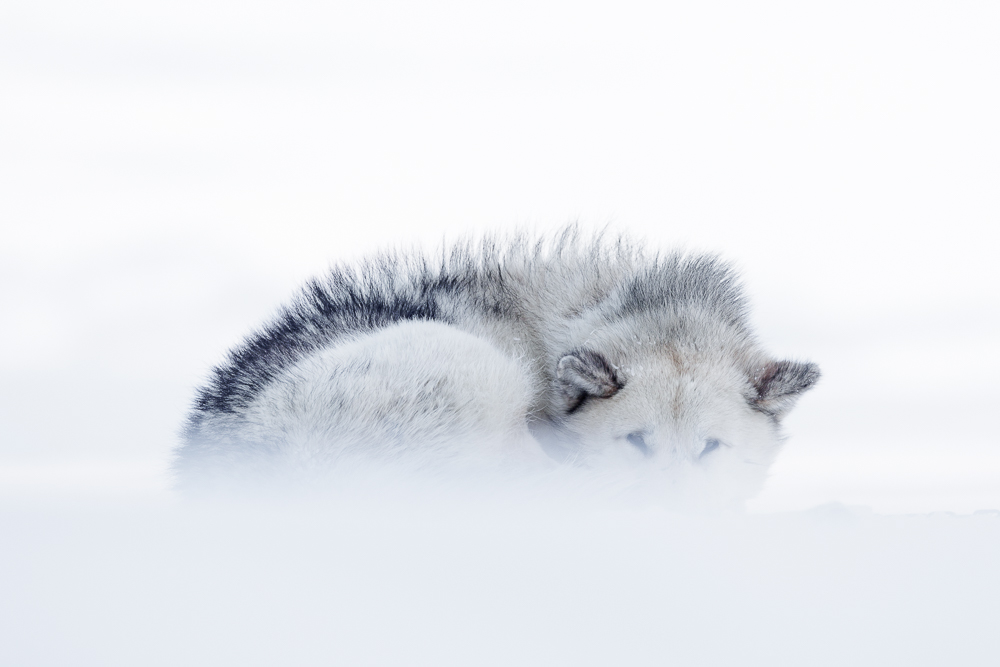
For this adventure, we utilized local Inuit guides and Greenland sled dogs. With incredible stamina and power, a team of twelve sled dogs can pull over a thousand pounds for hours across the sea ice, making them the ideal means of transportation in Winter. The essence of this expedition was to capture the elusive Arctic wildlife in its winter habitat and to immortalize the breathtaking beauty of Greenland in its winter glory. Greenland, a place seldom explored in Winter, is a testament to the untouched Arctic Nature, a rarity to be found anywhere around the Polar Circle.

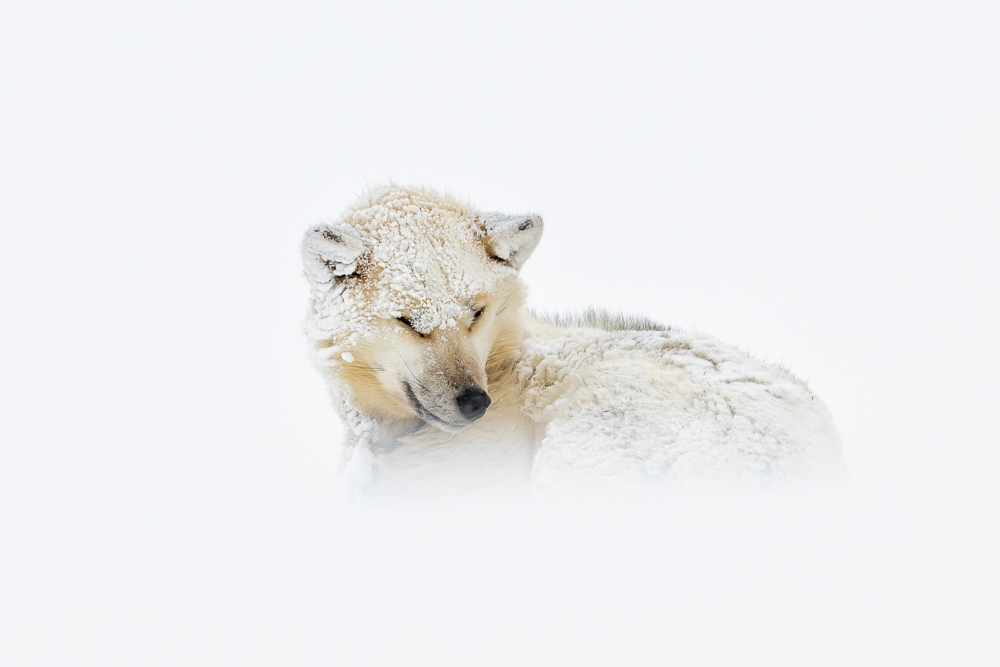
For this expedition, we flew from Reykjavik in Iceland to Constable Point in Greenland on a small Dash-8 plane, where we made camp for our first night. Our small group spent our first night in small mountain tents close to the ice runway of Constable Point to acclimate to the cold and exposure of the Arctic in Winter. This experience was a baptism by ice for the group, many of whom had never slept on sea ice in Winter. We ventured into Jameson land from our first camp, searching for Musk Ox – the prehistoric bison-like beast that survives and inhabits this region of eastern Greenland.

We only had to travel briefly (perhaps 10km) before our local Inuit guides spotted a small group of Musk Ox on a distant ridge line. Parking the sleds and dogs, we grabbed our cameras and long lenses and made our way stealthily across the landscape in the hope of some dramatic photographs. Fortuitously, the wind was blowing and catching both the loose spindrift and the woolly coats of the Musk Ox. These were ideal conditions to photograph these creatures. Skittish from decades of hunting, Musk Ox can be notoriously difficult to approach and, when agitated, can be more dangerous than Polar Bears. Maneuvering into position for the ideal background, we spent around an hour capturing images of these impressive animals in cold, windy and dramatic conditions before they finally tired of us and headed up a nearby mountain valley. Encounters like this are rare and a real photographic treat in the Arctic in Winter.

Our second and third nights saw us overnighting in an old hunter’s cabin. Although cold, the cabin afforded more protection than a tent and made for a more comfortable night. These hunters’ cabins typically consist of little more than four wooden walls and a roof, but they protect from the wind and some semblance of normality. Setting up cooking stoves inside the hut and removing the warm outer jackets that protect from the biting cold outside is possible. Of course, there are no facilities, and when nature calls, it is necessary to venture outside and find somewhere out of the wind to take care of personal business. Likewise, there are no showers or running water, and it is necessary to melt snow and ice for cooking and drinking.

From Jameson land, we turned south and headed out of the fjord across the frozen sea ice on our dog sleds to another hunter’s cabin approximately thirty kilometres south. We had spectacular views across the frozen sea ice from this location and excellent photographic opportunities with Ptarmigan in their winter plumage. Ptarmigans are usually quite approachable if you take your time and move slowly, and all of the group captured images of these beautiful birds. From this location, we could easily spot any approaching Polar Bears. Unfortunately, the sea ice remained empty, with no sign of bears from our high vantage point. Such is often the way with the King of the Arctic. With tens of thousands of square kilometres of habitat and perhaps only a few thousand bears inhabiting this region, an encounter is never guaranteed.

Continuing our journey across the sea ice to Cap Hope, we established our next camp in an old hut in the small abandoned settlement. We had our first and only encounter with a Polar bear here during this expedition. Spotted by one of our Inuit guides, the bear was quite some distance away on the sea ice (perhaps 5-6 kilometres, but visible through my binoculars), strolling away from us. Hurriedly, we headed down to the sea ice, hoping the bear would become curious and approach our position. Unfortunately, it was not to be, and the bear continued, disappearing into the distance as the sun set across the sea ice. While it was a fleeting encounter, it reminded us of the untamed wilderness we were exploring and that wildlife photography has no guarantees. It has been my experience that typically, one in seven Polar Bears provides a significant photographic encounter that yields tangible images. Most encounters are generally sightings only that rarely result in keeper photographs.

With a change in the weather forecast and a winter storm approaching, we decided to break camp and head back to the small village of Ittoqtoqitormet rather than stick to our original plan of heading to Cap Tobin. Although both were roughly the same distance from our current position, the town of Ittoqtoqitormet would offer us better accommodation, a hot shower and the chance to have a bed. The storm arrived a few hours earlier than predicted, giving us a real taste of what the Arctic can be like in Winter as we arrived in town. Our local guides’ experience proved correct, and shortly after we arrived, the storm intensified into a full winter blizzard that would last the next two days.

During the expedition, temperatures hovered around -20 to -36Celsius + wind chill. We had predominately excellent weather, with only our last two days and the storm’s arrival reducing visibility with strong winds and blowing snow.

We took the opportunity to photograph the Arctic Snow Hares in and around town. These Hares live around the old cemetery, providing fantastic opportunities in the blowing snow. Over the two days in town, we had several sessions with the Hares in what I would describe as ideal winter photographic conditions. The Hares are somewhat used to people, and it was possible to approach them within just a few feet.

At the expedition’s conclusion, we planned to take a helicopter from Ittoqtoqitormet to Constable Point to connect with our return flight to Reykjavik in Iceland. However, the helicopter was cancelled at the last minute due to the consistent blizzard conditions and near-zero visibility, leaving us stranded in town (Winter travel in the Arctic is never certain and always exciting). The cancellation would have meant a two-day delay in returning to Iceland, assuming the flight would go as planned from Constable Point. Rather than get stuck for two days, I quickly organized four locals with snowmobiles and sleds to take us from town to Constable Point across the sea ice. The journey should take around an hour and a half in good weather conditions. But, due to the blizzard and abysmal visibility, the journey took nearly three hours and proved quite the adventure. Our local Inuit guides showed their incredible skills, successfully navigating without GPS in what was effectively zero visibility to transport us to Constable Point.

Thankfully, I could rebook our group at the last minute on a return twin otter flight from Constable Point to Reykjavik, and we made this connecting flight with literally ten minutes to spare. Our long day of travel concluded in Reykjavik, where we wrapped up our winter expedition.

I sincerely thank our local guides and all who participated in this remarkable expedition. The success of these winter expeditions hinges on group dynamics and local knowledge. They require teamwork and cooperation from all. Our group aced this expedition, working together and ensuring a safe and successful outcome.

I will return to Greenland’s East Coast again in September 2024 for a more luxurious Autumn, ship-based expedition to Scoresby Sund. This expedition focuses on the incredible landscape and icebergs that drift as silent sentinels through this incredible fjord system. In addition, there will be a chance of wildlife, including Musk Ox and Polar Bears. We will be based on a comfortable, warm ship for the duration of this expedition that will serve as both our home and our photographic platform. Just two places remain now before this expedition is sold out. If you are interested in travelling to one of the world’s last untouched regions of the Arctic alongside a small group of like-minded, passionate photographers, please drop me an email to register your interest.

I will also return to Greenland in the Winter of 2025 to lead another dog-sled expedition across the sea ice in search of wildlife and dramatic landscapes. This expedition is already sold out, but I will soon be taking expressions of interest for 2026. If the idea of an adventure outside your comfort zone appeals and you feel you have the right stuff to explore Greenland in Winter via dog sled, then please reach out to register your interest – no obligation at this point.

Departing for Greenland in Winter Expedition 2024 Offline Update

Early tomorrow morning (the 10th of March, 2024), I am leaving for Iceland and Greenland for my dog-sled expedition to photograph Polar bears, Iceberg landscapes and other wildlife in the Arctic Winter. Please note that I will be offline in Greenland from the 12th of March until the 22nd of March. If you are trying to contact me during this time, please be patient, and I will get back to you upon my return. The 2024 and 2025 winter expeditions via dogsled in Greenland have long been sold out, but I will soon announce dates for 2026. These expeditions are for those looking to get out of their comfort zone and have the opportunity to capture dramatic, powerful and evocative photographs of Arctic wildlife in winter on the frozen sea ice.

Just a couple of places remain on my Greenland East Coast Scoresby Sund expedition in September of this year for those looking for a less exposed, more comfortable adventure. This expedition is for photographers looking to photograph and capture evocative and dramatic photographs of Greenland’s incredible icebergs and landscapes from the ease and comfort of a warm ship. We will have the comfort and luxury of flying across the Denmark Strait from Iceland to Greenland in both directions. This will save us both time and a potentially uncomfortable crossing should the weather not cooperate in the open ocean between Greenland and Iceland. You can get an idea of what to expect on this expedition by checking out the 2023 Trip Report HERE or by visiting the Greenland portfolio on my website. If you have ever wanted to photograph the best icebergs on the planet in the best possible conditions and light – this is the expedition for you. Drop me a note for more information or to register your place.