Iceland South Western Landscape Extension Report October 2024

In late September 2024, I ran a short 4-day photography workshop on the Snaefellsnes Peninsula on Iceland’s stunning southwest coast. This workshop was designed as an optional extension for participants from our Greenland East Coast Scoresby Sund Expedition (Read the Trip Report). It offered a more relaxed, leisurely pace, providing time to immerse ourselves in the unique geological beauty of the basalt coastline.

The Snaefellsnes Peninsula is often referred to as “Iceland in miniature” because it encapsulates many of the country’s varied landscapes—volcanic craters, jagged coastlines, waterfalls, and black sand beaches—all within a compact area. For photographers, it’s a treasure trove of textures, shapes, and dramatic contrasts, making it an ideal location for capturing grand vistas and intricate details. During our time on the peninsula, we visited several iconic coastal locations, including Arnastapi, Gatklettur, and Malarif, each offering something different for the keen photographer.

One of the key philosophies I encourage in these workshops is the importance of exploration by foot. The Snaefellsnes coastline is rugged and dramatic, with intricate basalt formations that beg to be photographed from multiple angles. Rather than just stopping at viewpoints or busy tourist spots, we took the time to walk along the shoreline with cameras ready, searching for compositions that capture the essence of the place. The basalt formations in this region offer endless opportunities for wide-angle photography and more intimate detail work. The sharp geometric lines of the basalt columns contrast beautifully with the often turbulent seas, creating the perfect scene for long-exposure photography. At the same time, the interplay of water against rock creates opportunities for capturing more abstract and fine art compositions.

Arnastapi: Known for its dramatic cliffs and the famous basalt rock arch, Gatklettur, this location provided breathtaking seascapes and fascinating rock formations. It’s a photographer’s playground, with each step revealing new textures and compositions.

Gatklettur: The natural arch is a centrepiece for any visit to this region, and we spent time here exploring the surrounding coastline, capturing the sweeping views and focusing on the arch as the subject in long exposures.

Malarif: Located near the iconic lighthouse of the same name, Malarif offers expansive views of the coastline and was one of the highlights of our explorations. Here, the waves crashing against the basalt cliffs created perfect conditions for dynamic coastal photography.

We parked at various locations around the peninsula and then explored the surrounding areas on foot, both early in the morning and late in the afternoon. We photographed during the “golden hour” and stayed on location well into the sunset, capturing the changing light as it played off the landscape.

Iceland’s weather is notoriously unpredictable, and the initial forecast for the workshop was not promising—heavy rain and overcast skies were expected. However, the Icelandic gods smiled upon us, and we were instead treated to several days of ideal photographic conditions. Overcast skies created soft, diffused lighting, perfect for landscape photography. This gentle light minimized harsh contrasts and allowed us to capture the fine details in the basalt rock and surrounding landscapes.

One of the unexpected highlights of the trip was our visit to the Hraunfossar waterfalls, a series of waterfalls that cascade out of a lava field into the Hvítá River. To our delight, we arrived just as the autumn colours were at their peak. The contrast between the vibrant reds, oranges, and yellows of the foliage against the cool blues of the water and the dark lava rock was spectacular, creating scenes that were a photographer’s dream.

The Hraunfossar waterfalls are easily accessible by a nearby walking path, which allowed us to explore different vantage points and compositions without rushing. This location was a wonderful opportunity to slow down and appreciate the subtle beauty of the Icelandic landscape in autumn.

As our four days ended, we returned to Keflavik, where we concluded the workshop with outbound flights. It was a short but highly productive trip, filled with the moments that make Iceland a true haven for photographers. Each day offered something unique and memorable, from the striking basalt coastline to the vibrant fall colours. This workshop was about capturing beautiful images and fostering a deeper connection with the landscape. Walking the coastline, breathing in the crisp autumn air, and experiencing Iceland’s natural wonders up close was as rewarding as the photographs we took home.

For those looking to explore Iceland in the future, the Snaefellsnes Peninsula offers an unparalleled combination of beauty, variety, and solitude, even in well-known spots. With the right approach—tripod and camera in hand, ready to explore—you’ll find endless opportunities to create photographs that tell the story of this incredible part of the world. We will likely be offering a further Iceland landscape workshop in the future. Please contact us to register your interest.

Greenland Hidden Gems September 2024 Expediton Report

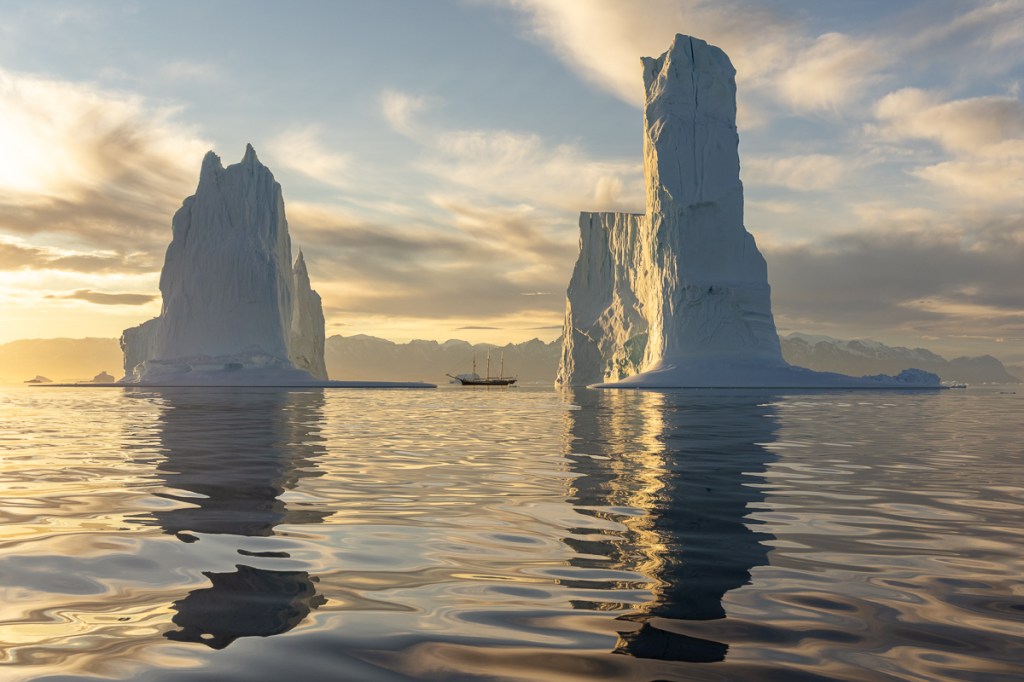
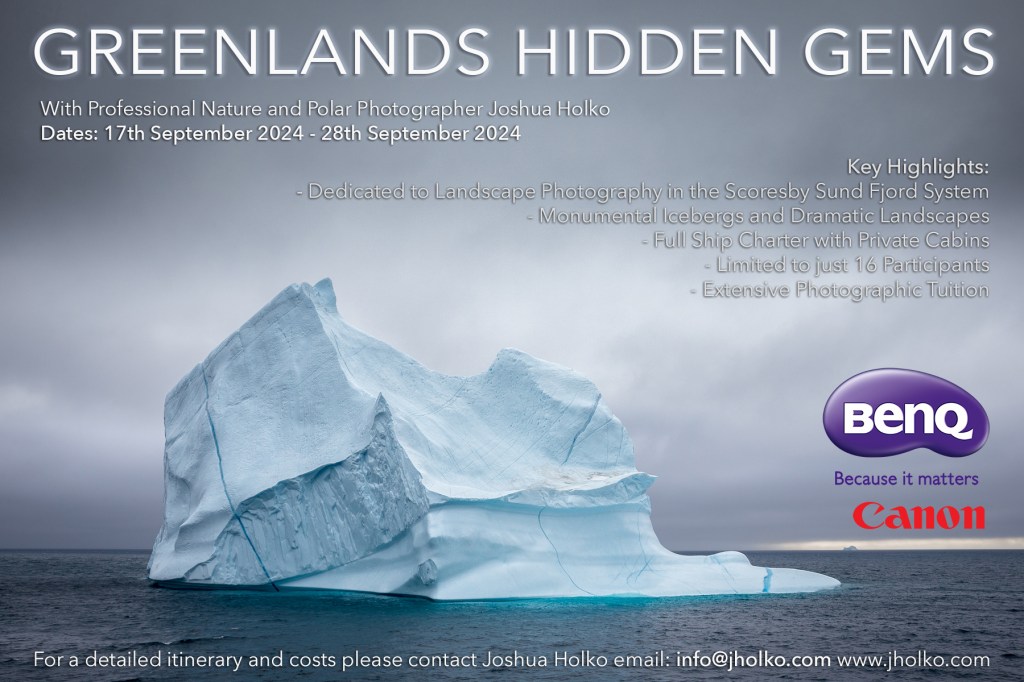
In September of 2024, I ran my semi-annual Polar landscape expedition to Scoresby Sund (the world’s most extensive fjord system) in Eastern Greenland. This has been an expedition I have been organising, leading and guiding for more than a decade now and is one I always eagerly look forward to. Scoresby Sund is not only the most extensive fjord system in the world but also the most extraordinary. Monolithic icebergs drift like silent sentinels on gentle ocean currents set against a backdrop of precipitous glacial scarred mountains, making for surreal, otherworldly imagery. It is a breathtaking arena of icebergs unmatched anywhere on earth.

This expedition was a fly-in, fly-out trip that saw us fly by private charter plane from Keflavik in Iceland to Constable Point in Greenland. Although flights into eastern Greenland can often be delayed by weather, flying across the Denmark strait takes less than two hours and saves the better part of three days sailing in either direction across a notoriously rough stretch of water. Having sailed these waters multiple times, I much prefer to fly and spend the extra time cruising the calm waters of the fjord system. This year, we were blessed with good weather for flying, and our outgoing and incoming flights were on time.

On arrival at Constable Point, we had a quick briefing before embarking on our expedition vessel, the Rembrandt Van Rijn. Although the Rembrandt is a comfortable schooner and can take a maximum of 32 passengers, I always prefer to take just 16 and provide private cabins for everyone – this also offers more space on the decks for photography. With a group size of 16, it is also possible for all participants to utilise zodiacs simultaneously. After the mandatory safety briefings, we were quickly underway and made our way across the channel in calm seas to Vikinbukt.

In Vikinbukt, we had our first glacier sighting, several stunning blue icebergs, and six Polar Bears. Most of the bears were high up on the moraine slopes, where they seemed to feel safe to rest when not active and while they waited for the sea to freeze to resume hunting on the ice. During the expedition, as the sun set, I decided to put zodiacs in the water to achieve a sense of scale with the enormous icebergs juxtaposed against our expedition ship. These sorts of opportunities are only possible on dedicated photographic expeditions such as this and make all the difference to the final portfolio of photographs one takes away from an expedition such as this.

During the expedition, we had some extraordinary sunrises and sunsets with beautiful, soft, pastel light painting the sky and icebergs. The weather is always a mixed bag in Greenland. Frequent dramatic lenticular clouds perfectly complement the mountain peaks and stunning icebergs. We were extremely fortunate to have outstanding conditions for the duration of our expedition, with snow falling only on our very last day. We also had northern lights on multiple nights. This time of year, the Arctic tundra was also at its peak colour. Having now completed more than three dozen expeditions to Eastern Greenland, I have learned that by far, the best time to visit is September when the sun is low in the sky and there are proper sunrises and sunsets. Expeditions earlier in the season are typically lit by 24-hour daylight and blue sky days, making photographing problematic. By travelling in the late Autumn of September, we ensured stunning Arctic tundra and soft pastel light.

We had multiple photographic encounters with Musk Oxen during the expedition. On our landing at Ingmikertikajik island, we encountered a lone Musk Oxen that posed for us on the edge of a rocky prow. I always prefer to photograph Musk Oxen when silhouetted against the sky as they blend into their surroundings when photographed against the Arctic Tundra. This young male provided us with some beautiful opportunities.

Below is a map of the trip voyage and the locations we visited during the expedition. The astute and experienced Greenland travellers will note that we did not visit Rhode Island (the Red Island). Recent changes to restrictions in this area mean it is unfortunately no longer possible to visit this location (a restriction designed to avoid disturbing local Narhwales – which are still hunted and slaughtered by the local Inuit). Those of you who may have visited it in the past can rest comfortably knowing that you visited one of the most incredible iceberg graveyards on earth. For those of you who have never been there, there is always hope that restrictions will lift in the future. For this expedition we sailed around the back of Milne land, visiting the other side of the iceberg graveyard. We also encountered our first sea ice in this area in combination with some beautiful light.

Towards the end of our expedition, we made the short sail back to Constable Point, where we disembarked the Rembrandt and flew by private charter plane back to Iceland. After the short hour-and-a-half flight, we bid farewell and concluded our expedition.

Wild Nature Photo Travel will return to Greenland again in October of 2026 to lead a small group expedition to Southeastern Greenland. The landscape and geology of the East Coast of Greenland are both stunning and extraordinary. Our main objective is to photograph this incredible landscape under soft golden Arctic light. We will also see and photograph incredible castellated icebergs that have calved off the many glaciers of Greenland. Dramatic glaciers, plunging cliffs and beautiful drift ice formations will also be present. We intend to fly from Iceland to the remote East Coast of Greenland, where we will be based for the duration of this expedition. We will make day trips on our expedition boat and spend our time exploring and photographing some of the world’s largest and most spectacular icebergs. If you are excited about travelling to the remote East Coast of Greenland with a small group of dedicated photographers, now is the time to register your place by dropping us an email. Places are very limited, and once they are spoken for, that’s it.

Arctic Fox in Winter in Iceland Expedition Report 2024

In early February 2024, I led my annual winter expedition to the remote Hornstrandir Nature Reserve in northwestern Iceland to photograph the Arctic Fox. This is an expedition I have been leading every year for many years now (excluding the COVID pandemic) and is one very near and dear to my heart. Over a decade ago, I visited this remote Nature Reserve to find and photograph the Arctic Fox. Now, more than ten years later, and having guided many groups to this location, this is one of my number one preferred workshops to lead.

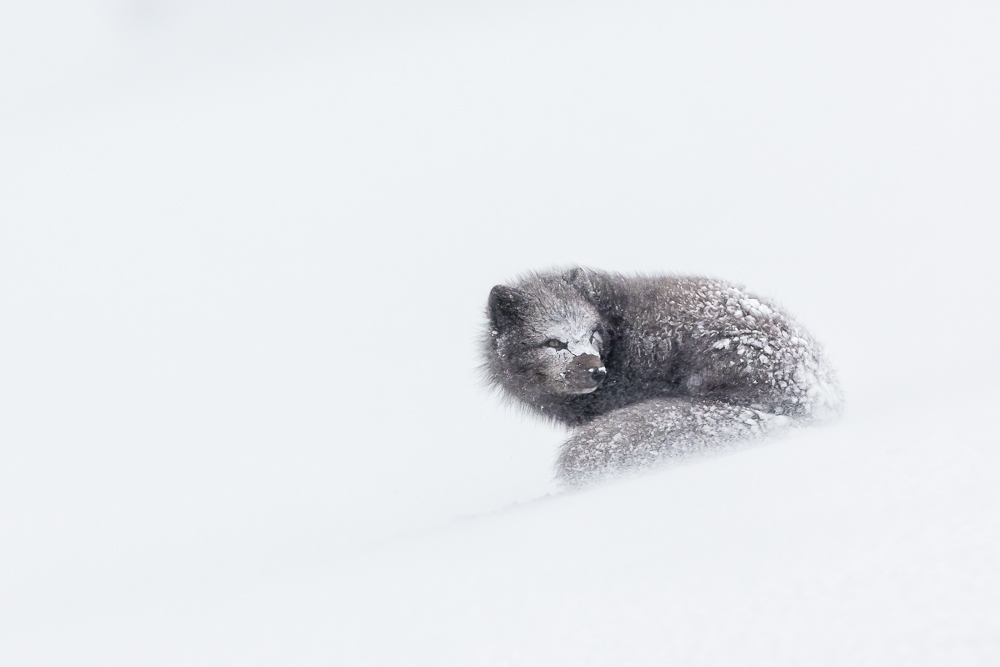
As I have written frequently, the Arctic fox is Nature’s most remarkable feat of engineering and is an incredibly photogenic subject in the snow-covered Iceland landscape. In the far north of Iceland, the Arctic fox is protected inside the Nature reserve, and it is possible to get extremely close to these wild animals. The north of Iceland is probably the best place in the world to photograph the Blue Morph variety of the Arctic Fox. While the white morph dominates most of the Arctic, the Blue Morph is more common only in Iceland. In Winter, the chocolate brown coat of the blu-morph makes for a stunning contrast against the winter snow.

For this expedition, our group convened in Isafjord in the northwest of Iceland early in the morning on our scheduled departure day. We then took the roughly one-hour boat ride (on our chartered boat) across the fjord on calm seas to our remote cabin—our warm and cozy home for our week-long workshop.

This year, we had five individual foxes around the cabin. Two of the five were two-year-old cubs we only saw on our last day. I have been photographing several of these foxes, including the dominant female and male for years, and we are very much old friends. Seeing at least two first-year cubs active in the area was also fantastic. There was no successful breeding last year, so it is excellent that the two-year-old cubs from the prior year are doing well.

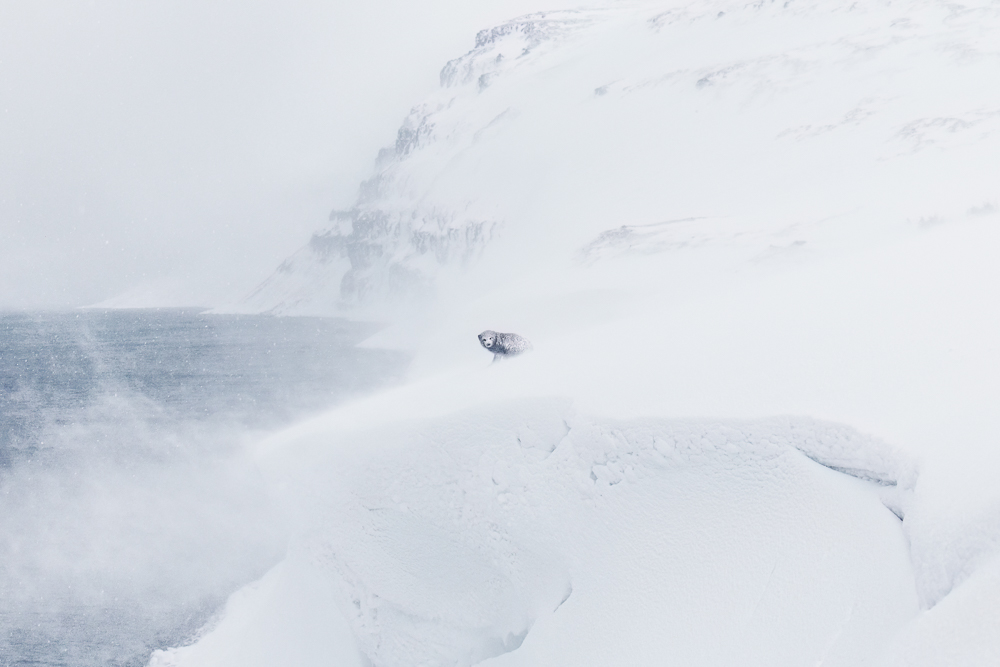
Winter in Iceland can be particularly fickle, and one never knows what the weather will bring. It is possible to have everything from sunshine to blizzards to driving rain. This year, we began our workshop with fantastic snow conditions that saw us photographing for many hours across our days in the field. We were straight into the photography on day one on arrival. Bags were unpacked, camera gear assembled, and we were straight into photographing Arctic Foxes. The foxes are typically most active in the early morning and late afternoon, which at this time of year meant we were out shooting from about 9:30am until roughly 4:30pm. The winter light is short this time of year in Iceland, but the sun’s low angle makes for superb photography throughout the day.

Over the next few days, we experienced various conditions that perfectly summarised Iceland’s freeze/thaw climate. Conditions for our workshop this year were absolutely superb, with ideal conditions for capturing the drama of Iceland’s winter weather. We had everything from breaking sun to blizzard conditions, providing an excellent opportunity to create a diverse portfolio of images during the workshop.

This year, we had some wonderful snow cornices and deep snow drifts that provided outstanding opportunities to capture dramatic images of the fox in the landscape. It was possible to make photographs with everything from 16-35mm all the way to 600mm,

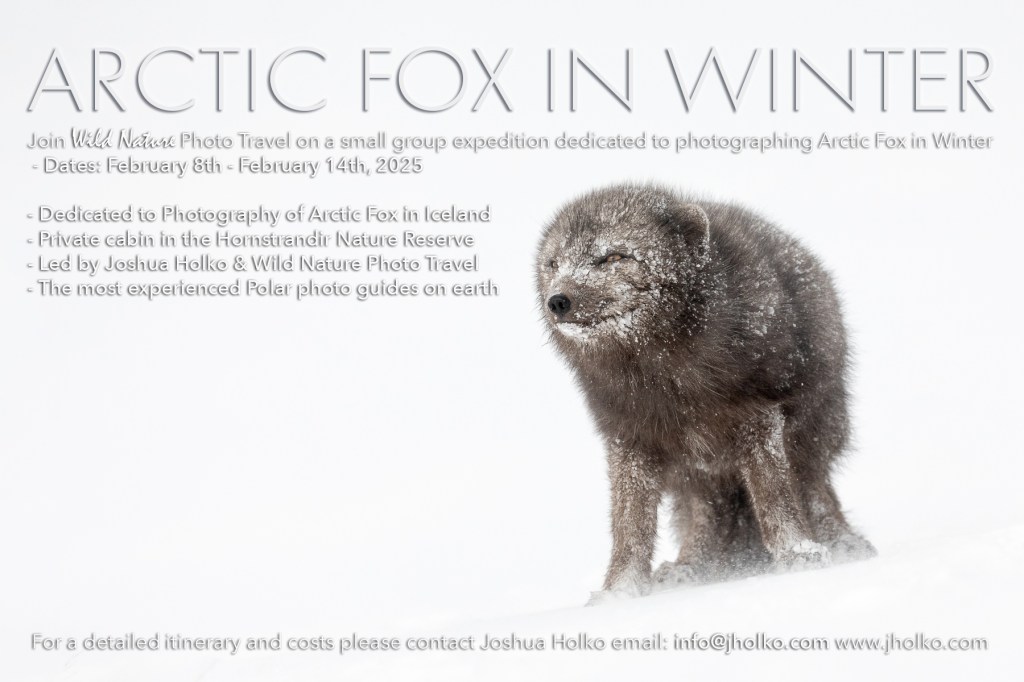
I will return to the far north of Iceland in the Winter of 2025 to lead another workshop for the Arctic Fox and then again in 2026. There are now just a couple of places remaining on my 2025 expedition. If you have ever wanted to photograph Nature’s most remarkable survivor in Winter, this is your opportunity. Our remote cabin is ideally situated as a cozy home away from home and provides a beautiful base from which to photograph the Arctic Fox. Places are minimal; please contact me for complete details.

Iceberg in Antarctica

Those who appreciate wildlife photography and would like to own some of the photographs from these expeditions can order my book on the Arctic Fox from my online publishing house – Melrakki Publishing.

Departing for Greenland in Winter Expedition 2024 Offline Update

Early tomorrow morning (the 10th of March, 2024), I am leaving for Iceland and Greenland for my dog-sled expedition to photograph Polar bears, Iceberg landscapes and other wildlife in the Arctic Winter. Please note that I will be offline in Greenland from the 12th of March until the 22nd of March. If you are trying to contact me during this time, please be patient, and I will get back to you upon my return. The 2024 and 2025 winter expeditions via dogsled in Greenland have long been sold out, but I will soon announce dates for 2026. These expeditions are for those looking to get out of their comfort zone and have the opportunity to capture dramatic, powerful and evocative photographs of Arctic wildlife in winter on the frozen sea ice.

Just a couple of places remain on my Greenland East Coast Scoresby Sund expedition in September of this year for those looking for a less exposed, more comfortable adventure. This expedition is for photographers looking to photograph and capture evocative and dramatic photographs of Greenland’s incredible icebergs and landscapes from the ease and comfort of a warm ship. We will have the comfort and luxury of flying across the Denmark Strait from Iceland to Greenland in both directions. This will save us both time and a potentially uncomfortable crossing should the weather not cooperate in the open ocean between Greenland and Iceland. You can get an idea of what to expect on this expedition by checking out the 2023 Trip Report HERE or by visiting the Greenland portfolio on my website. If you have ever wanted to photograph the best icebergs on the planet in the best possible conditions and light – this is the expedition for you. Drop me a note for more information or to register your place.

Departing for Iceland Winter Arctic Fox Expedition 2024

Please note that I will be offline for the next eight days (from tomorrow) while guiding my annual expedition to the far north of Iceland to photograph Arctic Fox in Winter. The expedition to the Hornstraidir Nature Reserve to photograph Arctic Fox is near and dear to my heart, and this year, it looks like we will have some fantastic snow conditions. I am really excited to get back up to this remote part of Iceland to find and photograph this tenacious predator. The area we are located for this expedition is quite far from the nearest town, without cell or internet coverage. If you are trying to contact me during this time, please be patient and I will get back to you on my return.

If you are interested in photographing the Arctic Fox, I now have dates available for the 2025 expedition, which will run from the 8th of February until the 14th of February 2025. The trip is eight days / seven nights and is fully inclusive of accommodation, food and transfers to and from Isfjordur to our remote cabin. On this trip, you can expect to have a great many fantastic photographic encounters with the Arctic Foxes that inhabit this remote peninsula. Full details are available on my website HERE. You can also check out the Adobe Spark Presentation. See you in Iceland.