
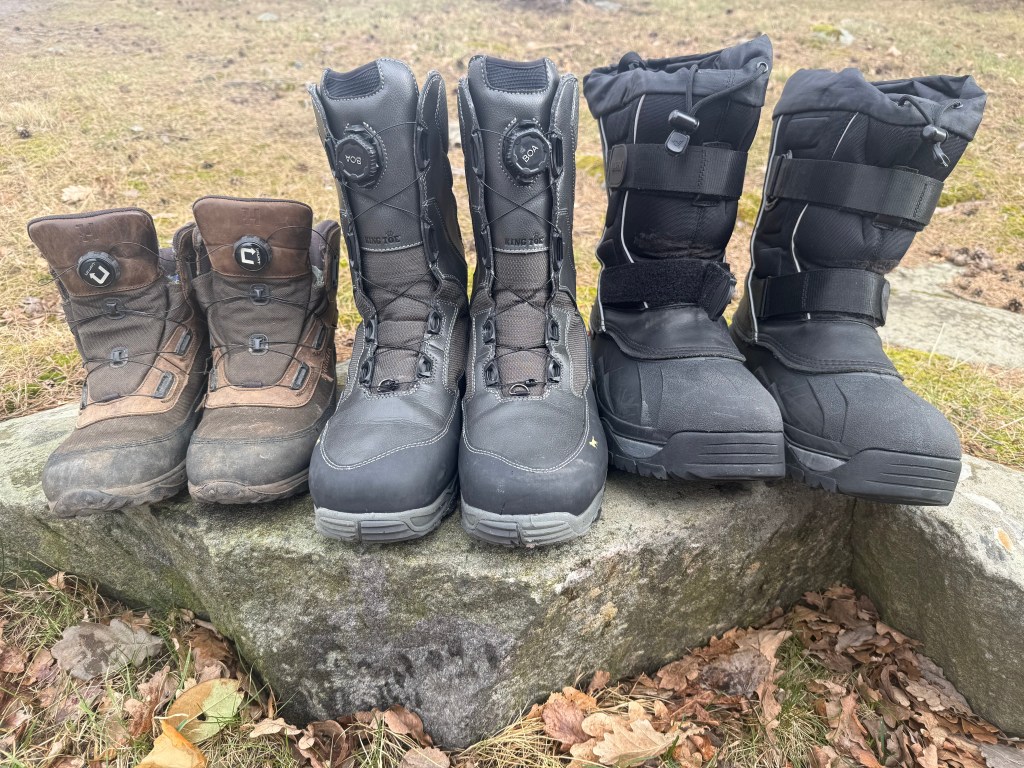
Introduction: There is no such thing as the perfect cold-weather boot for photography, as much depends on your needs and the prevailing temperature and conditions you are working in. Likewise, there is no perfect camera bag and no perfect cold-weather gloves. Such things simply do not exist, as different temperatures, shoots, and conditions (and personal tolerances) necessitate different boots, bags, and gloves for optimal performance and comfort. This article (the first of several – Gloves and Bags to come) includes the boots I have found that offer the best performance for a given temperature and condition range based on my experience shooting and working in cold weather climates over the last 25+ years. There are many more boots I have tried over the years that I have ultimately been dissatisfied with. The following represents the best I have tried in cold environments, where I photograph most of the time. You can also listen to Podcast 144, which has a deep dive on this topic.
Transparency: For the sake of transparency, you will not find affiliate links here. The internet is awash with websites that tell you, ‘we have reviewed X products, and these are the best‘. Such websites and reviews are nothing more than thinly veiled attempts to advertise products and make money through affiliate links. I have no interest in selling boots, bags, or gloves under the table to make extra money. What you will find here are my straightforward recommendations based on my experience – nothing more.
How We Experience Cold: It is important to note that we all experience cold differently. For me personally, my feet are the most important part of my body to keep warm. When I get cold feet, my entire body gets cold, and that’s a very uncomfortable experience. Your tolerance for the cold may very well be different to mine, and you should keep that in mind when making any buying decision. Another important point is that Nature photographers (I include landscape and wildlife in that genre) are typically not all that active in the field. We may hike to a location that requires some degree of activewear, but we often spend a long time waiting outdoors for wildlife or the right light. Thus, the choice of footwear is critical to our comfort level in the field. Many products from active-wear companies are simply inappropriate, in my experience, for cold-weather photography because they do not account for the significant time photographers spend inactive and just sitting or standing around in the field.
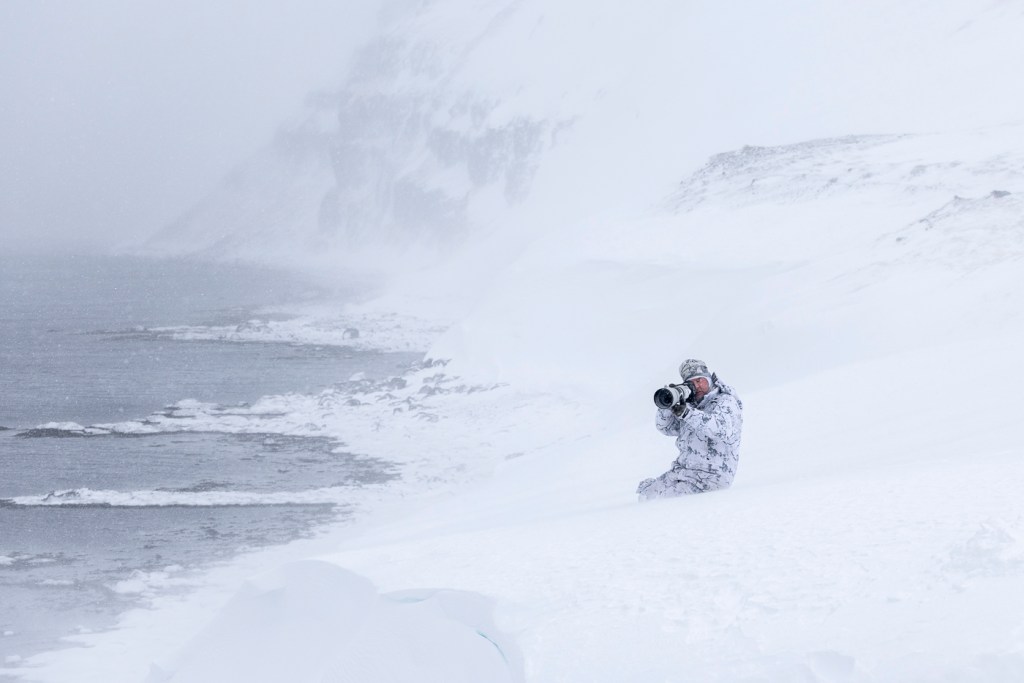
Battery Heaters: All of the boots below can, of course, be paired with battery-heated socks or insoles to extend their temperature range. Personally, I find battery-heated socks and insoles a real nuisance. The batteries rarely last a full day of fieldwork and require daily charging (I have tried a few different brands over the years). Battery-heated socks and insoles that are ‘app-controlled’ or ‘remote-controlled’ are even more of a nuisance in the field. Have you ever tried to get your phone out of your jacket in -25ºC during a blizzard, remove your gloves, open an app and to try to turn up your socks or insoles? Clearly, the designers of these products have not. Likewise, reviews that espouse the virtues of heated socks and insoles rarely actually review them in any sort of real-world situation where you are likely to actually want or need them. Wearing them around the house to review them like most YouTube reviews? A total joke. At this point, I feel I just don’t need or want anything else in my life that requires daily charging or requires me to open an app to make an adjustment. Chemical toe warmers are a far easier (and cheaper) option if you want to extend the temperature range of any of these boots. You can purchase either a full chemical sole warmer or just a toe warmer and they reliably last 8-10 hours provided they have not passed their used by date.
My Cold Weather Experience: Over the last 25+ years, I have tried nearly as many boots for cold-weather photography as I have gloves and camera bags. It has been a never-ending search for the right product that fits the genre of Polar photography I love so dearly. With more than 100 expeditions to the Arctic and Antarctic under my belt, these are my top four boots, based on my own experience with cold-weather photography.
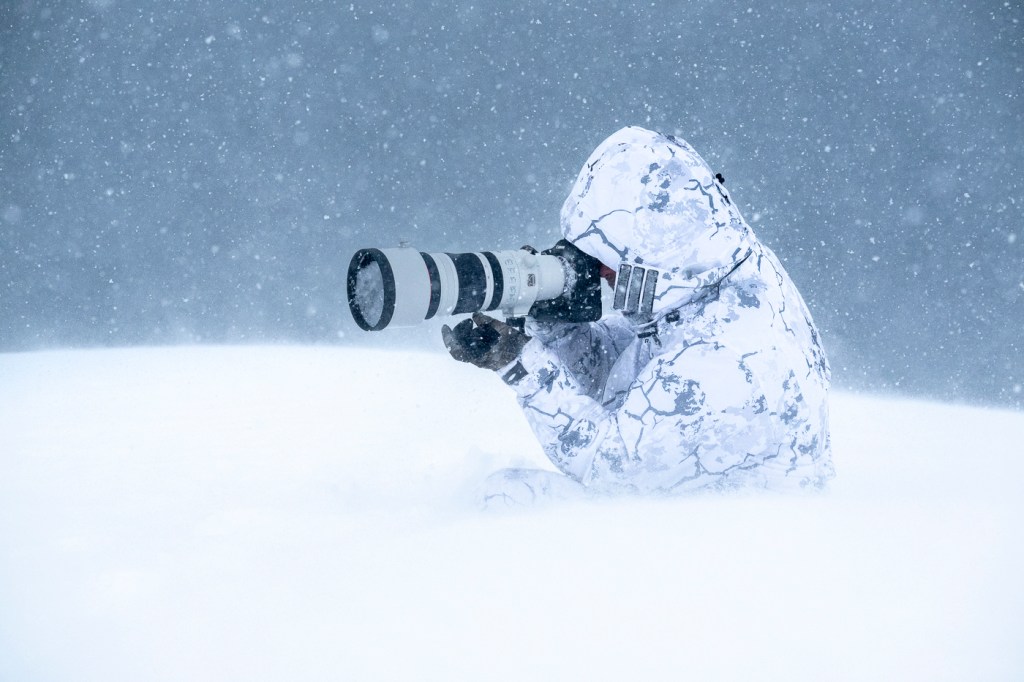
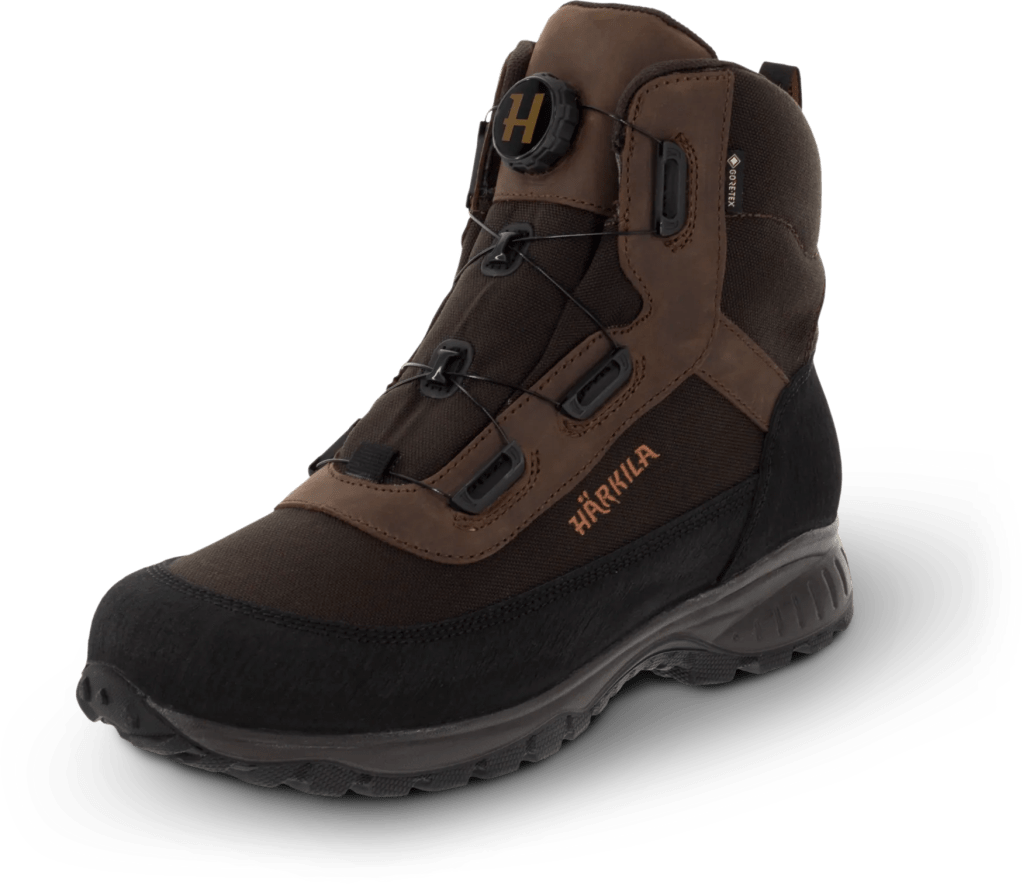
Temperatures from +20° Celsius to 0° Celsius – Härkila ATAAMIK GTX Boots
Most hiking boots on the market today fall into this temperature category. It is therefore the most contested for ‘best boot’ and the category in which most people will buy boots. After years of trying different boots from many manufacturers, I have found that the Härkila ATAAMIK GTX boots are my go-to hiking boots for any sort of photography where temperatures may vary from +20º Celsius to 0º Celsius. I use them daily in Sweden when I am walking through the forest, and I have probably walked and hiked more than 500km in my current pair, and they are still going strong. They are dam near indestructible, extremely comfortable and pretty much waterproof. I have walked through ankle-deep water with them on many occasions, and my socks and feet have never gotten wet. They also offer excellent ankle support. My feet feel warm and protected inside these boots down to temperatures at or just below 0º Celsius. They have a super easy twist wire-lacing system, which means they are quick and easy to put on and take off. I have used these boots in Iceland, Mongolia, Sweden, Africa, Australia, Chile, Argentina and Finland and have no hesitation in recommending them to anyone looking for a warm hiking boot for photography.
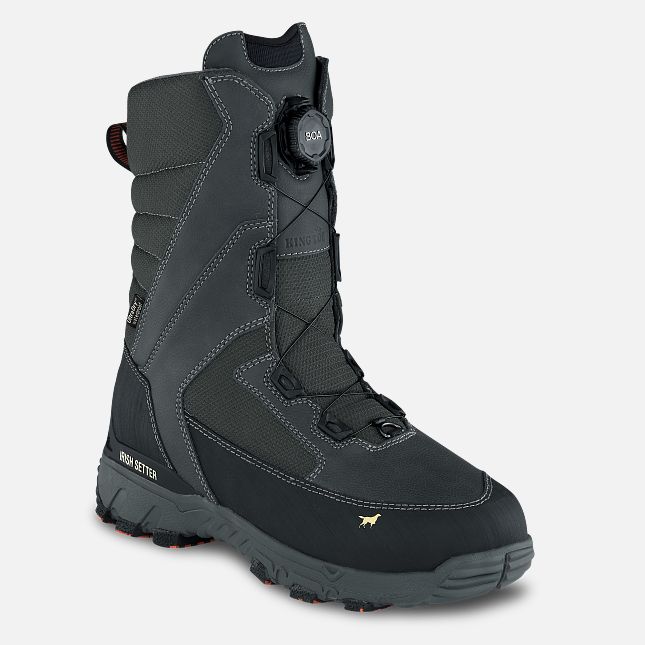
Temperatures from 0° Celsius to -25° Celsius – Irish Setter IceTrek Boots
When temperatures drop below 0º Celsius, the Irish Setter IceTrek are my boot of choice. These boots are incredibly warm and durable, offering outstanding ankle support and an uncanny ability to keep snow out when the going gets deep. They are a taller boot than the Härkilas that comes well up the leg, which helps keep out water and snow. I like to wear my base wool-layer pants with wool socks tucked into my boots, then my outer layers on top. Like the Härkilas, these boots use a wire-lace system, so they are extremely quick to take on and off. The boots are marketed and sold as waterproof and, in my experience to date, are exactly that. I have used these boots getting on and off zodiacs in Iceland in Winter and never got wet socks or feet. I have also used these boots in temperatures as low as -38 °C in Winter in western Mongolia while hiking for Snow Leopards. In these extreme temperatures, I did get cold toes when standing around for long periods, so I recommend these boots for temperatures down to -25º Celsius. These boots are built with 1600 grams of Primaloft insulation, so they are suitable for temperatures much colder than the Härkilas. At -25º Celsius, I have no hesitation in recommending these boots for standing around in a non-active state, and if you are active, you can take them into even colder temperatures. I find my feet don’t sweat much in these boots, but I still remove the insoles at the end of the day as a precaution to dry out any residual moisture from sweating. I have used these boots in Winter in Iceland, Mongolia, Sweden, Svalbard, Greenland and Finland and have no hesitation in recommending them to anyone looking for a warm boot suitable for photography in temperatures down to -25º Celsius (and below if you are active). I like them so much, I will often pair them with chemical toe warmers for use below -25º Celsius.
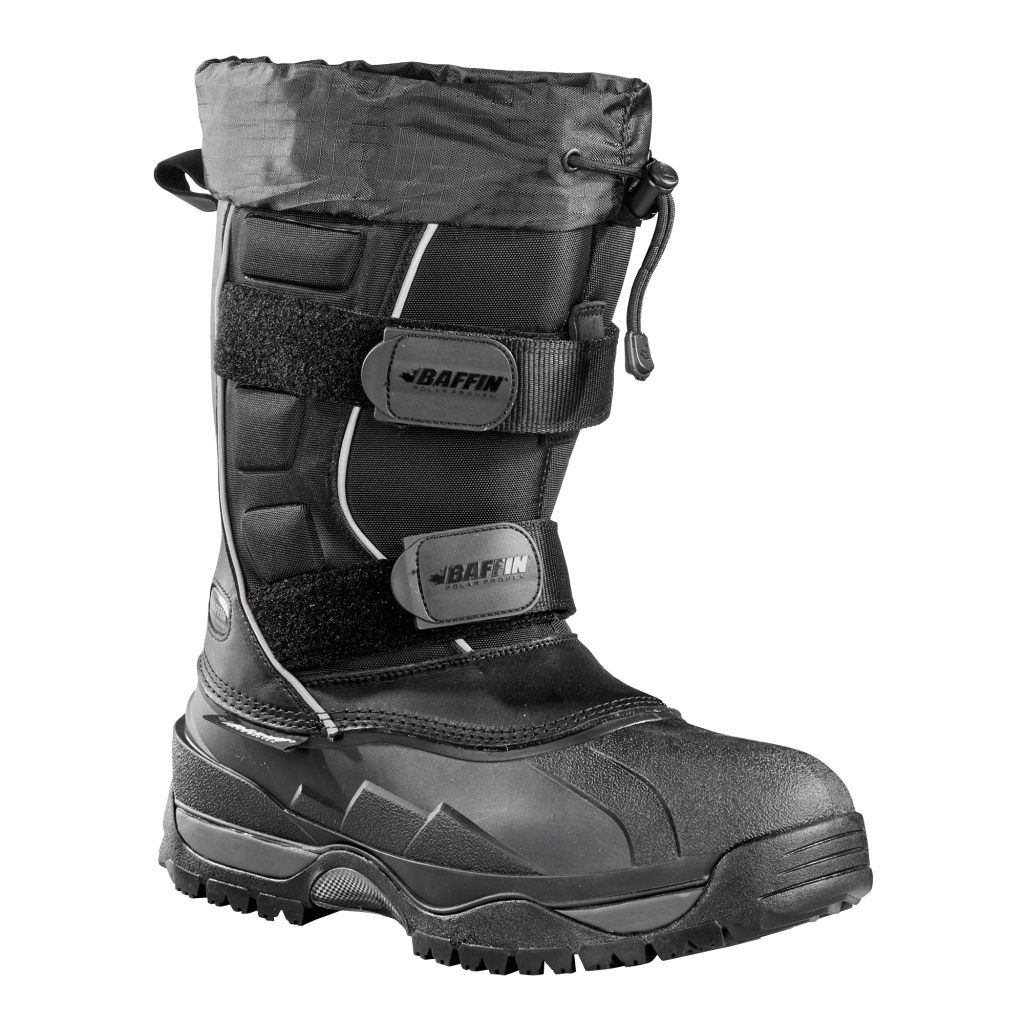
Temperatures below -25º Celsius – Baffin Eiger Boots
When temperatures really plummet, I reach for the Baffin Eiger boots. These boots are suitable for extreme cold, including temperatures below -25º Celsius, and I have personally used them in temperatures as low as -52º Celsius on Ellesmere Island in Winter. At temperatures above -25º Celsius, my feet just sweat in these boots to the point that I end up with wet socks, so I only reach for them when it gets really cold outside. I tend to sweat through my feet, so I always need to remove the inner liner at the end of every day and dry them thoroughly. Failure to do so always results in frozen toes the next day, as residual moisture freezes, ensuring a cold and uncomfortable experience. The Baffin Eiger boots are not waterproof (though the soles are) and are not suitable for getting on and off zodiacs. But then, in the sort of temperatures you are likely to be wearing these boots, you are unlikely to encounter running water. The marketing material on Baffin’s website says these boots are tested down to -60º C. Whilst I have never experienced a temperature this low, I can tell you that at -52º Celsius on Ellesmere Island in winter, I needed a chemical toe warmer inside these boots to keep my toes from getting cold. The Eigars are quick and easy to put on and take off thanks to the velcro straps, but they do not offer very good ankle support (especially compared to the Härkilas and Irish Setters). I have weak ankles and a tendency to roll them if I am not careful, so I always tread a little more cautiously in these boots than in the other two. They are also not as effective at keeping out snow in deep conditions as the Irish Setter IceTrek boots (despite the inbuilt snow gaiter), but they are warm. It can also be difficult to pull your outer-layer pants over the top of these boots because they are so wide at the opening. I have used these boots in Winter in Iceland, Mongolia, Greenland, Svalbard, Finland and Canada (Ellesmere Island in -52ºC) and have no hesitation in recommending them to anyone looking for a warm boot for photography in the most extreme cold weather.
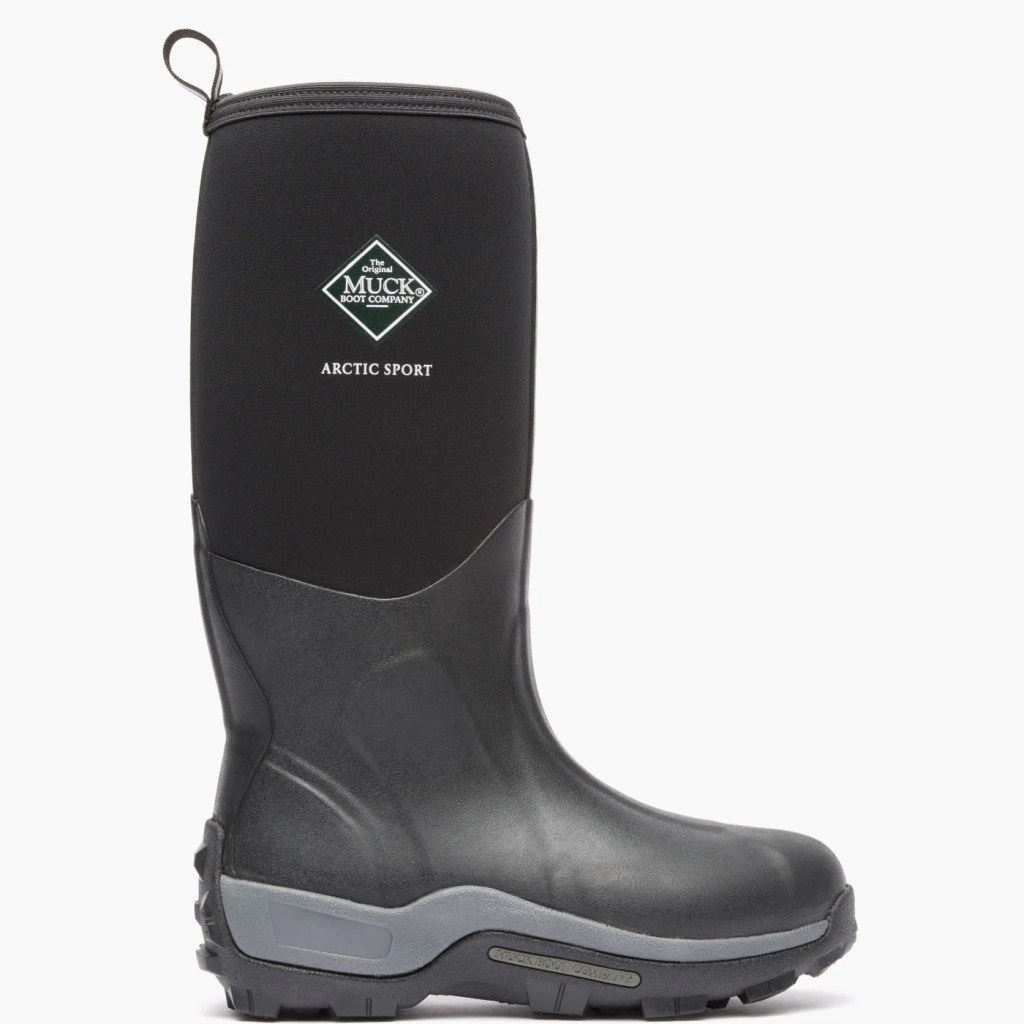
Special Mention Wet Weather Boots – Arctic Sport Muck Boots
If I know I am going to be working in extremely wet weather, walking through a lot of water, or getting on and off zodiacs frequently, then my boot of choice is the Arctic Sport Muck Boot. These boots are waterproof right up to the very top and are warm in temperatures down to about -10º Celsius. Muck Boots do not specify a temperature range for these boots, but in my experience, they are warm above -10ºC. I do tend to sweat in them quite significantly, so I have to be careful to dry them at the end of the day. These boots are not as easy to take on and off as the others, but what you lose in time spent doing so, you gain in waterproofing. They offer reasonable ankle support (better than the Baffins, but not as good as the Härkilas or Irish Setters). They can be a bit tight around the calves, and if you have larger lower legs you may want to opt for the ‘wide version’. These are an ideal boot for a summer expedition to Antarctica, where temperatures will hover around 0º Celsius, but you will be stepping in and out of water a lot with shore landings. They are also ideal for photographers working in boggy, wet environments or in the Arctic in Summer, especially if you are working in and around water. The only shortcoming I have experienced is that they tend to develop leaks around the seals after heavy use and thus need replacing from time to time (I have been through about half a dozen pairs over the years). They are exceptionally easy to keep clean, however, requiring nothing more than a hosing off and little to no maintenance.
Boot Considerations: When assessing the suitability of a boot for my type of photography, I consider comfort and warmth for the intended purpose, ease of getting on and off, and long-term durability amongst the most important factors. The ability to withstand water (depending on the intended use) and to keep out snow also plays a major role in my decision-making. Lastly, manufacturer support also plays a role in addressing potential issues. I do not consider price when assessing the qualities of boots for cold-weather photography since it’s folly to try to save a few bucks at the expense of cold toes.
Conclusion: Ultimately, the choice of boot is a personal one based on your needs, preferences, and tolerances for the environment in which you work. There are many more boots on the market that I have not used or tested, and they may or may not deliver great results, depending on your personal needs. There are other boots I have tested that I feel fail to live up to their claims, so I won’t name, review or recommend them. The above are products I will stand behind as offering superb performance in their temperature range for cold-weather photography. If you are interested, I dive deeper into this topic and discuss each of these boots in more detail in Episode 144 of my Wild Nature Photography Podcast.
Author: Joshua Holko
 www.WILDNATUREPHOTOTRAVEL.com