As has become tradition on my blog, I like to do a “What’s in Store” post for the coming year as well as reflect back, and wrap up the year that was. In equipment or ‘gear’ terms 2016 saw the introduction of the much anticipated Canon EOS 1DX MKII camera and the Canon EOS 5D MK4. Two of the Canon EOS 1DX MKII cameras have a permanent home in my camera equipment and have been my weapon of choice since I picked them up earlier in the year (there is actually a fair chance I will add a third for my new Nauticam underwater housing). I haven’t bothered with the 5D MK4 (although I do own a 5DSR); quite honestly, the Canon EOS 1DX MKII is the best DSLR camera I have ever used regardless of price, brand or model. Although I prefer the Canon EOS 1DX MKII camera for the majority of my photography, there is no denying the huge resolution advantage of the 5DS/R when making giant prints. Outside of sheer resolution though I prefer the ergonomics of the 1-series 1DX MKII and overall I prefer the files from this camera as well.
Despite my initial misgivings that the 11-24mm might be too specialised and too wide for most applications it has proved a superb optic and a regular tool I have utilised throughout the 2016 year. Back in 2015 I ditched gimbal heads for long lens work and moved to a Sachtler FSB-6 Fluid head. Last year I wrote that this move represented what was probably the best equipment investment I made in 2015 in terms of improving my photography and ratio of keepers. Now, more than a year on I can say with complete certainty that I would not go back to a gimbal head.
My best investment for 2016 quite honestly has to be the Canon EOS 1DX MKII. I know some photographers felt this camera was only an incremental upgrade on the already superb Canon EOS 1DX; however, after shooting with both extensively I can assure you that the upgrade is overall very significant in my experience. I also recently invested in a Nauticam underwater housing for the Canon EOS 1DX MKII as well as a large glass dome port for the 11-24mm F4L lens. I am looking forward to using this new tool over the coming year. My sincere thanks to Peter at Scuba Pix for all his assistance in choosing and specifying the housing options. My gear pick of the year for 2016 is split this year between the outstanding Canon EOS 1DX MKII and the brand new BenQ 4K Sw320 32″ UHD monitor (look for the full review in coming weeks). This brand new (not yet released to the public) 4K display offers stellar performance and resolution at a price point previously unheard of for a monitor of this resolution. I expect this new wide gamut monitor to be a game changer for a great many photographers when it goes on sale early next year.
2017 should be a very interesting year in equipment terms. I expect to see several new L series lenses from Canon. As always, the jury is still out on what lenses Canon will actually deliver. We just have to wait and see as Canon don’t publish a road map and outside of certain specific models I have no more idea than anyone else. Rumours still persist of a new 600mm F4 DO lens (a patent has been filed by Canon and they have shown a prototype) and there has also been a patent lodged for a 400mm F2.8L IS Lens with inbuilt 1.4 and 1.7 Teleconverters (Canon please make this lens!). Such a lens would be quite specialised and very expensive, but would be a one stop solution for wildlife photographers who wanted a fast, no compromise all in one telephoto lens with an extraordinary focal range. A 400mm F2.8L IS Lens with 1.4 and 1.7 teleconverters would yield focal lengths of 400mm, 560mm and 680mm all in one fast telephoto lens. Quite honestly, if Canon decide to make this lens I would sell my 200-400mm F4L IS and 600mm F4L IS MKII lenses on the spot.
Last year I gave my book pick of the year to the very deserving Arctique by Vincent Munier (Read the Review). Arctique was an absolutely superb presentation that deserved a place in any photographic library. If you don’t yet own a copy you should pick one up immediately. This year I am giving the nod again to Vincent Munier for his new book Adelie. I have not as yet had time to review this book, but I have been enjoying it for the last few weeks and it is in my opinion one of the best books I have seen on Antarctica. I hope to review it over the coming months. See my previous comment about owning a copy.
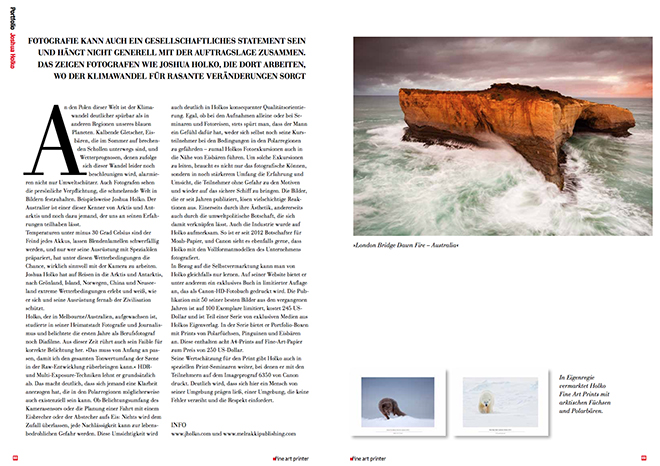
2016 also marked the year I published my own first book, Melrakki. The culmination of three years of winter photography in the extreme north-west of Iceland, Melrakki is available now exclusively as a Limited Edition hard bound fine-art book. Limited to just 100 copies (only a few remaining), each edition is hand numbered and signed and includes an original 11″ x 09″ inch fine-art pigment on paper print. Copies can be ordered online HERE.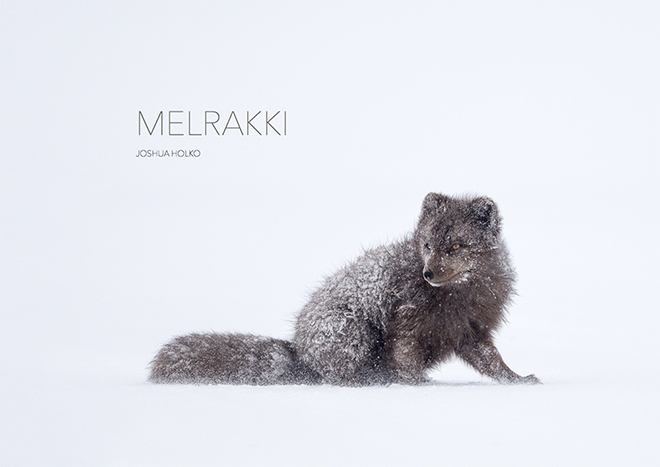 In 2016 I was extremely honoured to be asked to join the Penguin World Project as a project photographer and to continue to work with Kerry and the Arctic Arts Project. Both of these groups are actively working toward significant conservation issues in both the Arctic and Antarctic (and the world’s oceans). It is my hope to tie in Penguin World with a future exhibition of Polar Photography here in Australia. I also hope to join the Arctic Arts team for a winter Greenland scouting trip next year (if time permits).
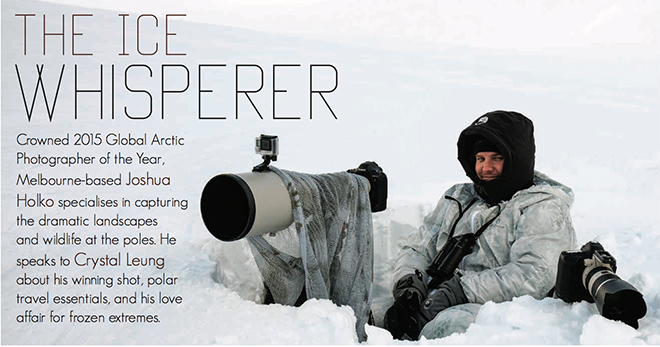
Over the course of this year I also published my own favourite twelve photographs here on my blog. Please be sure to check them out and let me know what you thought. I don’t usually have an overall favourite from a given year, although I definitely have a soft spot for the photographs I made recently at the Emperor Penguins at Gould Bay in Antarctica (Read the trip Report). Be sure to check out the full portfolio of images at my website www.jholko.com In competition terms, 2016 was a brilliant year for me with an overall win as the Global Arctic Photographer of the Year. In total I was fortunate to take out five medals across the different categories including Gold, Silver and the FLAP Special award in two categories as well as the overall Grand Prize of Global Arctic Photographer of the Year. As an added bonus, I was also the first photographer outside of Norway to win this award. In 2017 I will be Special Guest Judge for the Global Arctic Photographer of the Year competition and as a result will not be entering the competition. This year I also had concurrent finalist positions in the 2016 Canon APPA Professional Science, Wildlife and Wild Places Photographer of the Year as well as finalist in the Epson 2016 Professional Science, Wildlife and Wild Places Photographer of the Year and Epson 2016 Professional Documentary Photographer of the Year. I was also a finalist in the 2016 Outdoor Photographer of the Year and 2016 Travel Photographer of the Year competitions as well being short listed in BBC Wildlife Photographer of the Year. Lastly, I was also highly honoured in Natures Best Photography 2016 Polar Passion Category for one of my Polar Bear photographs below. Overall, it was a great year and I am thrilled with the results.
  2016 was also the biggest year yet for me both with destinations visited and sheer number of international miles travelled. 2016 also marked my first visit to the Lofoten Islands in Norway; a location I am very much looking forward to returning to in 2018 (details to be released soon). I have no idea how many actual miles I covered in 2016 in total, how many aeroplanes I boarded, how many times I went through airport security or how many tens of hours I spent waiting around in airports for connecting flights, but it was an awful lot. 2017 is shaping up to be an equally hectic year and I am trying to work through as much office work as possible in the next two weeks before I board the next plane in mid January.
2016 kicked off in early February with a brand new expedition to the Weddell Sea in Antarctica (Read the Trip Report). The Weddell sea side of Antarctica is far less visited than the western side of the peninsula and offers a very different experience to the standard peninsula visit. Home to giant tabular icebergs and large colonies of Adelie penguins the Weddell Sea is usually inaccessible before February due to sea ice conditions. Quite honestly, February is not my favourite time of the year to visit Antarctica as there is far less snow and ice than earlier in the season. However, we had some superb conditions and magical light for iceberg photography during our time in the Weddell Sea as well as some really fabulous landings. We were also very fortunate to encounter some wonderful tabular icebergs. After Antarctica I returned to the extreme northwest of Iceland and finished the work on my Arctic Fox Project. This personal project spanned three years of winter photography in Iceland and was published as the Limited Edition book Melrakki late in 2016. Next year I will again be returning to the northwest tip of Iceland in Winter, but this time to lead an expedition with a small group of photographers keen to experience and photograph the Arctic fox in its winter habitat. More on this below.In March Daniel Bergmann and I ran our annual Winter Iceland workshop ‘The Frozen North’ (Read the Trip Report) that included destinations in both the north and south of the Island. Iceland in winter is an incredible experience and this workshop provided us with wonderful opportunities in a snow covered landscape. During our winter trip we had a small window of opportunity for Aurora Borealis (northern lights) whilst we were at Jökulsarlon glacial lagoon and again in the north near Myvatn. Our opportunity at Jökulsarlon was somewhat anticlimactic due to heavy cloud cover that obscured the best display. Our chance was better in the north with a faint display during mostly clear skies. If you haven’t photographed the Aurora before it can be an incredibly exciting experience. The camera sees and captures a great deal more colour than the naked eye – so even a faint display can yield some very impressive results in camera. We also had an absolutely superb session in one of the ice caves.
  After Iceland I travelled to Lofoten to lead a brand new winter workshop to these spectacular islands (Read the Trip Report). If you are unfamiliar with Lofoten let me assure you that the landscape of these islands is really quite something to behold. Precipitous and ominous peaks that rise straight out of the ocean loom over small fishing villages that comprise of bright red houses lining the shorelines. With a dusting of fresh snow and arctic winter light the entire scene is akin to a fairy tail location and subsequently the photographic opportunities during our workshop were truly superb. On our last day we made the decision to mix things up and took a private charter boat out to photograph White-Tailed Sea Eagles fishing off the coastline. This proved a worthwhile gamble with a couple of hours of really wonderful eagle photography in occasional light snowfall. I am very much looking forward to returning to Lofoten in the winter of 2018 and hope to release details here on my blog and website soon.
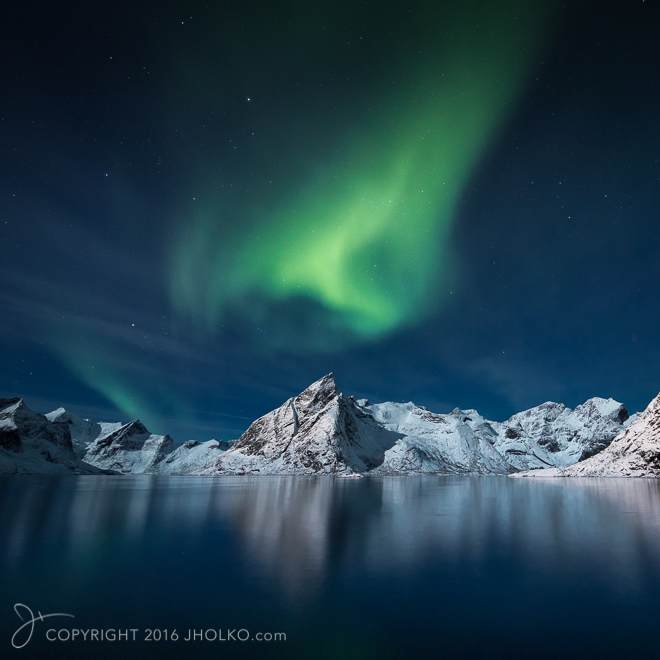 After Lofoten I travelled to Namibia where I lead a Desert Fire Safari that included the ghost town of Kolmonskop, the giant dunes of Sossusvlei, salt pan of Dead Vlei and more. This overland Safari provided some wonderful landscape and wildlife opportunities and I very much enjoyed returning to the Namib desert after a two year hiatus. I neglected to write up a trip report from this Safari but hope to do so over the coming weeks. I will be returning to Namibia again in 2018 and will soon announce details of that safari here on my blog.
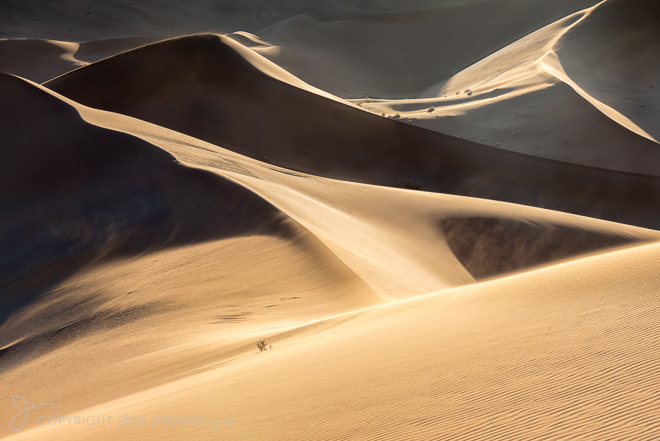 After Namibia, I ran my annual two week New Zealand South Island workshop which saw us circumnavigate the South Island via private 4-wheel drives and that included significant helicopter time over the spectacular southern Alps as well as the Teanu region. We also visited Milford Sound, Queenstown, Fox Glacier, Mount Cook and a great many other off the beaten track locations during the workshop. This year I also included an optional extension to the northern coastline region of the South Island which proved very fruitful for coastal scenery (Read the Trip Report).
 After a short break, I then travelled back to Svalbard for my Wild Polar Bears expedition (Read the Trip Report). This was a fabulous expedition that saw us encounter twenty Polar Bears on the sea ice (including an absolutely superb encounter with a very curious mother and cub) in just the first three days. We also had numerous close encounters with Arctic Fox, Walrus and Reindeer and some outstanding images resulted from all aboard. If you haven’t seen it, be sure to watch the video from the 2015 expedition – Kingdom of the Ice Bear by clicking on the image below.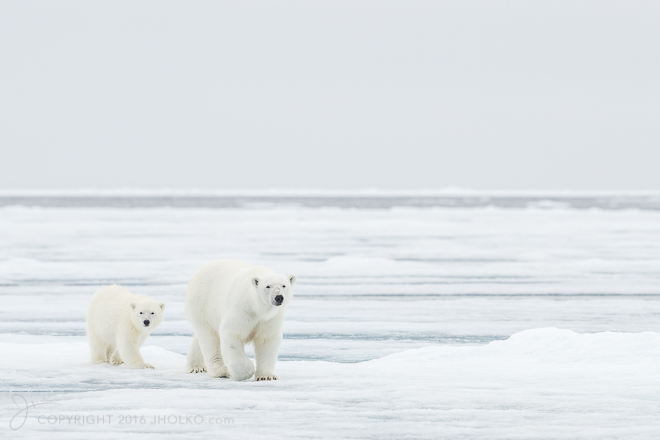
 After Svalbard I returned to Iceland for the Summer season and lead two back-to-back expeditions into the Highlands with Daniel Bergmann (Read the Trip Reports). I never tire of returning to Iceland and eagerly look forward to each return visit and the incredible landscape and light this miraculous country continually serves up. This year we decided to specialise and spend as much of our time as possible off the tourist path, deep in some of the more remote highlands regions. Our first trip took us into the northern area of the highlands and the second into the southern region. Each offered unique opportunities for landscape imagery and each served up its usual share of Iceland weather and light.
 In November I lead a brand new expedition to a very remote area of Antarctica to camp with Emperor Penguins on the sea ice in Gould Bay (Read the Trip Report). It took four years of planning, including a scouting trip last year before our expedition group would finally arrive on the frozen sea ice and get the opportunity to photograph the world’s largest and most difficult to reach penguin, the mighty Emperor. This was a life changing expedition for me and I am already putting plans in place to return to the sea ice and the Emperor Penguins in 2018. Be sure to check out the full portfolio of photographs on my website at www.jholko.com
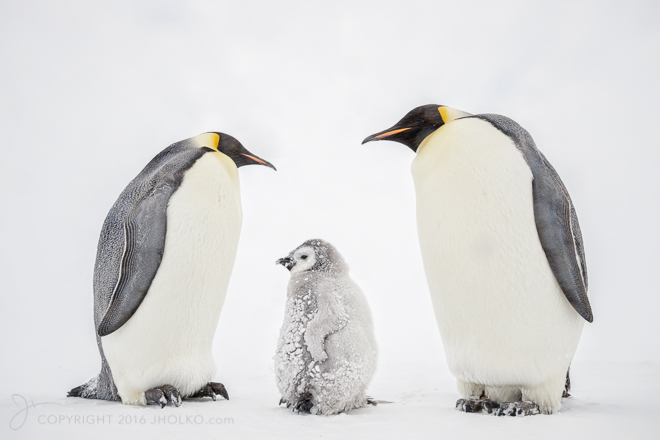 After the expedition to the Emperor Penguins I guided one final trip to South Georgia Island and Antarctica – Photographers First Light. This fifteen day expedition saw us photographing in some of the world’s best locations for wildlife in South Georgia (full trip report coming soon), before we headed down to the Antarctic Peninsula. We had mixed weather and light on this expedition and quite frankly too many blue sky days for my liking. Nevertheless there was some wonderful opportunities to be had during a brief snowstorm in South Georgia and a heavy blizzard on the Antarctic Peninsula. I have really been enjoying seeing the fantastic photographs being shared on social media taken by all who participated on this expedition. My special thanks to Jenn and Erin from the Canon Collective for all their invaluable help and assistance during the expedition – thank you.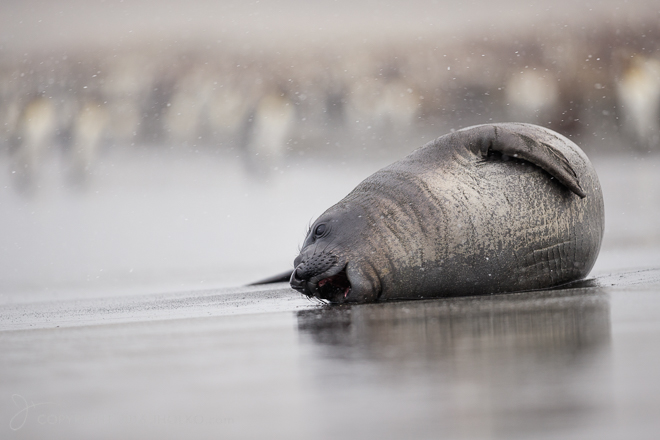
 All up I led a total of eleven separate international workshops and expeditions in 2016 spread across the globe (not including some local private workshops to the Great Ocean Road as well as one-on-one Print workshops). A brief count tallies up around fifty plane segments and just over forty thousand exposures (wish they were all keepers!) and a lot more than forty hours of lost sleep. It was a fantastic year and I just want to thank all of you who I was fortunate to meet, travel and photograph with throughout the year. It was real privilege to share in such remarkable destinations with so many fantastic passionate photographers – thank you.
 2017 is shaping up to be an even bigger year than 2016 in terms of both miles and locations and I am really excited about whats in store. In January I will be heading back to Italy (I was last in Italy back in 2012) to be part of a new television series being filmed about photography that will be screened across Europe next year (more on this later). From Italy I am travelling to Finland on a private project to photograph Great Grey Owls and Hawk Owls (and hopefully Wolverine) in winter. I am really looking forward to this trip as I have not visited Finland before and to be heading there in winter is very exciting. I hope I can also offer this trip as a future workshop at a later date.
From Finland I am heading directly to Iceland to lead my annual winter workshop (Sold Out) with good friend Daniel Bergmann. We have continued to refine our itinerary from last year and will again spend the majority of our time in the frozen north seeking out spectacular snow covered landscapes and Aurora Borealis. We are also looking forward to partially frozen waterfalls, ice caves and more. Iceland in winter never disappoints and I look forward to returning to this miraculous country as often as I can. After our winter Iceland workshop I am leading a small group of photographers on a sold out expedition to the remote northwest peninsula to photograph Arctic Foxes in winter. This expedition will take us by boat to one of the very the same locations on which I worked on my Melrakki project over the previous three years. We will spend the better part of a week living with the foxes in a picturesque winter landscape. I will have a full trip report on this expedition on completion next year.
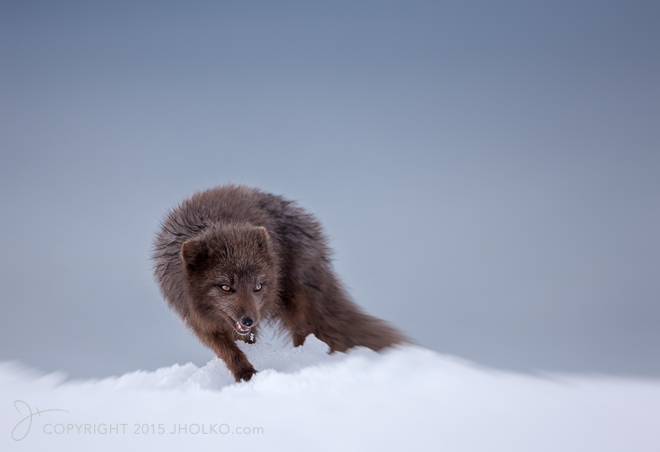 After I finish in the north of Iceland I am heading further north to Svalbard to make a new short film with good friend Abraham Joffe from Untitled Film Works (videographer from Kingdom of the Ice Bear). We have planned a snow mobile expedition out into the frozen winter landscape of Spitzbergen in search of Polar Bears. It is our hope to photograph and film both newborn cubs emerging from their dens and a seal kill on the frozen fjords. Look for this new short movie around the middle of next year.
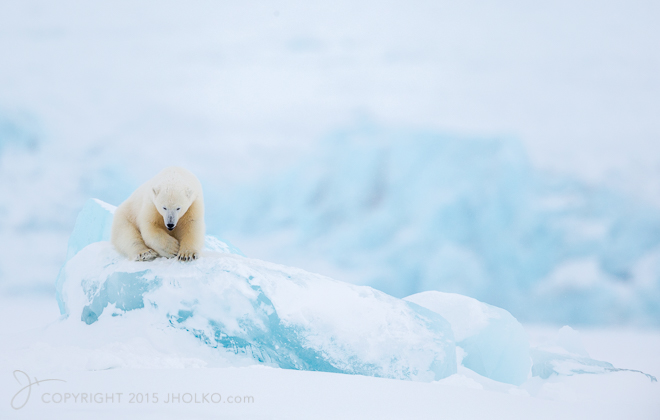 On return to Longyearbyen I am leading a new sold out winter expedition by ship to photograph both the frozen winter landscape of Svalbard as well as Polar Bears, Reindeer, Arctic Fox and Walrus in winter light. I have been looking forward to this expedition for more than two years now, having conducted a scouting trip back in 2013. The opportunities in Svalbard at this time of year for golden winter light are truly superb.
 In May I am going to make the short hop across to the South Island of New Zealand to co-lead a Masterclass workshop with friend Phillip Bartlett. We have some really exciting locations lined up for this trip that include helicopter access into the remote back country and aerial photography over the spectacular Southern Alps. I always look forward to any chance to photograph in this spectacular country. Due to a cancellation we have one single place available on this Masterclass before it will be sold out. Please drop me an email if you are interested in joining us.
 After New Zealand I will lead a private workshop to the Great Ocean road in Australia and then down to Tasmania for photography down both the east and west coasts. Look for a future photography, food and wine workshop to Tasmania in 2018.
After Tasmania I will be returning to Iceland to lead a new Puffin workshop with Daniel Bergmann. The workshop is dedicated to photography of the Atlantic Puffin and other birds of Iceland including Fulmars, Kittiwakes, Guillemots (Murres), Arctic Terns and Razorbills. Iceland is one of the best places in the world to photograph Puffins and other Arctic birds in their natural environment. We will visit a number of different locations during this workshop where we will have outstanding access to the Puffins living in burrows on the edge of sea cliffs. We have timed our 2017 workshop to ensure we are in the best locations at the best times to photograph these wonderful birds. We will have hours of golden light under the spectacular midnight sun – ideal conditions for photography of the Atlantic Puffin. We still have a few spots available before the workshop will be sold out.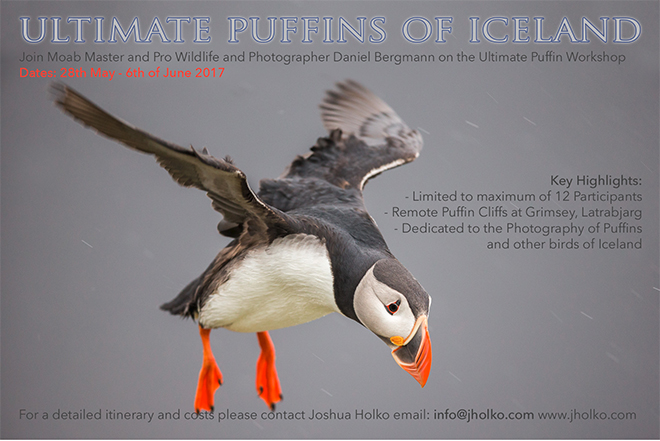 In July I will head back to Svalbard to lead my Polar Bears of Svalbard Expedition. We will depart from the small town of Longyearbyen and sail up to the edge of the permanent pack ice where we will spend out time searching for and photographing the king of the Arctic.
 In September I am travelling to the east coast of Greenland with Daniel Bergmann for two new back-back expeditions into the spectacular Scoresby Sund fjord system. Home to some of the most extraordinary geology to be found on earth, the red and orange glacial scarred landscape of Greenland stands in stark contrast to the electric blue icebergs that carve off its many glaciers and drift slowly down its precipitous fjords. It is a remote land of untamed and unbridled beauty that is rarely visited and even less rarely photographed. It is an incredible place to inspire the imagination and fuel your photographic desires.
The landscape and geology of the East Coast of Greenland is both stunning and extraordinary. Photographing this incredible landscape under soft golden Arctic light is our main objective. In fact, our entire expedition has been planned around us being on location at the best time of year for soft golden light. We will also see and photograph incredible castellated icebergs that have calved off the many glaciers of Greenland. Dramatic glaciers, plunging cliffs and beautiful drift ice formations will be present as well.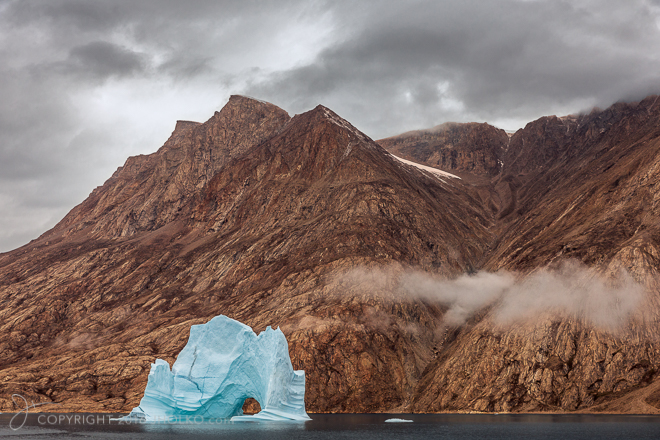 Finally in November I am heading back to Antarctica for my White Nature Expedition to the peninsula. The main focus of this expedition will be Antarctic wildlife including penguins, seabirds, seals, and possibly even whales. We also plan to photograph snow and ice covered landscapes and icebergs. Our expedition has been timed as the first of the season so we expect fantastic icebergs and a breathtaking winter landscape. Very few photographers have visited Antarctica this early in November, and experience has shown us that this will give you the best possible photo opportunities.
 Amongst all of the above I hope to get back to Greenland in Winter after my Svalbard expeditions (we will see if time permits) to photograph with the Arctic Arts group.
Lastly, I want to wish all of you a very safe and happy New Year and may 2017 be one of amazing light and experiences for all of you. See you in the New Year.
 The first and most important consideration when you are investigating the multitude of ship options for sailing to Antarctica is how many passengers does the ship take. This very critical piece of information is going to have very significant impact on how much shore time you can expect whilst you are in Antarctica and what sort of photographic opportunities you can expect. Before we discuss this in further detail it is important to understand that the IATTO (International Antarctica Treaty Organisation) body is responsible for the protection of Antarctica and managing tourism to the continent. Their regulations are continually being refined, expanded and updated. The critical regulation you need to consider when choosing your ship is the maximum number of passengers permitted to land on Antarctica at any given point in time is limited to no more than 100 people (including ships expedition staff). Therefore, if you choose a ship that carries 100 passengers or more you will be forced to wait your turn and rotate on landings in order for the expedition company to comply with IATTO restrictions (they will make no exceptions to this rule). This will be extremely frustrating having travelled all the way to Antarctica and being made to wait your turn. You may well miss landings (in fact you will), miss wildlife opportunities and miss the best light of the day as you sit with increasing impatience waiting for your turn.
 A word on ship stabilisers. Some expedition companies market the fact that their ship has stabilisers to help keep it from rolling around too much as you cross the Drake passage. Whilst stabilisers can and do make a difference to ship movement you should be aware that ships equiped with outboard stabilisers are usually not suitable for use in the ice. Stabilisers are easily damaged by large pieces of ice so the captains of these ships are usually going to avoid taking the ship into the ice or too close to icebergs. Therefore I recommend you avoid ships that are sold and marketed as being ‘stabilised’.
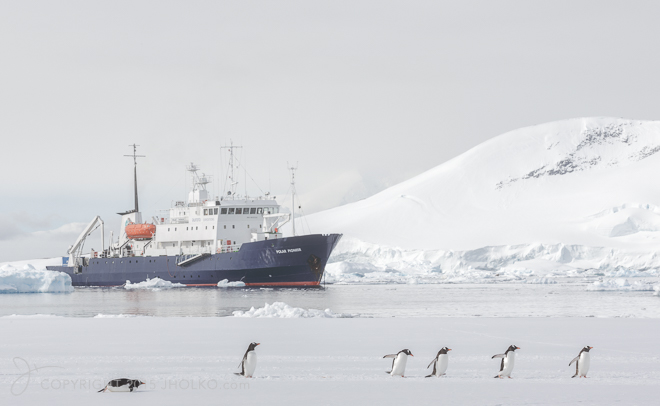 One thing you should be acutely on the look out for is generic expeditions that offer a photographic component as part of their overall program; or expeditions that comprise in the majority of general tourists with what is marketed as an additional small dedicated photography group that plans to co-exist on the same ship. These expeditions are disasters for photographers who are dedicated to their work and who want to achieve the best possible photographs. Any expedition that comprises in the majority of general tourists will first and foremost have to cater to this majority (and not the much smaller group of photographers). Such groups will not be able to rearrange their schedule to suit the best light for photography and will not be able to suitably serve the needs of the dedicated photographers. I can tell you from experience that these sort of expeditions are incredibly frustrating as you are forced to photograph during midday landings in harsh light in order to meet the standard meal times when the light would be optimum for photography. If photography is your primary goal avoid any sort of mixed expedition at all costs.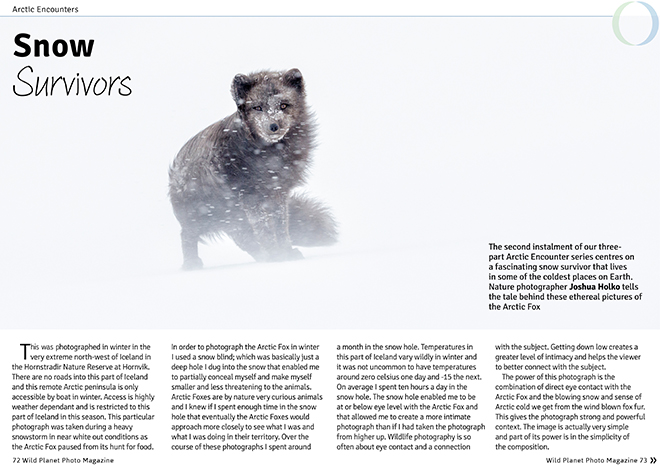
 www.WILDNATUREPHOTOTRAVEL.com