I have just published episode #91 of my Wild Nature Photography Podcast. In this episode, I discuss the IT infrastructure and the backup strategies I employ in my photography. Increasingly, I am asked to help specify IT hardware and advise on hardware and backup for other photographers. Much depends on your individual needs and budget, but this episode should help shed some light on my thoughts and processes regarding this complex issue.
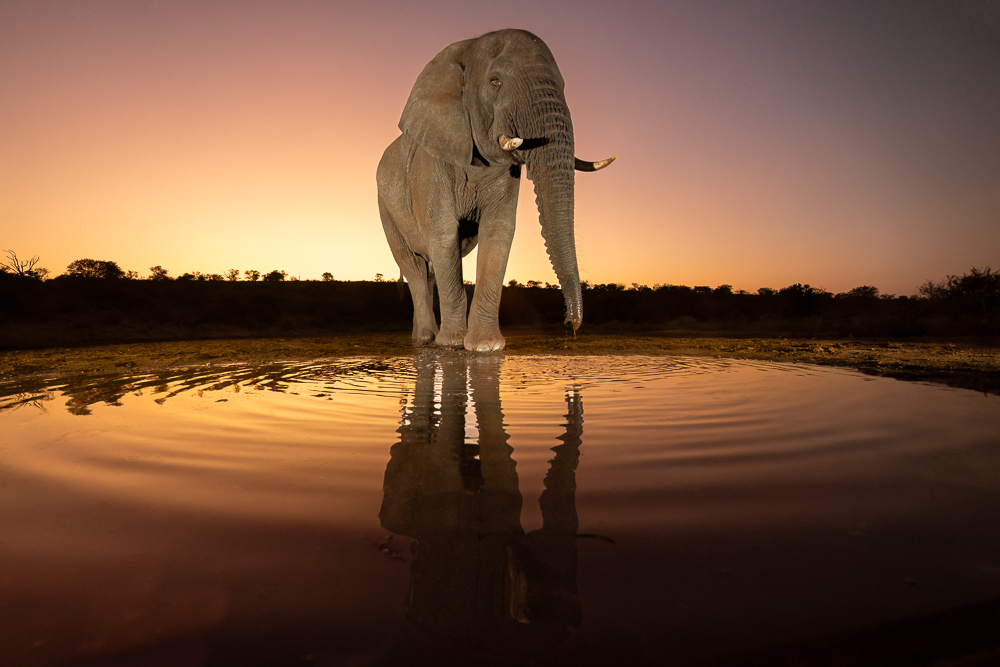
Only two places remain on the 2024 Zululand South Africa ground-level Wildlife masterclass before it will be sold out. You can get an idea of what to expect from this workshop by reading the 2023 trip report HERE and by checking out the portfolio on my website HERE. This is the workshop for you if you have ever wanted to photograph African wildlife at ground and eye level. For more information, please download the PDF or drop me an email.
The photograph of the month for February 2024 comes from my recent expedition to the Steppe region of Mongolia (Read the Trip Report) to find and photograph the enigmatic Pallas Cat. Taken right at sunset, the stance and demeanour of this Pallas Cat (Manul) ‘make’ the photograph. Composed with the cat to the right-hand side of the frame and looking into the image to minimise the negative space, the soft evening light that paints the snow is the icing on the cake for what is one of my favourite images of this wonderful cat.
The 2025 expedition to Mongolia’s far eastern Steppe region to find and photograph Pallas Cat and other wildlife is now sold out – thank you. If you missed out on a place, and were keen to join us, I am offering this expedition again in January 2026. The expedition will run from January 2nd to January 8th and will be limited to five photographers. On this expedition, you can expect to see and photograph wild Pallas cats, Corsak Foxes and raptors, including the Upland Buzzard, Golden Eagle and Saker Falcon. More information, including a full trip PDF and itinerary, can be downloaded on my website here www.jholko.com/workshops . To get an idea of the type of photographs you can take on this expedition please be sure to check out the Mongolia portfolio on my website.
In January of 2024, I ran a small group workshop in the Ontario region of Canada to photograph the magical Snowy Owl. Snowy Owls are a highly sought-after species by nature photographers and are regularly sighted in this region of Canada in winter. Previous workshops in this area have proved exceptionally fruitful, with many owl encounters and photographs resulting from our time in the field. It has been common, in past years, to walk outside our accommodation after breakfast to find an Owl perched on a nearby fence or telephone pole. This year, things were quite different.
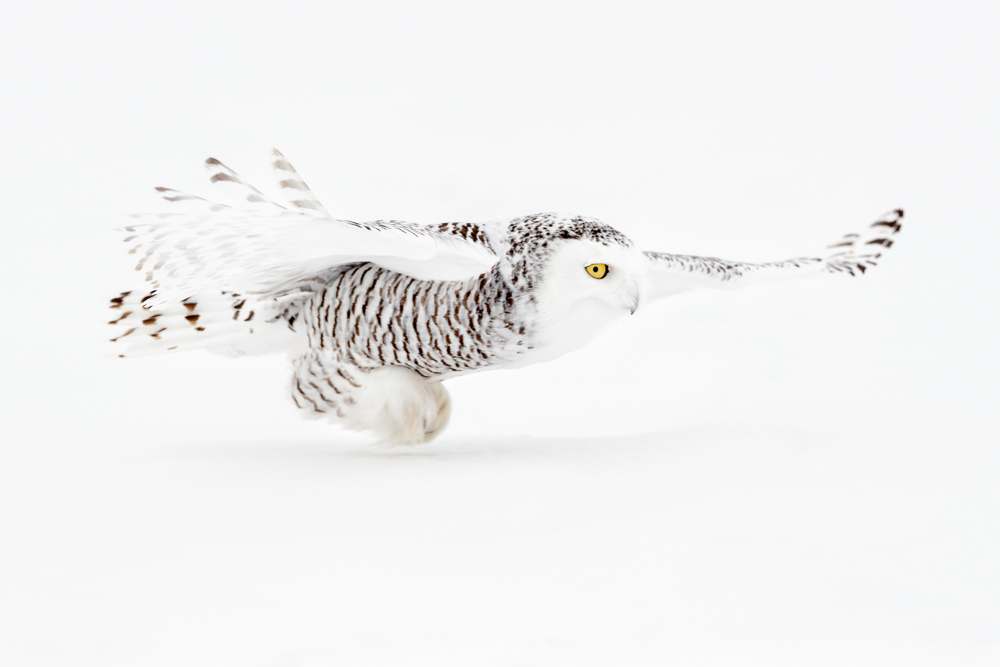
Due to a likely combination of avian flu, poor breeding in 2023 (likely due to lack of prey), and an erratic, overly warm climate that included a late winter, there have been virtually no Snowy Owls this season in the Ontario and Quebec regions. In a typical year, Snowy Owls are regularly seen in multiple numbers, and it is possible to have the choice of birds to photograph. Thanks to the above factors, any sighting of a Snowy Owl was a real bonus this year.
Mercifully, thanks to our many scouts in the field, we located a young female Snowy Owl on our second day and photographed this owl over three separate days. The owl had taken up residence in a field just outside of central Ottawa, which meant an early morning start and a commute of around an hour each way. A journey that proved worthwhile.
During this workshop, we photographed four different owl species, including the Snowy Owl, the Barred Owl, the Sawwit Owl and the adorable Screech Owl. The Screech Owl was a real thrill for me, as not only was it the first time I had seen this owl in the wild, but the little guy had perched right on the edge of his hole in a dead tree and was in the ideal position to photograph. Close to eye level and with a clean background, it was possible to maneuver around the tree for various compositions. The Screech Owl has incredible camouflage, making it extremely difficult to find in the wild, but also highly photogenic.
Although Snowy Owls were challenging to locate this year as a result of mitigating factors, we still managed to find and photograph an owl, as well as three other species, during the week-long workshop. We wrapped up the last rainy day of our workshop with an image processing and image critique session. As I am currently travelling, I have not as yet had time to process any additional photographs from the workshop, but will update this post at a later date with more images when I can.
I will run this workshop again in January of 2026 for a small group of photographers. If you have ever wanted to photograph Snowy Owls in winter, this workshop is for you. Places are extremely limited, and once spoken for, that’s it. Please just drop me an email for further information or to register your place.