Why Photography Should Not Be a Competitive Sport – Op. Ed.


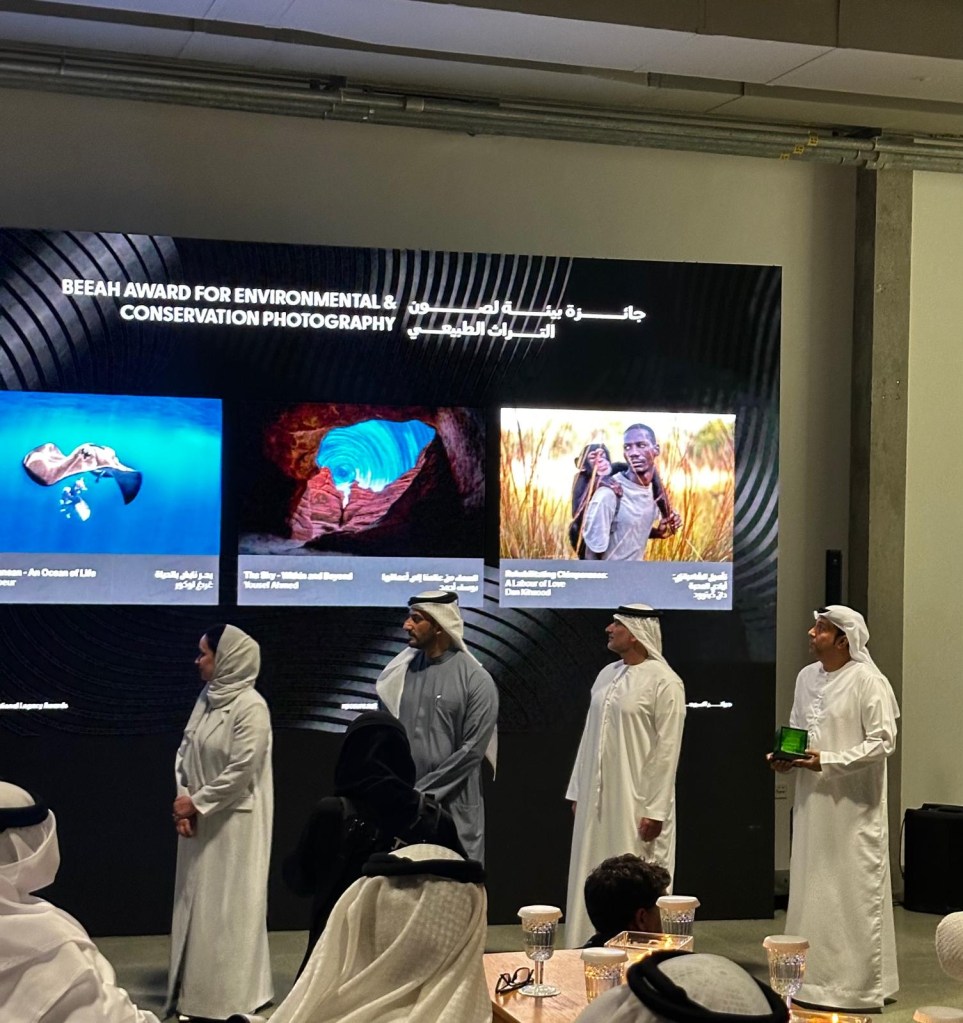
Lately, I have been pondering the nature and real value of photographic competitions. Over my career, I have been fortunate to win and place in a great many photographic competitions, both national and international. But what does this really mean? Does a ribbon, trophy or a certificate, often granted by a panel of judges whose tastes may or may not align with mine, truly measure the worth of an image, or the depth of the moment in which it was created? Does it reward the photographer for how hard they worked in the field? The more I reflect on it, the more I question whether photography can ever be meaningfully ranked. After all, when an art form is rooted in emotion, interpretation, and personal experience, can it genuinely be distilled into points, scores, and placements without losing something essential along the way?

Photography has always lived in a curious space between art and documentation, between personal expression and universal communication. It is a medium built on interpretation, emotion, and perspective and not on quantifiable metrics or objective truths. Yet in recent years, photography competitions have multiplied (mostly as business ventures designed to make money), and with them, the idea that photographs can be ranked, scored, assigned points, and declared winners or losers. This trend raises an essential question: Should photography ever have been turned into a competitive sport in the first place?

For many, I suspect, the answer is no. Photography, by its very nature, resists the reductive frameworks of competition. It is not a discipline that benefits from podiums or score sheets. And more importantly, most competitions rely on judging panels that are frequently unqualified, or, at the very least, unprepared to meaningfully evaluate the depth and diversity of the work presented to them. Just imagine a judge who specialises in pet photography who has never been to Africa sitting down to judge your work of a lioness on the hunt. How would that feel when you have worked as a professional African wildlife photographer most of your life? What qualifications, or perhaps more importantly, what real-world experience do they have to judge your photograph?

The core problem is simple: photography is in the eye of the beholder, and the beholder is always shaped by subjective experience.

Art begins where scoring ends. A photograph is not a race, a timed event, or a measurable physical feat. It cannot be judged by speed, distance, or efficiency. It is not chess, where logic and mastery follow strict rules. A photograph (like a painting) is a translation of how someone sees the world, or how they want you to see it. To declare that one person’s vision is “better” than another’s is an act rooted in personal preference, cultural bias, and aesthetic conditioning.

Two people can stand before the same image and see two entirely different things: One may see a technical flaw, the other an emotional truth. One may see a messy composition, whilst the other sees a moment alive with movement and chaos. Who is correct? Who decides? And on what authority and on what experience?

Photography defies objectivity. Its impact varies with the viewer’s life experience, cultural background, emotional disposition, and even mood in the moment. Unlike sports, where the outcome is indisputable (the fastest runner always wins), art has no universal measurement of merit. Once we acknowledge that photography is inherently subjective, treating it like a competitive sport collapses under its own contradictions.

At the heart of most photography competitions lies a judging panel, and the judges are not qualified – and that matters. These judges hold the power to validate, dismiss, promote, or sideline a photographer’s work. Yet in many cases, the individuals chosen to evaluate images lack the experience, artistic depth, or cultural literacy needed to understand the work before them (sorry, judges, but it’s almost universally true). The majority of competitions rely on: Local camera club judges with limited real-world experience; Retired hobbyists unfamiliar with contemporary work or lacking professional experience; Industry personalities whose fame comes from social media rather than expertise; Editors or curators viewing thousands of entries in a rush; Sponsors or brand representatives with commercial rather than artistic priorities. The reality is stark: many judges are simply not qualified to critique a wide range of photographic styles.

A wildlife photographer may be judged by someone whose experience lies entirely in portraiture. A fine-art landscape photograph could be dismissed by someone who values saturated colours and hyper-sharp detail over subtle tonal work. A minimalist, contemplative image may lose out to a flashy, oversaturated one because a judge equates loudness with impact. And perhaps most troubling: competitions often favour what is fashionable rather than what is meaningful. If the judges lack breadth of experience, depth of knowledge, or the ability to appreciate artistic nuance, then the judging becomes arbitrary. Nothing more than a reflection of personal taste disguised as authority. This is evidenced again and again in judging panels by the rampant overuse of the word ‘I’. ‘I’ like it because, “I” dislike it because etc.

You do not have to look far to realise that Competitions Reward Formula, not Vision. When photography becomes competitive, it becomes predictable. Competitions, especially large public ones, tend to reward: Loud colours, Dramatic lighting, Easily digestible narratives, Familiar compositions, Trendy editing styles, Images with “shock value”, Photographs that look like past winners.

This creates a loop in which photographers shape their vision to win, not to express, and not to grow as artists. It fosters a culture of serial entrants who deliberately photograph in a particular style or with a specific approach for the sole purpose of entering a competition to try and win. The same types of images will inevitably rise to the top year after year. The subtle, the unconventional, the abstract, the brave, and the deeply personal often go unnoticed. Great photography frequently breaks rules. Competitions, however, enforce them. Innovation rarely wins awards because innovation is often misunderstood. And misunderstood work is almost always rejected by judges who are unwilling, or unable to engage with it on a deeper emotional level. To have any semblance of relevance, competition would require a panel of lifelong category-experienced judges willing to let go of the conventional, who can step away from their personal biases and who are willing (and capable) of engaging with each individual photograph on an individual emotional level. Such a judging panel simply does not exist.

Competition also encourages conformity and ego, not growth. Art flourishes in an environment of curiosity, experimentation, and vulnerability. When photography becomes competitive, something changes: Photographers stop taking risks. They begin shooting for approval rather than expression. The desire to win overshadows the desire to grow. Criticism becomes a threat rather than a learning opportunity. And this is the big one for a great many: The joy of creation becomes tied to external validation. That’s nothing more than ego folks.

Worse, competitions fuel unhealthy comparisons. A photograph that resonates deeply with its creator might receive a low score and be labelled mediocre by someone whose preferences have no bearing on the artist’s intent. For emerging photographers, this can be soul-destroying. For established photographers, it can distort direction. For everyone, it can turn a soulful craft into a sport of ego.

Photography is a human experience, not a contest, and it is not about winners. It is about connection to place, to subject, to emotion, to memory. It is about translating the world as we see it into something others can feel. It is about storytelling, presence, and perspective. A competition cannot measure: the silence of a moment, the trust between photographer and subject, the meaning behind the image, the effort, difficulty and courage it took to make it, or the emotion it evokes in someone who needs it. These things cannot be scored. They can only be experienced. Photography is at its best when it is a conversation, not a contest. When it invites reflection rather than comparison. When it opens doors rather than builds hierarchies.

The illusion of objectivity creates the myth of “The Best” in photographic competitions, and that is a very bad thing. When judges declare a winner, they present the outcome as if it reflects some universal truth: this photograph is better than all others. But what they are really doing is announcing their personal preference, shaped by their personal experiences, within the narrow confines of a specific moment. There is no “best” photograph. There is only the photograph that resonated most with a particular judge on a particular day. Meanwhile, some of the greatest images in photographic history were ignored, rejected, or misunderstood when first created. Recognition came later, often decades later, from an audience ready to hear what the work had to say. Competitions do not determine greatness. Time does. Culture does. Human emotion does.

The true value of photography lies outside the competitive model. Photography’s greatest gift is its ability to deepen our relationship with the world. It teaches us to see to really see and potentially see something in a new way. The adage is true: ‘Don’t show me what it is. Show me what else it is.’ Photography encourages patience, empathy, attentiveness, awareness, and connection. Photography is a vehicle to personal expression, emotional release, storytelling, discovery, exploration and the preservation of memory. These are all human experiences, not competitive ones. When we remove competition, photography returns to its essence. It becomes intimate again. Authentic. Curious. Brave. Free.

Photography belongs to everyone, and not to judges or a judging panel. Photography should not be treated as a competitive sport because it was never meant to be measured, ranked, or scored. It is an art form rooted in individuality, not conformity; in expression, not judgement; in emotion, not points. Competitions may have their place: as a learning experience, as entertainment, as community activities, as marketing tools (I have used them that way myself). But let’s be crystal clear that they cannot define the value of a photograph, and they should never define the value of a photographer. At its heart, photography is about what we feel when we create and what others feel when they see. And feeling cannot be judged. It can only be shared. When we let go of competition, we make space for what truly matters: authenticity, growth, curiosity, connection, and the thrill of seeing the world anew. Photography belongs not to judges, but to the beholder. To every beholder. And that is precisely as it should be.

Client Workshop Feedback and Testimonial October 2025

Earlier today, I received a wonderful, unsolicited email from frequent traveller and photographer, Kevin Hall. Kevin has been a frequent traveller with Wild Nature Photo Travel in recent years, and his work from our trips has been published by both the BBC and BBC Travel. We live in a fast-paced, chaotic world today, where people rarely take the time to provide positive feedback or express gratitude, so I wanted to take a moment to publicly thank Kevin (thank you, Kevin) for taking the time to offer such wonderful feedback. From my perspective, it has been wonderful to share these experiences and to see your work published and in print from such high-profile organisations as the BBC.

“If you are reading this, you will probably be doing so because you are considering going on a workshop with Joshua Holko, and want to know what other photographers think.   So let me tell you how it is… 
Joshua Holko is out to mislead you.  He calls his trips ‘photography workshops’, as so many in the industry do.  Well, I can tell you, as someone who has been on eight of his ‘workshops’ in 2023-25 and signed up for two more in 2026-27, that they are not ‘workshops’, as the term ‘workshop’ simply does not do what Joshua Holko delivers anywhere near justice.  So don’t be fooled when he uses the term ‘workshop’!

If you sign up for a trip with Joshua Holko and Wild Nature Photo Travel, you get the ‘Big 5’ …

  1. Practical support from the best polar photographer on the planet.  

    From the time you sign up to the time you return, Josh deals with you personally.  He will answer any question you put to him regarding any aspect of the trip whether you require clarity or advice, with impressive speed providing he’s not out of signal travelling.  He will willingly pass on his experience based on his 20+ years of travelling to and photographing in some of the remotest places on Earth.  He is a man of integrity who provides honest, objective and helpful support and advice.  He’s also very passionate about what he does, and that comes through if you are one of his clients.

  2. Detailed packing lists sent out well in advance so you have time to prepare properly.  

    After all, most of his trips take you to some pretty isolated locations with extreme temperatures that few on the planet will ever get to see, so it is critical that you take the right equipment, be that clothing or gear, that will allow you to make the most of it.  Imagine going on what might be for you the trip of a lifetime and forgetting a vital item of clothing or gear!
  3. Excellent logistics.  

    Let’s face it, travelling to some of the locations on his list is not for the feint-hearted and impossible to do on your own.  It would be fool-hardy and dangerous to try.  Joshua Holko’s trip logistics are comprehensive and impressive at every level.  He thinks of everything and releases you from this burden so you can focus on your photography and enjoying the experience.  His trips attract a certain kind of person; generally people who are passionate about their photography, interesting to be around and good travelling companions.  And that matters when you are with people in close quarter for many days or even weeks at a time.  Many people who go on workshops with Josh have been on many workshops with Josh, and that speaks volumes in itself if you think about it. 
  4.  Getting your bucket list shots by placing you in the right place at the right time, with your photography and your safety as his number one priority.  

    Josh is quite incredible in this regard.  He won’t be found talking to camera for a YouTube video that he needs to post whilst you are in the field photographing.  He is not a YouTuber.  Similarly, he won’t be standing over you interfering with your photography.  But he will be leading you in the field to where you will get the best shots and assist with any settings if asked.  He will be photographing on the floor alongside the group, not in a ‘directors chair from afar enjoying a coffee’!  And this is probably what I like the most about travelling with Josh; he lets you realise your own creative abilities by inspiring you with his knowledge and experience of all matters photography, wildlife and nature.  

  5. And lastly an immersive ‘life and photographic experience’ that provides the opportunity for you to grow as a person and photographer.  Indeed, I personally think ‘photographic life experience’ far better describes what you get when you travel with Joshua Holko.  Never did I think that I would go to East Greenland on a 100 year old Dutch sail ship to take photographs of monumental icebergs that subsequently be published by the world’s leading on-line Fine Art magazine, or ride on a dog sled driven by an Inuit over pack ice to one of the remotest places on Earth to photograph polar wildlife and landscapes with an article that I subsequently wrote about the trip being published by BBC Travel, or spend nearly three weeks in the High Arctic photographing polar bears.  But I did, and have come back with some amazing life long memories and award-winning photographs.

There is one more thing I would like to add, and that is that I have never met anyone who is more knowledgeable about wildlife, nature and photography than Joshua Holko.  He truly is a master in his field.  His post processing knowledge of Adobe is also incredible and he will willingly sit alongside you during the trips to help you edit photos, again if you ask him, or sometimes will lead an impromptu class on editing if there is a desire by the group for him to do so.   So in summary, I have no hesitation in recommending Joshua Holko’s ‘life and photographic experiences’ to you.  Your only question should be ‘which one?’  And if it is, why don’t you do what I did when I first looked at his website, and that is ‘ask Joshua Holko’?  I guarantee you will be amazed with what comes back!

Note:  This testimonial has been written by me.  I offered to provide it; I was not asked by Joshua Holko, and Joshua Holko has had no involvement whatsoever in what I’ve said.  These are my words and my thoughts alone.  And if you would like to see some of his influences on my work, please check out my website and look at Galleries and Featured Location.  https://kevinhallphotography.co.uk

With best wishes,  Kevin (Photo Credit Below: Kevin Hall).

Post Production Ethics and the Use of Generative Artificial Intelligence

AI-generated images are literally swamping social media platforms. Many of the Nature photography groups on Facebook I have historically been a part of are now drowning in A.I generated images as surrepticious users attempt to outdo each other in a seemingly never-ending quest for likes and views. Disclosure does not appear anywhere on most posters radar, and the intent is very clearly to deceive and fool the viewer. These posts are often immediately apparent to the trained eye; but even an untrained eye can quickly check the posters photo album to see that they have nothing else even close to what they are claiming is their photograph. It is a very sad run-away train of one-up manship that is significantly blurring the lines between Nature photography and “computer-generated art” (and I use the word ‘art’ loosely). Where will it end? I have no idea, but at least in the Nature space, the use of generative A.I tools appears to be highly destructive to accurate depictions and documentation of Nature. Or, at the very least, it causes significant confusion about what is real in the Nature space.

Since the rise of generative A.I tools, I have been receiving more correspondence asking if I use any A.I techniques to enhance my photographs. The answer is NO. A long time ago I published an ethics statement on my website HERE fully disclosing how I approach processing my photographs. I have now updated this to include the exclusion of A.I generative tools.

ETHICS AND POST-PRODUCTION

All of the photographs on this website are single-image captures without HDR (High Dynamic Range) or multi-image compositing techniques. No focus stacking or blending of multiple exposures has been used, and there are no overlayed textures or dropped-in skies or foregrounds. Panoramas do include stitched images.

I learned the craft of photography by shooting 35mm transparencies (primarily Fujichrome Provia 100 and Velvia 50). Transparencies had very little exposure latitude, and outside of a third of a stop on either side of a correct exposure, the slide was either over or under-exposed and destined for the trash. I learned the hard way that it was critical to get my exposures correct in camera and this is something I still try very hard to achieve today shooting digitally. I use graduated neutral density filters in the field extensively in my photography to help tame the dynamic range found in Nature. I bias my exposures to the right (ETTR) wherever possible to try and capture the most information possible in my RAW file. The RAW file on the right was overexposed by one stop (without clipping the highlights) in order to capture more data. The exposure was then corrected during post-production in Adobe Lightroom.

All of the photographs on this website were shot with Canon digital cameras in RAW and post-processed in Adobe Lightroom. Adjustments include White Balance, Color and Tone, Capture Sharpening, and equivalent techniques to darkroom dodging and burning.

Any excessive noise or grain from high ISO captures is treated in Lightroom or other noise reduction programs with subtle adjustments of the Noise Sliders. Any sensor dust spots are removed in post production – but that is the extent of any digital cloning or manipulation.

Post-processing is utilised to faithfully reproduce the natural colours and light captured in the field. Never to create something that wasn’t there. Additionally, no artificial intelligence (AI) generative technologies or tools have been used to create or enhance these photographs. My work remains true to the traditional craft of photography, ensuring authenticity and integrity in every image. I want the viewer to enjoy the majesty and beauty of Nature as it appears on our mother Earth.

Canon EOS R3 Firmware 1.6.0 Update December 2023

Canon has released new firmware for the Canon EOS R3. This update is relatively minor, with compatibility updates and bug fixes.

Firmware Version 1.6.1 incorporates the following fixes and enhancements:

  1. Adds support for RF-S10-18mm F4.5-6.3 IS STM lens.
  2. Fixes an issue that may cause the camera, in rare instances, to experience a delayed restart after the camera has gone into Auto Power Off.
  3. Fixes minor issues.

Download Canon EOS R3 firmware v1.6.0