Ultimate Polar Bears of the High Arctic Expedition Report June 2025

Ultimate Polar Bear Expedition: Svalbard, June 10th to June 27th, 2025 – There are trips that linger in the soul long after you return to solid ground. And then there are expeditions that define your entire career and stay with you for the rest of your life. The 2025 Ultimate Polar Bear Expedition to Svalbard falls firmly into the latter category. Eighteen extraordinary days in the High Arctic, ten of which were spent deep in the sea ice north of 81 degrees latitude, delivered what can only be described as the most productive and fulfilling polar bear photography experience of my life. Perhaps best of all, it was shared with a wonderful group of like-minded photographers that made the camaraderie as fulfilling as the photography.

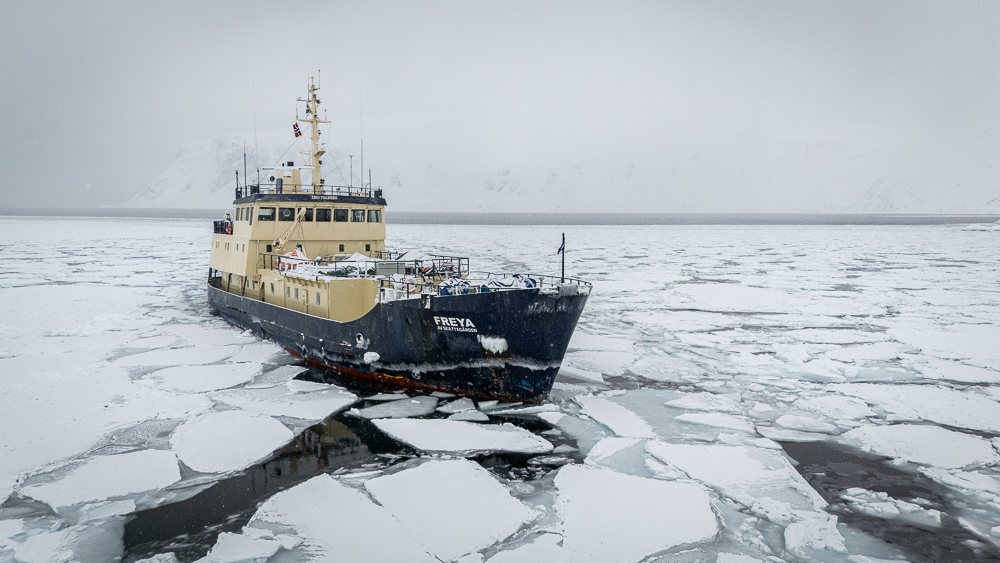
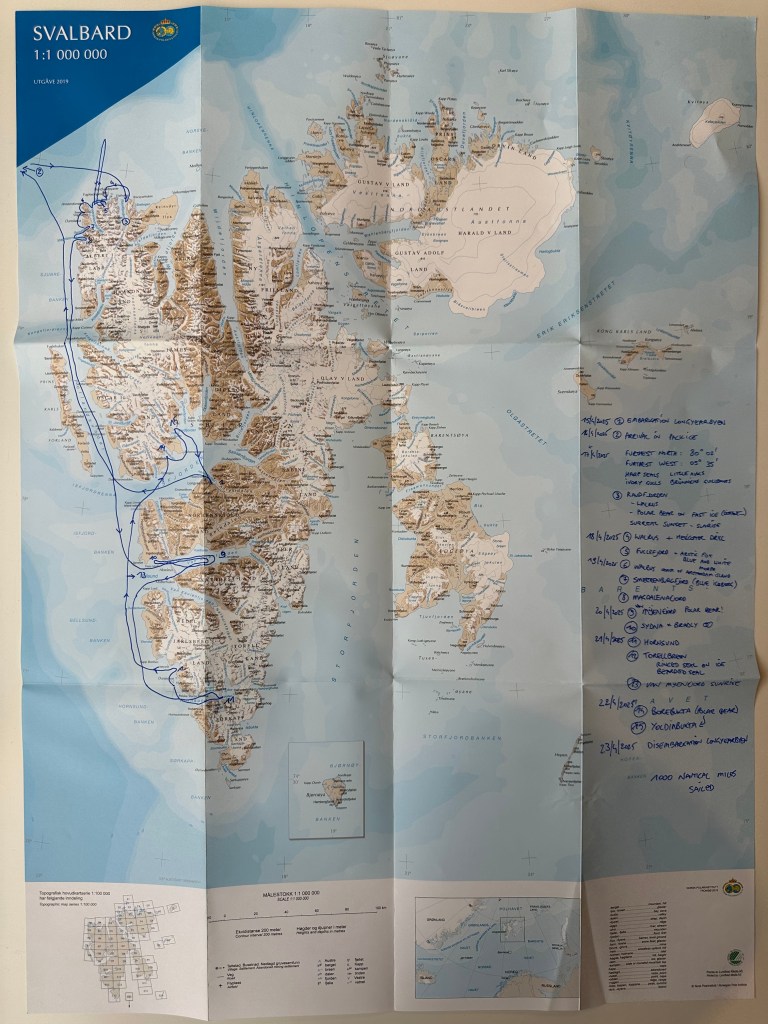
We departed Longyearbyen on June 10th aboard our trusted expedition vessel M.S Freya, with a small team of passionate photographers from around the world. The anticipation was electric as we pushed north through calm waters (we had superb weather the entire expedition), heading for the ice edge with hearts full of hope and memory cards ready for the magic of the Arctic. The pack ice would be our home and our canvas. What followed was an experience nothing short of astonishing. The map below traces our journey from Longyearbyen up into the pack ice and back.
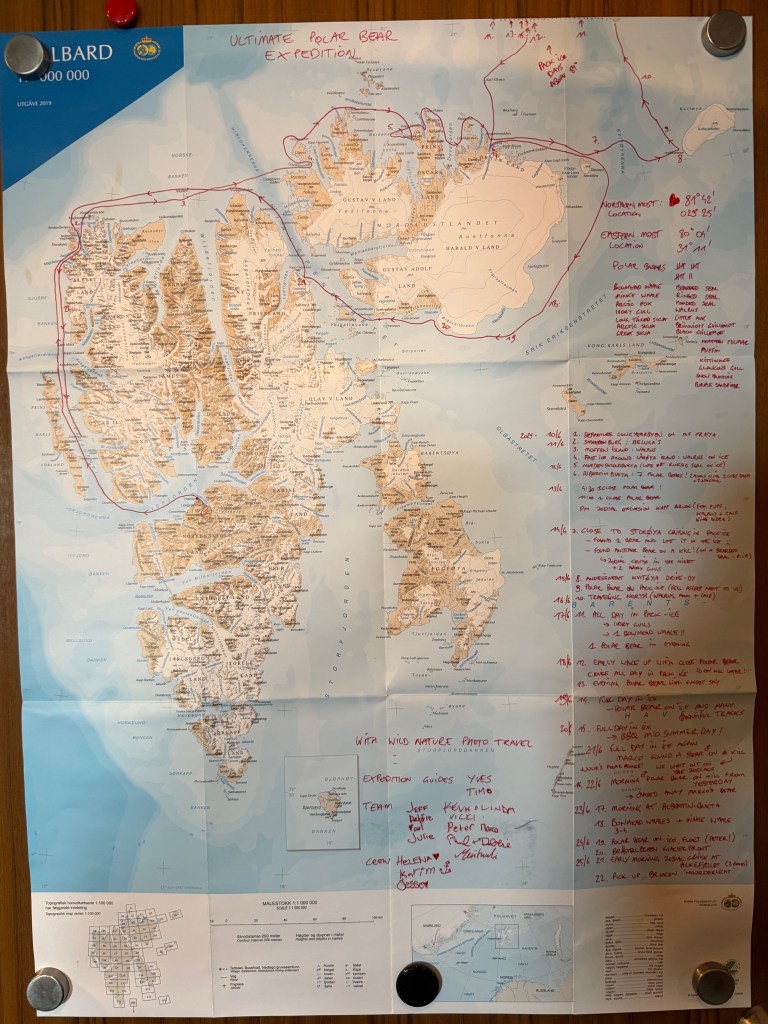
Svalbard Ultimate Polar Bear Expedition Notes

  • 10/6 – Departure Longyearbyen aboard M.S Freya
  • 11/6 – S,eergenburg with a pod of Beluga Whales and Mofen Island with a big colony of Walrus
  • 12/6 – Nordenskioldbukta with a lot of ringed seals on the ice
  • 12/6 – Albertinibukta – 7 Polar Bears! 2 Polar Bear females with 2 cubs each and one adult bear
  • 13/6 – 2 x Polar Bear! Plus zodiac excursion to Kapp Bruun with Arctic Fox pups, Walrus and King Eiders
  • 14/6 – Close to Storoya cruising in the pack ice. Found one bear but lost it in the ice. Found another bear on a recent kill (bearded seal) zodiac cruise during the night plus ivory gulls
  • 15/6 – Andreeneset Kvitoya Drive by and a Polar Bear on the pack ice that fell asleep nearby
  • 16/6 – Travelling further north with Walrus mom and calf
  • 17/6 – All day in the pack ice with Ivory gulls, one Bowhead whale and a Polar Bear in the evening
  • 18/6 – Early wake-up call with Polar Bear on a kill and cruise all day in the pack ice. Evening Polar Bear with sunset sky
  • 19/6 Full day in the pack ice. Polar Bear on the ice and many bear tracks
  • 20/6 – Full day in the pack ice and Midsummer BBQ
  • 21/6 – Full day in the pack ice. Polar Bear on a kill (great spot Marco!) Polar Plunge for those who were feeling brave!
  • 22/6 – Morning and afternoon Polar Bears on kills
  • 23/6 – Morning at Albertinibukta with Bowhead whales and Minke Whales later in the day
  • 24/6 – Polar Bear on ice floes (Great spot Peter!) Brasvellbreen glacier cruise from the ship
  • 25/6 – Early morning zodiac cruise at Alkefjellet (two Arctic Foxes)
  • 26/6 – Sailing to Longyearbyen
  • 27/6 Disembarkation

A Bear a Day: Eleven Photo Bears and Eighteen in Total – The defining goal of this expedition was simple but profound: to photograph wild polar bears in their natural habitat. Achieving that goal is never guaranteed in the Arctic; the sea ice moves, conditions shift, and wildlife follow their own rhythms. Yet somehow, over the course of this journey, we encountered a total of eighteen individual polar bears – a bear a day! Eleven of those encounters resulted in what I classify as true photographic opportunities—bears at close range, in beautiful light, behaving naturally. And not just bears at a distance, but bears that approached us, curiously and calmly, in serene Arctic light.

The pack ice north of 81 degrees offered us these moments in abundance. We would often park the vessel, engines off, drifting silently with the ice. We let the Arctic come to us. And it did. Again and again. Some bears were lone males, strolling confidently across the floes. Others were mothers with cubs, cautious and observant. All were healthy, well-fed, and moving with the slow, deliberate and majestic elegance that only polar bears seem to possess. In these moments, standing on the deck of the ship with a camera in hand, there is a stillness and majesty to Nature and the high Arctic that is impossible to capture with mere words.

One particular morning stands etched in memory: a young male emerged from the fog, padding across the ice under soft, diffused light. He approached to within a few meters, sniffing curiously before settling down and resting in front of us. We spent a wonderful amount of time with him in absolute silence. Just the breath of the bear, the creak of the ice, and the soft click of mirrorless shutters. As Nature photographers, these are the moments we dream of.
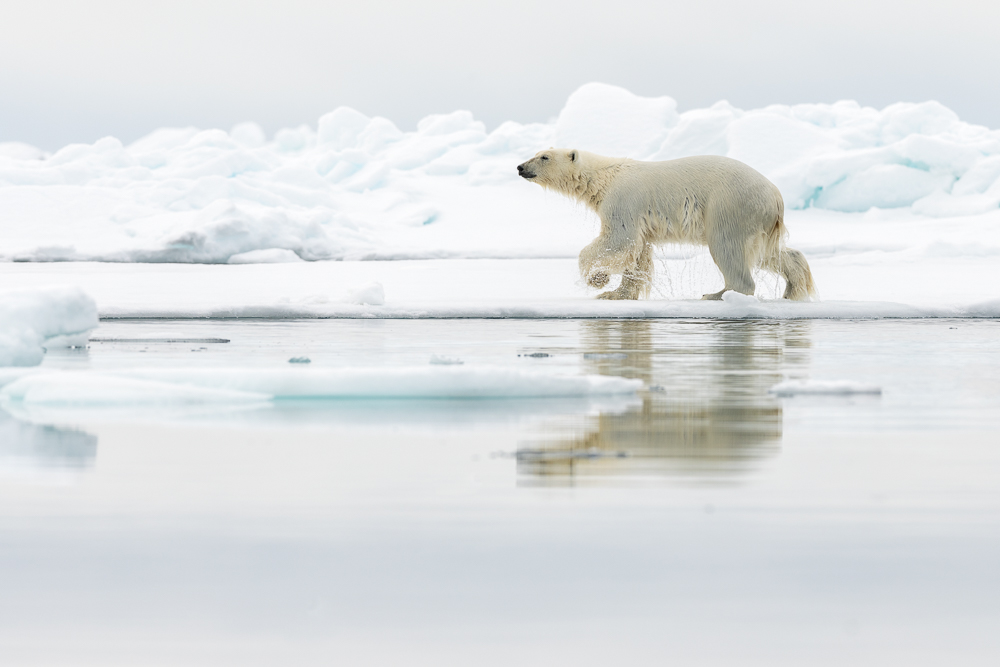
Spending ten full days in the northern pack ice was, in itself, a once-in-a-lifetime privilege. This region, far beyond the 12 nautical mile limit of Svalbard’s archipelago, remains wild and unregulated—raw Arctic wilderness where the laws of nature, not tourism and bureaucracy, still rule. It’s in these outer reaches, around 81.42 degrees north and 30.56 degrees east—just 20 nautical miles shy of Russian waters—that we found the essence of the polar bear’s world. There was even an opportunity to scout for Polar Bears from the hot tub on the back of the ship!

This was the furthest east I have ever ventured with a group of photographers on a Svalbard expedition. The sea was mirror-calm, allowing us to navigate deep into the ice fields. Ice floes drifted slowly under endless daylight, broken only by the occasional pressure ridge or melt pool glowing turquoise under the midnight sun. Every hour held photographic potential: glowing pastels at 3 a.m., long shadows and golden rim light at midnight, overcast diffusions that made every texture sing.

We never rushed. With 18 days at our disposal, we could take the time to wait, to observe, to drift. Patience rewarded us over and over again. It’s this kind of time-rich, immersive experience that elevates a polar expedition from a trip to a truly transformative journey. The 360º degree video below courtesy Yves Adams – thank you.

While polar bears were our primary focus, the Arctic did not limit its generosity to a single species. Walrus were abundant, often hauled out on ice, bobbing in the water beside the ship, or interacting in social clusters on floes. We enjoyed close-up photography of these massive, tusked mammals in perfect, still conditions—reflections in melt pools, nose-to-nose confrontations, even young calves beside their mothers.
Arctic foxes, typically elusive in summer, surprised us with six separate encounters. On a bird cliff slope, a curious fox went about its morning routine. On another day, we watched two fox cubs playing high on the side of a remote bird cliff. Each fox offered not only photographic opportunities but a deeper insight into this clever and resilient predator’s summer behaviours.

And then there were the birds—a vital part of the Arctic tapestry. Ivory gulls circled gracefully above the ice. Glaucous gulls called overhead. Black-legged Kittiwakes wheeled and dived near ice edges, and both black and Brünnich’s guillemots dotted rocky cliffs and ice margins. Each added a layer of life and energy to the frozen world. For the first time in my life, I was privileged to witness four Bowhead whales surfacing in the calm, pre-dawn hours. Massive, ancient, and rarely seen, they moved with quiet dignity through the glass-like sea. The ship held its breath. We stood together and watched history swim past. For me, this was not a photographic opportunity (whales from ships are rarely photogenic), but a moment to put the camera down and simply enjoy the wild Arctic.

Although the pack ice held most of our attention, our route also allowed us to visit some of Svalbard’s most remote and dramatic locations. At Kvitøya, a ghostly white island shrouded in fog, we paid homage to the history of Arctic exploration and experienced one of the most surreal landscapes on Earth. Storøya gave us panoramic views and solitude, a place where the ice meets sky in perfect harmony. And of course, the massive face of the Brasvellbreen glacier front always inspires awe. This photograph from a previous expedition when it was still permitted to fly drones in this region.

Alkefjellet, with its sheer cliffs and swirling bird colonies, offered a different kind of drama. Thousands of guillemots filled the sky, their cries echoing from rock walls. It was a thunderous reminder of the abundance and chaos of life that clings to even the smallest ledge in the Arctic. Yet, throughout all of this, the focus remained always on the bears. Every decision, every mile travelled, was in pursuit of the next potential encounter. It is essential to recognise the stringent regulations that govern interactions with polar bears in Svalbard. Within the 12-nautical-mile territorial limit of the archipelago, all landings and bear observations are subject to Norwegian law. These laws exist to protect both wildlife and humans.
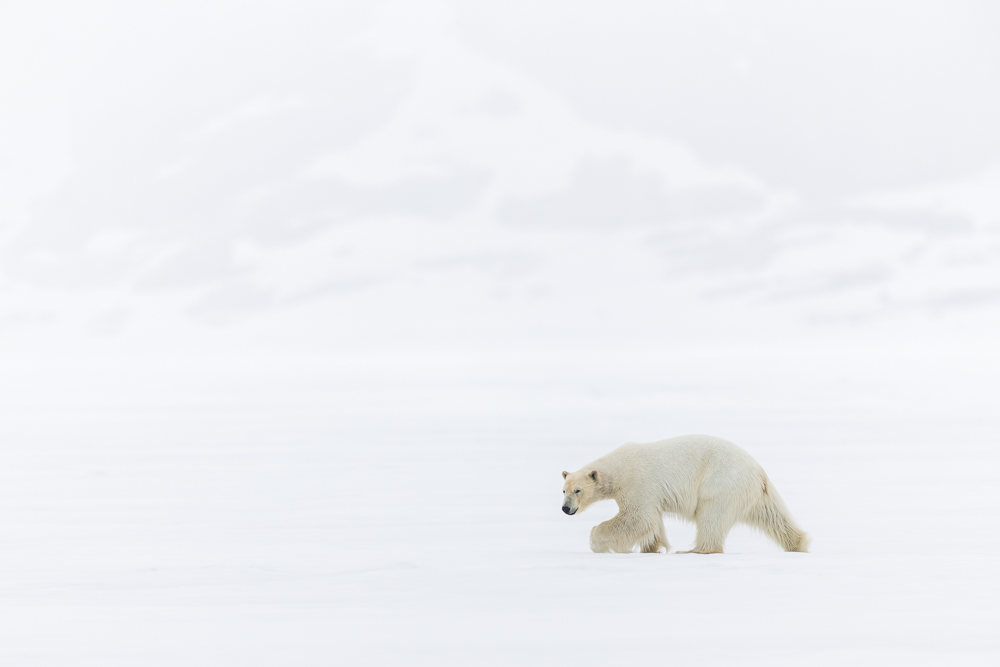
However, during this expedition, we spent the majority of our time well outside this zone. In the northern pack ice, far beyond the reach of these regulations, we were able to photograph bears in a manner that was both free and ethical, always with the utmost respect for the animals and their environment. We never chased. We let them come to us. It’s a crucial distinction—one that makes all the difference in the world.
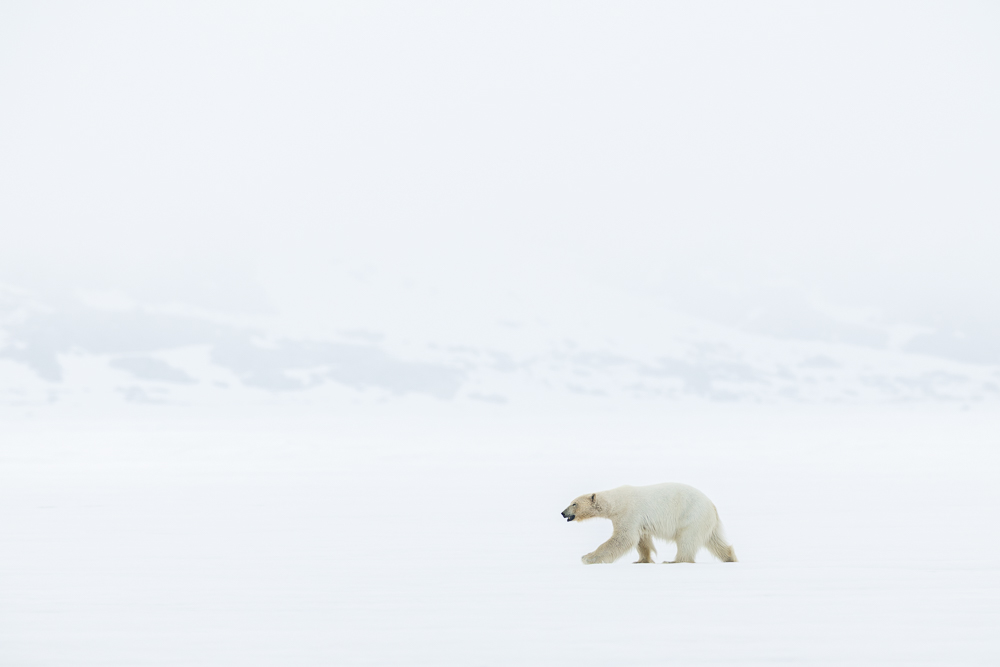
To the best of my knowledge, this was the first dedicated polar bear photography expedition to Svalbard, featuring a comprehensive 18-day itinerary. That extra time proved invaluable. It allowed us to explore farther, respond flexibly to changing conditions, and, most importantly, spend ten full, uninterrupted days in the heart of the pack ice. There were no forced diversions, no unnecessary landings. Just ice, bears, and the profound silence of the Arctic. The photographs included in this report represent only a small fraction of those taken during the expedition. It will likely be many months or even years before I have the opportunity to fully mine all the gems from this trip.

Such a long-duration expedition also fostered something else: camaraderie. Onboard the ship, a deep bond formed between the photographers. We shared meals, techniques, stories, and laughter. We stood shoulder-to-shoulder on deck, eyes locked on the horizon. That sense of shared purpose—of mutual respect for the craft and for the wilderness—was as vital to the experience as the bears themselves.

As I write this, safely back in the world of green trees and mobile reception, I find myself still adrift in that world of ice and light. The images are extraordinary, but it’s the feeling that stays with me: the calm, the connection, the privilege. The high Arctic is an incredibly special place and it is always a privilege to travel there to experience a true polar wilderness.

Our next polar bear expedition to Svalbard is scheduled for April 2026. We will journey in early spring, when the landscape is still cloaked in winter white and the low sun paints everything in gold. That trip will offer new challenges and new rewards—frozen fjords, early cubs, and pristine snowscapes.

I am also currently developing plans for a second, extended 18-day expedition for late autumn 2027. This will be a unique opportunity to experience Svalbard as the light fades into polar night, and the bears move toward the edges of the returning ice. In the meantime, we have just a few places left on our April Winter light expedition next year, 2026.
For now, I carry this summer’s expedition with deep gratitude. To those who joined me—thank you for your trust, your passion, and your companionship. And to the Arctic: thank you for reminding us that magic still exists, far to the north (away from the politics of the world), where the ice never sleeps – Stay Wild.
Svalbard Winter Explorer Expedition April 2025 Trip Report

In the heart of the High Arctic, under a dome of soft grey skies and amidst the ghostly hush of falling snow, our April 2025 Svalbard winter expedition aboard the venerable M.S. Freya delivered one of the most unforgettable polar experiences in recent memory. This journey, which spanned over 1,000 nautical miles through the ice-choked fjords and remote coastlines of the Svalbard archipelago, offered a profound immersion into the raw, elemental beauty of the Arctic. Our vessel carved its way through frozen seascapes, bringing us deep into the polar wilderness, far beyond the reach of most travelers.

The expedition was marked by a gentle yet relentless Arctic quiet, broken only by the distant cracking of sea ice and the occasional calls of returning seabirds drifting on the wind. For those of us who return to Svalbard year after year, this trip stood out not for its dramatic apex predator encounters—though three polar bears were spotted at a distance—but for its rare and deeply moving walrus experiences, the likes of which we have not witnessed in over a decade.

Svalbard’s walrus populations have steadily rebounded in recent years, thanks to concerted conservation efforts. Yet it is still unusual to find them during the winter months when sea ice is more dominant and access to haul-out sites more difficult. This year, however, was different.

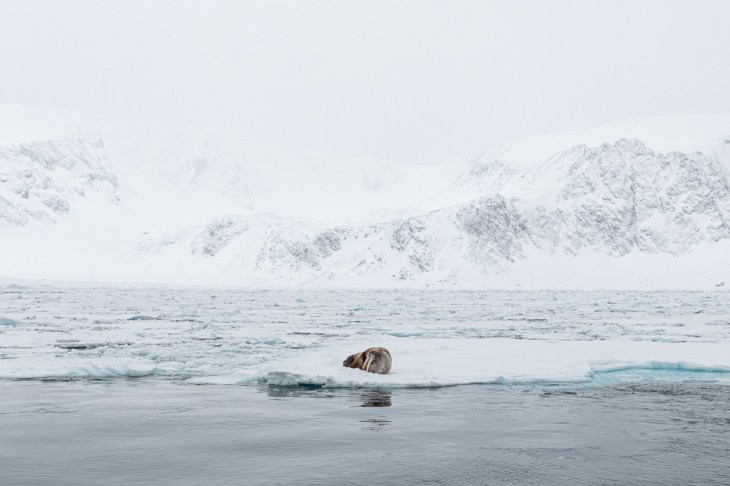
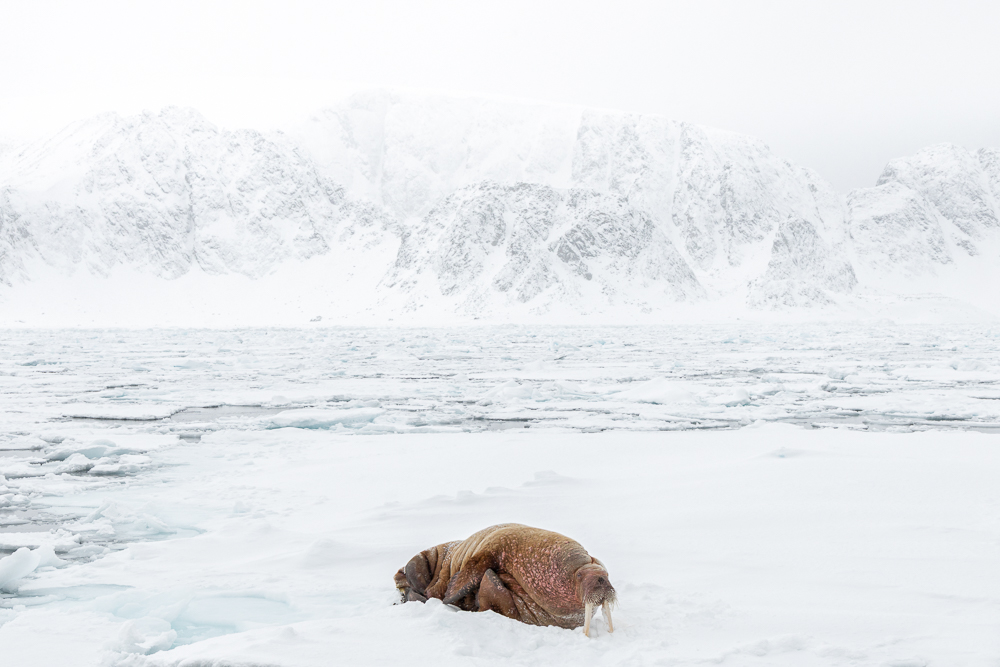
On multiple occasions, we were graced with close, extended encounters with walrus resting along snow-covered ice floes. What made these interactions truly magical was the weather: soft, steady snowfall that blanketed the entire scene in a delicate hush, muting the world and rendering the encounters almost surreal. These conditions, rarely aligned, offered dreamlike opportunities for photography. The walrus, with their richly textured hides dusted with snow, lay peacefully as we watched from our ship, their breath curling visibly in the frigid air.

Photographically, these moments were gold—low-contrast palettes of greys and blues, punctuated by the soft white of snow, created minimalist compositions that spoke of the essence of the Arctic in winter. No dramatic light was needed; the mood and texture carried everything. Many in our group expressed that these were the finest walrus encounters they had ever experienced. I would have to agree.

This expedition was never about chasing wildlife in numbers, but about immersing ourselves in whatever the Arctic chose to reveal. And although polar bear sightings were sparse—just three individuals were seen, all at significant distance—each encounter served as a poignant reminder of their quiet dominion over this landscape. Their tracks, however, told other stories. We crossed few fresh trails along beaches and sea ice, including one particularly striking set that meandered along snow-covered ice at sunrise, untouched and perfect in the soft light.

The polar bear is the undisputed icon of the Arctic, and while some may measure success by proximity or frequency, I have always believed that the real gift is simply to be in their world, to tread respectfully and recognize their sovereignty over these wild lands. With the increasing intrusion of tourism, industry and science into Arctic ecosystems, such moments—even distant—hold immense value.

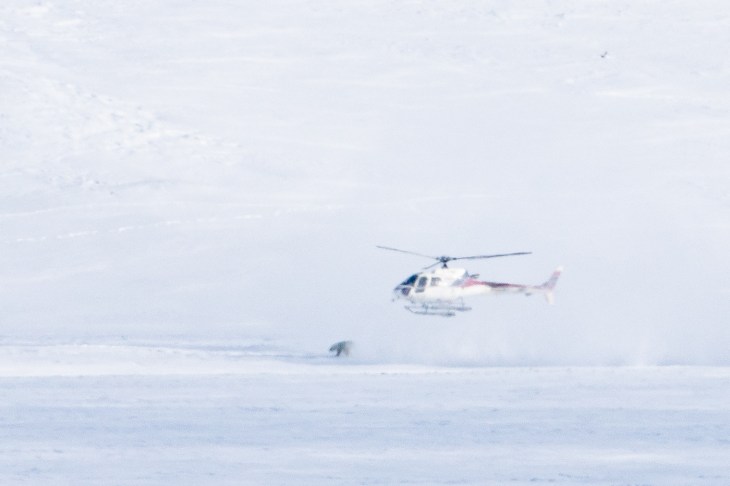
It is, however, impossible to discuss this year’s polar bear encounters without acknowledging a deeply troubling incident that occurred during our expedition. A widely condemned event involving a helicopter harassing a polar bear in the Svalbard region sent shockwaves through the wildlife and conservation communities. Images of the helicopter hovering aggressively over the bear, clearly disturbing its natural behavior, was both heartbreaking and enraging.

Such actions are antithetical to everything we stand for in responsible Arctic travel. They highlight the urgent need for stronger regulations around scientific research and more rigorous enforcement to protect vulnerable species from thoughtless human intrusion. As stewards and storytellers of this environment, we must be loud in our opposition to such behavior and unwavering in our commitment to ethical field practices. The Arctic gives generously to those who approach with humility; it turns cold and silent to those who do not. A full accounting of this encounter has been documented HERE. It has also been sent to the Governor of Svalbard, and news agencies around the world. It has been published by the NRK in Norway and the Svalbard Posten. To date, the only response from the Governors office has been a short statement that “they are looking into the incident.”

What this expedition lacked in high-density wildlife sightings, it more than made up for in landscape photography. Svalbard’s mountains, encased in thick coats of snow and ice, appeared every bit the guardians of the north—stoic, jagged, and infinitely photogenic. Every fjord we entered revealed new variations of winter’s mastery: towering cliffs draped in icicles, frozen waterfalls cascading in silent defiance of gravity, and icebergs locked in sea ice like sculptures waiting to be discovered.

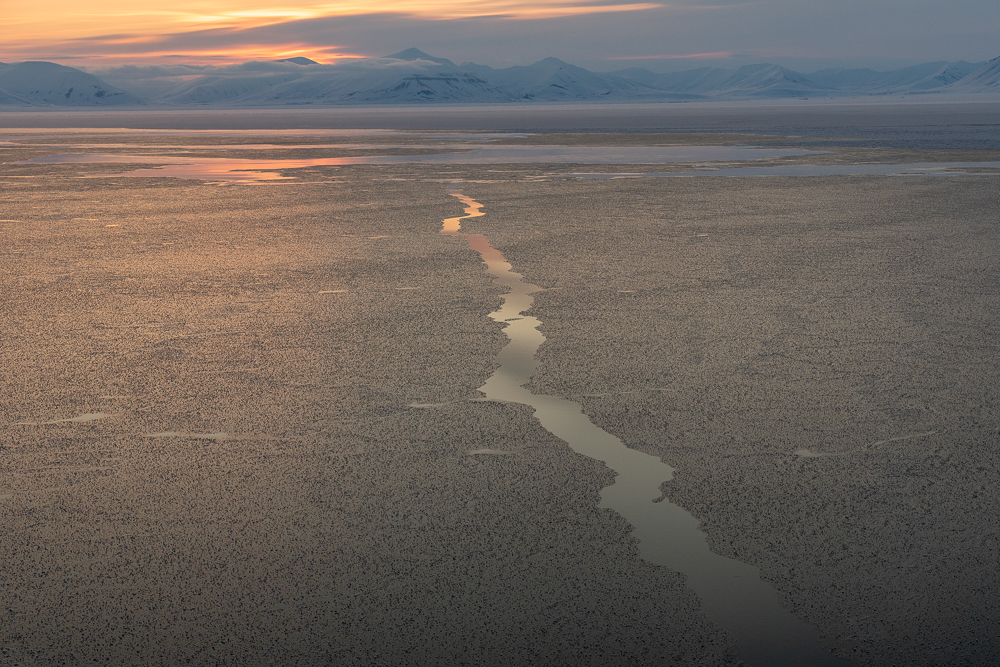
At times, the weather closed in, surrounding us in a soft monochrome mist that stripped the landscape to its essential forms. At others, the skies opened just enough to allow ribbons of pastel light to skim across the snowfields. These fleeting moments of light—never dramatic, but always subtle—offered those patient and attuned enough the chance to make quiet, powerful images.

Each evening, as we gathered in the warm dining room of the Freya, trading stories and reviewing the day’s experiences, there was a shared sense of reverence for the landscape we were privileged to explore. We had come seeking solitude, wildness, and truth—and the Arctic had provided, in its own sparse, magnificent way.

This expedition reminded me, as it does each year, that Svalbard in winter is a place of paradox: stark yet tender, harsh yet comforting, desolate yet full of life. It is a place where patience is rewarded, where minimalism sings, and where every track in the snow tells a story worth listening to.

As we completed our 1,000 nautical mile journey and began the long voyage back to Longyearbyen, I was struck once again by the importance of returning—not just physically, but mentally and spiritually—to places like this. Places where the wild still rules, and where we are reminded, as always, that the greatest gift of the Arctic is its silence—and how it teaches us to listen.

We will return again next year 2026 to lead another winter expedition aboard M.S Freya in search of miraculous wildlife encounters and ice covered landscapes. This is a rare opportunity to explore one of the Arctic’s most remote and pristine landscapes at the height of its frozen majesty. Designed specifically for keen nature and wildlife photographers, this small-group expedition offers intimate access to Svalbard’s breathtaking winter wilderness, including encounters with walrus, Arctic foxes, and polar bears, all set against a backdrop of towering snow-covered mountains and sculpted sea ice. With 24-hour twilight and the potential for moody, ethereal light, this is a once-a-year chance to capture the Arctic in its most cinematic and atmospheric state. Guided by Wild Nature Photo Travels extensive field experience and deep knowledge of polar conditions, this trip is not just a photographic expedition—it’s an immersion into the raw soul of the Arctic. Spots are extremely limited. Adventure with purpose—photograph with intention.

Svalbard in Winter 2025 Expedition Client Feedback

Today, I just wanted to share some wonderful positive feedback I received from our just completed April, 2025 Wild Nature Photo Travel expedition to Svalbard (Trip Report coming in the next few days). Shared experiences like this are the reason I started this company and continue to be the driving force for taking photographers into some of the wildest and most remote locations on our planet. Thank you to Andy and Jennifer for taking the time to write such wonderful feedback.

“Dear Fellow Pilgrims on the Svalbard Sojourn, And so it goes, as one might mutter in a post-epic journey haze, that we find ourselves penning this note, our hearts still adrift in the icy dazzle of April’s photographic odyssey to Svalbard—a place so starkly, absurdly beautiful it could make a grown man weep or a cynic reconsider their trade. We’re trying, in our fumbling, human way, to stitch together a thank-you that does justice to the kaleidoscopic wonder of what we all shared. Spoiler: words are flimsy things, like paper boats on an Arctic swell, but we’ll give it a go.

First, a nod to Joshua and Susy, our intrepid guides, who didn’t just lead us through the frostbitten wilds but opened their journey to us, letting us piggyback on their passion like hitchhikers on some cosmic road trip. You didn’t just show us walruses lolling on ice floes or the ice bear’s ghostly shimmy; you gifted us a lens—literal and otherwise—through which to see our fragile world anew. And to every soul on this expedition, from the gear-hauling, tripod-toting shutterbugs to the quiet ones who whispered awe at the edge of a glacier: you made this thing hum. You were, to borrow from that old B.W. Stevenson tune, the embodiment of “Everyone is helpful, everyone is kind / On the road to Shambala.” Svalbard, with its endless snow and light that bends time, felt like a glimpse of that place. Each click of our shutters, each shared fika of coffee in the bone-chilling cold, was a step on that road. We weren’t just chasing images; we were chasing renewal, love, the kind of adventurous spirit that makes you feel, for a fleeting moment, like you’ve cracked the code to being alive. And you all—every one of you—were kind, were helpful, were the sort of companions who make a journey feel like a destination in disguise. Our gratitude is a clumsy, oversized thing, too big for this page, but it’s real. We wish you all safe travels, continued success, and more journeys that feel like Shambala’s just around the bend. Keep chasing the light, literal and otherwise. – Andy & Jennifer”

Update on the Helicopter Polar Bear Incident in Svalbard 26th April 2025

It has taken some days, but tonight I finally received a response from the Governor’s office in Svalbard in relation to the horrific story I reported on HERE regarding the harassment and stressful darting of Polar Bears via helicopter. Since I wrote about this story it has been published by NRK in Norway as well as Svalbard Posten in Longyearbyen and several other news outlets have also run the story. It has also been widely shared on Social Media and photography websites including PetaPixel.

The response from the Governors office reads: “Hello, The Governor is looking into whether the institution has complied with all conditions in the permit.”

I have sent the following correspondence to the Governor’s office in response: “Good morning Eva,  Thank you for letting me know that the Governor is now conducting an investigation into this incident. I am preparing a paper for submission to the Governor with time-stamped photographs as well as the GPS co-ordinates that clearly shows Jon Ars’s recounting of the 3-4 minute chase is a blatant lie. The photographic time-stamped evidence is indisputable.  

I am also preparing signed letters from all 12 passengers and the Captain that were on board M.S Freya that  witnessed this event that corroborate the events that took place as reported. The 2nd mate on board also timed the event and has provided evidence to me as well.

Further to the above – there may be a case with the civil aviation authority regarding the manner of reckless high speed low-level flying we witnessed during the chase. This is a question for the CAA.

In addition to the above, questions need to be asked surrounding the fact that this chase and hunt was conducted in front of our expedition vessel without regard to the passengers who had paid to see and observe a polar bear in the wild (safely from a distance of 3km).

This is not just a question of wether the helicopter and researchers adhered to all the regulations (which I find very hard to believe given all of the above), but of the double standard being applied in Svalbard regarding Polar Bears, photographers and researchers.

Broader questions need to be asked at the highest level of the Norwegian Polar Institute about the continual need for tagging of Polar Bears (removal of pre-molars, claws, invasive use of heart and pulse rate monitors and collars on female bears). Or, is the NPI merely trying to avoid having its funding cut from the Norwegian government by continuing ‘research’ that is no longer necessary. How many more bears have to be stressed and killed by invasive sedation methods??? What is the current count on dead bears from this methodology in Svalbard? I am aware of at least two from NPI employees in recent times.

These issues need to be treated with utmost priority and I will continue to push this through mainstream media until Polar Bears are no longer harassed or stressed in the name of unnecessary science. And, until such time, that the rules surrounding viewing and photographing of Polar Bears in Svalbard are revised in accordance with common sense and applied equally to all who visit Svalbard – be it general tourist or scientist.”

What can you do to help? Please sign the petition HERE.

Wildlife Photography and Wildlife Respect

I wanted to share a photograph that shows how a Polar Bear (or any wildlife for that matter) can be not only be safely photographed (this image shot before the new restrictions in Svalbard – more than a year ago), but also treated with the highest degree of respect and not interfered with, harassed or stressed in the slightest. We observed this magnificent bear, walking slowly across some fast ice near a glacier at a distance of more than three kilometres. We parked our small expedition ship (12 passengers aboard – all photographers) at the edge of the fast ice, shut off the engine and watched and observed through our binoculars for more than two hours – enjoying the moment with respect, awe and hopeful anticipation. Slowly, the bear approached of its own volition and curiosity, without need for us to do anything other than remain calm, quiet and patient. All on board remained quiet, observant and patient. Cameras at the ready, we began to photograph the bear from the safety of our ship as it walked slowly along the fast ice, still at distance from the boat. Of course, it noticed us, as it sniffed the air in passing in curiosity. But, it was never interfered with. It was never stressed and it was never chased. It was treated with the highest degree of respect it deserves. The Polar Bear is the king of the Arctic. It deserves nothing less than the highest degree of respect at all times. When the bear was ready, it continued its journey along the edge of the fast ice, disappearing into the distance. It was never chased or followed and there was never stress caused. There was never a question of danger from the safety of the expedition ship. When the bear had gone, we started our engine and continued our journey. This is how you photograph wildlife with respect. Perhaps scientists who chase bears with helicopters could learn a thing or two from wildlife photographers about how to approach and photograph wildlife with respect and patience. Even in this ‘cropped’ photograph, taken with a 600mm lens and a 1.4 TC (effective focal length 840mm) the bear was never closer than a couple of hundred metres. Wildlife photography of Polar Bears doesn’t need a wide angle lens to be powerful, emotive and dramatic. What is required is an understanding and respect for the wildlife. Wildlife FIRST. Photography second. This is not a comparison between Science and Tourism. That is not the intent. This is a comparison between methodologies. How Polar Bears can be engaged with, with respect, or as in the case of the recent helicopter incident by researchers, without respect that unduly stresses the animal. For the record, I am not against the Science of Polar Bears. I am against invasive, stressful methods for Polar Bear sedation and research such as chasing bears from helicopter.

Edit: Update: 24th April 2025 8.35pm AEST – Svalbard Posten has posted an article about the incident HERE. NRK Media in Norway has also posted a front page Article HERE.