In early February 2024, I led my annual winter expedition to the remote Hornstrandir Nature Reserve in northwestern Iceland to photograph the Arctic Fox. This is an expedition I have been leading every year for many years now (excluding the COVID pandemic) and is one very near and dear to my heart. Over a decade ago, I visited this remote Nature Reserve to find and photograph the Arctic Fox. Now, more than ten years later, and having guided many groups to this location, this is one of my number one preferred workshops to lead.

As I have written frequently, the Arctic fox is Nature’s most remarkable feat of engineering and is an incredibly photogenic subject in the snow-covered Iceland landscape. In the far north of Iceland, the Arctic fox is protected inside the Nature reserve, and it is possible to get extremely close to these wild animals. The north of Iceland is probably the best place in the world to photograph the Blue Morph variety of the Arctic Fox. While the white morph dominates most of the Arctic, the Blue Morph is more common only in Iceland. In Winter, the chocolate brown coat of the blu-morph makes for a stunning contrast against the winter snow.
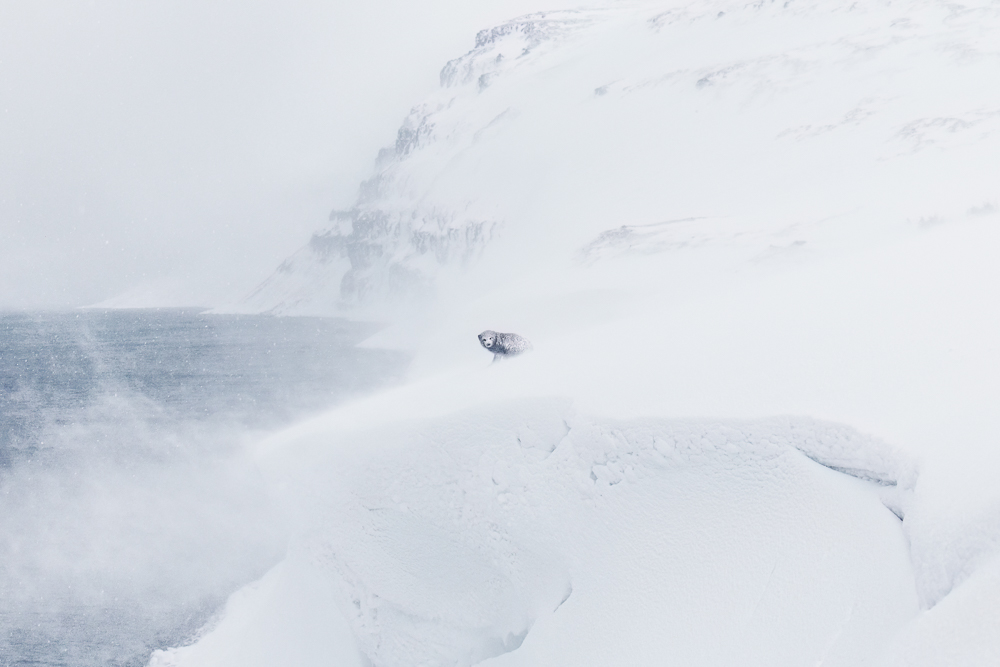
For this expedition, our group convened in Isafjord in the northwest of Iceland early in the morning on our scheduled departure day. We then took the roughly one-hour boat ride (on our chartered boat) across the fjord on calm seas to our remote cabin—our warm and cozy home for our week-long workshop.
This year, we had five individual foxes around the cabin. Two of the five were two-year-old cubs we only saw on our last day. I have been photographing several of these foxes, including the dominant female and male for years, and we are very much old friends. Seeing at least two first-year cubs active in the area was also fantastic. There was no successful breeding last year, so it is excellent that the two-year-old cubs from the prior year are doing well.
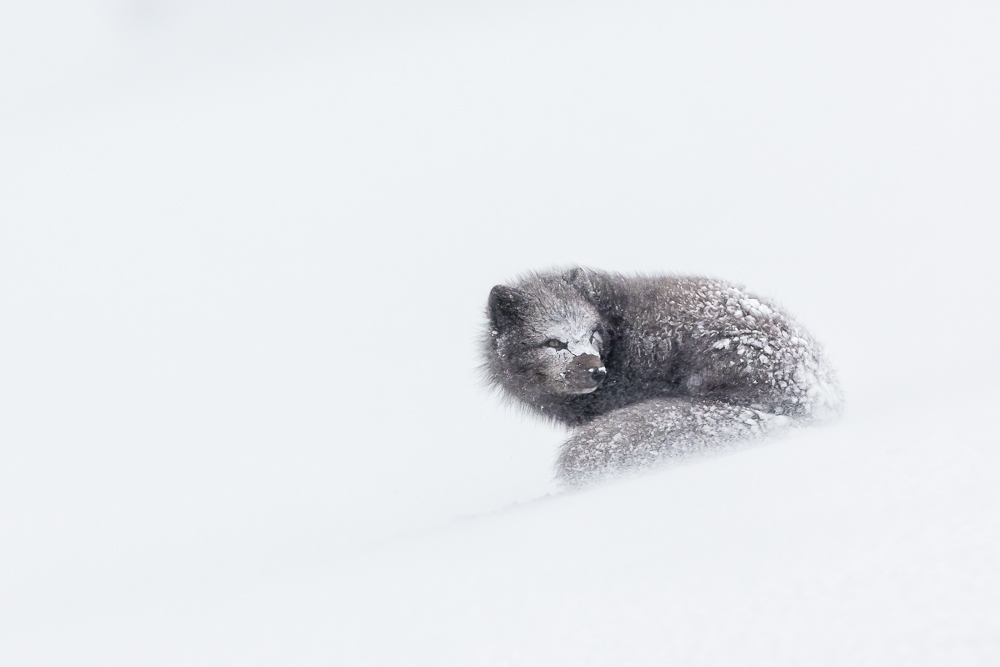
Winter in Iceland can be particularly fickle, and one never knows what the weather will bring. It is possible to have everything from sunshine to blizzards to driving rain. This year, we began our workshop with fantastic snow conditions that saw us photographing for many hours across our days in the field. We were straight into the photography on day one on arrival. Bags were unpacked, camera gear assembled, and we were straight into photographing Arctic Foxes. The foxes are typically most active in the early morning and late afternoon, which at this time of year meant we were out shooting from about 9:30am until roughly 4:30pm. The winter light is short this time of year in Iceland, but the sun’s low angle makes for superb photography throughout the day.

Over the next few days, we experienced various conditions that perfectly summarised Iceland’s freeze/thaw climate. Conditions for our workshop this year were absolutely superb, with ideal conditions for capturing the drama of Iceland’s winter weather. We had everything from breaking sun to blizzard conditions, providing an excellent opportunity to create a diverse portfolio of images during the workshop.
This year, we had some wonderful snow cornices and deep snow drifts that provided outstanding opportunities to capture dramatic images of the fox in the landscape. It was possible to make photographs with everything from 16-35mm all the way to 600mm,
I will return to the far north of Iceland in the Winter of 2025 to lead another workshop for the Arctic Fox and then again in 2026. There are now just a couple of places remaining on my 2025 expedition. If you have ever wanted to photograph Nature’s most remarkable survivor in Winter, this is your opportunity. Our remote cabin is ideally situated as a cozy home away from home and provides a beautiful base from which to photograph the Arctic Fox. Places are minimal; please contact me for complete details.

Those who appreciate wildlife photography and would like to own some of the photographs from these expeditions can order my book on the Arctic Fox from my online publishing house – Melrakki Publishing.


 www.WILDNATUREPHOTOTRAVEL.com