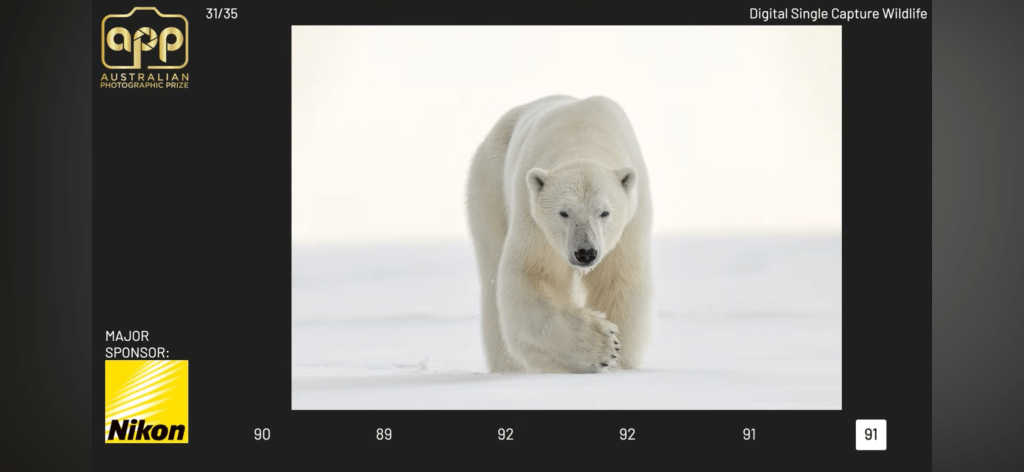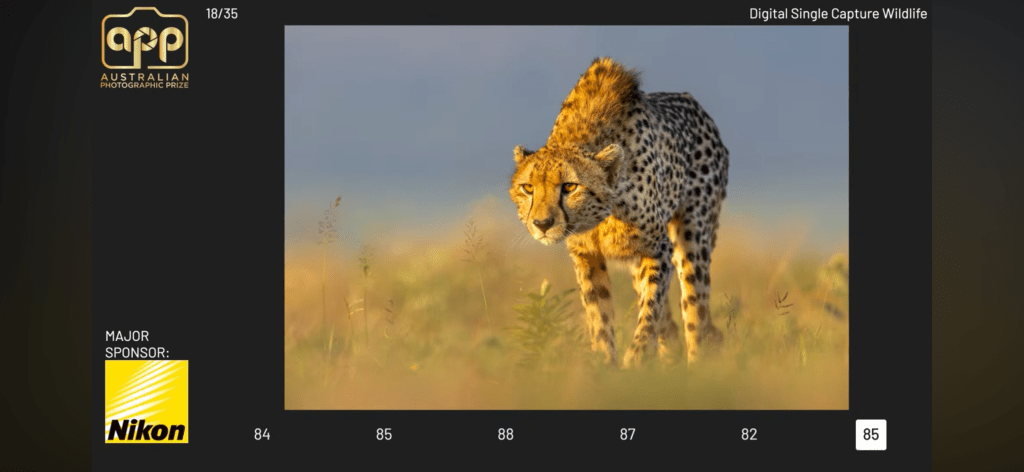
Australian Photographic Prize 2024 Nature Single Capture Gold Awards

Since the voluntary administration and closing of the AIPP (Australian Institute of Professional Photography), I have steered clear of the new Australian Photographic Prize Award. Like a phoenix from the ashes, the Australian Photographic Prize arose as a direct result of ex-AIPP member’s desires to maintain a high-level photographic (both print and digital) competition in Australia for both professionals and amateurs (after the Australian Professional Photography Awards that were an inseparable part of the AIPP became no more). I chose to avoid (not boycott) the Australian Photographic Prize (APP) in its first two years since I was on the board of directors that took part in the decision to shut down the AIPP via voluntary wind-up due to predicted and inevitable insolvency (based on projected cash flows). At the time, this was the fiscally responsible decision (although much has been touted otherwise), and I still believe this to be the case as a director who was privy to the full picture of the organization’s finances. As of today, there still remains a small chance the AIPP may be re-born – pending a Supreme Court decision on what is to become of the remaining surplus funds. I have a feeling we have not seen the end of the AIPP, and it may yet re-emerge in one form or another.

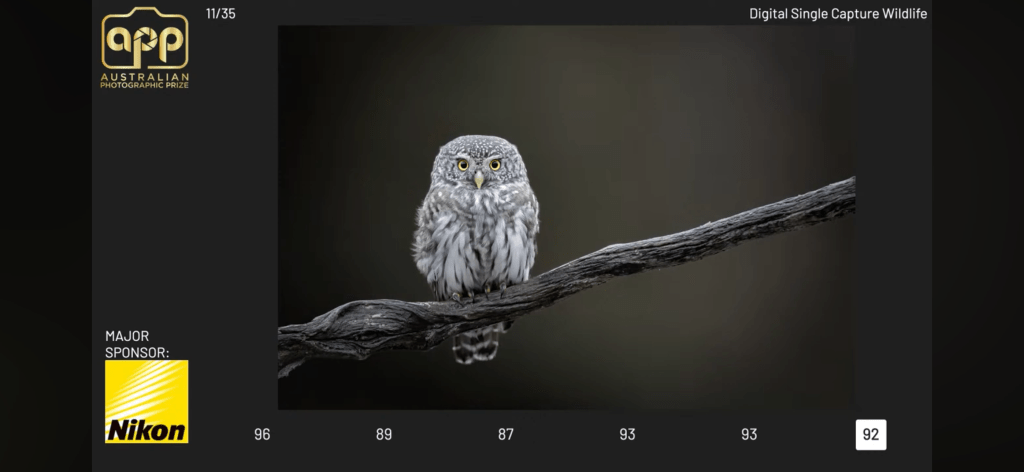
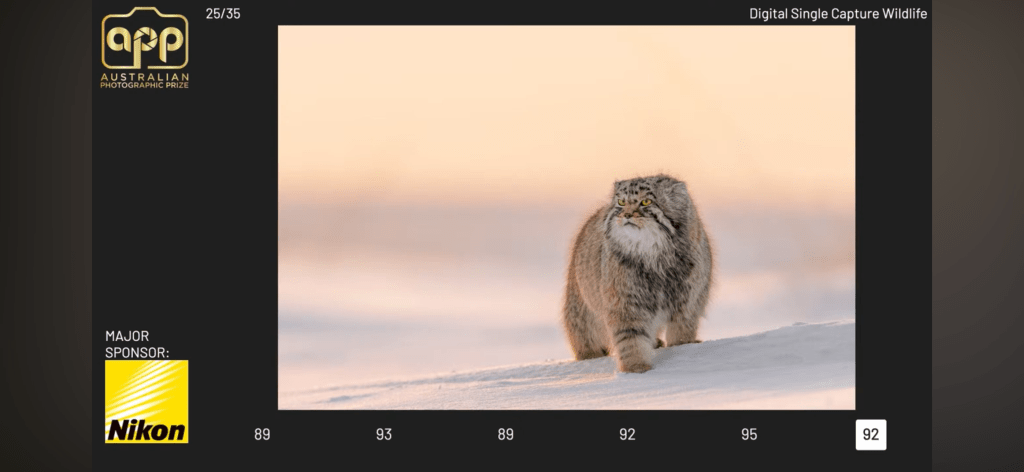
This year, I decided to put the closure of the AIPP behind me (since it felt like the dust had significantly settled) and enter the single-image Nature category of the Australian Photographic Prize. The Nature category was judged yesterday, and I just caught up on the preliminary results on You-Tube during some downtime here in Mongolia (on my summer workshop for Pallas Cats). Much like the deceased APPA awards, the APP awards are judged by a team of five professional photographers on a moderated panel. Of the five photographs I chose to enter this year, all five made the final round of judging (top 35 entered images). Three of the five have gone to receive highly coveted Gold Awards, and the remaining two racked up Silver with Distinction awards, with one photograph (of the two back-lit Cheetahs) being a single point off a fourth Gold award. Screenshots of the judge’s scores and images are included below. You can also watch the recorded live-steam for the Single Image Nature category below. The overall winner of the category will be announced in the next few days.

Addendum: Since this post, I have been notified that two of my photographs (the owl and Pallas cat) were in the final round of judging as grand finalist images.
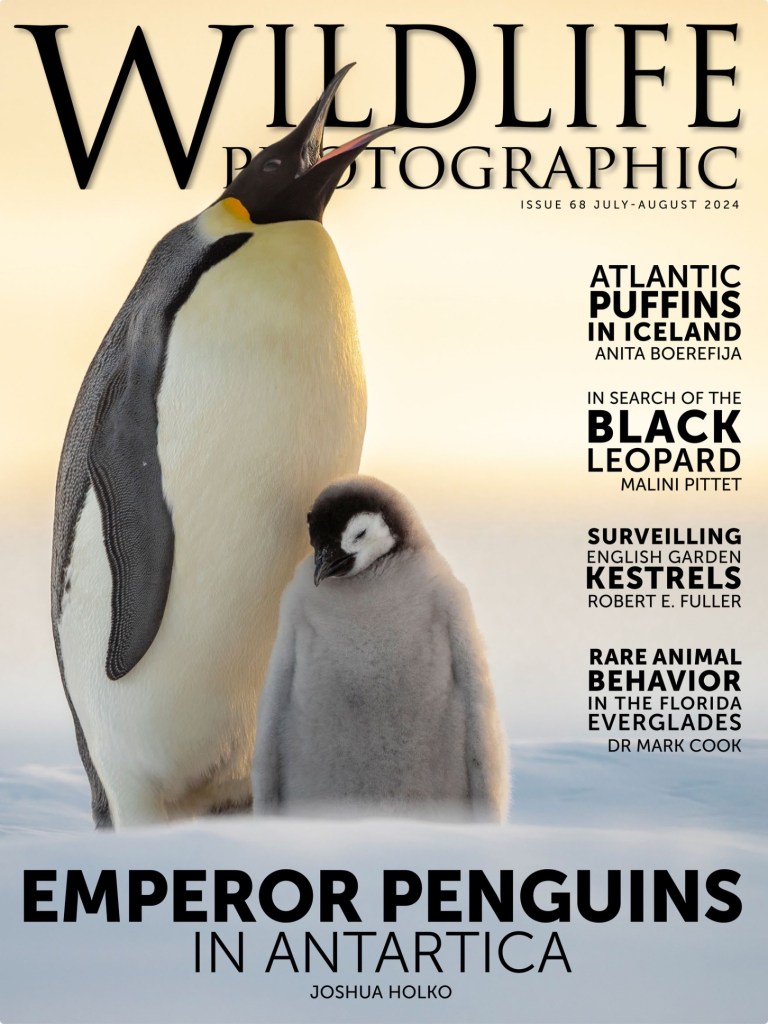
Wildlife Photographic Emperor Penguin Cover Shot July / August 2024

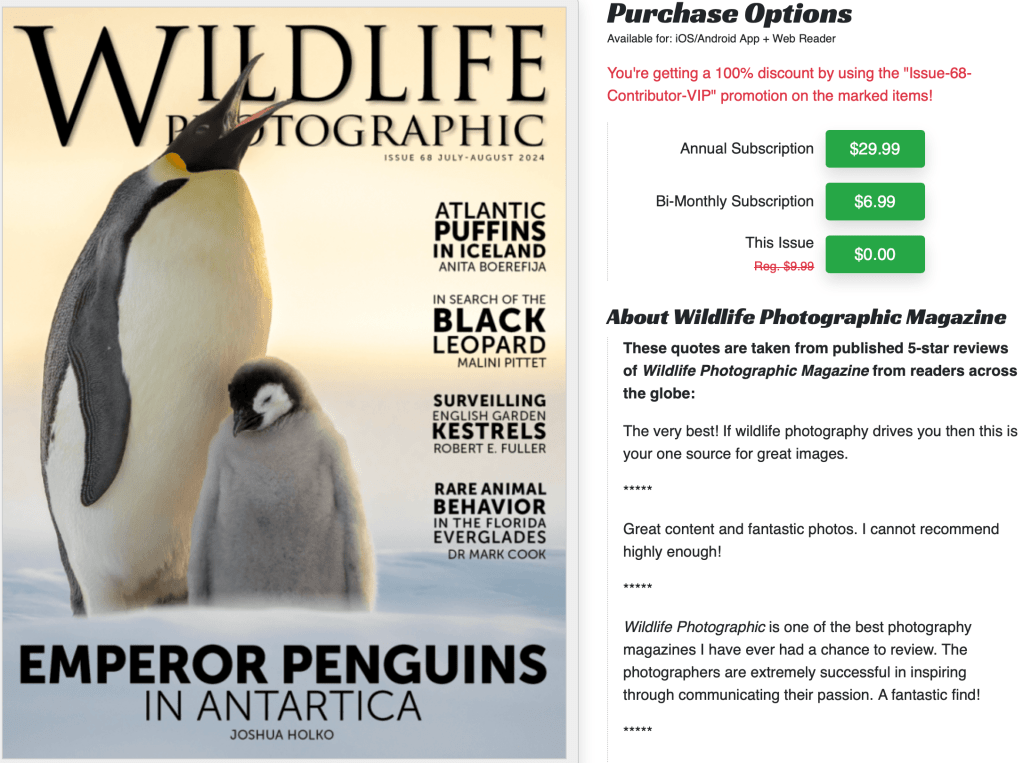
The just-published July / August 2024 issue of Wildlife Photographic magazine includes one of my photographs of Emperor Penguins on the front cover and a feature article on my experiences photographing Emperors in the deep south of Antarctica. This is the seventh time I have been published in Wildlife Photographic and the sixth time I have been fortunate to score the cover shot! (the last five cover shot editions were on Walrus photography,  Grey Wolf PhotographyPallas Cat Photography,  Arctic Fox Photography, and Polar Bear Photography). I have also been previously been published in Wildlife Photographic for my Emperor Penguin photography.

Wildlife Photographic can be read on iOS and Android devices, as well as from any computer via our Web Reader at MagsFast. Please use the following link to obtain your free issue:  Free Subscription to Wildlife Photographic Magazine

Departing for Mongolia and Pallas Cat Kittens July 2024

A few weeks at home have already come and gone, and later this evening, I am making the journey back to Mongolia (this time in Summer) to lead my Pallas Cat Kittens workshop in the far eastern Steppe Region. I am very much looking forward to returning to this incredible country (I was last there in January in Winter earlier this year – read the trip report) and am excited about the opportunities to photograph Pallas Cats and their kittens in the warm summer sun. I will be offering this workshop again in July of 2026, and preliminary details are now on my website at www.jholko.com/workshops. See you in Mongolia!

Iceberg in Antarctica

Photograph of the Month July 2024 Cheetah Brothers at Play

The photograph of the month for July 2024 comes from my recent Zululand South Africa masterclass workshop (Read the Trip Report) and is of two Cheetah brothers playing at sunset. This was an extremely fortunate situation whereby we came across the Cheetahs in an open area of the game reserve right at sunset. I had the luxury of choice of how to shoot this scene and could have chosen to side-light it or even to take it front-lit. However, it was immediately clear to me that the backlight would provide the most dramatic image. The key to this sort of image is to always expose the brightest part of the frame (the sun) and to let the shadows fall where they may. In this exposure, the shadows were quite dark, and I opened them just slightly in post-production to give just a hint of the Cheetah’s spots. Of course, the moment is dramatic, with both Cheetahs off the ground. A fast shutter speed ensured both cats were sharp, and I stopped the 400mm f2.8L lens down to f6.3 to ensure I had sufficient depth of field to keep both cats sharp. The low angle of view was achieved by lying down in the grass – one of the key benefits to this particular location.

I am offering this masterclass workshop again in May next year -May 7th to May 16th 2025. Whether it’s your first visit to Africa or you’re a seasoned safari-goer, the 2025 Zululand ground-level wildlife masterclass offers an incredible opportunity to photograph African wildlife at eye level. The exclusive camp takeover provides unmatched access and flexibility, enhancing the photographic experience for all participants. With only a few places remaining, please contact me soon to secure your spot. This workshop is an extraordinary adventure, offering unique and powerful photographic opportunities.

Zululand South Africa Wildlife Masterclass Worskhop Report 2024

In June 2024, I led what has become an annual (and much looked forward to) ground-level wildlife masterclass workshop in Zululand, South Africa. While African safaris are commonplace, the opportunity to work at ground level with wildlife (including Cheetahs) is unique and incredibly special. This approach provides chances for emotive, dynamic and powerful photographs that are impossible from traditional safari vehicles. Seeing cheetahs from the ground, walking with them, and photographing them on the hunt offers an unparalleled experience, as does the opportunity to photograph from custom high-end hides designed from the ground up for photographers. Not only does this workshop offer these opportunities, but it also boasts some of the only low-angle safari vehicles in all of Africa. Add all this together, and you have photographic opportunities that are simply unmatched anywhere in Africa.

This year’s workshop took place in Zimanga; a private game reserve in Zululand, spanning over 70 square kilometres and home to numerous species, including those beyond the African Big Five. The reserve features several state-of-the-art hides, enabling photography at ground level and at night, when many species come to drink at water holes. These overnight hides offer dramatic and unique photographic opportunities. In addition, this year we also took the opportunity to photograph at night from custom low-angle safari vehicles with spot lights to capture dramatic images of lions on the hunt.

For the duration of this workshop we had the entire game reserve to ourselves, allowing us unparalleled access and flexibility in our activities. This setup enabled us to tailor each day to the participants’ needs, enhancing the quality and variety of their photographic portfolios. Full camp takeover such as this is the key to ensuring everyone maximises their opportunities during our stay. Of course, anyone can visit a game reserve on their own, but being part of a full camp takeover means you get a lot more time in the hides and a lot more preference selection on daily activities. What this translates to is a far better portfolio of photographs at the end of the trip.

The highlight for many this year was the chance to walk with and photograph wild cheetahs on the hunt. This ground-level perspective is a game-changer, offering dramatic and unique shots of predators from a low angle. This year, we had several unique encounters, including some very close and dramatic moments with two fabulous Cheetah brothers. We were also fortunate to have outstanding backlit opportunities at the end of the day. This type of light is my favourite to photograph wildlife, and some beautiful photographs resulted from this session.

The overnight hides we use are equipped with kitchens, flushing toilets, and sleeping beds. They provide comfort and readiness for action with infrared triggers to alert you when wildlife is approaching. These hides are unmatched anywhere else in Africa and provide opportunities for dramatic and unique photographs of wildlife at night.

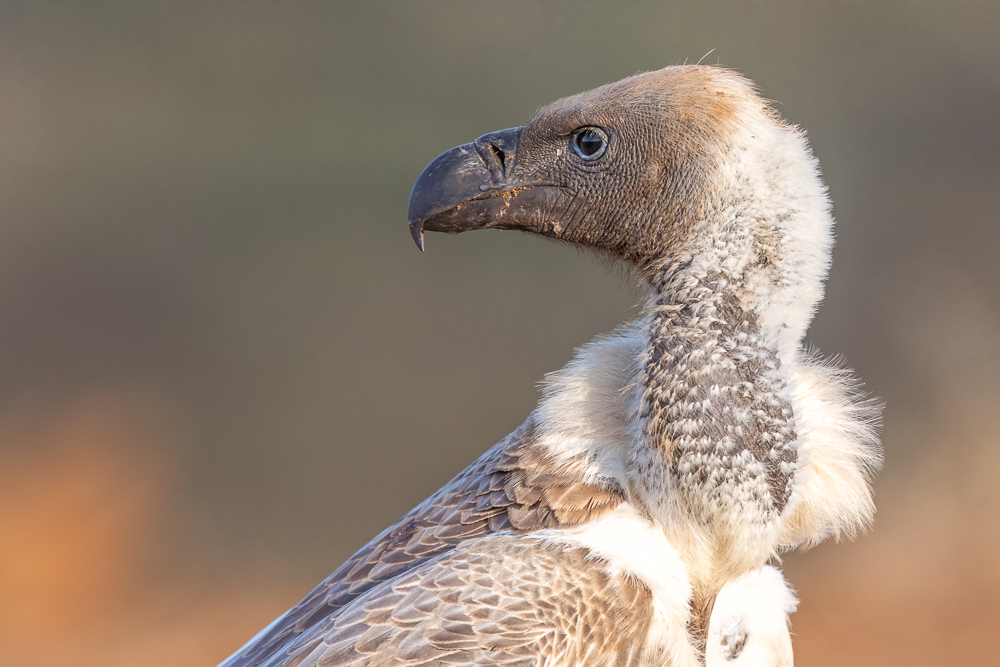
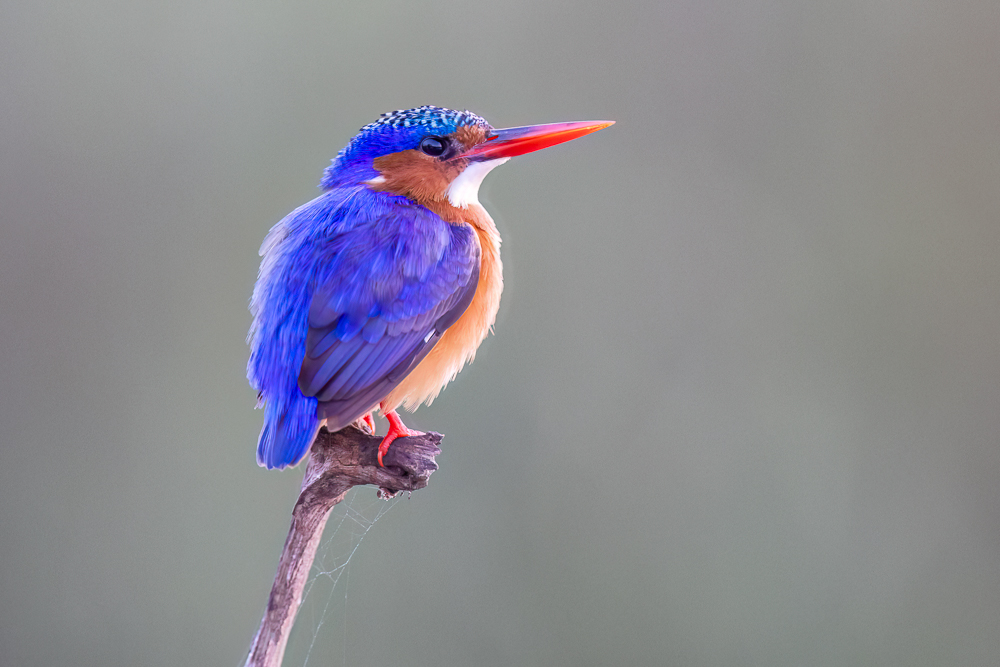
During the workshop, we also photographed various African bird species, including the beautiful Malachite Kingfisher (a personal favourite), with lenses as short as 70-200mm. This year, I did not keep a complete bird list, but sightings included many incredible species of Eagles, Vultures, Owls, and more.

I am offering this masterclass workshop again in May next year -May 7th to May 16th 2025. Whether it’s your first visit to Africa or you’re a seasoned safari-goer, the 2025 Zululand ground-level wildlife masterclass offers an incredible opportunity to photograph African wildlife at eye level. The exclusive camp takeover provides unmatched access and flexibility, enhancing the photographic experience for all participants. With only a few places remaining, please contact me soon to secure your spot. This workshop is an extraordinary adventure, offering unique and powerful photographic opportunities.