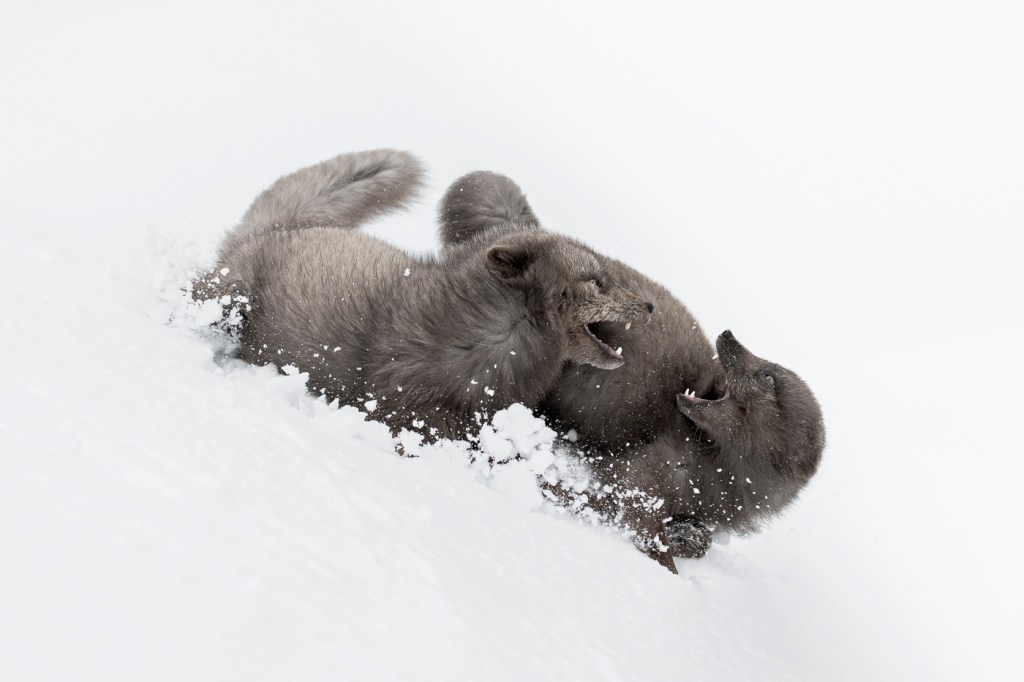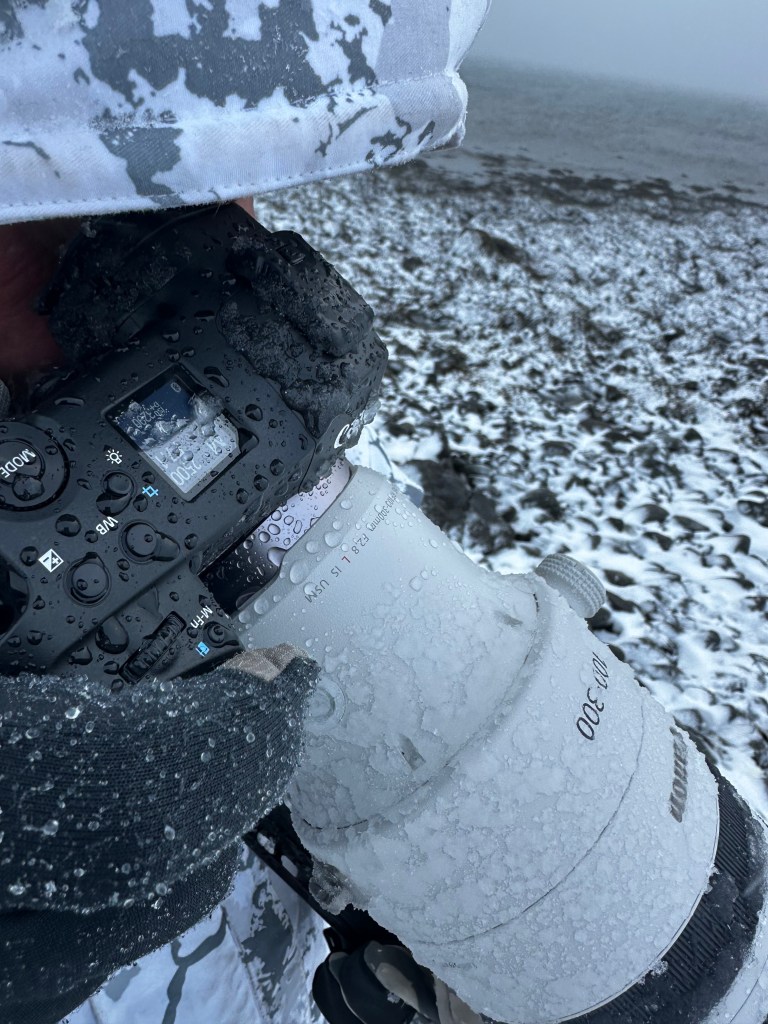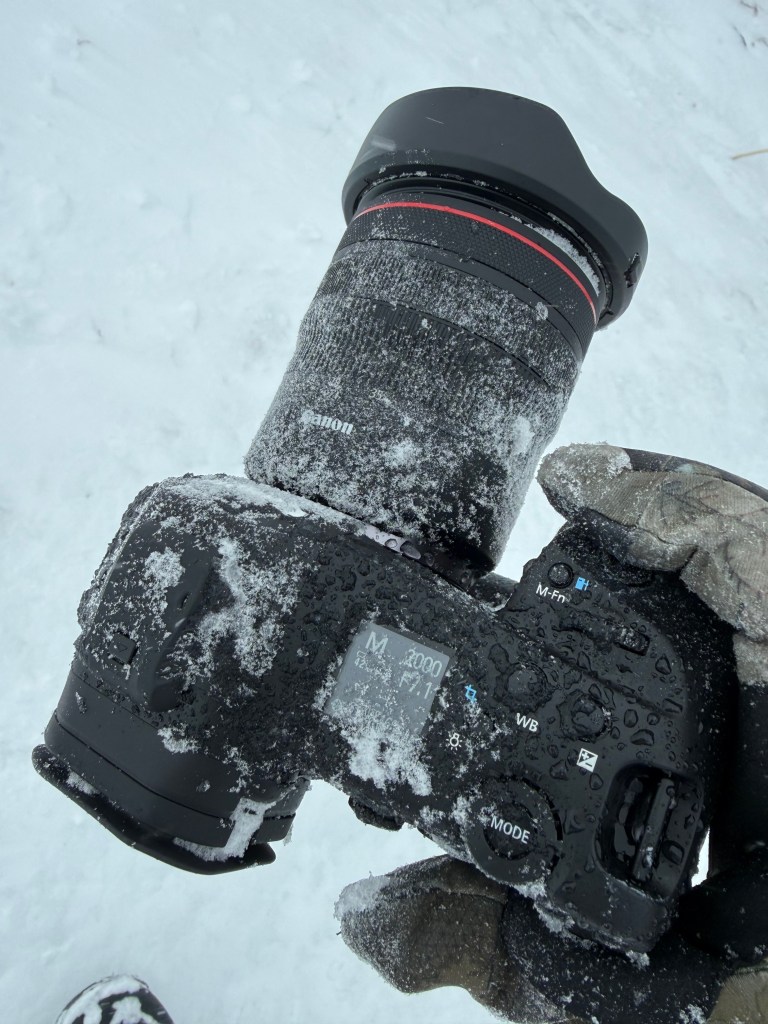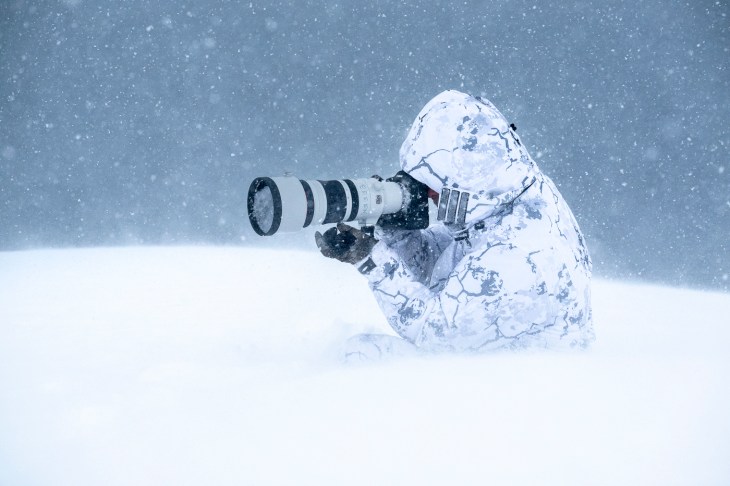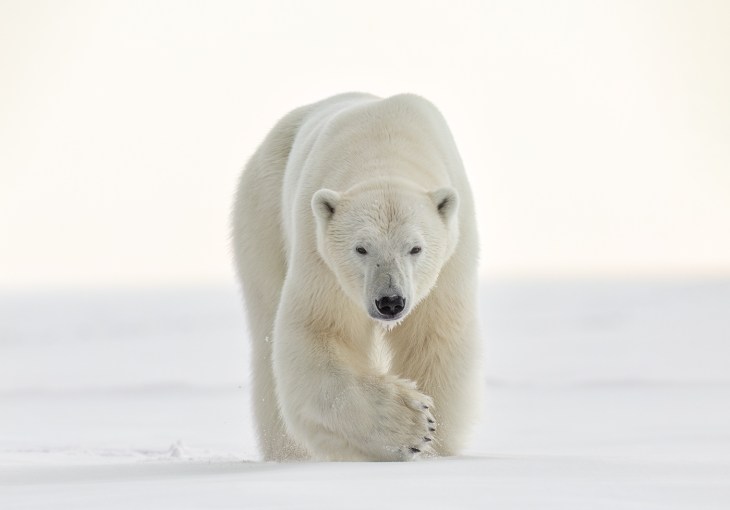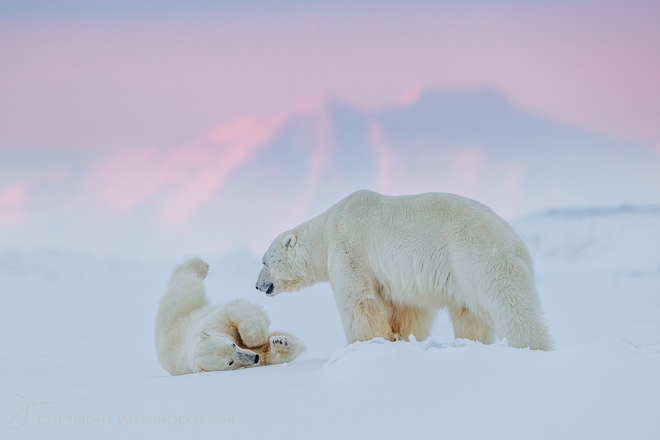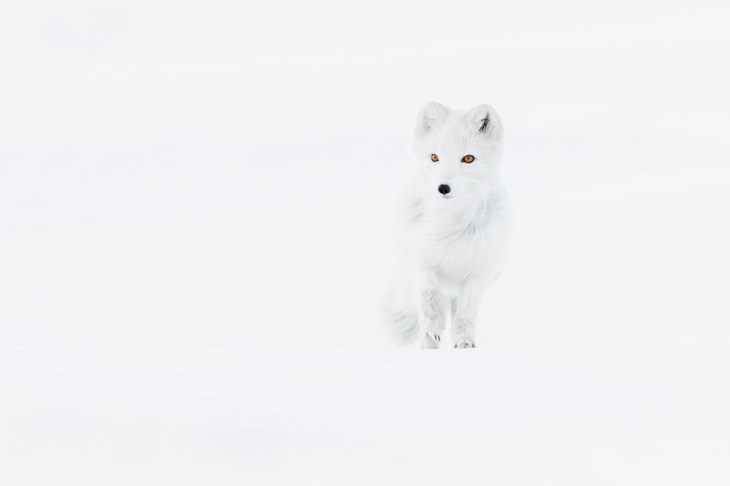
By popular demand, we have decided to offer another Svalbard Spring Light expedition in April next year. The expedition will run from the 7th to the 15th of April, 2027 and include nine nights / ten days. Early April is one of the very best times to visit Svalbard. At this time of year, the sun is still low in the sky, and the landscape is bathed in golden light.
This early Spring expedition to the archipelago of Svalbard is for keen and passionate wildlife and landscape photographers who want to capture evocative and powerful photographs of Arctic wildlife (including Polar Bears, Arctic Fox, Reindeer, Walrus and more) and dramatic ice and snow-draped landscapes in golden light.
Svalbard is one of the best places in the world to photograph Arctic wildlife and landscapes, and at this time of the year, the sun will be extremely low in the sky, casting a golden glow across the landscape. We have a small group size and personal, one-on-one tuition for the duration of the workshop. There will also be many landscape opportunities during this workshop, although our primary focus is always on polar bears when possible.
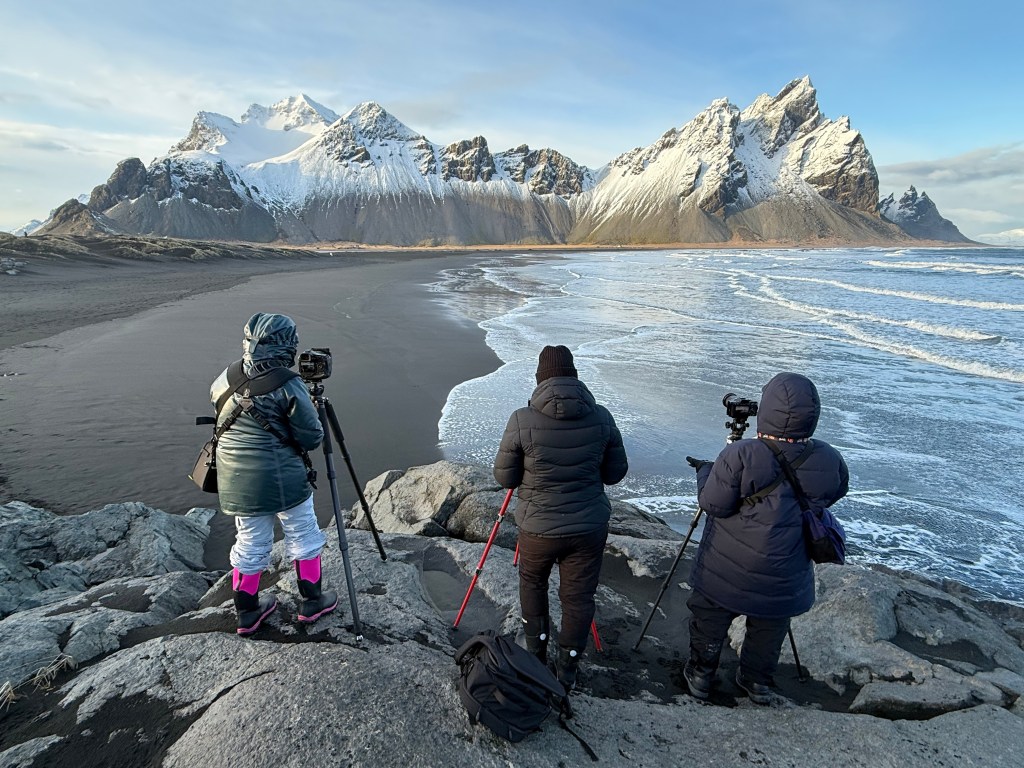
The landscape in and around the Svalbard archipelago is stunning and primordial. Glacier-scarred mountains dominate the landscape and will be a significant subject for our cameras during the expedition. The landscape opportunities are, therefore, as varied and important as the wildlife encounters.
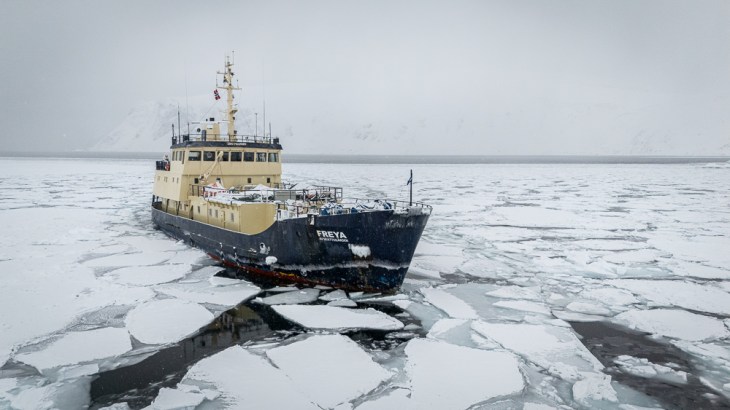
We will use the ice-hardened expedition ship M.S Freya, enabling us to navigate deep into the pack ice, searching for and photographing Polar Bears, landscapes and other wildlife. M.S Feya is regarded as one of the best ships in the Arctic for Photography. Our expedition ship is also equipped with sufficient zodiacs (2 x Zodiac MKV models) and crew for all photographers to be shooting simultaneously, with plenty of room to spare for camera equipment – So bring what you need!
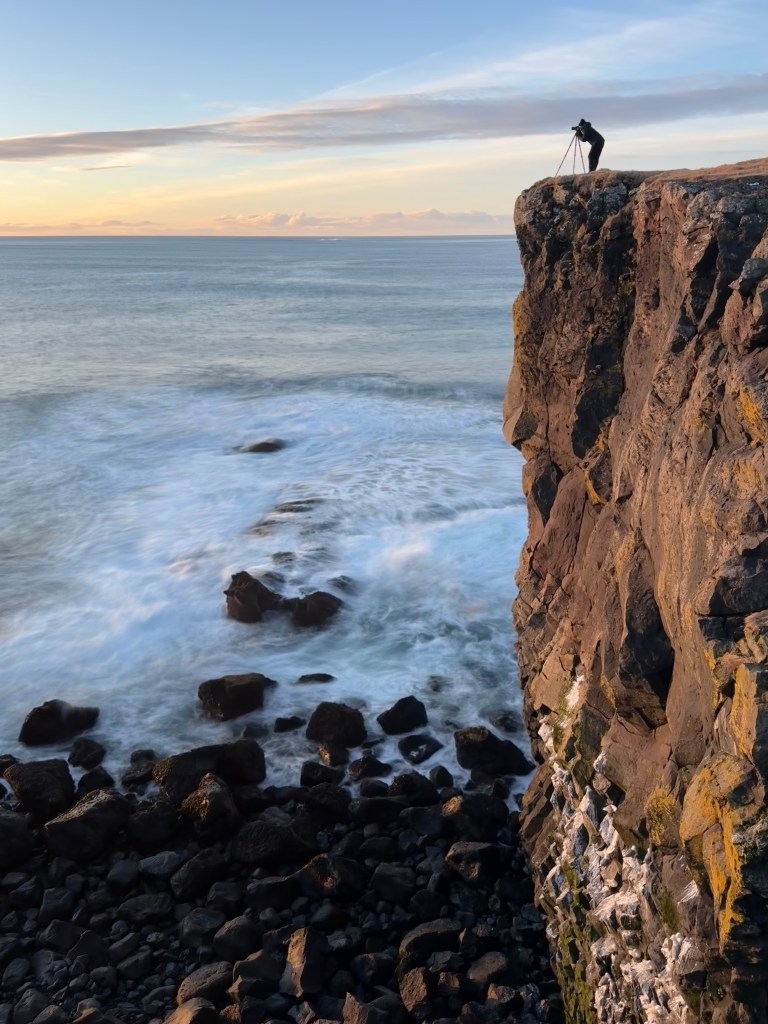
There are places in the world where time seems to be all but irrelevant—where silence has weight, and where life exists on the knife’s edge of wilderness. The Hornstrandir Nature Reserve, perched at the extreme northwestern edge of Iceland, is one such place. It’s here, amid weathered fjords and wind-bent tundra, that the elusive Arctic fox raises its young—unhunted, unharried, and at peace in one of the last true wilderness sanctuaries of the North.
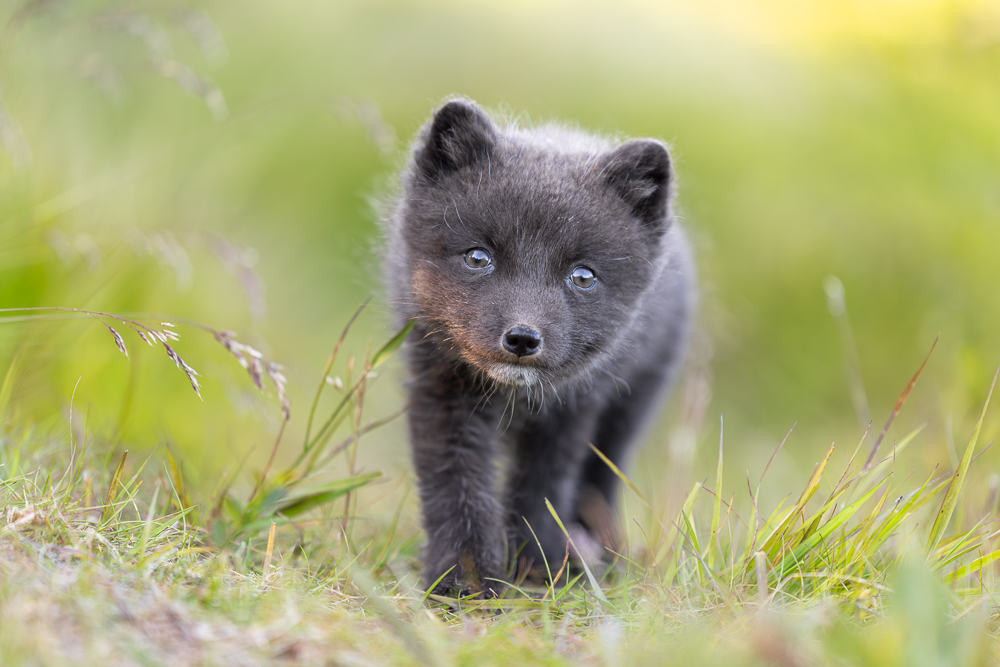
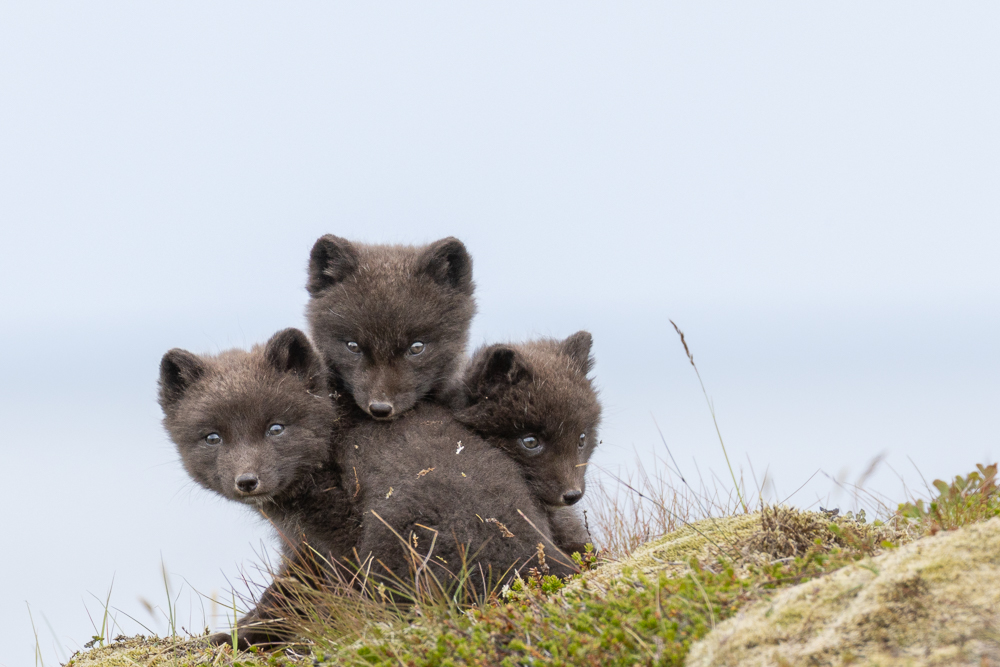
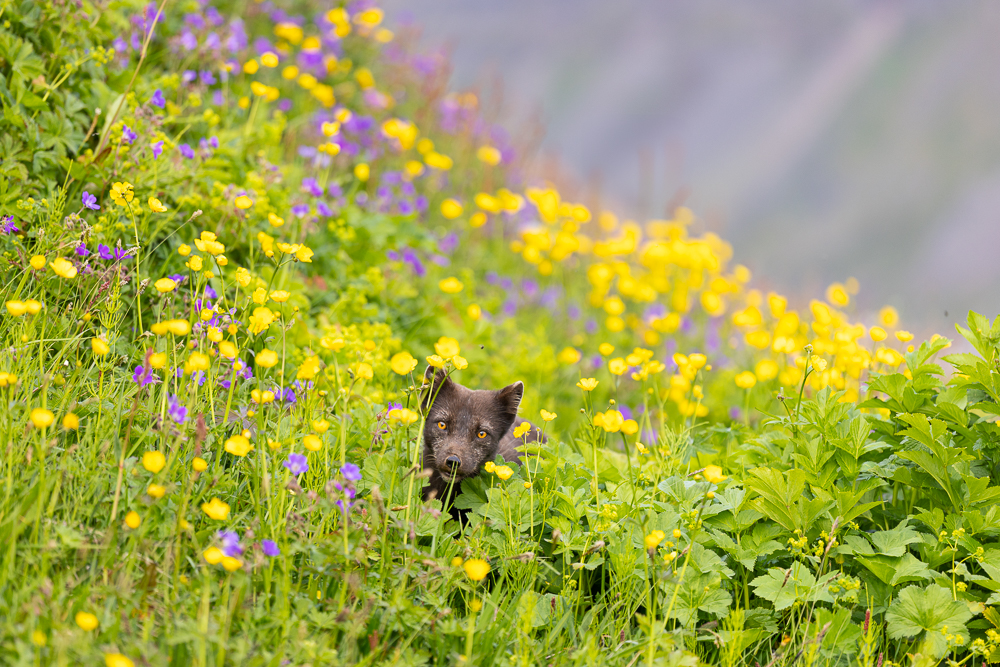
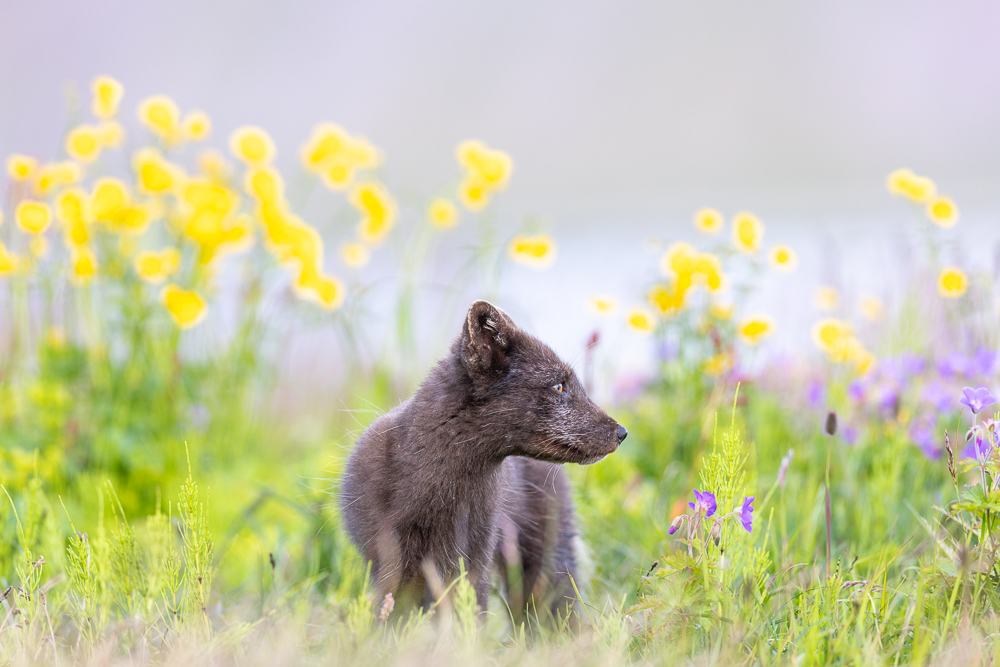
From July 1st to 7th, 2025, I had the privilege of leading a small group of photographers deep into this forgotten corner of the world for a summer workshop focused on Arctic fox cubs. What unfolded over those seven days was extraordinary: four healthy, playful cubs, fresh out of their den, exploring the world for the very first time. We had timed our arrival perfectly.
Our journey began in Ísafjörður, a sleepy town surrounded by steep fjords that comes alive in the summer months. From there, we boarded a privately chartered boat, cutting across the still ocean waters to Hornstrandir—a region completely uninhabited, unreachable by road, and where nature reigns supreme.
Upon landing on the shoreline, we were met with calm winds, mild temperatures, and the telltale silence that defines this place. The weather, often a wildcard in the Icelandic summer, held beautifully in our favour—a perfect mix of overcast skies for soft light and clear days for contrast and depth.
We walked in with our gear, a short but deliberate walk through tundra meadows and coastal cliffs until we reached our remote cabin—our “home away from home” for the week. Modest, but wonderfully cozy, the cabin offered reliable power, heat, and a warm shower, giving us a comfortable base from which to photograph and recharge both batteries and bodies.
The Arctic foxes in Hornstrandir are protected under Icelandic law and unaccustomed to human threat. This gives us a unique window into their lives—a rare chance to observe them with minimal disturbance. We knew from previous years where a known female fox maintained her territory, and it was near this location that we carefully established our viewing distances, always respectful, always still. And then, like a miracle borne of silence: four cubs.
Emerging from the mossy lip of their den, blinking in the soft summer light, they appeared with hesitant steps and twitching ears. They were healthy, inquisitive, and full of energy, bounding across the lichen-covered rocks, chasing each other through patches of Arctic thyme, and occasionally collapsing in an exhausted heap under the watchful gaze of their mother.
The timing could not have been better. They had just begun venturing out from the den—still clumsy and unsure, but filled with curiosity. For a wildlife photographer, this is the golden moment: when behaviour is at its most revealing, when innocence radiates through every movement, and when images tell stories as ancient as nature itself.
What makes photographing foxes in Hornstrandir so special isn’t just the opportunity to see them—but the privilege to be so close to them. These animals, free from hunting pressure, exhibit a calm curiosity rather than fear. They observe, approach, and sometimes come so near you can hear the soft pad of their feet over the tundra.
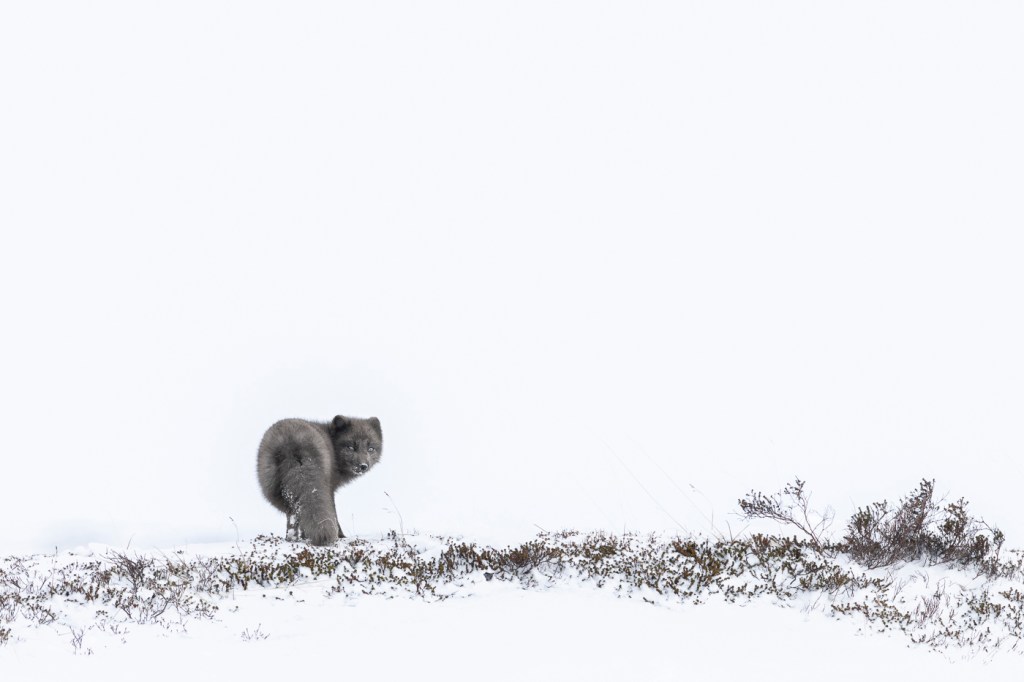
Each day we returned to the den, observing routines and behaviours. The mother—sleek, somewhat shy, and blue-morph—would occasionally trot off on short hunting forays, returning with fish scraps or shellfish to feed her litter. The father appeared more often, showing no fear and regularly approaching for an inquisitive look at our cameras.
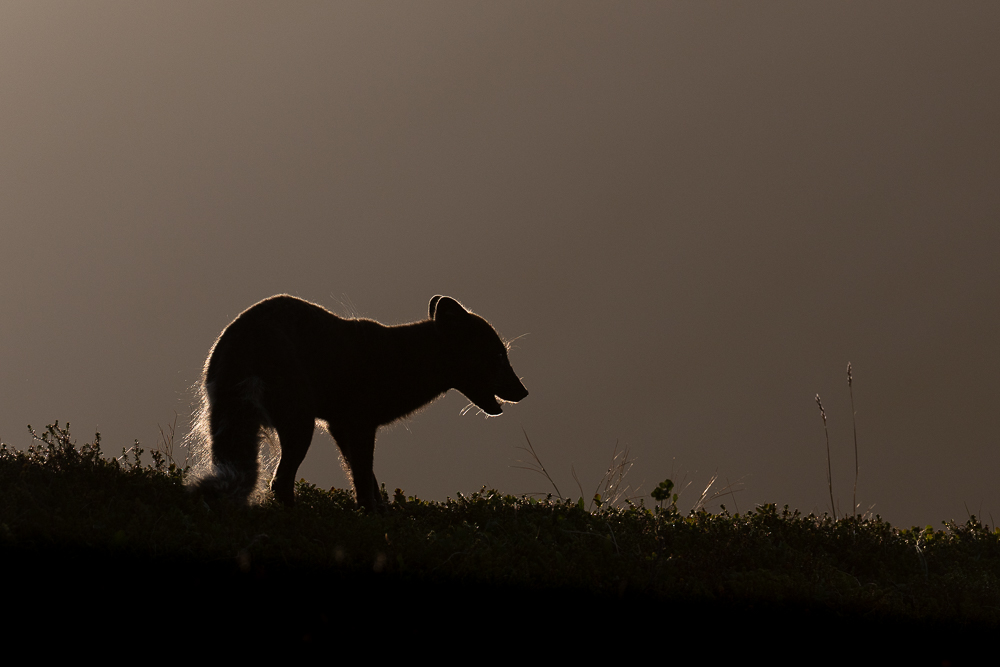
Photographically, we were gifted beyond measure. Overcast days gave us beautiful softbox light, perfect for portraits and detail-rich imagery. On clearer days, the drama of shadow and contrast lent itself to more stylized compositions. Whether it was cubs backlit in the golden light of an endless Arctic evening, or nestled in the moss under moody skies, every session offered something new.
The joy of these moments wasn’t just in the photography—but in the quiet communion with the land and its wild inhabitants. No roads, no cars, no noise. Just wind, sea, and the faintest rustle of foxes through grass. Arctic summer light is both gift and challenge. With nearly 24 hours of daylight, we were afforded unparalleled flexibility in our shooting schedule. We often chose to photograph in the “shoulder hours”—early mornings and late evenings when the light was most flattering and the cubs most active. Remarkably, the weather held throughout the trip. Overcast periods were long enough to allow deep exploration without ever feeling rushed. For a workshop in a location as volatile as the Hornstrandir coast, this was a blessing not to be understated.
One early morning brought backlit opportunities near to the den. The effect was sublime—foxes outlines luminous against the dark backdrop. We whispered to each other that it felt like being inside a dream, and the resulting images remain among the most evocative of the trip.
Our remote base was everything a field workshop should be: rugged, warm, and welcoming. After long hours on the tundra, we would return to hot meals, shared stories, and laughter around the table. We reviewed our images, shared techniques, discussed post-processing ideas, and most importantly, connected as a group of like-minded creatives driven by a shared love of wild places.
There is something profound about being unplugged from the world, present only in the moment and the landscape. No internet. No distractions. Just photography, nature, and the camaraderie that grows from shared experience.
While the fox cubs were our primary focus, Hornstrandir never fails to deliver more to the attentive eye. Ptarmigans, still in mottled plumage, clucked their way through the underbrush. Seabirds wheeled overhead—kittiwakes, Arctic terns, and the ever-charismatic black guillemots. Occasionally Harlequin ducks could be found and photographed at the river mouth.
One evening, as the sun dipped low across the fjord, a group of common seals surfaced near the shoreline, curious about our presence. And once, in the quiet hour just after midnight, I watched a white-tailed Eagle glide silently along the ridge—not common, but not impossible here.
Yet, no sighting ever pulled our hearts away from those cubs. Every time we returned to the den, it felt like a reunion. The trust they showed us grew stronger each day, and by the end of the week, we felt like we were witnessing the emergence of a new generation—one that had accepted our quiet presence as part of their world.
On our last morning, the light broke crystal-clear over the fjord. We made our way back to the den one final time. The cubs were more adventurous now, ranging further, playing harder, their confidence growing with every hour. We spent our final moments watching them tumble and yip, playing in the morning light. I watched through the viewfinder, but also over the top of the camera, wanting to etch this memory into my mind as much as onto my memory card.
Then, slowly, we packed our gear, said our goodbyes to the family we had quietly shared space with for a week, and began the walk back to the coast. Our private boat met us in the calm waters, and as we pulled away from Hornstrandir, the reserve faded into mist and memory.
This workshop was, without doubt, one of the most intimate, joyful, and meaningful I’ve ever had the privilege to lead. To witness and photograph Arctic fox cubs just as they emerge into the world is to be part of something deeply elemental—life at its beginning, in one of the world’s last great refuges. For all of us on the trip, the experience will echo long after the images are printed and the gear cleaned. It was more than photography. It was connection—to nature, to the wild, and to each other.
For those who feel the pull of the wild, who seek authenticity, silence, and the raw beauty of life on the edge—Hornstrandir awaits. Please get in touch with us to express your interest in a future workshop to this wonderfully wild and remote location.
Ultimate Polar Bear Expedition: Svalbard, June 10th to June 27th, 2025 – There are trips that linger in the soul long after you return to solid ground. And then there are expeditions that define your entire career and stay with you for the rest of your life. The 2025 Ultimate Polar Bear Expedition to Svalbard falls firmly into the latter category. Eighteen extraordinary days in the High Arctic, ten of which were spent deep in the sea ice north of 81 degrees latitude, delivered what can only be described as the most productive and fulfilling polar bear photography experience of my life. Perhaps best of all, it was shared with a wonderful group of like-minded photographers that made the camaraderie as fulfilling as the photography.
We departed Longyearbyen on June 10th aboard our trusted expedition vessel M.S Freya, with a small team of passionate photographers from around the world. The anticipation was electric as we pushed north through calm waters (we had superb weather the entire expedition), heading for the ice edge with hearts full of hope and memory cards ready for the magic of the Arctic. The pack ice would be our home and our canvas. What followed was an experience nothing short of astonishing. The map below traces our journey from Longyearbyen up into the pack ice and back.
Svalbard Ultimate Polar Bear Expedition Notes
10/6 – Departure Longyearbyen aboard M.S Freya
11/6 – S,eergenburg with a pod of Beluga Whales and Mofen Island with a big colony of Walrus
12/6 – Nordenskioldbukta with a lot of ringed seals on the ice
12/6 – Albertinibukta – 7 Polar Bears! 2 Polar Bear females with 2 cubs each and one adult bear
13/6 – 2 x Polar Bear! Plus zodiac excursion to Kapp Bruun with Arctic Fox pups, Walrus and King Eiders
14/6 – Close to Storoya cruising in the pack ice. Found one bear but lost it in the ice. Found another bear on a recent kill (bearded seal) zodiac cruise during the night plus ivory gulls
15/6 – Andreeneset Kvitoya Drive by and a Polar Bear on the pack ice that fell asleep nearby
16/6 – Travelling further north with Walrus mom and calf
17/6 – All day in the pack ice with Ivory gulls, one Bowhead whale and a Polar Bear in the evening
18/6 – Early wake-up call with Polar Bear on a kill and cruise all day in the pack ice. Evening Polar Bear with sunset sky
19/6 Full day in the pack ice. Polar Bear on the ice and many bear tracks
20/6 – Full day in the pack ice and Midsummer BBQ
21/6 – Full day in the pack ice. Polar Bear on a kill (great spot Marco!) Polar Plunge for those who were feeling brave!
22/6 – Morning and afternoon Polar Bears on kills
23/6 – Morning at Albertinibukta with Bowhead whales and Minke Whales later in the day
24/6 – Polar Bear on ice floes (Great spot Peter!) Brasvellbreen glacier cruise from the ship
25/6 – Early morning zodiac cruise at Alkefjellet (two Arctic Foxes)
26/6 – Sailing to Longyearbyen
27/6 Disembarkation
A Bear a Day: Eleven Photo Bears and Eighteen in Total – The defining goal of this expedition was simple but profound: to photograph wild polar bears in their natural habitat. Achieving that goal is never guaranteed in the Arctic; the sea ice moves, conditions shift, and wildlife follow their own rhythms. Yet somehow, over the course of this journey, we encountered a total of eighteen individual polar bears – a bear a day! Eleven of those encounters resulted in what I classify as true photographic opportunities—bears at close range, in beautiful light, behaving naturally. And not just bears at a distance, but bears that approached us, curiously and calmly, in serene Arctic light.
The pack ice north of 81 degrees offered us these moments in abundance. We would often park the vessel, engines off, drifting silently with the ice. We let the Arctic come to us. And it did. Again and again. Some bears were lone males, strolling confidently across the floes. Others were mothers with cubs, cautious and observant. All were healthy, well-fed, and moving with the slow, deliberate and majestic elegance that only polar bears seem to possess. In these moments, standing on the deck of the ship with a camera in hand, there is a stillness and majesty to Nature and the high Arctic that is impossible to capture with mere words.
One particular morning stands etched in memory: a young male emerged from the fog, padding across the ice under soft, diffused light. He approached to within a few meters, sniffing curiously before settling down and resting in front of us. We spent a wonderful amount of time with him in absolute silence. Just the breath of the bear, the creak of the ice, and the soft click of mirrorless shutters. As Nature photographers, these are the moments we dream of.
Spending ten full days in the northern pack ice was, in itself, a once-in-a-lifetime privilege. This region, far beyond the 12 nautical mile limit of Svalbard’s archipelago, remains wild and unregulated—raw Arctic wilderness where the laws of nature, not tourism and bureaucracy, still rule. It’s in these outer reaches, around 81.42 degrees north and 30.56 degrees east—just 20 nautical miles shy of Russian waters—that we found the essence of the polar bear’s world. There was even an opportunity to scout for Polar Bears from the hot tub on the back of the ship!
This was the furthest east I have ever ventured with a group of photographers on a Svalbard expedition. The sea was mirror-calm, allowing us to navigate deep into the ice fields. Ice floes drifted slowly under endless daylight, broken only by the occasional pressure ridge or melt pool glowing turquoise under the midnight sun. Every hour held photographic potential: glowing pastels at 3 a.m., long shadows and golden rim light at midnight, overcast diffusions that made every texture sing.
We never rushed. With 18 days at our disposal, we could take the time to wait, to observe, to drift. Patience rewarded us over and over again. It’s this kind of time-rich, immersive experience that elevates a polar expedition from a trip to a truly transformative journey. The 360º degree video below courtesy Yves Adams – thank you.
While polar bears were our primary focus, the Arctic did not limit its generosity to a single species. Walrus were abundant, often hauled out on ice, bobbing in the water beside the ship, or interacting in social clusters on floes. We enjoyed close-up photography of these massive, tusked mammals in perfect, still conditions—reflections in melt pools, nose-to-nose confrontations, even young calves beside their mothers.
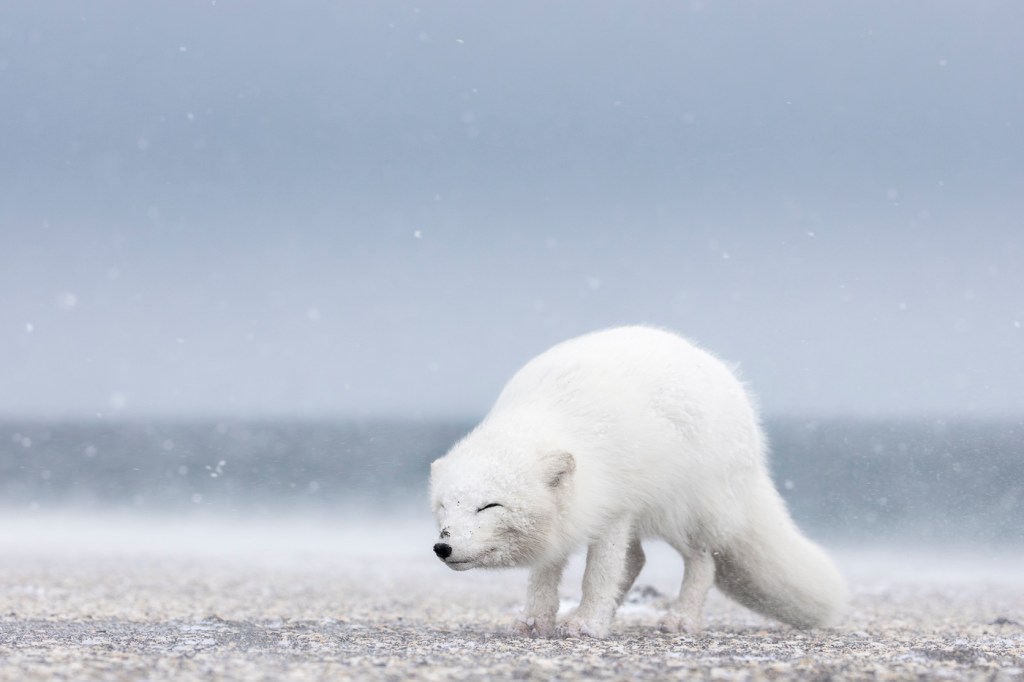
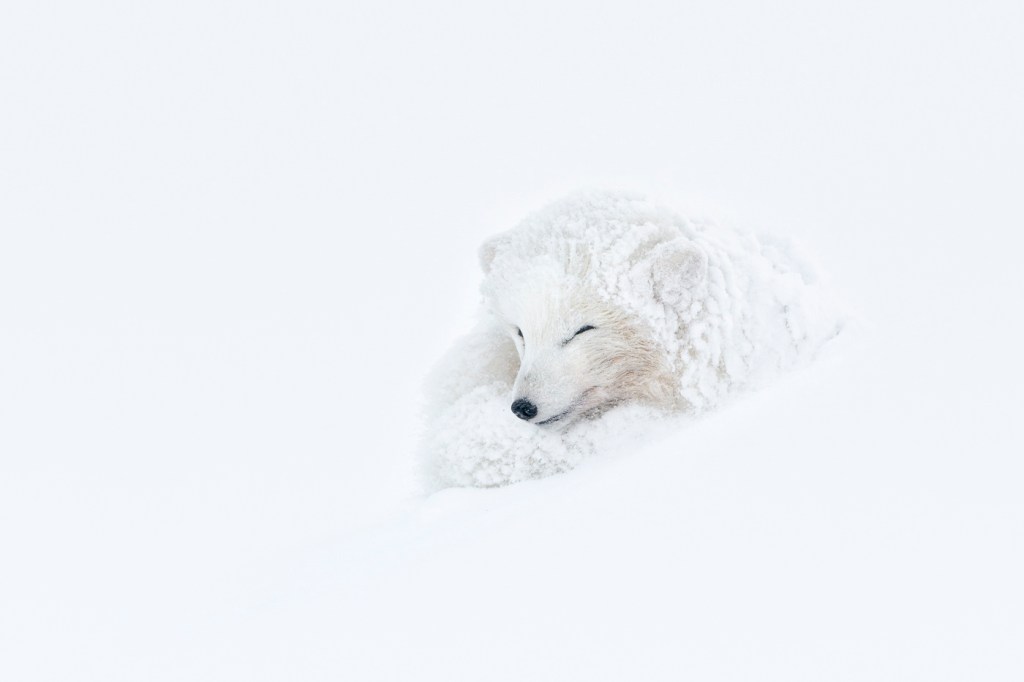
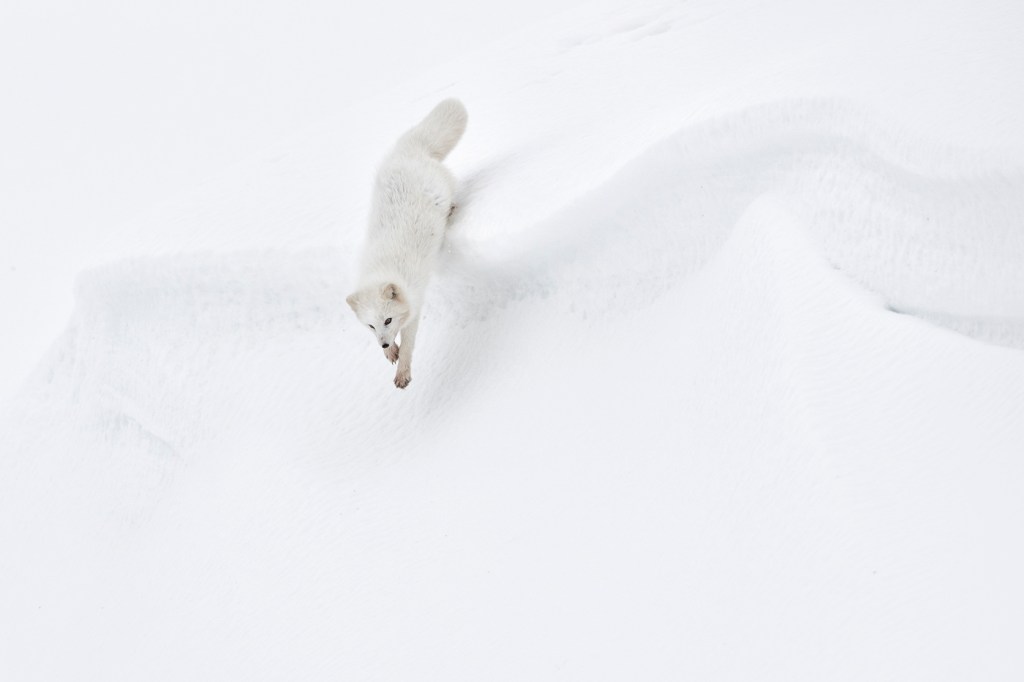
Arctic foxes, typically elusive in summer, surprised us with six separate encounters. On a bird cliff slope, a curious fox went about its morning routine. On another day, we watched two fox cubs playing high on the side of a remote bird cliff. Each fox offered not only photographic opportunities but a deeper insight into this clever and resilient predator’s summer behaviours.
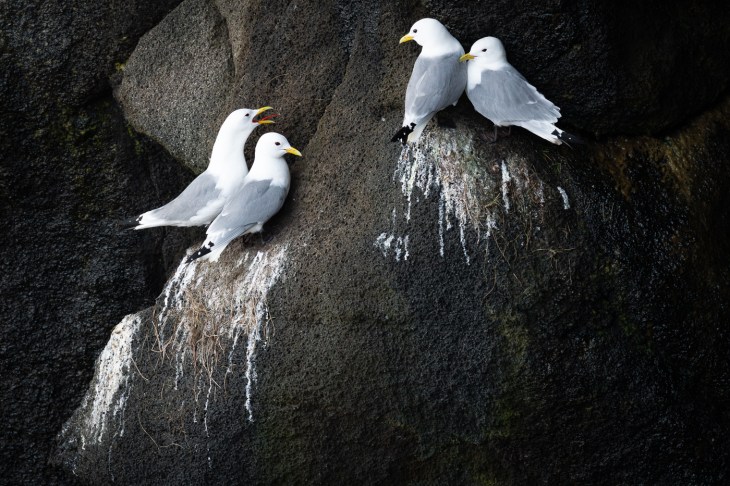
And then there were the birds—a vital part of the Arctic tapestry. Ivory gulls circled gracefully above the ice. Glaucous gulls called overhead. Black-legged Kittiwakes wheeled and dived near ice edges, and both black and Brünnich’s guillemots dotted rocky cliffs and ice margins. Each added a layer of life and energy to the frozen world. For the first time in my life, I was privileged to witness four Bowhead whales surfacing in the calm, pre-dawn hours. Massive, ancient, and rarely seen, they moved with quiet dignity through the glass-like sea. The ship held its breath. We stood together and watched history swim past. For me, this was not a photographic opportunity (whales from ships are rarely photogenic), but a moment to put the camera down and simply enjoy the wild Arctic.
Although the pack ice held most of our attention, our route also allowed us to visit some of Svalbard’s most remote and dramatic locations. At Kvitøya, a ghostly white island shrouded in fog, we paid homage to the history of Arctic exploration and experienced one of the most surreal landscapes on Earth. Storøya gave us panoramic views and solitude, a place where the ice meets sky in perfect harmony. And of course, the massive face of the Brasvellbreen glacier front always inspires awe. This photograph from a previous expedition when it was still permitted to fly drones in this region.
Alkefjellet, with its sheer cliffs and swirling bird colonies, offered a different kind of drama. Thousands of guillemots filled the sky, their cries echoing from rock walls. It was a thunderous reminder of the abundance and chaos of life that clings to even the smallest ledge in the Arctic. Yet, throughout all of this, the focus remained always on the bears. Every decision, every mile travelled, was in pursuit of the next potential encounter. It is essential to recognise the stringent regulations that govern interactions with polar bears in Svalbard. Within the 12-nautical-mile territorial limit of the archipelago, all landings and bear observations are subject to Norwegian law. These laws exist to protect both wildlife and humans.
However, during this expedition, we spent the majority of our time well outside this zone. In the northern pack ice, far beyond the reach of these regulations, we were able to photograph bears in a manner that was both free and ethical, always with the utmost respect for the animals and their environment. We never chased. We let them come to us. It’s a crucial distinction—one that makes all the difference in the world.
To the best of my knowledge, this was the first dedicated polar bear photography expedition to Svalbard, featuring a comprehensive 18-day itinerary. That extra time proved invaluable. It allowed us to explore farther, respond flexibly to changing conditions, and, most importantly, spend ten full, uninterrupted days in the heart of the pack ice. There were no forced diversions, no unnecessary landings. Just ice, bears, and the profound silence of the Arctic. The photographs included in this report represent only a small fraction of those taken during the expedition. It will likely be many months or even years before I have the opportunity to fully mine all the gems from this trip.
Such a long-duration expedition also fostered something else: camaraderie. Onboard the ship, a deep bond formed between the photographers. We shared meals, techniques, stories, and laughter. We stood shoulder-to-shoulder on deck, eyes locked on the horizon. That sense of shared purpose—of mutual respect for the craft and for the wilderness—was as vital to the experience as the bears themselves.
As I write this, safely back in the world of green trees and mobile reception, I find myself still adrift in that world of ice and light. The images are extraordinary, but it’s the feeling that stays with me: the calm, the connection, the privilege. The high Arctic is an incredibly special place and it is always a privilege to travel there to experience a true polar wilderness.
Our next polar bear expedition to Svalbard is scheduled for April 2026. We will journey in early spring, when the landscape is still cloaked in winter white and the low sun paints everything in gold. That trip will offer new challenges and new rewards—frozen fjords, early cubs, and pristine snowscapes.
I am also currently developing plans for a second, extended 18-day expedition for late autumn 2027. This will be a unique opportunity to experience Svalbard as the light fades into polar night, and the bears move toward the edges of the returning ice. In the meantime, we have just a few places left on our April Winter light expedition next year, 2026.
For now, I carry this summer’s expedition with deep gratitude. To those who joined me—thank you for your trust, your passion, and your companionship. And to the Arctic: thank you for reminding us that magic still exists, far to the north (away from the politics of the world), where the ice never sleeps – Stay Wild.
In the heart of the High Arctic, under a dome of soft grey skies and amidst the ghostly hush of falling snow, our April 2025 Svalbard winter expedition aboard the venerable M.S. Freya delivered one of the most unforgettable polar experiences in recent memory. This journey, which spanned over 1,000 nautical miles through the ice-choked fjords and remote coastlines of the Svalbard archipelago, offered a profound immersion into the raw, elemental beauty of the Arctic. Our vessel carved its way through frozen seascapes, bringing us deep into the polar wilderness, far beyond the reach of most travelers.
The expedition was marked by a gentle yet relentless Arctic quiet, broken only by the distant cracking of sea ice and the occasional calls of returning seabirds drifting on the wind. For those of us who return to Svalbard year after year, this trip stood out not for its dramatic apex predator encounters—though three polar bears were spotted at a distance—but for its rare and deeply moving walrus experiences, the likes of which we have not witnessed in over a decade.
Svalbard’s walrus populations have steadily rebounded in recent years, thanks to concerted conservation efforts. Yet it is still unusual to find them during the winter months when sea ice is more dominant and access to haul-out sites more difficult. This year, however, was different.
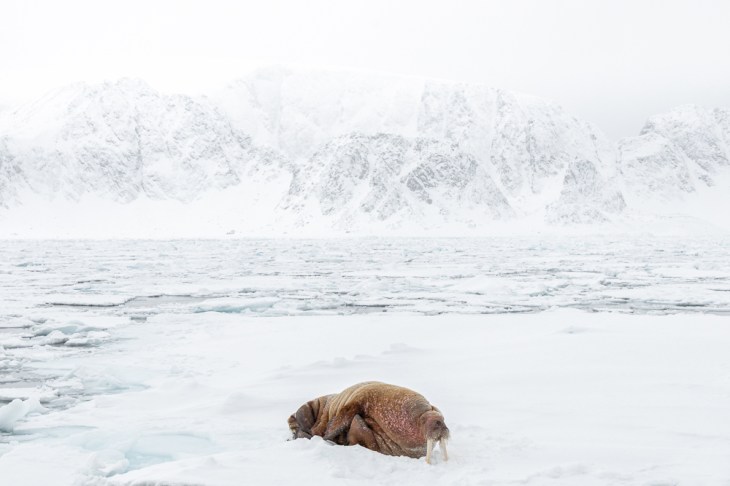
On multiple occasions, we were graced with close, extended encounters with walrus resting along snow-covered ice floes. What made these interactions truly magical was the weather: soft, steady snowfall that blanketed the entire scene in a delicate hush, muting the world and rendering the encounters almost surreal. These conditions, rarely aligned, offered dreamlike opportunities for photography. The walrus, with their richly textured hides dusted with snow, lay peacefully as we watched from our ship, their breath curling visibly in the frigid air.
Photographically, these moments were gold—low-contrast palettes of greys and blues, punctuated by the soft white of snow, created minimalist compositions that spoke of the essence of the Arctic in winter. No dramatic light was needed; the mood and texture carried everything. Many in our group expressed that these were the finest walrus encounters they had ever experienced. I would have to agree.
This expedition was never about chasing wildlife in numbers, but about immersing ourselves in whatever the Arctic chose to reveal. And although polar bear sightings were sparse—just three individuals were seen, all at significant distance—each encounter served as a poignant reminder of their quiet dominion over this landscape. Their tracks, however, told other stories. We crossed few fresh trails along beaches and sea ice, including one particularly striking set that meandered along snow-covered ice at sunrise, untouched and perfect in the soft light.
The polar bear is the undisputed icon of the Arctic, and while some may measure success by proximity or frequency, I have always believed that the real gift is simply to be in their world, to tread respectfully and recognize their sovereignty over these wild lands. With the increasing intrusion of tourism, industry and science into Arctic ecosystems, such moments—even distant—hold immense value.
It is, however, impossible to discuss this year’s polar bear encounters without acknowledging a deeply troubling incident that occurred during our expedition. A widely condemned event involving a helicopter harassing a polar bear in the Svalbard region sent shockwaves through the wildlife and conservation communities. Images of the helicopter hovering aggressively over the bear, clearly disturbing its natural behavior, was both heartbreaking and enraging.
Such actions are antithetical to everything we stand for in responsible Arctic travel. They highlight the urgent need for stronger regulations around scientific research and more rigorous enforcement to protect vulnerable species from thoughtless human intrusion. As stewards and storytellers of this environment, we must be loud in our opposition to such behavior and unwavering in our commitment to ethical field practices. The Arctic gives generously to those who approach with humility; it turns cold and silent to those who do not. A full accounting of this encounter has been documented HERE. It has also been sent to the Governor of Svalbard, and news agencies around the world. It has been published by the NRK in Norway and the Svalbard Posten. To date, the only response from the Governors office has been a short statement that “they are looking into the incident.”
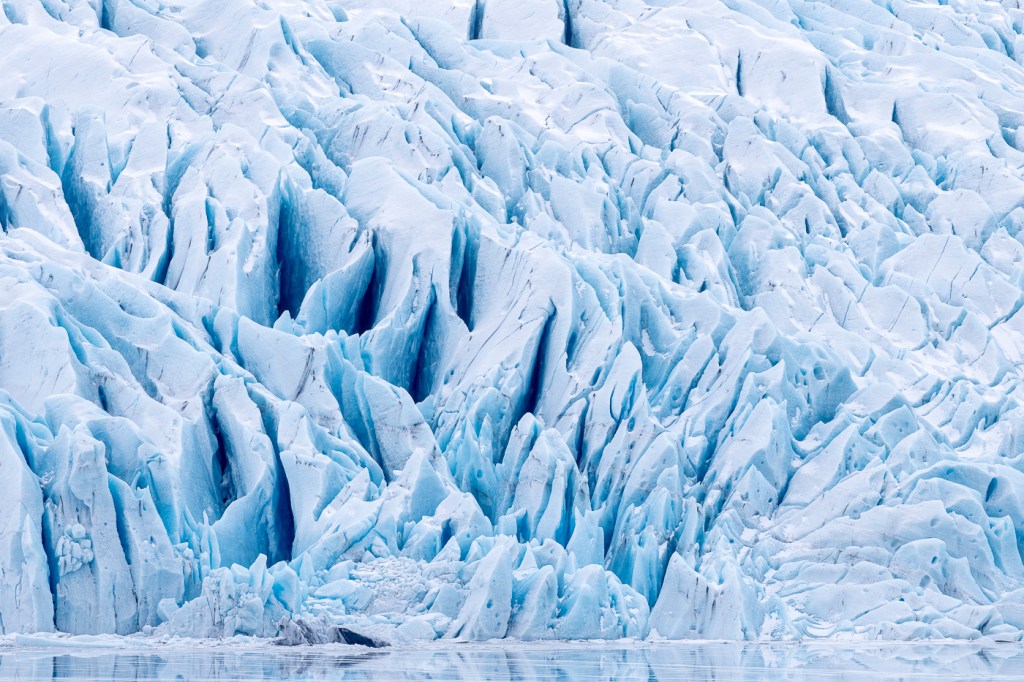
What this expedition lacked in high-density wildlife sightings, it more than made up for in landscape photography. Svalbard’s mountains, encased in thick coats of snow and ice, appeared every bit the guardians of the north—stoic, jagged, and infinitely photogenic. Every fjord we entered revealed new variations of winter’s mastery: towering cliffs draped in icicles, frozen waterfalls cascading in silent defiance of gravity, and icebergs locked in sea ice like sculptures waiting to be discovered.
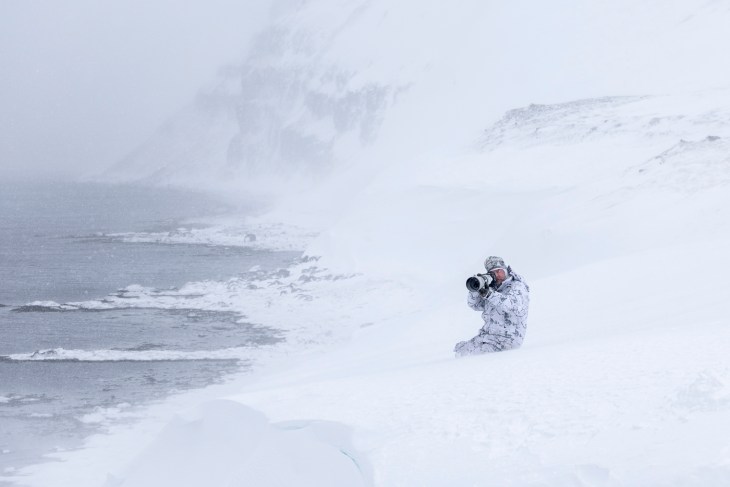
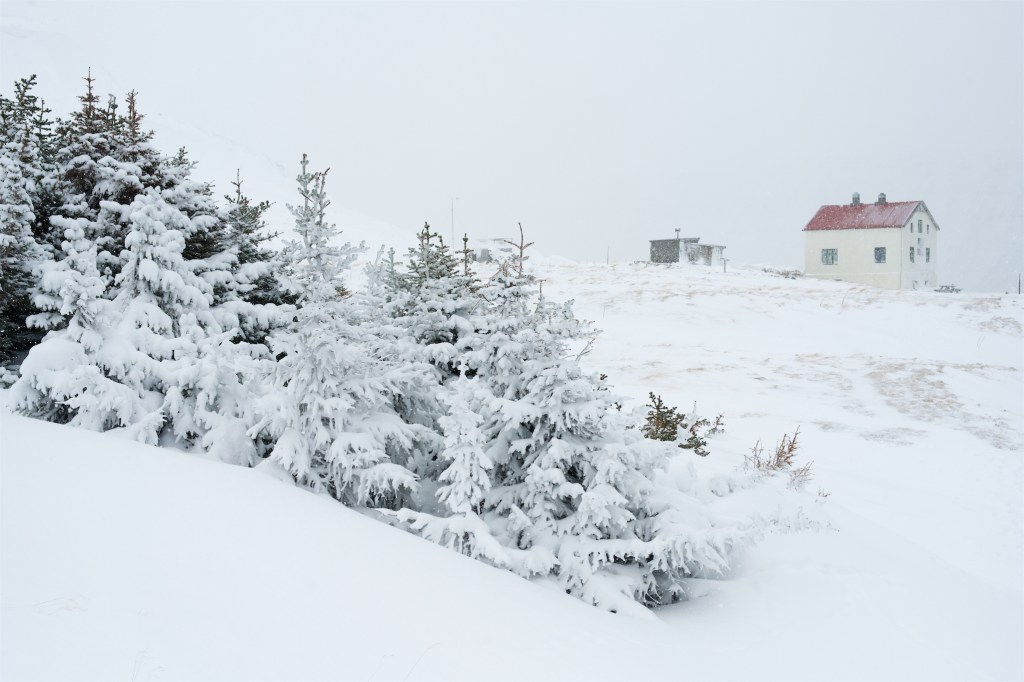
At times, the weather closed in, surrounding us in a soft monochrome mist that stripped the landscape to its essential forms. At others, the skies opened just enough to allow ribbons of pastel light to skim across the snowfields. These fleeting moments of light—never dramatic, but always subtle—offered those patient and attuned enough the chance to make quiet, powerful images.
Each evening, as we gathered in the warm dining room of the Freya, trading stories and reviewing the day’s experiences, there was a shared sense of reverence for the landscape we were privileged to explore. We had come seeking solitude, wildness, and truth—and the Arctic had provided, in its own sparse, magnificent way.
This expedition reminded me, as it does each year, that Svalbard in winter is a place of paradox: stark yet tender, harsh yet comforting, desolate yet full of life. It is a place where patience is rewarded, where minimalism sings, and where every track in the snow tells a story worth listening to.
As we completed our 1,000 nautical mile journey and began the long voyage back to Longyearbyen, I was struck once again by the importance of returning—not just physically, but mentally and spiritually—to places like this. Places where the wild still rules, and where we are reminded, as always, that the greatest gift of the Arctic is its silence—and how it teaches us to listen.
We will return again next year 2026 to lead another winter expedition aboard M.S Freya in search of miraculous wildlife encounters and ice covered landscapes. This is a rare opportunity to explore one of the Arctic’s most remote and pristine landscapes at the height of its frozen majesty. Designed specifically for keen nature and wildlife photographers, this small-group expedition offers intimate access to Svalbard’s breathtaking winter wilderness, including encounters with walrus, Arctic foxes, and polar bears, all set against a backdrop of towering snow-covered mountains and sculpted sea ice. With 24-hour twilight and the potential for moody, ethereal light, this is a once-a-year chance to capture the Arctic in its most cinematic and atmospheric state. Guided by Wild Nature Photo Travels extensive field experience and deep knowledge of polar conditions, this trip is not just a photographic expedition—it’s an immersion into the raw soul of the Arctic. Spots are extremely limited. Adventure with purpose—photograph with intention.
Today, I just wanted to share some wonderful positive feedback I received from our just completed April, 2025 Wild Nature Photo Travel expedition to Svalbard (Trip Report coming in the next few days). Shared experiences like this are the reason I started this company and continue to be the driving force for taking photographers into some of the wildest and most remote locations on our planet. Thank you to Andy and Jennifer for taking the time to write such wonderful feedback.
“Dear Fellow Pilgrims on the Svalbard Sojourn, And so it goes, as one might mutter in a post-epic journey haze, that we find ourselves penning this note, our hearts still adrift in the icy dazzle of April’s photographic odyssey to Svalbard—a place so starkly, absurdly beautiful it could make a grown man weep or a cynic reconsider their trade. We’re trying, in our fumbling, human way, to stitch together a thank-you that does justice to the kaleidoscopic wonder of what we all shared. Spoiler: words are flimsy things, like paper boats on an Arctic swell, but we’ll give it a go.
First, a nod to Joshua and Susy, our intrepid guides, who didn’t just lead us through the frostbitten wilds but opened their journey to us, letting us piggyback on their passion like hitchhikers on some cosmic road trip. You didn’t just show us walruses lolling on ice floes or the ice bear’s ghostly shimmy; you gifted us a lens—literal and otherwise—through which to see our fragile world anew. And to every soul on this expedition, from the gear-hauling, tripod-toting shutterbugs to the quiet ones who whispered awe at the edge of a glacier: you made this thing hum. You were, to borrow from that old B.W. Stevenson tune, the embodiment of “Everyone is helpful, everyone is kind / On the road to Shambala.” Svalbard, with its endless snow and light that bends time, felt like a glimpse of that place. Each click of our shutters, each shared fika of coffee in the bone-chilling cold, was a step on that road. We weren’t just chasing images; we were chasing renewal, love, the kind of adventurous spirit that makes you feel, for a fleeting moment, like you’ve cracked the code to being alive. And you all—every one of you—were kind, were helpful, were the sort of companions who make a journey feel like a destination in disguise. Our gratitude is a clumsy, oversized thing, too big for this page, but it’s real. We wish you all safe travels, continued success, and more journeys that feel like Shambala’s just around the bend. Keep chasing the light, literal and otherwise. – Andy & Jennifer”