Arctic Foxes and Reindeer of Svalbard April 2025 Expedition Report

There are few places on Earth that match the wild, remote, and brutally beautiful snow and ice covered landscapes of Svalbard in winter. Nestled deep within the Arctic Circle, this archipelago is a realm ruled by ice, wind, and wildlife. This April, I had the privilege of leading a private snowmobile expedition across this frozen frontier—a journey that would see us travel over 500 kilometres, find more than a dozen Arctic foxes, encounter reindeer and ptarmigan, and face the full spectrum of Arctic weather, from golden light to whiteout blizzards.

From the moment we arrived in Longyearbyen, the sense of isolation and adventure was palpable. The eve of an expedition is always an exciting time with the great unknown ahead. The air was sharp and cold, the light already tinged with the ethereal glow of Arctic spring. With 24-hour daylight just around the corner, we were on the cusp of the long polar day, and we planned to make the most of every usable hour. By April the sun no longer truly sets in Svalbard, which means there are hours of golden light available for photography. It also means we can work well into the night, taking advantage of times the wildlife is at its most active.

Our days were often long—starting at 5 a.m. and often not wrapping up until midnight—but the light was at its best during these hours. As any serious wildlife photographer knows, great light and great wildlife don’t run on a 9-to-5 schedule.

We travelled by snowmobile, fully outfitted in cold-weather gear, carrying camera equipment, safety gear, and enough fuel and supplies for extended runs. We based ourselves in Longyearbyen and made daily sojourns out into the wilderness in search of wildlife. Navigating the ice-covered landscape by snow mobile requires concentration and no small amount of stamina. But the reward? Untouched terrain, and wildlife in its most raw and natural form.

One of the primary goals of this expedition was to photograph Arctic foxes in their natural habitat. By the end of the trip, we had seen more than a dozen individuals—an incredible result in such a vast and challenging environment. These foxes, well-adapted to the cold and the shifting seasons, were in prime winter coat: a thick, snow-white camouflage against the terrain. This makes them hard to spot, but also incredibly photogenic in the snow covered environment.

One particularly encounter took place near a windswept ridge on the outskirts of Barentsburg, where we found a young white morph fox near the coastline. We set up low, using the terrain for cover, and waited. The fox came close—curious but cautious—offering a string of intimate moments that translated into some of the most compelling images of the trip. During this encounter we had to work quickly as there was a freezing wind that plummeted temperatures and numbed the fingers in moments. Despite the cold, some incredible images resulted from this encounter.

Another highlight came in the aftermath of a fresh snowfall. As we neared the town of Barentsburg, we spotted a fox high on a ridge line – watching from above. The soft light and pristine conditions gave the scene a dreamlike quality and a wonderful opportunity to show the fox in the landscape. It’s in moments like these that make wildlife photography in the Arctic such a joy.

While Arctic foxes were our primary focus, we were also treated to many memorable encounters with Svalbard reindeer in absolutely superb conditions. These smaller, stockier cousins of mainland reindeer are uniquely adapted to the harsh environment. We found several groups grazing through the snow-crusted tundra, their thick coats catching the snowfall.

Photographing them in the early hours and during the long twilight evenings, we were able to create evocative portraits against the vast, open white landscape amidst swirling snowfall.

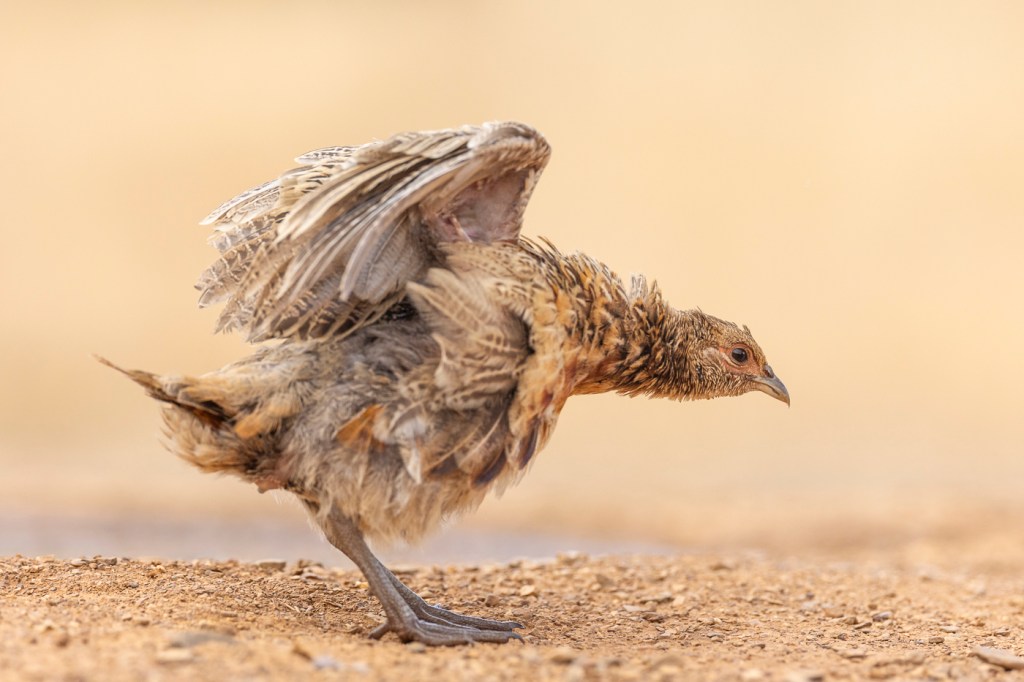
Ptarmigan, often overlooked, became another fascinating subject. With their feathered feet and perfectly camouflaged plumage, these Arctic birds offered opportunities for intimate ground-level compositions. Catching one mid-fluff or just as it shook free a dusting of snow made for dynamic, storytelling frames that added variety to the trip’s portfolio.

Of course, no Arctic expedition would be complete without a taste of the extreme. One full day of our trip was lost to a powerful whiteout winter storm that swept through the region. Winds howled across the open landscape, visibility dropped to near zero, and temperatures plummeted well below -35°C with windchill. Of course, we ventured out to experience the storm, but photography was impossible and we returned to the safety of town after our winter storm experience.

We hunkered down in our base accommodation—frustrated by the lost shooting time, but deeply aware that this, too, was part of the Arctic’s story. When the storm finally passed, it left behind a transformed world. The landscape had been reset—smooth, sculpted by the wind, and freshly dusted with snow. This shift opened new possibilities for minimalistic compositions, and our fox sightings resumed with a renewed sense of wonder.

Our routine became a rhythm of extremes—early starts, long snowmobile journeys, and frequent stops to assess terrain, scout for wildlife, or simply pause and admire the view. The focus was always on maximizing opportunities while respecting the environment and the wildlife. This private snowmobile expedition was not just a photography tour—it was a true Arctic experience. From the exhilaration of racing across frozen fjords to the quiet joy of lying in wait as a fox crests a snowbank, it was a journey that tested us, thrilled us, and left us with a deepened connection to the polar world.

As the snowmobiles rolled back into Longyearbyen for the final time, we were exhausted but elated—changed in ways we hadn’t expected. That, more than anything, is the hallmark of a truly great expedition. We will be running another snow mobile expedition for Arctic wildlife in 2026 in Svalbard. The expedition will again see us based in Longyearbyen, making daily journeys out in the field in search of wildlife. The expedition will run from April 1st until April 5th, 2026 and is limited to just three participants. Full details are now available on the website HERE.

Update on the Helicopter Polar Bear Incident in Svalbard 26th April 2025

It has taken some days, but tonight I finally received a response from the Governor’s office in Svalbard in relation to the horrific story I reported on HERE regarding the harassment and stressful darting of Polar Bears via helicopter. Since I wrote about this story it has been published by NRK in Norway as well as Svalbard Posten in Longyearbyen and several other news outlets have also run the story. It has also been widely shared on Social Media and photography websites including PetaPixel.

The response from the Governors office reads: “Hello, The Governor is looking into whether the institution has complied with all conditions in the permit.”

I have sent the following correspondence to the Governor’s office in response: “Good morning Eva,  Thank you for letting me know that the Governor is now conducting an investigation into this incident. I am preparing a paper for submission to the Governor with time-stamped photographs as well as the GPS co-ordinates that clearly shows Jon Ars’s recounting of the 3-4 minute chase is a blatant lie. The photographic time-stamped evidence is indisputable.  

I am also preparing signed letters from all 12 passengers and the Captain that were on board M.S Freya that  witnessed this event that corroborate the events that took place as reported. The 2nd mate on board also timed the event and has provided evidence to me as well.

Further to the above – there may be a case with the civil aviation authority regarding the manner of reckless high speed low-level flying we witnessed during the chase. This is a question for the CAA.

In addition to the above, questions need to be asked surrounding the fact that this chase and hunt was conducted in front of our expedition vessel without regard to the passengers who had paid to see and observe a polar bear in the wild (safely from a distance of 3km).

This is not just a question of wether the helicopter and researchers adhered to all the regulations (which I find very hard to believe given all of the above), but of the double standard being applied in Svalbard regarding Polar Bears, photographers and researchers.

Broader questions need to be asked at the highest level of the Norwegian Polar Institute about the continual need for tagging of Polar Bears (removal of pre-molars, claws, invasive use of heart and pulse rate monitors and collars on female bears). Or, is the NPI merely trying to avoid having its funding cut from the Norwegian government by continuing ‘research’ that is no longer necessary. How many more bears have to be stressed and killed by invasive sedation methods??? What is the current count on dead bears from this methodology in Svalbard? I am aware of at least two from NPI employees in recent times.

These issues need to be treated with utmost priority and I will continue to push this through mainstream media until Polar Bears are no longer harassed or stressed in the name of unnecessary science. And, until such time, that the rules surrounding viewing and photographing of Polar Bears in Svalbard are revised in accordance with common sense and applied equally to all who visit Svalbard – be it general tourist or scientist.”

What can you do to help? Please sign the petition HERE.

Wildlife Photography and Wildlife Respect

I wanted to share a photograph that shows how a Polar Bear (or any wildlife for that matter) can be not only be safely photographed (this image shot before the new restrictions in Svalbard – more than a year ago), but also treated with the highest degree of respect and not interfered with, harassed or stressed in the slightest. We observed this magnificent bear, walking slowly across some fast ice near a glacier at a distance of more than three kilometres. We parked our small expedition ship (12 passengers aboard – all photographers) at the edge of the fast ice, shut off the engine and watched and observed through our binoculars for more than two hours – enjoying the moment with respect, awe and hopeful anticipation. Slowly, the bear approached of its own volition and curiosity, without need for us to do anything other than remain calm, quiet and patient. All on board remained quiet, observant and patient. Cameras at the ready, we began to photograph the bear from the safety of our ship as it walked slowly along the fast ice, still at distance from the boat. Of course, it noticed us, as it sniffed the air in passing in curiosity. But, it was never interfered with. It was never stressed and it was never chased. It was treated with the highest degree of respect it deserves. The Polar Bear is the king of the Arctic. It deserves nothing less than the highest degree of respect at all times. When the bear was ready, it continued its journey along the edge of the fast ice, disappearing into the distance. It was never chased or followed and there was never stress caused. There was never a question of danger from the safety of the expedition ship. When the bear had gone, we started our engine and continued our journey. This is how you photograph wildlife with respect. Perhaps scientists who chase bears with helicopters could learn a thing or two from wildlife photographers about how to approach and photograph wildlife with respect and patience. Even in this ‘cropped’ photograph, taken with a 600mm lens and a 1.4 TC (effective focal length 840mm) the bear was never closer than a couple of hundred metres. Wildlife photography of Polar Bears doesn’t need a wide angle lens to be powerful, emotive and dramatic. What is required is an understanding and respect for the wildlife. Wildlife FIRST. Photography second. This is not a comparison between Science and Tourism. That is not the intent. This is a comparison between methodologies. How Polar Bears can be engaged with, with respect, or as in the case of the recent helicopter incident by researchers, without respect that unduly stresses the animal. For the record, I am not against the Science of Polar Bears. I am against invasive, stressful methods for Polar Bear sedation and research such as chasing bears from helicopter.

Edit: Update: 24th April 2025 8.35pm AEST – Svalbard Posten has posted an article about the incident HERE. NRK Media in Norway has also posted a front page Article HERE.

Helicopters, Hypocrisy, and Harassment: The Double Standard of Polar Bears in Svalbard

Many wildlife photographers of are likely already aware of the increasingly absurd regulations being imposed on all visitors to Svalbard, particularly surrounding the ‘so-called’ protection of polar bears. One of the most contentious of these mandates is the requirement to maintain a minimum distance of 500 meters from a polar bear—no matter the circumstance. That includes viewing from the safety of an expedition vessel and even when a bear voluntarily approaches. Photographers, wildlife enthusiasts, and nature lovers are being pushed further and further away, forced to retreat at the exact moment nature becomes intimate and magical. These new regulations are not designed to protect Polar Bears – they are designed to stop Polar Bear watching in Svalbard.

The new law (Legislative Decree 65 2023–2024), passed in mid-2024, reads:

It is prohibited to unnecessarily disturb, lure, or pursue polar bears.No one may travel or stay closer than 300 meters to a polar bear. From March 1 to June 30, no one may travel or stay closer than 500 meters to a polar bear. Anyone who spots a polar bear closer than the distance limit must move away so that the legal distance is maintained.

Yet on the 20th of April this year, 2025, I witnessed something that throws the entire justification for these restrictions into serious question. I documented an utterly disgraceful scene involving so-called “researchers / scientists” from the Norwegian Polar Institute, who, under the banner of science, mercilessly harassed and stressed a wild polar bear with their helicopter. This wasn’t a misunderstanding or a necessary intervention. This was a prolonged, high-speed chase that left a majestic animal panicked, exhausted, stressed and visibly terrified.

We had been observing this particular bear from a respectful distance aboard our expedition vessel—more than 3 kilometres away—as it rested peacefully on the ice and slowly ambled across the frozen landscape. It was calm, undisturbed, and behaving entirely naturally. We observed the bear for more than four hours, keeping our distance and respecting the environment and the bear. Then came the helicopter.

Flying in at a low altitude and high speed, the chopper panicked the bear almost immediately. It leapt up and began running at full speed, clearly terrified by the sudden roar and presence of the aircraft. What followed was not a quick dart-and-release operation. Instead, the helicopter pursued the bear relentlessly for more than thirty minutes, sweeping down to within mere metres of the fleeing and now highly stressed animal. This was not research—it was a chase. And it was heartbreaking to witness.

Eventually, after the bear was clearly exhausted and had no energy left to continue running, it was darted. Imagine that: terrorising an animal into a state of total exhaustion and stress before sedating it. All in the name of science. 

Let’s be crystal clear here: this was harassment, pure and simple. No matter how it’s packaged, this kind of treatment of a wild animal is not only unethical, it is completely out of alignment with the strict rules imposed on everyone else in Svalbard. If a group of photographers or tourists had behaved this way—approaching a bear at such a close range, causing it to flee in fear, disturbing its natural behavior—we’d be vilified. Fined. Possibly even banned. And yet when it’s a helicopter marked with the insignia of a research organization, this behavior is suddenly justifiable?

I want to be clear at this point. I am not against the science of Polar Bears. I am against the invasive and highly stressful nature in which this science is currently being carried out by the Norwegian Polar Institute. They, and the governor of Svalbard are responsible.

We cannot stand by and allow this kind of hypocrisy to go unchecked. The rules in Svalbard must be applied consistently, regardless of whether the person breaking them wears a lab coat or carries a camera. If it’s unacceptable for an expedition ship to remain stationary while a curious bear approaches, how can it possibly be acceptable to chase that same bear with a helicopter until it collapses from fear, stress and exhaustion?

This is not an isolated incident. Reports from others who have spent time in the Arctic tell similar stories of “research” being used as a shield for disturbing and unnecessary interference with wildlife. It is high time we start questioning who is truly disturbing the natural order in Svalbard.

I’ve included above a photograph—a zoomed-in crop from a 600mm lens—that captures the moment this bear, utterly drained and frightened, tried to escape the mechanical predator circling above. It’s not easy to look at, but it is vital that this image be seen. I urge you to share it widely. Send it to the Governor of Svalbard. Send it to the Norwegian Environmental Agency and Norwegian Polar institute. Send it to every institution responsible for wildlife regulation and oversight in the Arctic – This needs to stop.

The polar bear is not just a symbol of the Arctic—it is an apex species already under tremendous pressure from a rapidly warming world. The very least we can do is treat it with the respect and dignity it deserves. And that means holding everyone—scientists, tourists, guides, and yes, photographers—to the same standard of ethical behavior.

The world is watching. Let’s make sure Svalbard does better.

Addendum: Through a mutual friend, Morten Jørgensen (author or Polar Bears on the Edge), Nikita Ovsyanikov, (Dr. of Bio. Sci., Polar bear specialist), has reached out with the following statement.

“This is a very powerful message in this record of the violence against the bear done by polar bear scientists in Svalbard.  And this evidence should be published widely in all possible media, in all possible ways. Science is doing its cynical business, jeopardizing polar bears in this way to “answer the question of how global warming is affecting polar bears “. These scientists are driving polar bears to extinction. What they are doing is an ecological crime, nothing else!

Considering the legal aspects of this event, and of this invasive methodology in general, the following qualification should be applied:

Due to its de facto impact on animals, this application of such an invasive methodology, should be interpreted as a violation of the law. There are laws intended to protect animals from cruelty, and this is intentional cruel treatment of an animal. There are laws protecting endangered animals, and this intentional treatment has a strong negative impact on and endangered and protected animal.

This harassment of animals and violation of humanitarian and conservation principles must be stopped. Protection of animals from cruelty and protection of endangered species from negative impacts that reduce their survival capacity (evidence is numerous, but continuously denied by the scientists more interested in continuing their business) should be made real and effective.”

Nikita Ovsyanikov, Dr. of Bio. Sci.,  Polar bear specialist, Ethologist and conservationist.

Dr. Nikita Ovsyanikov is widely regarded as the most experienced Polar Bear scientist in the world with decades of experience. 

How can you help? Please sign the petition HERE.

This article was also published by Peta Pixel and has been sent to the authorities and Governor of Svalbard. To date, no response has been received.

Arctic Fox in Icelands Winter Wilderness Workshop Report 2025

In early February 2025, I led two back-to-back Arctic fox photography workshops in the remote and rugged Hornstrandir Nature Reserve in northwestern Iceland for two seperate groups of photographers. Hornstrandir is a true wilderness, offering some of the best opportunities anywhere in the Arctic to observe and photograph Arctic foxes in their natural habitat. Unlike much of Iceland, where foxes are still hunted, the nature reserve provides them with full protection. As a result, they are more approachable here than in other parts of the country, making it an exceptional destination for wildlife photography. Accessible in the winter, and only by boat, the Hornstrandir Nature Reserve also offers a wonderful getaway for photographers looking to get back to Nature and spend quality time with their subjects.

This year’s workshops presented a mix of conditions that kept us constantly adapting. We arrived to find a good covering of snow, which is always ideal for clean, wintery backdrops. However, strong southerly winds soon brought in sporadic rain, initiating a rapid thaw. Iceland’s freeze-thaw cycle is highly dynamic, and even in the depths of winter, conditions can change within hours. While this can be frustrating, it also presents opportunities—by working with the available weather and terrain, we were able to capture a diverse portfolio of Arctic fox images in just a short span of time.

Over the course of the two workshops, we encountered a total of six different Arctic foxes, each with its own distinct personality and behaviour. The majority of them (five out of six) were blue morphs, which are much more common in coastal regions like Hornstrandir. Blue morph Arctic foxes retain a dark brown coat throughout winter, unlike their white morph counterparts that shift from brownish-grey in summer to pure white in winter. The contrast of the dark blue morph foxes against the snow-covered and rocky landscape provided excellent photographic opportunities. The sixth fox, a striking white morph, was a particular highlight—seeing a white fox in winter is always a special moment, as they blend seamlessly with their snowy surroundings. The opportunities for white-on-white minimalist photography are at their very best in winter with the White morph.

Among the foxes we observed was a dominant male, clearly in control of his territory. He was confident, bold, and regularly patrolled his area, occasionally chasing off younger or less dominant foxes. We also photographed several other males, females, and first-year cubs. The cubs, still relatively inexperienced, displayed playful and curious behaviour, which made for some fantastic interactions and storytelling images.

One of the most rewarding aspects of these workshops was the ability to spend extended time with individual foxes, allowing us to observe and document their behaviours in depth. Patience was key—by positioning ourselves carefully and waiting quietly, we were often rewarded with intimate moments of foxes resting, hunting, and interacting with each other.

Winter photography in Hornstrandir presents a unique set of challenges and rewards. The ever-changing conditions meant that we had to constantly adjust our approach. Some days were dominated by heavy cloud cover, creating soft, diffused light that was perfect for close-up portraits and details as well as wide vistas. Other times, brief windows of clear skies allowed us to work with directional light, emphasizing the texture of the foxes’ fur and the rugged landscape. We also took the opportunity to photograph some of the bird life in this area.

One particularly memorable session took place in the late afternoon as the low winter sun briefly broke through the clouds, casting a golden glow over the landscape. A blue morph Arctic fox paused on a rocky outcrop, bathed in the last light of the day, allowing us to capture a stunning series of backlit portraits. Moments like this are what make winter wildlife photography so rewarding—being in the right place at the right time, ready to seize an opportunity when the elements align.

The thawing snow added another dynamic element to the imagery. As the white landscape receded, patches of dark volcanic rock and golden-brown tundra began to emerge, creating a striking contrast with the foxes. This gave us a more varied and unique portfolio than a uniform blanket of snow might have allowed. Some images showcased the foxes navigating a pristine winter landscape, while others depicted them against a more transitional, raw, and textured background.

After the conclusion of the workshops, I traveled to a new, previously unexplored location in northwestern Iceland to scout for future Arctic fox photography opportunities. This region offers not only a dramatic coastal setting but also supports both blue morph and white morph Arctic foxes, making it a particularly exciting prospect for future trips.

The scouting trip was highly productive—I was able to locate multiple foxes and observe their behaviour in this environment. The landscape features towering cliffs, black sand beaches, and rugged fjords. The combination of these elements provides a striking backdrop for wildlife photography, adding another layer of visual interest to Arctic fox images.

I also took the time to assess the logistics of operating a workshop in this new location. Accessibility, accommodation options, and weather patterns all play a crucial role in determining the viability of a new workshop destination. From what I experienced, this area has tremendous potential, and I’m excited to return for more in-depth exploration.

Following the success of this year’s workshops, we will be returning to Iceland in February 2026 for another round of back-to-back Arctic fox photography expeditions. Hornstrandir remains one of the best locations in the Arctic for reliably finding and photographing these elusive animals, and with the addition of a new location in northwestern Iceland, we will have even more opportunities to create exceptional imagery.

Each workshop is limited to a maximum of five photographers, ensuring a highly personalized experience with ample one-on-one guidance. Whether you’re interested in capturing intimate portraits, dynamic action shots, or environmental compositions that showcase the foxes within their rugged habitat, these workshops are designed to maximize photographic opportunities in one of the most breathtaking winter landscapes on Earth.

If you’re interested in joining us for this incredible experience, feel free to reach out to register your interest. With small group sizes, spaces fill quickly, and this remains one of the most sought-after wildlife photography experiences in Iceland.

Photographing Arctic foxes in winter is both a challenge and a privilege. These animals are perfectly adapted to one of the harshest environments on the planet, and spending time with them in their natural habitat is an unforgettable experience. The combination of dramatic landscapes, rapidly changing weather, and the intimate encounters we had with the foxes made this year’s workshops a tremendous success. As always, adapting to the conditions was key. Iceland’s winter is unpredictable, and working with what nature provides—rather than against it—ensures the best photographic results. The freeze-thaw cycle, while sometimes frustrating, ultimately allowed us to create a diverse and compelling portfolio in just a short period.

With the addition of a new location for future expeditions, I’m looking forward to expanding the possibilities for Arctic fox photography in Iceland. These workshops remain a highlight of the year, and I can’t wait to return in February 2026 to once again immerse myself in this incredible environment. If Arctic fox photography in the wild is something you’ve dreamed of, now is the time to start planning. I hope to see you in Iceland next winter for another unforgettable experience!