Puffins and Razorbills of Grimsey Island Workshop Reports May June 2025

Puffins, Solitude, and the Soul of the Arctic – There are few places left in the world where you can photograph wildlife in complete solitude—where the only sound is the rush of wind across dramatic basalt cliffs, the echoing cackle of seabirds, and the soft high-speed click of your mirrorless cameras electronic shutter. Grimsey Island, perched on the Arctic Circle just off the north coast of Iceland, is one of those places. It is wild, raw, and unforgiving—but in its ruggedness lies extraordinary beauty and a rare opportunity for intimate encounters with wildlife. Grimsey is the hidden gem of Iceland, packing a photographic punch well above its size and weight.

This May and June, I had the great privilege of leading two back-to-back photography expeditions to Grimsey Island focused primarily on the charismatic Atlantic Puffin, but with ample opportunities to photograph a host of other seabirds and Arctic landscapes. The trips—May 27th to June 2nd and June 3rd to June 8th—delivered not only exceptional bird photography but also some of the most dramatic weather and moody light I’ve encountered in recent years.

Grimsey isn’t easy to reach, and that’s a good thing. Its remoteness keeps it pristine and blissfully free from crowds. To get there, we journeyed north to the Icelandic town of Dalvík, where we boarded the ferry for the three-hour crossing. The first group arrived smoothly, with calm seas and mild winds—a gentle welcome to the north. But the second trip was greeted by nature’s fury: high winds exceeding 30 metres per second and ocean swells over five meters delayed our departure by a full day. While the delay wasn’t ideal, it provided an impromptu opportunity to explore some Lightroom processing and discuss the optimal camera settings for the upcoming photography.  The one-day delay also served as a reminder that in the Arctic, nature always has the final say.

Once we landed on Grimsey, however, everything fell into place. Our home for the week was a humble guesthouse near the island’s southern cliffs—a perfect base from which to venture out for both early morning and late evening sessions. Grimsey is a relatively small island with only a few basic roads. Nevertheless, a car (4WD) is of significant benefit for moving around quickly and accessing the more remote and higher sea cliffs. At both of these workshops, we took a 4WD with us on the car ferry so we could maximise our photography on the island. Other groups don’t necessarily offer car transport on the island, but this can be a significant error of judgment in inclement weather. Over the course of our trip, we watched several groups uncomfortably trudging uphill through the rain with their camera gear, headed for the high cliffs. Meanwhile, we travelled comfortably to the top by 4WD with all our gear, arriving dry and ready to photograph.

The stars of the show were, of course, the Atlantic Puffins. These endearing seabirds return to Grimsey in the thousands each spring to nest high on the cliffs that ring the island’s perimeter. Unlike other sites in Iceland where the birds are often skittish or the cliffs too distant for intimate photography, Grimsey offers something truly special: proximity. Not only does it provide an incredible opportunity to get close to these fantastic birds, but it also offers the chance to photograph these birds in a stunning Arctic setting.

Each day, we were able to approach puffins within mere meters, lying flat on the soft grass as they hung out on the high cliffs or returned to their burrows. With patience and respect for their space, they allowed us into their world. We photographed them in dramatic light, and during moody, misty afternoons that added emotional depth to the frames.

What makes Grimsey exceptional is not just the access, but the solitude. Unlike well-trodden sites on the mainland, we had entire stretches of cliff to ourselves. No tourists and no other visitors. No other groups. Just us, the birds, and the Arctic wind. It’s a kind of photographic meditation—one that allows you to connect deeply with the landscape and your subject.

While puffins were the headline act, they were far from the only performers. Grimsey is a seabird sanctuary, alive with an astonishing diversity of species. Razorbills nested alongside puffins, their bold monochrome plumage striking against the green moss and black cliffs. Black-legged Kittiwakes shrieked and soared on coastal updrafts, offering opportunities for stunning in-flight images as they banked and hovered in the wind. Mixed amongst them were northern Fulmars and common murres.

We watched and photographed Common Murres and Guillemots packed shoulder-to-shoulder on the narrow cliff ledges, each pair tending to a single egg balanced precariously on bare rock. Northern Fulmars glided effortlessly past our lenses on fixed wings, while Arctic Terns dive-bombed intruders with typical ferocity.

We were fortunate to encounter several rarer species as well, including Black Guillemots, the delicate Red-necked Phalarope in its breeding plumage, and even the elusive Little Auk. Each day brought new sightings—Snipe performing aerial displays, Golden Plovers calling from lichen-covered rocks and buttercup-covered fields, Snow Buntings flitting along the coastal paths.

Throughout the two trips, we documented and photographed an impressive list of 30 species. I did not personally photograph every single species, but very much enjoyed keeping a list of those species we encountered.

  • Atlantic Puffin
  • Razorbill
  • Black-legged Kittiwake
  • Common Murre
  • Brünnich’s Guillemot
  • Black Guillemot
  • Northern Fulmar
  • Arctic Tern
  • Red-necked Phalarope
  • Snipe
  • Golden Plover
  • Snow Bunting
  • Redwing Thrush
  • Raven
  • Common Eider
  • Long-tailed Duck
  • Black-headed Gull
  • Gannet
  • Black-tailed Godwit
  • Common Ringed Plover
  • Ruddy Turnstone
  • Eurasian Oystercatcher
  • Sanderling
  • Common Redshank
  • Arctic Skua
  • Dunlin
  • Mallard
  • White Wagtail
  • Meadow Pipit
  • Canada Goose

Each species presented its own photographic challenges and rewards, from fast flight patterns to elusive behaviour. But the overarching theme was access—Grimsey offers unparalleled proximity to birds in their natural environment, free from the pressure and disruption of human traffic.

The Arctic teaches patience and rewards those who are flexible. Throughout our time on Grimsey, we encountered an extraordinary range of weather conditions: wind, sun, sea fog, and sudden downpours. But far from being an obstacle, the changing weather only enhanced our photography. I have long mandated that dramatic weather makes dramatic photographs, and Grimsey delivered in spades for both our workshops.

One particularly memorable morning, fog and mist rolled in off the ocean, blanketing the cliffs in a pale, blue-grey hue. Visibility dropped, but the mood became magical. Puffins stood like statues in the mist, their colourful beaks luminous against the muted backdrop. That afternoon, the fog burned off to reveal crisp skies and overcast light, and we returned to the same spot to photograph puffins against the ocean.

Another evening brought towering clouds that swept across the island like theatre curtains, letting shafts of light fall onto the sea. With long lenses and careful compositions, we captured seabirds soaring through these natural spotlights—a breathtaking juxtaposition of nature’s grandeur and raw simplicity.

Grimsey isn’t just about birds. The island itself is staggeringly beautiful. A windswept plateau broken by basalt cliffs and rolling meadows, it feels like a place lost in time. We explored beyond the nesting colonies to photograph the broader landscape: coastal rock formations, dramatic sky-scapes, and wild, empty vistas that echo the purity of the far north.

At times, the play between scale and subject became a powerful compositional element. A lone puffin perched on the edge of a massive sea stack. A pair of Black-legged kittiwakes on their nest. A group of murres slicing through shafts of light over a cobalt sea. Grimsey gives photographers room to breathe—to pull back and frame the subject in its environment with honesty and reverence.

Perhaps what made both trips so special was not just the wildlife or the location, but the people. Our small, tight-knit groups quickly bonded over shared meals, gear chats, photo reviews, and the inevitable jokes that come after long days in the field. We worked as a team—scouting, spotting, sharing tips and excitement. When one of us found a nesting site or a particularly photogenic perch, the news spread quickly and everyone benefited. There was no competition, just a shared passion and respect for nature and photography. Evenings were spent reviewing images, charging batteries, and discussing light, behaviour, and composition. More than a few nights ended well after midnight, reluctant to put our cameras down even as fatigue set in.

Personally, I shot over 22,000 images during the two workshops on Grimsey Island (not hard when your R1 camera goes at 40 FPS with birds in flight!). After an initial first pass, I was able to delete around 13,000 images, leaving approximately 9,000 keepers (sharp photographs with interesting compositions that are worth a second look). That is an extraordinary number of photographs to sort, edit, process, and catalogue, and the photographs in this report represent just a very small fraction of those I chose to keep and have processed to date. It will likely be many years before I finish mining photographs from these two workshops. This makes Grimsey Island one of the most productive locations in the Arctic to photograph Arctic birds.

Grimsey Island is not a destination to add to your bucket list. It’s something more profound: a place to slow down, to reconnect with the rhythm of nature, and to immerse yourself in the art of observation. It’s a place where puffins aren’t props for selfies but sentinels of a wild world that still exists if you’re willing to seek it. Both of these trips reminded me why I fell in love with wildlife photography in the first place. It’s not about the number of images or the reach of your lens—it’s about presence. About being there. About watching a puffin return to its burrow against the wind, or witnessing the sudden flash of an Arctic Skua as it harasses a tern mid-flight.

If you’re looking for an experience that combines intimate wildlife encounters, cinematic landscapes, and genuine solitude, Grimsey offers something truly rare. I’ll be back—and I hope to see you there, lying flat on a clifftop, your lens trained on a puffin with the wind in your face and the Arctic sun at your back. Details for our June 2026 trip are now online, and places are limited. Please contact me for details – Until next time, stay wild.

Zululand South Africa Wildlife Masterclass Workshop Report 2025

In April 2025, I had the privilege of leading an extraordinary group of photographers on my Zimanga Africa Ground-Level Wildlife Masterclass — a full reserve takeover that provided unparalleled access to one of the most diverse and wildlife-rich regions in South Africa. I’ve long said that Zimanga is one of the most progressive photographic destinations on the continent, and this year’s workshop only reaffirmed that sentiment. With no outside tourists, no sharing with others, unrestricted access to world-class photographic hides, a dedicated team of trackers and guides, and a truly immersive experience in African wildlife photography, 2025’s edition was nothing short of a creative and wildlife-rich success.

There is something profoundly moving about photographing elephants at night. The darkness, punctuated only by subtle, carefully positioned lights, transforms a majestic subject into something even more powerful and ethereal. One of the absolute highlights of this year’s trip — and a resounding favourite among the group — was the overnight experience in the elephant bunker hide. Designed specifically for photographers, this low-angle, comfortable hide allowed us to witness enormous elephant bulls as they came to drink, bathe, and interact under the cover of darkness. Being this close to a fully grown massive Tusker is an awe-inspiring experience not to be missed.

The conditions this year were sublime. With mild evenings and clear skies, although it took some persistence, the waterhole was a consistent magnet for elephants. On one particularly unforgettable night, three bulls approached simultaneously, their massive forms silhouetted against the soft glow of artificial light, mist swirling from their trunks as they drank and sprayed water into the cool night air. The photographic results were staggering — dramatic lighting, perfect reflections, and razor-sharp detail made for world-class imagery. Every single participant came away with portfolio-worthy shots that captured the spirit and strength of these incredible creatures in a truly unique way.

While hides and low-level photo vehicles offer powerful opportunities, few moments compare to the sheer intimacy of walking with a wild predator. Zimanga is one of the only places in Africa where you can photograph free-ranging cheetahs on foot — and this year’s experience elevated that to another level. With the guidance of Zimanga’s experienced trackers and guides, our group approached a pair of cheetah brothers on foot in the open savanna. This pulse-quickening encounter brought a profound sense of connection to the natural world.

Photographically, walking with cheetahs is a dream. We could shoot from low angles, position ourselves with the light, and create immersive, personal, and alive images. The early morning light was golden and soft, with gentle dew clinging to the grass. The cheetahs moved with grace and elegance, pausing occasionally to look directly into our lenses, allowing everyone to create images filled with mood and eye contact. It was, without question, a highlight of the trip and an experience no one will soon forget.

In addition to the hides and on-foot cheetah experience, the photo game drives this year were exceptional. One of the distinct advantages of a full reserve takeover is the exclusivity — we were not restricted by schedules or other tourists. Each photographer had their own row of seats in custom-built vehicles explicitly designed for low-angle wildlife photography. This made a massive difference, allowing everyone the freedom to move, shift, and compose without obstruction. You haven’t photographed in Africa on safari until you have experienced one of these low-angle vehicles.

Weather conditions were ideal — cool mornings with mist clinging to the valley floors, building into warm, dry days with rich, directional light. This meant optimal shooting conditions nearly every session. We photographed everything from rhinos dust bathing at sunrise to giraffes silhouetted at sunset, to close encounters with lions resting in the shade of acacia trees. The ability to work low to the ground from the vehicle provided a completely different perspective, yielding more dramatic and intimate imagery than traditional safari setups allow.

Zimanga isn’t just about the big mammals. The bird photography opportunities this year were phenomenal. The lagoon hide, in particular, was a bird photographer’s paradise. The clean, uncluttered backgrounds and shallow water provided the perfect stage for capturing elegant images of African spoonbills, pied and malachite kingfishers, hamerkops, storks and more.

Our group spent several serene sessions in this hide, working with long lenses to freeze the dramatic dives of kingfishers and the deliberate wading of spoonbills as they hunted. The morning light filtered in just right, casting subtle highlights and rich colours that made for exquisite avian portraits and action shots. The hide design, with glass-fronted opening, allowed for complete immersion without disturbing the wildlife — a critical feature for this kind of delicate work.

The scavenger hide delivered intense action and raw storytelling. Designed with photographers in mind, this hide is positioned over a natural carcass area frequented by vultures, jackals, and other opportunists. Over multiple sessions, we witnessed dramatic interactions as white-backed vultures jostled for position, jackals darted in for scraps, and marabou storks loomed over the chaos like prehistoric sentinels. On one particular morning we also had a visit from a majestic tawny eagle.

For those looking to create compelling behavioural imagery, these scenes were gold. Wings spread wide, dust flying, claws extended — every moment was charged with intensity. The hide’s positioning allowed us to shoot at eye-level, capturing the energy and aggression of these feasts in full cinematic detail. It was a reminder that even the less ‘glamorous’ wildlife encounters can result in some of the most potent images.

A trip of this calibre wouldn’t be complete without comfort and care. The accommodation at Zimanga is nothing short of luxurious — private, spacious rooms with views over the reserve, luxurious bedding, and all the modern amenities you could wish for. After long days in the field, returning to gourmet meals, fine South African wines, and a roaring fire created the perfect atmosphere for review, reflection, and camaraderie.

This level of comfort matters not only for rest and recovery but also for allowing participants to focus entirely on their photography. The Zimanga team handled every logistical detail flawlessly, from meal timing to equipment storage to hide scheduling. The exclusivity of having the entire reserve to ourselves meant no waiting, no distractions, and complete immersion—something that simply can’t be overstated.

Reflecting on the 2025 Masterclass, I’m already filled with anticipation for our return in 2027. Zimanga remains one of the only game reserves in Africa built from the ground up with photographers in mind, and our complete takeover ensures a bespoke experience designed to maximize photographic potential. This isn’t a workshop where you are forced to share a location with general tourists. This is a deep and private immersion that provides the opportunity to create an emotive portfolio of African images.

In 2027, we will once again take over the entire reserve. That means no sharing with tourists, no rigid safari schedules, and complete access to all hides and photo vehicles. Why is this so important? Simply put, by taking over the entire camp, we can offer multiple overnight and day hide sessions to everyone. This provides many opportunities that would otherwise be missed.

The itinerary will include overnight elephant hide sessions, walking with cheetahs, private photo vehicle access, avian hide time, and exclusive opportunities in the scavenger hide — all under ideal seasonal conditions. We’ll be visiting at the optimal time of year, when weather patterns bring soft light, mild temperatures, and increased wildlife activity. This time of the year, the rains have finished, and this also provides additional opportunities at the watering holes.

If you’re looking to elevate your portfolio, challenge your creativity, and experience Africa in a way few others ever do, Zimanga 2027 is the opportunity. With limited spaces available and the 2025 edition having sold out well in advance, I highly encourage interested photographers to reach out early. Please contact us to secure your place. Full details are available on our website at www.jholko.com/workshops This trip is not just a workshop — it is an immersion into the best Africa has to offer, with a focus on excellence, comfort, and the creation of truly world-class wildlife imagery. See you in 2027.

Namibia Dune Sea Landscape Masterclass Workshop Delayed until 2027

A quick update that our planned May 2026 Namibia workshop has been postponed until 2027 due to a combination of our preferred accomodation availability and recent flooding in Namibia that has seen another of the chosen camps flooded and closed.

The workshop will now run from May 19th until May 30th, 2027, and include an optional extension to the ghost town of Kolmonskop, which will run from May 30th – June 2nd. This masterclass workshop has been designed to take in the best of Namibia and maximise the time on the field. Namibia is a vast country, taking many days to navigate by 4-wheel drive. During this workshop, we will fly by private charter planes between each location, vastly increasing our time in the field and minimising our transfer and transit times.

On the South Western Coast of Africa, where the icy Atlantic Ocean meets the world’s oldest desert, lies a place known for its incredible landscapes and abundant wildlife. The unique combination of desert, grassland and cold ocean currents form a one-of-a-kind terrain found only here. For this reason, landscape photographers from all over the world journey to the Namibia Desert to try to capture its dramatic dunes and ethereal beauty. This landscape masterclass has been designed to provide the ultimate experience to capture the incredible opportunities offered in this fantastic country. Perhaps best of all, we will be flying between our different locations, saving many days of driving in the hot desert.

The goal of this masterclass workshop is to photograph the breathtaking desert landscapes of Namibia. This workshop has been designed to provide unparalleled landscape opportunities with a balance between flexibility and luxurious accommodations. This exciting new workshop has been custom-tailored to take in the very best of Namibia. It includes iconic areas like the Dune landscapes of Sossusvlei and several other breathtaking locations offering unparalleled opportunities. We also have an optional extension for photography at the incredible abandoned ghost town of Kolomonskop. There will even be a cultural aspect as we visit the Himba.

This exclusive workshop is for a strictly limited number of just 8 participants plus a leader and guide and is dedicated to the photography of desert landscapes of Namibia. If you are excited by the idea of travelling to the oldest desert in the world with a small group of dedicated photographers, now is the time to secure your place. Please contact me for further details. Places are very limited and once they are spoken for that’s it (some places already spoken for).

Svalbard Winter Explorer Expedition April 2025 Trip Report

In the heart of the High Arctic, under a dome of soft grey skies and amidst the ghostly hush of falling snow, our April 2025 Svalbard winter expedition aboard the venerable M.S. Freya delivered one of the most unforgettable polar experiences in recent memory. This journey, which spanned over 1,000 nautical miles through the ice-choked fjords and remote coastlines of the Svalbard archipelago, offered a profound immersion into the raw, elemental beauty of the Arctic. Our vessel carved its way through frozen seascapes, bringing us deep into the polar wilderness, far beyond the reach of most travelers.

The expedition was marked by a gentle yet relentless Arctic quiet, broken only by the distant cracking of sea ice and the occasional calls of returning seabirds drifting on the wind. For those of us who return to Svalbard year after year, this trip stood out not for its dramatic apex predator encounters—though three polar bears were spotted at a distance—but for its rare and deeply moving walrus experiences, the likes of which we have not witnessed in over a decade.

Svalbard’s walrus populations have steadily rebounded in recent years, thanks to concerted conservation efforts. Yet it is still unusual to find them during the winter months when sea ice is more dominant and access to haul-out sites more difficult. This year, however, was different.

On multiple occasions, we were graced with close, extended encounters with walrus resting along snow-covered ice floes. What made these interactions truly magical was the weather: soft, steady snowfall that blanketed the entire scene in a delicate hush, muting the world and rendering the encounters almost surreal. These conditions, rarely aligned, offered dreamlike opportunities for photography. The walrus, with their richly textured hides dusted with snow, lay peacefully as we watched from our ship, their breath curling visibly in the frigid air.

Photographically, these moments were gold—low-contrast palettes of greys and blues, punctuated by the soft white of snow, created minimalist compositions that spoke of the essence of the Arctic in winter. No dramatic light was needed; the mood and texture carried everything. Many in our group expressed that these were the finest walrus encounters they had ever experienced. I would have to agree.

This expedition was never about chasing wildlife in numbers, but about immersing ourselves in whatever the Arctic chose to reveal. And although polar bear sightings were sparse—just three individuals were seen, all at significant distance—each encounter served as a poignant reminder of their quiet dominion over this landscape. Their tracks, however, told other stories. We crossed few fresh trails along beaches and sea ice, including one particularly striking set that meandered along snow-covered ice at sunrise, untouched and perfect in the soft light.

The polar bear is the undisputed icon of the Arctic, and while some may measure success by proximity or frequency, I have always believed that the real gift is simply to be in their world, to tread respectfully and recognize their sovereignty over these wild lands. With the increasing intrusion of tourism, industry and science into Arctic ecosystems, such moments—even distant—hold immense value.

It is, however, impossible to discuss this year’s polar bear encounters without acknowledging a deeply troubling incident that occurred during our expedition. A widely condemned event involving a helicopter harassing a polar bear in the Svalbard region sent shockwaves through the wildlife and conservation communities. Images of the helicopter hovering aggressively over the bear, clearly disturbing its natural behavior, was both heartbreaking and enraging.

Such actions are antithetical to everything we stand for in responsible Arctic travel. They highlight the urgent need for stronger regulations around scientific research and more rigorous enforcement to protect vulnerable species from thoughtless human intrusion. As stewards and storytellers of this environment, we must be loud in our opposition to such behavior and unwavering in our commitment to ethical field practices. The Arctic gives generously to those who approach with humility; it turns cold and silent to those who do not. A full accounting of this encounter has been documented HERE. It has also been sent to the Governor of Svalbard, and news agencies around the world. It has been published by the NRK in Norway and the Svalbard Posten. To date, the only response from the Governors office has been a short statement that “they are looking into the incident.”

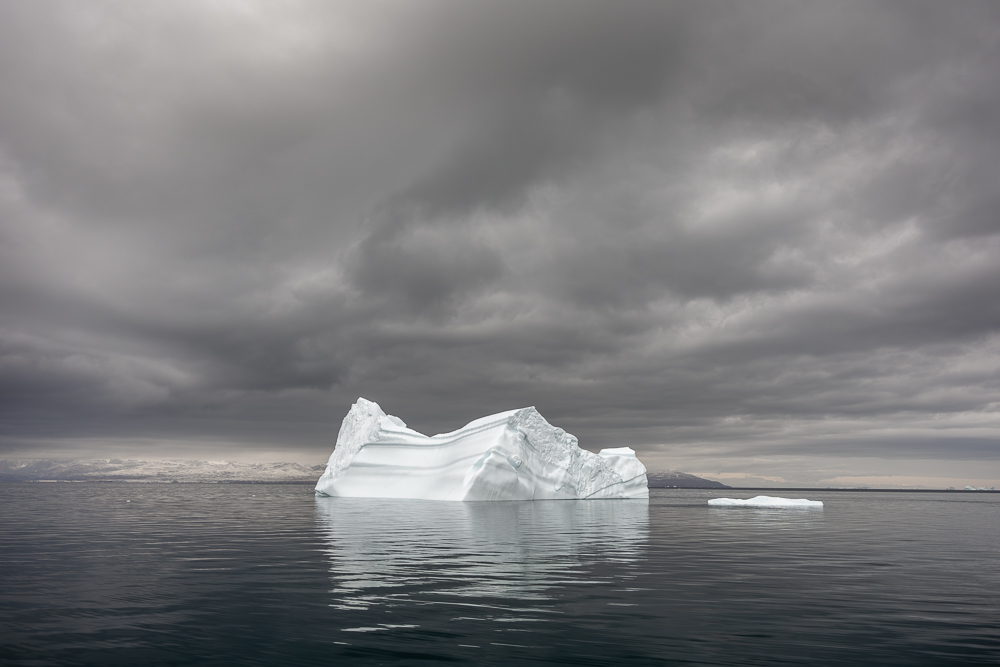
What this expedition lacked in high-density wildlife sightings, it more than made up for in landscape photography. Svalbard’s mountains, encased in thick coats of snow and ice, appeared every bit the guardians of the north—stoic, jagged, and infinitely photogenic. Every fjord we entered revealed new variations of winter’s mastery: towering cliffs draped in icicles, frozen waterfalls cascading in silent defiance of gravity, and icebergs locked in sea ice like sculptures waiting to be discovered.

At times, the weather closed in, surrounding us in a soft monochrome mist that stripped the landscape to its essential forms. At others, the skies opened just enough to allow ribbons of pastel light to skim across the snowfields. These fleeting moments of light—never dramatic, but always subtle—offered those patient and attuned enough the chance to make quiet, powerful images.

Each evening, as we gathered in the warm dining room of the Freya, trading stories and reviewing the day’s experiences, there was a shared sense of reverence for the landscape we were privileged to explore. We had come seeking solitude, wildness, and truth—and the Arctic had provided, in its own sparse, magnificent way.

This expedition reminded me, as it does each year, that Svalbard in winter is a place of paradox: stark yet tender, harsh yet comforting, desolate yet full of life. It is a place where patience is rewarded, where minimalism sings, and where every track in the snow tells a story worth listening to.

As we completed our 1,000 nautical mile journey and began the long voyage back to Longyearbyen, I was struck once again by the importance of returning—not just physically, but mentally and spiritually—to places like this. Places where the wild still rules, and where we are reminded, as always, that the greatest gift of the Arctic is its silence—and how it teaches us to listen.

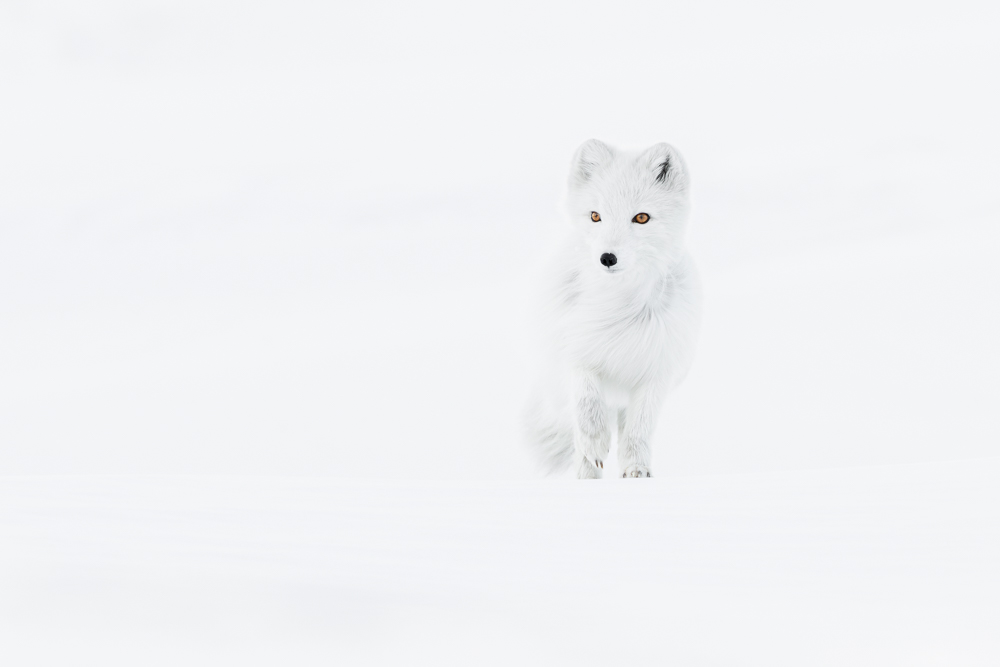
We will return again next year 2026 to lead another winter expedition aboard M.S Freya in search of miraculous wildlife encounters and ice covered landscapes. This is a rare opportunity to explore one of the Arctic’s most remote and pristine landscapes at the height of its frozen majesty. Designed specifically for keen nature and wildlife photographers, this small-group expedition offers intimate access to Svalbard’s breathtaking winter wilderness, including encounters with walrus, Arctic foxes, and polar bears, all set against a backdrop of towering snow-covered mountains and sculpted sea ice. With 24-hour twilight and the potential for moody, ethereal light, this is a once-a-year chance to capture the Arctic in its most cinematic and atmospheric state. Guided by Wild Nature Photo Travels extensive field experience and deep knowledge of polar conditions, this trip is not just a photographic expedition—it’s an immersion into the raw soul of the Arctic. Spots are extremely limited. Adventure with purpose—photograph with intention.

Svalbard in Winter 2025 Expedition Client Feedback

Today, I just wanted to share some wonderful positive feedback I received from our just completed April, 2025 Wild Nature Photo Travel expedition to Svalbard (Trip Report coming in the next few days). Shared experiences like this are the reason I started this company and continue to be the driving force for taking photographers into some of the wildest and most remote locations on our planet. Thank you to Andy and Jennifer for taking the time to write such wonderful feedback.

“Dear Fellow Pilgrims on the Svalbard Sojourn, And so it goes, as one might mutter in a post-epic journey haze, that we find ourselves penning this note, our hearts still adrift in the icy dazzle of April’s photographic odyssey to Svalbard—a place so starkly, absurdly beautiful it could make a grown man weep or a cynic reconsider their trade. We’re trying, in our fumbling, human way, to stitch together a thank-you that does justice to the kaleidoscopic wonder of what we all shared. Spoiler: words are flimsy things, like paper boats on an Arctic swell, but we’ll give it a go.

First, a nod to Joshua and Susy, our intrepid guides, who didn’t just lead us through the frostbitten wilds but opened their journey to us, letting us piggyback on their passion like hitchhikers on some cosmic road trip. You didn’t just show us walruses lolling on ice floes or the ice bear’s ghostly shimmy; you gifted us a lens—literal and otherwise—through which to see our fragile world anew. And to every soul on this expedition, from the gear-hauling, tripod-toting shutterbugs to the quiet ones who whispered awe at the edge of a glacier: you made this thing hum. You were, to borrow from that old B.W. Stevenson tune, the embodiment of “Everyone is helpful, everyone is kind / On the road to Shambala.” Svalbard, with its endless snow and light that bends time, felt like a glimpse of that place. Each click of our shutters, each shared fika of coffee in the bone-chilling cold, was a step on that road. We weren’t just chasing images; we were chasing renewal, love, the kind of adventurous spirit that makes you feel, for a fleeting moment, like you’ve cracked the code to being alive. And you all—every one of you—were kind, were helpful, were the sort of companions who make a journey feel like a destination in disguise. Our gratitude is a clumsy, oversized thing, too big for this page, but it’s real. We wish you all safe travels, continued success, and more journeys that feel like Shambala’s just around the bend. Keep chasing the light, literal and otherwise. – Andy & Jennifer”