Asia Pacific Photography Awards People’s Choice Winner Nature Category

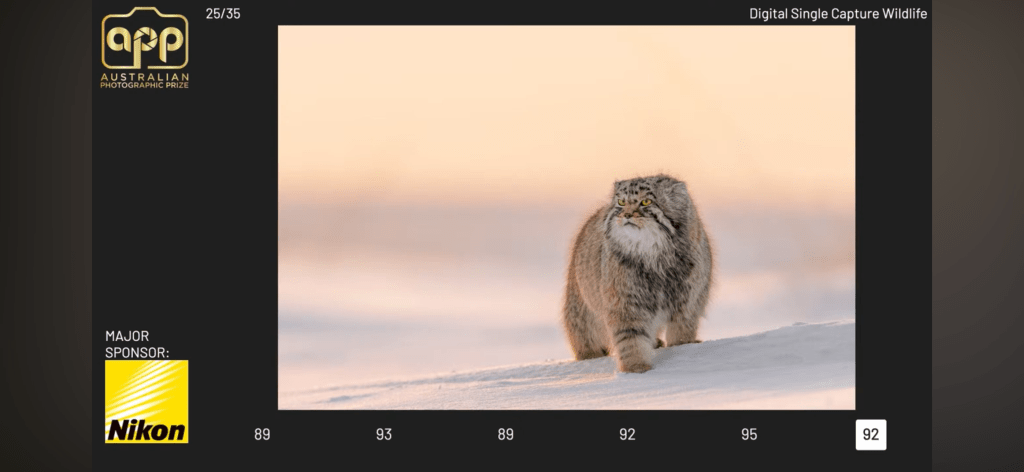
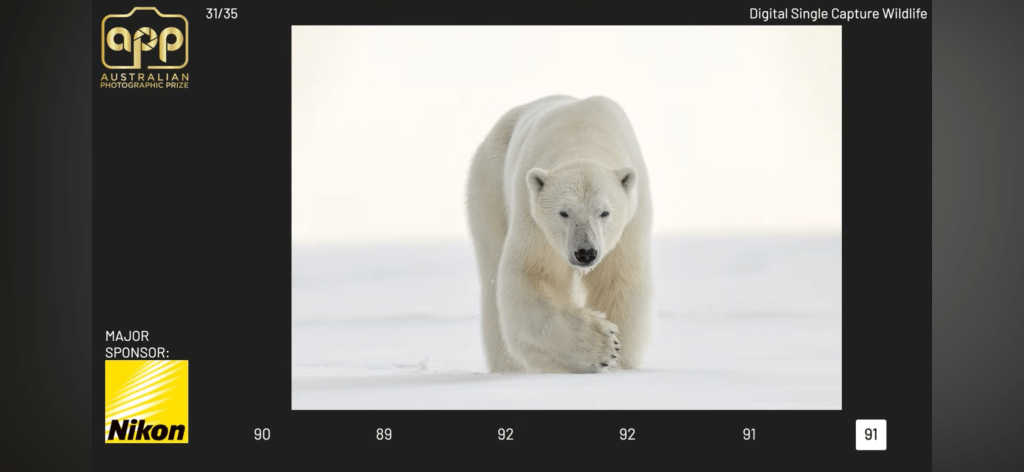
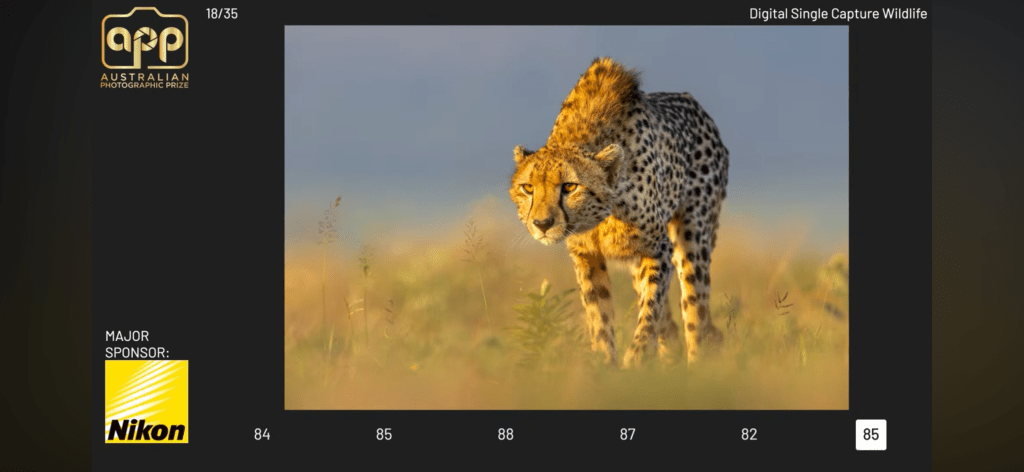
The Asia Pacific Photography Awards have just announced the 2024 People’s Choice Award winner for the Nature category. I am thrilled to report my recent photograph of the Pallas Cat, titled ‘Regal Cat’, from Mongolia in winter was the overall People’s Choice award winner for 2024.

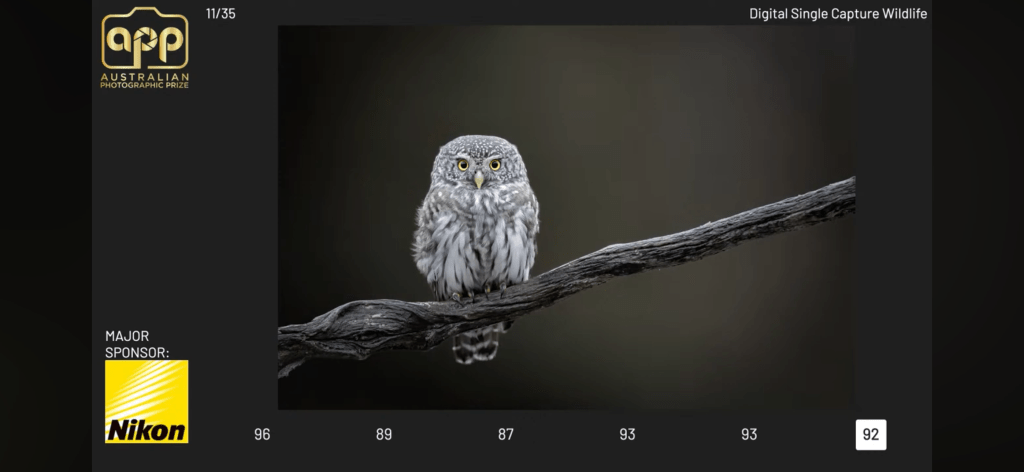
In 2022, I completely swept the pool in this category, taking First, Second, and Third place. This year, I won the Peoples Choice award in the nature category and drew with myself for third place in the judged category with the Pallas Cat photograph and the Pygmy Owl photograph. All three of my entered photographs were also top 20 and top 10 finalists.

I will return to Mongolia again in January 2025 and 2026 to photograph the Pallas Cat and the Snow Leopard. The 2025 expeditions are already sold out, but bookings are now open for 2026. You can email me for further information or to register your place. Full details are also available on my website at http://www.jholko.com/workshops.

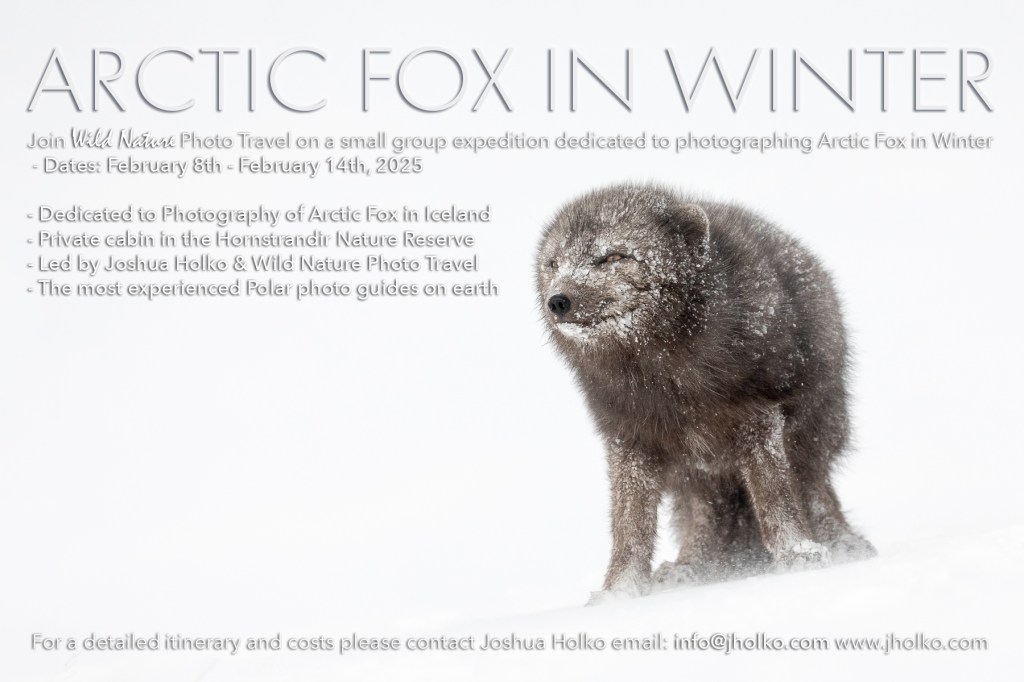
Departing for Iceland Winter Arctic Fox Expedition 2024

Please note that I will be offline for the next eight days (from tomorrow) while guiding my annual expedition to the far north of Iceland to photograph Arctic Fox in Winter. The expedition to the Hornstraidir Nature Reserve to photograph Arctic Fox is near and dear to my heart, and this year, it looks like we will have some fantastic snow conditions. I am really excited to get back up to this remote part of Iceland to find and photograph this tenacious predator. The area we are located for this expedition is quite far from the nearest town, without cell or internet coverage. If you are trying to contact me during this time, please be patient and I will get back to you on my return.

If you are interested in photographing the Arctic Fox, I now have dates available for the 2025 expedition, which will run from the 8th of February until the 14th of February 2025. The trip is eight days / seven nights and is fully inclusive of accommodation, food and transfers to and from Isfjordur to our remote cabin. On this trip, you can expect to have a great many fantastic photographic encounters with the Arctic Foxes that inhabit this remote peninsula. Full details are available on my website HERE. You can also check out the Adobe Spark Presentation. See you in Iceland.

Snowy Owls of Canada in Winter 2024 Workshop Report

In January of 2024, I ran a small group workshop in the Ontario region of Canada to photograph the magical Snowy Owl. Snowy Owls are a highly sought-after species by nature photographers and are regularly sighted in this region of Canada in winter. Previous workshops in this area have proved exceptionally fruitful, with many owl encounters and photographs resulting from our time in the field. It has been common, in past years, to walk outside our accommodation after breakfast to find an Owl perched on a nearby fence or telephone pole. This year, things were quite different.

Due to a likely combination of avian flu, poor breeding in 2023 (likely due to lack of prey), and an erratic, overly warm climate that included a late winter, there have been virtually no Snowy Owls this season in the Ontario and Quebec regions. In a typical year, Snowy Owls are regularly seen in multiple numbers, and it is possible to have the choice of birds to photograph. Thanks to the above factors, any sighting of a Snowy Owl was a real bonus this year.

Mercifully, thanks to our many scouts in the field, we located a young female Snowy Owl on our second day and photographed this owl over three separate days. The owl had taken up residence in a field just outside of central Ottawa, which meant an early morning start and a commute of around an hour each way. A journey that proved worthwhile.

During this workshop, we photographed four different owl species, including the Snowy Owl, the Barred Owl, the Sawwit Owl and the adorable Screech Owl. The Screech Owl was a real thrill for me, as not only was it the first time I had seen this owl in the wild, but the little guy had perched right on the edge of his hole in a dead tree and was in the ideal position to photograph. Close to eye level and with a clean background, it was possible to maneuver around the tree for various compositions. The Screech Owl has incredible camouflage, making it extremely difficult to find in the wild, but also highly photogenic.

Although Snowy Owls were challenging to locate this year as a result of mitigating factors, we still managed to find and photograph an owl, as well as three other species, during the week-long workshop. We wrapped up the last rainy day of our workshop with an image processing and image critique session. As I am currently travelling, I have not as yet had time to process any additional photographs from the workshop, but will update this post at a later date with more images when I can.

I will run this workshop again in January of 2026 for a small group of photographers. If you have ever wanted to photograph Snowy Owls in winter, this workshop is for you. Places are extremely limited, and once spoken for, that’s it. Please just drop me an email for further information or to register your place.

BenQ SW272U Adobe RGB 4K Monitor Review Follow Up January 2024

Back in late 2023, I did an extensive first impressions review of the BenQ SW272U 4K Adobe RGB photographic monitor. Since then, I have been using the BenQ SW272U exclusively in my photographic studio for the post-production work of all my photography, and I wanted to do a follow-up review with my thoughts on this impressive display now that I have actually lived with and used it extensively. Specifically, I want to talk about the importance of Adobe RGB for the colour space of the display and the importance this brings to tonal gradation in photographs that include snow and ice. Or, indeed, photographs that include extensive tonal gradation of any colour. This applies to sports photographers who are shooting green fields, nature photographers like myself working with large areas of the same colour, or indeed any photographer who values the tones and tonal relationships in their photographs (and that should be all of them!).

A BRIEF HISTORY OF ADOBE RGB: First, let us talk a little bit about what Adobe RGB actually is and where it came from: The Adobe RGB (1998) colour space is a colour space developed by Adobe Inc. in 1998. It was designed to encompass most of the colours achievable on CMYK colour printers, but by using RGB Primary Colours on a device such as a computer display. The Adobe RGB (1998) colour space encompasses roughly 50% of the visible colours specified by the CIELAB colour space – significantly improving upon the gamut of the SRGB colour space (the colour space of the web), primarily in cyan-green hues. It was subsequently standardized by the IEC as IEC 61966-2-5:1999. Although Adobe RGB is an older colour space by today’s modern standards, its importance has not diminished and has actually increased in recent times with the improvements in display technology.

WHY IS ADOBE RGB IMPORTANT: Put about as simply as possible, Adobe RGB offers a bigger bucket of colour than SRGB. Perhaps the best analogy is to think of Adobe RGB as a 256-piece colour crayon set, whereas SRGB only comes with 128 colour crayons. You, therefore, get more colour depth and options with Adobe RGB. And who doesn’t want more colour options? With more green colours to choose from, more tonal gradation can be visually displayed by the display device. More tonal gradation means more life-like photographs. It also means better prints!

BUT WHAT ABOUT BIT DEPTH: Although the Adobe RGB (1998) working space provides significantly more colours than SRGB, another factor to consider when choosing between colour spaces is how each space influences the distribution of the image’s bit depth. Colour spaces with larger gamuts (such as Adobe RGB) “stretch” the bits over a broader region of colours, whereas smaller gamuts concentrate these bits within a narrow region. If you need an analogy, think of ‘bits’ as salt flakes. In an SRGB colour space, you put those salt flakes on one dinner plate. In an Adobe RGB colour space, you stretch those flakes over multiple dinner plates. Thus, the more bits you have to share across the plates in the Adobe RGB colour space, the better. You can have plenty of “spare” bits if using a 16-bit image, thus negating any reduction due to the choice of working space. That is why it’s not a good idea to use an 8-bit JPEG file as your master file. Compression aside, you don’t have sufficient bits for the larger working space.

BENQ SW272U DISPLAY PERFORMANCE: Now that we have established why we want to use Adobe RGB as our colour space and why we want to use a 16-bit Tiff file or PSD (I prefer Tiffs as they are not proprietary to Adobe) as our master file, we can move onto a discussion about the performance of the BenQ SW272U Adobe RGB 4K Photographic display. Just as an aside, don’t get confused about RAW files. Until a RAW file is demosaiced, it does not have an effective colour space. The selection of Adobe RGB or SRGB on your digital camera only applies to any JPG files you take – not RAW files. The preview you see of the RAW file on your camera is a jpeg, and its colour rendition is limited to the capabilities of the individual LCD display on your camera. That is why it is a very bad idea to make colour judgements simply by looking at the image displayed on the back of your camera. You need to get the RAW file onto your computer and view the file on a high-quality Adobe RGB-capable display. Enter the BenQ SW272U Photographic Display.

With its wide colour gamut and superb luminosity, the BenQ SW272U displays smooth, accurate colour and tonal transitions. Subtle detail and shade are rendered with exquisite care by this display. When working with images that contain snow and ice, the tonal transitions are often extremely subtle and are lost by most consumer displays (especially laptop displays and tablets). Such displays just show these areas as one shade of white or grey and are incapable of displaying the subtle nuances of the photograph. If you have never worked on a high-quality display such as an SW272U, you may not even know what you are missing. You will, however, be absolutely amazed at how much information is contained in your photographs when viewed on a high-quality, properly calibrated photographic display. Such a comparison is usually a complete revelation to the photographer. I have fielded countless comments over the years from photographers who have moved from poor-quality displays to high-quality displays who are simply dazzled by the difference they make. Put simply, a high-quality photographic display such as the SW272U should be the first thing any photographer purchases after their camera. If you are new to photography and just starting out, don’t make the mistake of thinking you can ‘get by’ with your laptop or old desktop display. Whilst these may work in displaying your photographs, they will not even come close to displaying their full glory.

Over the last weeks and months, I have been making a lot of direct comparisons between calibrated laptop displays (such as my expensive Apple Laptop XDR display) and the BenQ SW272U for displaying images with extensive snow and ice. In all instances, the BenQ shows significantly more tonal transition information than the laptop display. In many cases, the laptop display fails to show any tonal variation in the snow and ice, with images appearing just solid white or grey. Side-by-side, the BenQ SW272U shows wonderful tonal transitions in the same scenes that bring all the subtleties of the scene to bear. The net result is an image that is far more life-like and that beautifully displays the soft tones in the image. If you want to see and experience the full detail of your RAW files then you absolutely need and will want a display such as the SW272U. Of course, such advantages are not limited to images with ice and snow but apply to all colour (and B&W!) photographs.

Perhaps best of all, and as I discussed in my initial review of the SW272U, the new PMU or Pallete Master Ultimate software is the easiest and most intuitive software I have yet come across for calibrating displays. BenQ is to be commended for taking what was traditionally overly complex and confusing software that was full of technical terms that baffled most users and for making it into a streamlined, simple process with a clean and easy-to-understand user interface. It may seem trivial, but the user experience during calibration plays a large role in end-user happiness and BenQ have nailed this aspect. Bravo BenQ!

CONCLUSION: The BenQ SW272U gets my highest recommendation for bang vs. buck for performance. You can spend thousands of dollars more on alternative brands that offer performance no better (and in some cases, not even as good as the SW272U. It also gets top marks for its overall performance, regardless of price. In fact, taking price completely out of the equation, I believe the BenQ SW272U to be the current best choice in the market for photographers looking for the highest levels of performance. With its wide Adobe RGB gamut, superb luminosity, and ability to render subtle tonalities with starting depth and clarity, it makes for an open-and-shut case for any photographer looking to get the best from their photographs. And that’s all of them – right?

Mongolia Pallas Cat Expedition Report 2024

In January of 2024, I ran an expedition to Mongolia’s far eastern Steppe region to find and photograph the stunningly beautiful, rare and enigmatic Pallas Cat. This was my third expedition to this remote region of Mongolia, and it proved no less productive than the previous two (Read the 2023 Trip Report).

The camp where we based ourselves to find and photograph Pallas Cats resides in Mongolia’s far eastern Steppe region, nearly 700 kilometres from the capital, Ulaanbaatar. We used three large 4-wheel drive vehicles to reach the camp and to search for cats in the field. In good conditions, the drive is around 8-10 hours. The drive took us nearly twelve hours this year due to heavy snowfall. This year, I am including more behind-the-scenes photographs in the trip report to help paint a better picture of the overall experience of visiting and living in this remote region.

Widely unknown by many, the Pallas cat is a small wildcat roughly the size of a domestic house cat that is found in Mongolia, parts of China, Russia and Tibet. Typically, it is an ambush hunter living off small rodents such as vols. Unlike most cats that have an elliptical pupil, what makes the Pallas cat unique and special is its round pupils. Affectionately known as the ‘Grumpy cat’ by many, Pallas cats always tend to have an annoyed look that is undoubtedly part of their charm and appeal.

For 2024, Mongolia’s far east Steppe region has been buried under heavy snow, making for absolutely ideal conditions for finding and photographing Pallas Cat. Most years, the snow coverage is sparse in this region, and it is not uncommon for there to be little or even no snow. The lack of snow makes for easy driving conditions but can be problematic for photography. This year, the reverse proved true, with outstanding conditions for winter photography and adverse driving conditions that slowed us down on more than one occasion.

Over the week-long expedition, we photographed approximately six different Pallas Cats and sighted another half dozen or so as we traversed the landscape in our 4-wheel drives. Pallas cats can be challenging to distinguish, so it is impossible to be sure of the exact number of individual cats we sighted. Our local guides again showed their eagle-vision superpower of spotting the small cats at huge distances across the landscape. Finding Pallas cats in the vast, seemingly endless Steppe region would be impossible without their skilled eyes.

During this expedition, we also had a fantastic photographic encounter with a Corsak fox. This encounter was the first time in my visits that I could get close enough to Corsak Fox to photograph them. Completely relaxed, the fox allowed us to get close enough to fill the frame with a 600mm lens and a 1.4 teleconverter. Typically, the foxes in this region of Mongolia run away before you can get out of the car. This particular fox was found quite close to a nearby small village, and I suspect it was somewhat habituated to human activity. Nevertheless, it proved an incredible encounter.

During the trip, we also saw many raptors, including the Upland Buzzard (a fantastic black morph was also sighted), Golden Eagle, Saker Falcon, and the Cinereous Vulture.

Our final encounter for the expedition provided terrific images of a Pallas cat in backlight just as the winter sun was setting. This encounter was to be our last shoot for the trip, with the following day being lost to a snowstorm with poor visibility and high winds. In these sorts of conditions, Pallas cats prefer to hunker down in the rocks or fox and marmot burrows to seek shelter from the winds.

The following day, Our return to Ulaanbaatar took far longer than usual due to the heavy snow, which slowed us down considerably. The first part of the return journey (a distance of approximately 70 kilometres) is all off-road driving through the steppe region, and thanks to heavy snow, high winds and a snowstorm, this drive took us five and a half hours instead of the usual hour and a half. We left camp at 6am, anticipating the drive would be slow in the prevailing conditions. Indeed, the deep snow drifts saw us bogged down or stuck eleven times in our 4-wheel drives. Even once we made the main road, we were frequently slowed down by road closures and snow and ice conditions. Thanks to the tireless work of our local guides and drivers, we got moving each time and finally made it safely back to the capital an epic sixteen hours after our departure. Although this proved a very long travel day, the resulting photographs from the expedition were superb and totally worth the long hours in the car to and from the capital.

I will return to Mongolia this July for an expedition to photograph Pallas Cat and Pallas Cat kittens in the warm summer sun. This workshop is now sold out, but I am taking bookings for January and winter 2025. If you are interested in photographing this beautiful wildcat in winter snow conditions, drop me an email for more information or to register your interest.